Specialist shares what Mercedes buyers and owners should know before learning the hard way
Published on Jun 06, 2026 at 3:55 AM (UTC-4)
by Molly Davidson
Last updated on Jun 06, 2026 at 3:55 AM (UTC-4)
Edited by
Kate Bain
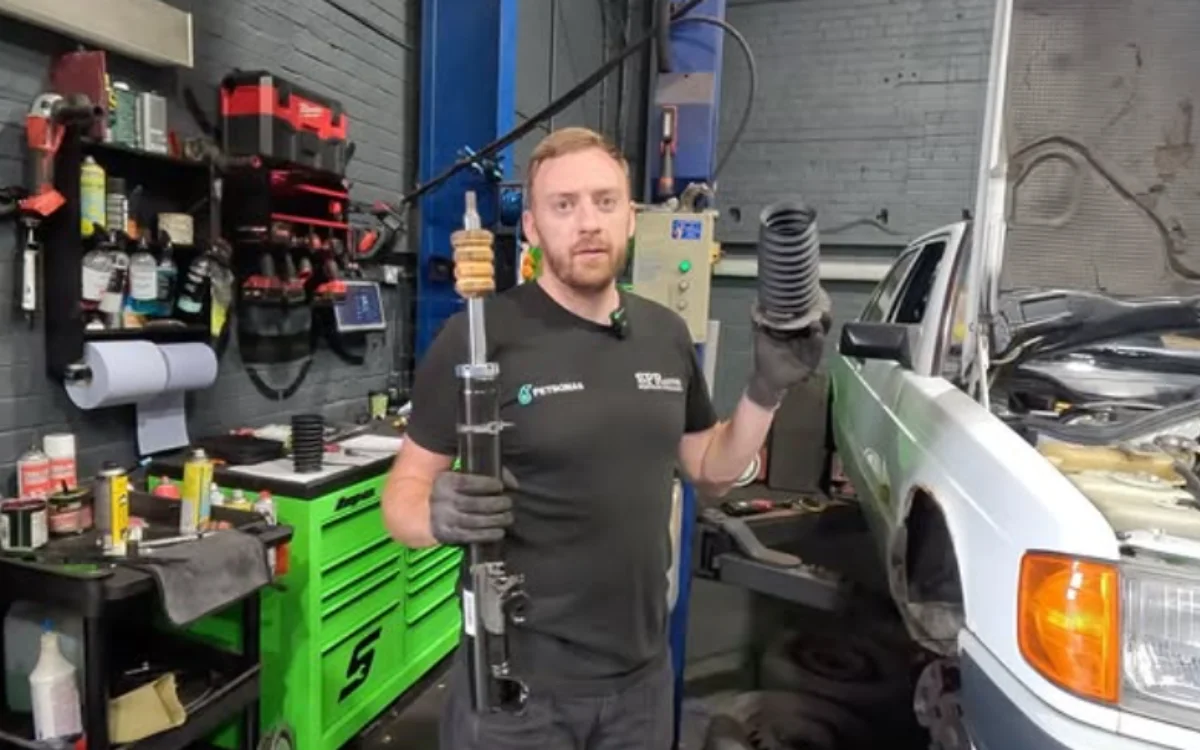

Sam Bates runs SPR Autos in Manchester, where he works on Mercedes cars all day, every day.
People come to him with questions about buying, servicing, and keeping these cars on the road – usually when something doesn’t feel quite right.
After nearly 20 years working almost exclusively on the brand, he knows which concerns come up most often, and which ones actually matter.
And now he’s revealing exactly what you need to look out for if you want to own, maintain, or buy a Mercedes.
Are you a Mercedes driver? Here’s what to look for
Sam’s worked on almost every brand under the sun, from Fords to Porsches, but after years on the tools, he’s proven to be something of a Mercedes expert.

“I’ve had lots of other garages wonder how I work on Mercedes day in, day out.”
“They find them hard work and difficult to diagnose.”
But for Sam, it all boiled down to repetition.
Working on a brand occasionally is very different from seeing the same systems and faults week after week, and that familiarity changes how problems are approached.
We asked Sam what problems and mistakes he saw most often when Mercedes owners come through the workshop door, so you don’t have to learn the hard way.
1. Misdiagnosis causes more problems than neglect
One of the first issues Sam raised was an incorrect diagnosis.
“Mercedes electronics can be complicated,” he explained.
“Non-specialist shops using generic diagnostic machines can struggle for data.”
Without brand-specific information, faults are often chased rather than confirmed.
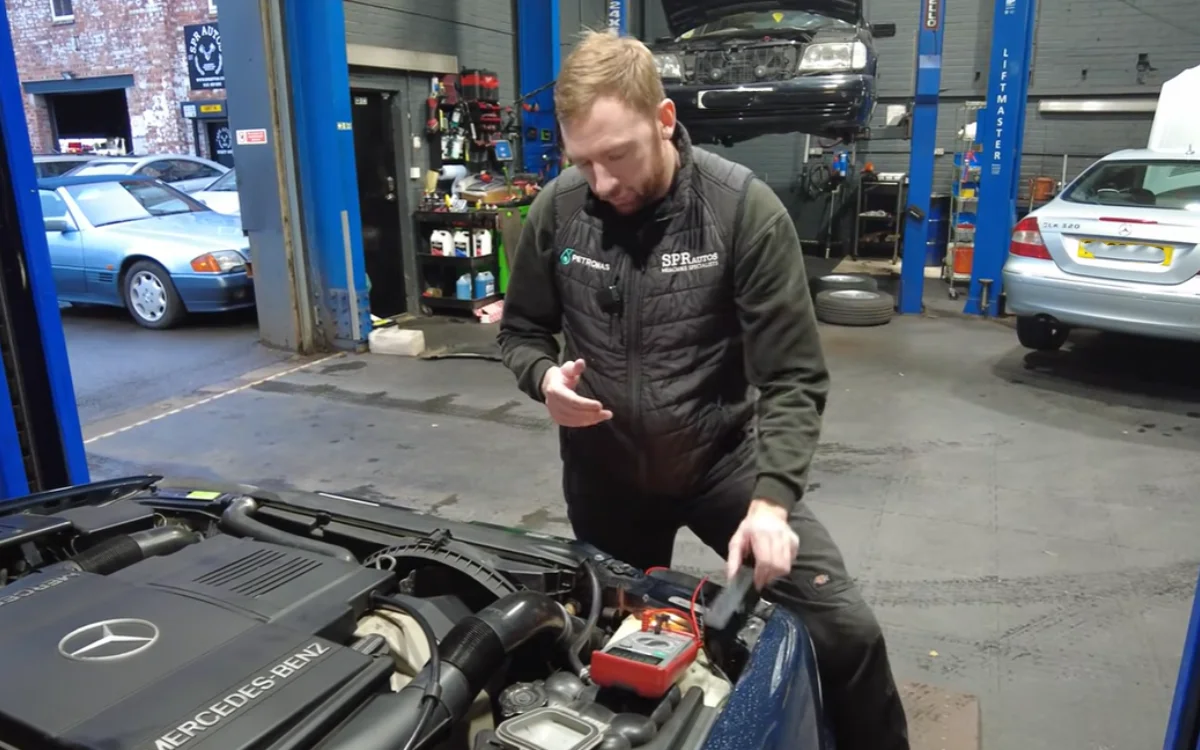
Sam uses the genuine Mercedes Star diagnostic system, which provides guided test procedures instead of basic fault codes.
That extra detail is often the difference between a repair that lasts and one that simply patches the problem.
2. Correct diagnosis means nothing if the parts aren’t right
Even when the fault is identified correctly, if parts are chosen incorrectly, it can undo the work.
“They’re very sensitive to non-genuine parts,” he said of Mercedes vehicles.
In many cases, the diagnosis is spot-on, but the component fitted isn’t up to the task.
That’s why his workshop sticks to genuine parts or proven like-for-like brands – not out of loyalty, but because cheaper alternatives tend to come back through the door.
3. Long-life oil doesn’t suit real-world driving
Maintenance habits come up just as often as faults.
“Stick to the recommended schedules and avoid long-life oil changes,” Sam said.
For drivers covering 10,000 to 20,000 miles a year, he recommends an extra oil change between services, even though Mercedes specifies long-life oil.
In his experience, stretching intervals rarely pays off long-term.

4. Gearbox servicing is overlooked and expensive to ignore
Gearbox servicing is another area Sam feels owners underestimate.
“Your gearbox works as hard as your engine,” he said.
“Why wouldn’t you service it?”
His rule of thumb is around 40,000 miles or four to five years at most.
Leave it longer, and the consequences tend to arrive later… and at a much higher cost.
5. Buying used is about expectations as much as history
For buyers considering a used Mercedes, Sam’s advice starts with service history.
“Find one with full service history,” he said, so you know how the car’s been looked after.
But he also warns against expecting a used car to feel brand new.
Wear and small faults are part of the deal.
Checking for past damage matters, and rushing the decision often leads to regret.
“Take your time,” he added.
The unusual everyday workshop moments
After covering the more serious issues, we asked Sam about the moments that stand out for different reasons.
And one example came to mind straight away.
A customer arrived convinced a serious knocking noise was coming from his car.
It was persistent enough that he expected something mechanical to be wrong.

After checking it over, Sam traced the noise to something far simpler – an air freshener hanging from the rear-view mirror, swinging and tapping against the mirror as the car moved.
“He didn’t believe me,” Sam said.
“I had to take him out, show it knocking, remove it, and prove the noise was gone. He rang the next day to say it was fixed.”
It’s a small moment, but a familiar one in a Mercedes workshop.
Not every noise points to a major fault, and not every problem needs an expensive fix.
Sometimes, knowing what to rule out is just as valuable as knowing what to repair.
For more real-world Mercedes insight, you can subscribe to Sam’s SPR Autos YouTube channel, where he shares repairs and workshop fixes as they happen.
With roles at TEXT Journal, Bowen Street Press, Onya Magazine, and Swine Magazine on her CV, Molly joined Supercar Blondie in June 2025 as a Junior Content Writer. Having experience across copyediting, proofreading, reference checking, and production, she brings accuracy, clarity, and audience focus to her stories spanning automotive, tech, and lifestyle news.