Italy has a perfectly engineered circular test track where cars can drive flat-out without needing to steer
Published on Jan 17, 2026 at 1:46 PM (UTC+4)
by Jason Fan
Last updated on Jan 13, 2026 at 9:45 PM (UTC+4)
Edited by
Mason Jones

The Nardò Ring test track, also known as the Nardò Technical Center, is a marvel of automotive engineering, with a fascinating history dating back almost 50 years.
Built by Fiat in 1975, this unique high-speed facility was designed to push cars to their limits in a controlled environment.
Its perfectly circular layout and banked lanes allow vehicles to reach very high speeds without the driver having to constantly correct the steering.
This creates the illusion of driving on a straight road, making it ideally suitable for testing performance cars.
SBX CARS – View live supercar auctions powered by Supercar Blondie
Many records were set on the Nardò Ring
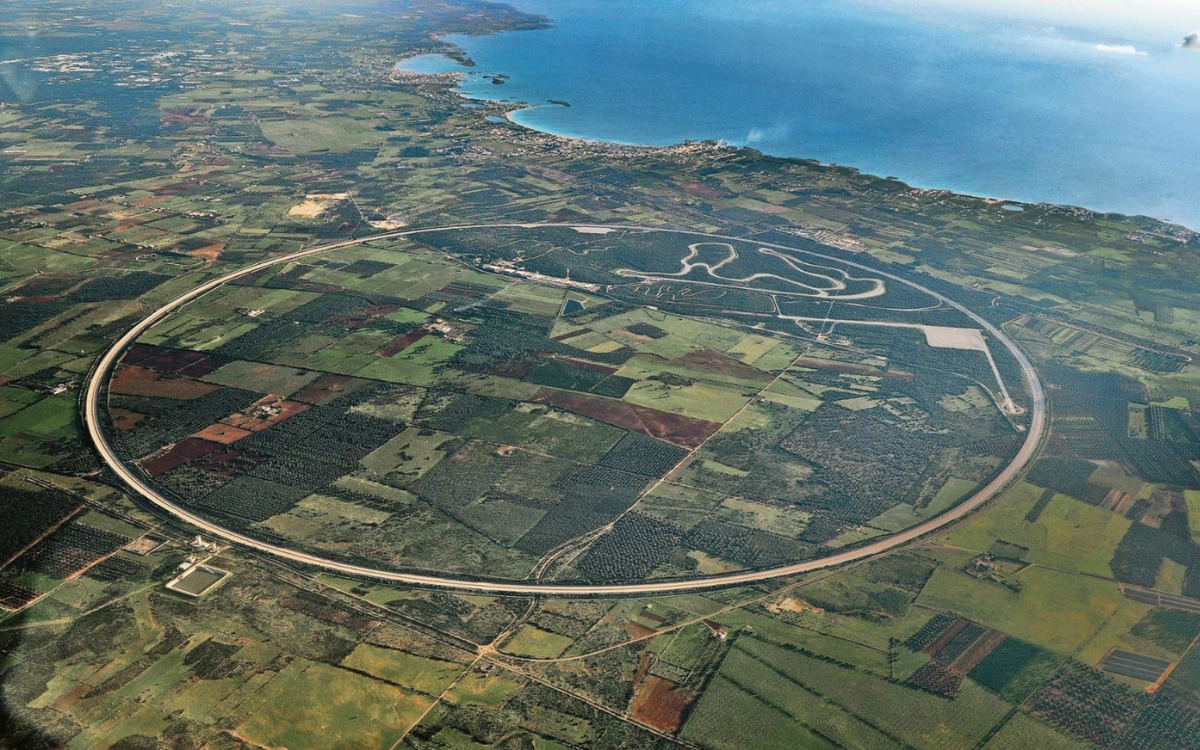
Stretching about 7.76 miles in circumference with a diameter of roughly 2.5 miles, the track has four concentric lanes with different banking profiles.
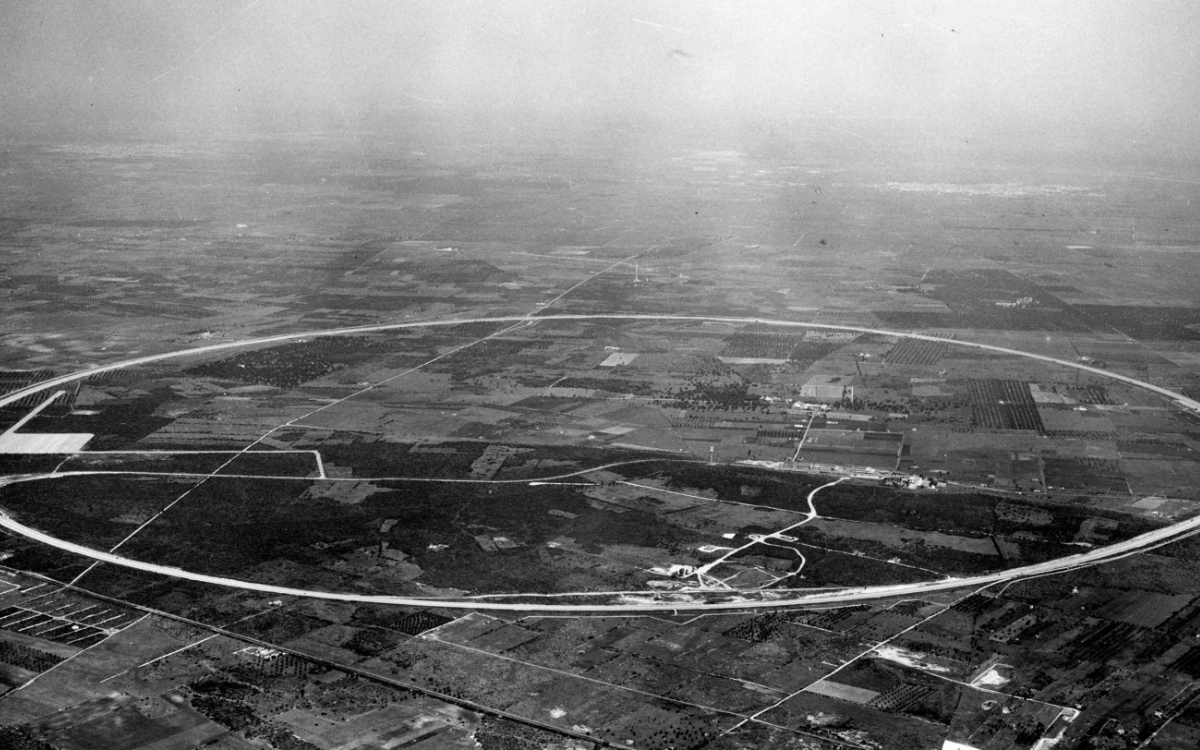
Each lane is engineered so that at a certain ‘neutral speed’, the forces acting on a car balance out and the driver can keep the steering wheel perfectly straight.
In the outermost lane, that speed can be as high as around 149 mph.
This allows manufacturers to test high-speed stability and durability in ways that would be impossible on point-to-point straights.
In 1993, the Porsche 928 GTS beat the 24-hour world speed record on this very track.

Years later, a racer also set an unbelievable world record for the greatest distance traveled on a motorcycle in 24 hours.
Where did he do it? Obviously, on the Nardò Ring test track.
Porsche Engineering acquired the facility in 2012, renaming it the Nardò Technical Center.
However, the iconic circular high-speed track remains its star attraction.
Around the Ring, the expansive test complex covers more than 700 hectares and includes multiple circuits for different types of vehicle evaluation, from handling to off-road simulation.
Recent investments have brought fresh asphalt and upgraded safety features to support modern testing needs.
It’s a very busy test track
Today, the Nardò Technical Center is busy with cutting-edge vehicle development.
For example, Alfa Romeo’s 33 Stradale supercar has been undergoing high-speed validation at the track, reaching around 207 mph.
Engineers use the Ring to fine-tune aerodynamics, cooling systems, and dynamic behaviour at extreme speeds.
After all, doing so on public roads isn’t exactly feasible.

It’s not just combustion engines getting their turn either.
Automobili Pininfarina’s electric Battista hypercar has also completed phases of its development programme at Nardò.
Using both the circular track and the technical center’s handling circuits, the carmaker managed to calibrate the car’s chassis dynamics and advanced torque-vectoring systems.
The Nardò Ring test track may have started as a Fiat proving ground, but it is now embracing its role as a high-tech automotive laboratory in the modern day.
DISCOVER SBX CARS: The global premium car auction platform powered by Supercar Blondie