NASA's James Webb Telescope has looked inside Uranus for the first time
Published on Feb 27, 2026 at 3:51 AM (UTC+4)
by Claire Reid
Last updated on Feb 27, 2026 at 9:37 PM (UTC+4)
Edited by
Mason Jones
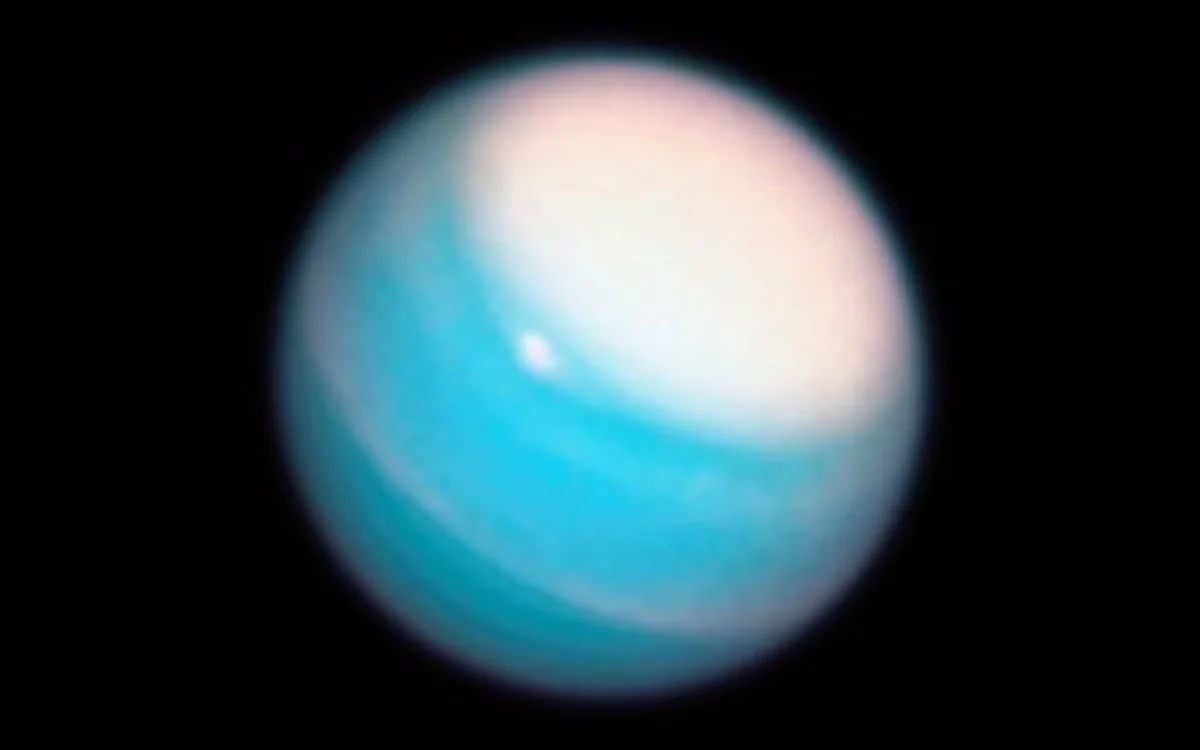

The James Webb Telescope has looked into Uranus’s upper atmosphere for the first time, NASA has said – and managed to snap images of huge auroras rolling through its atmosphere.
The James Webb Space Telescope (JWST) blasted off on Christmas Day in 2021 and is the largest telescope in space.
Since its launch, it’s been responsible for some incredible discoveries, including observing light on an ‘Earth-like’ planet for the first time and getting images of star clusters on an infant galaxy.
And its latest images have given scientists a glimpse into Uranus’s upper atmosphere, and the auroras that form there.
DISCOVER SBX CARS – The global premium auction platform powered by Supercar Blondie
The James Webb Telescope has given scientists a ‘first look’ inside Uranus
The study, which was conducted by NASA and the European Space Agency (ESA), focused on Uranus’s magnetosphere, which extends more than 3,100 miles above the planet’s cloud tops.
The telescope allowed astronomers to observe Uranus for almost one complete rotation, and they were able to detect a fair glow from molecules above the clouds.
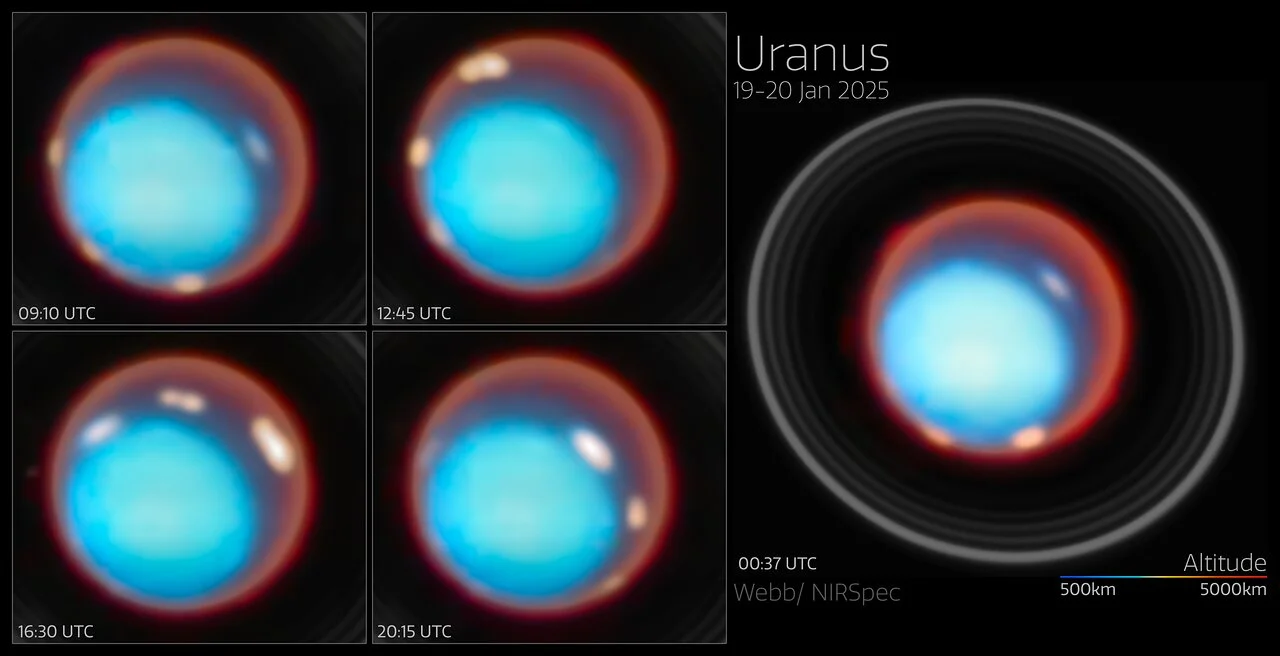
Researchers say Uranus’s magnetosphere is ‘one of the strangest in the Solar System’ as it’s tilted and offset from the planet’s rotation axis, which means that auroras move in ‘complex ways’ across its surface.
Now, thanks to the James Webb Telescope, scientists have been provided with the most detailed data ever of where the auroras form, how Uranus’s unusually tilted magnetic field impacts them, and how the planet’s atmosphere has been cooling down over the last three decades.
“This is the first time we’ve been able to see Uranus’s upper atmosphere in three dimensions,” Northumbria University’s Paola Tiranti said.
“With Webb’s sensitivity, we can trace how energy moves upward through the planet’s atmosphere and even see the influence of its lopsided magnetic field.”
The data also confirmed that Uranus’s atmosphere has continued to cool since the 1990s.
Click the star icon next to supercarblondie.com inGoogle Search to stay ahead of the curve on the latest and greatest supercars, hypercars, and ground-breaking technology
Auroras on Uranus act differently than here on Earth
Astronomers first detected auroras on Uranus with the Hubble Space Telescope back in 2012.
But, new data has since confirmed that they behave very differently out on Uranus than the auroras we see on Earth.
On Earth, the auroras – also known as the northern and southern lights – form in line with the north and south poles.
But on Uranus, with its lopsided tilt, the auroras extended far beyond the planet’s poles.
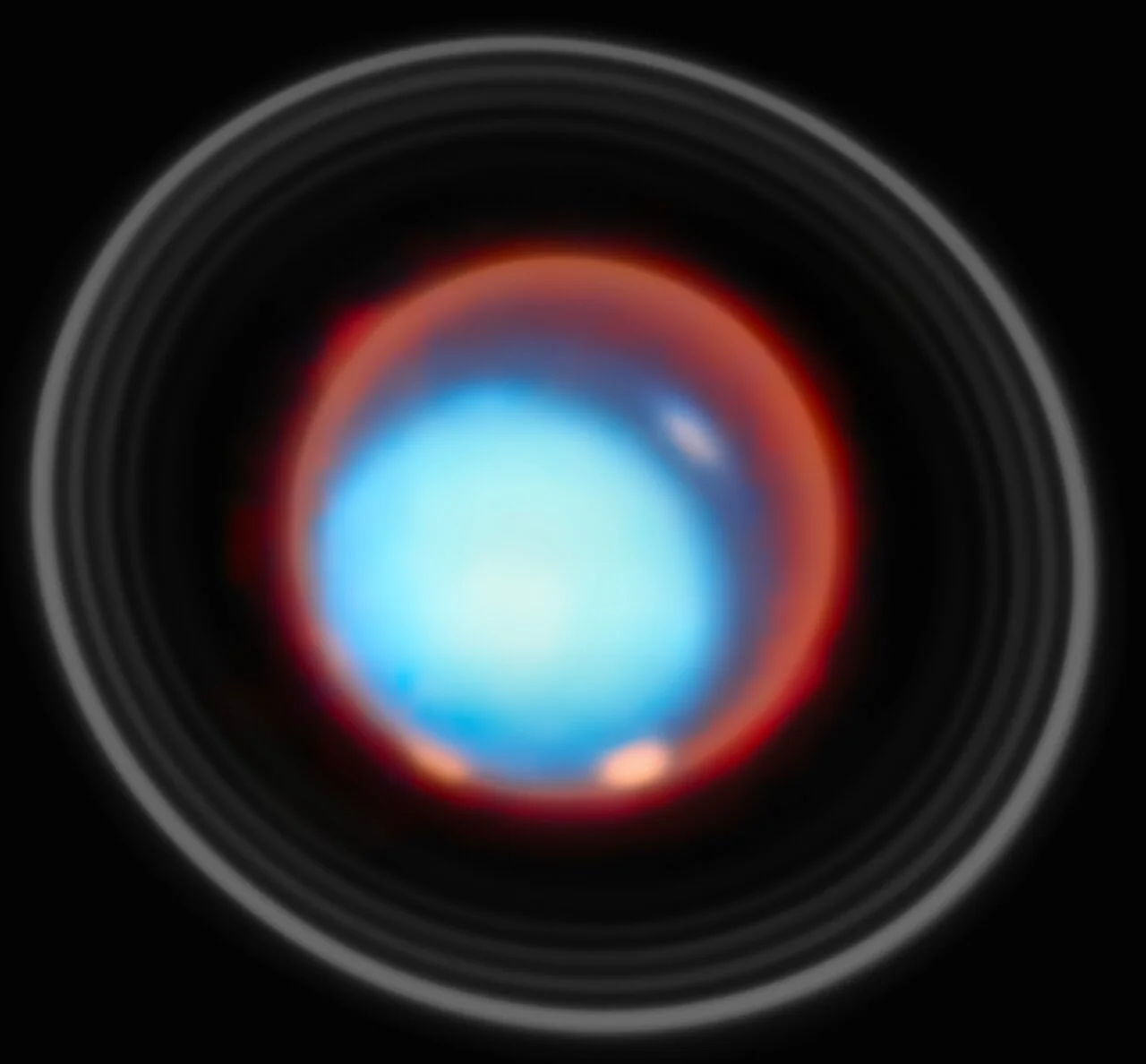
Researchers were able to spot two bright auroral bands near the magnetic poles, which had a ‘depletion in emission and ion density’ between them, most likely caused by transitions between Uranus’s magnetic-field lines.
“By revealing Uranus’s vertical structure in such detail, Webb is helping us understand the energy balance of the ice giants,” Tiranti added.
“This is a crucial step towards characterising giant planets beyond our Solar System.”
DISCOVER SBX CARS: The global premium car auction platform powered by Supercar Blondie
With a background in both local and national press in the UK, Claire has covered a range of topics, including technology, gaming, and cryptocurrency, since joining the editorial team at Supercar Blondie in May 2024. Her ability to be first to a story has been integral to making SB’s coverage of scientific discovery, AI, and global tech news a slick 24/7 operation.