Consumer reports find that plug-in hybrids have 80% more problems than gas cars
Published on Dec 30, 2025 at 3:56 AM (UTC+4)
by Daisy Edwards
Last updated on Dec 29, 2025 at 6:31 PM (UTC+4)
Edited by
Mason Jones

Consumer Reports has dropped a warning for anyone eyeing a plug-in hybrid as the ‘safe’ step into electrification.
New data suggests plug-in hybrids suffer around 80 percent more problems than traditional gas cars.
That is a rough result for a car type sold as the best of both worlds with the blend of electric and combustion power.
Instead, it is starting to look like the mix is also where all the problems and headaches live.
EXPLORE SBX CARS – Supercar auctions starting soon powered by Supercar Blondie
Plug-in hybrids have 80% more problems than gas cars
Consumer Reports bases its reliability rankings on a huge annual survey, pulling feedback from hundreds of thousands of vehicle owners across model years stretching all the way back to 2000.
In the latest findings, plug-in hybrids came out noticeably worse than regular gas vehicles, with the average plug-in hybrid showing about 80 percent more reported problems.
Those problems are not limited to one area either.
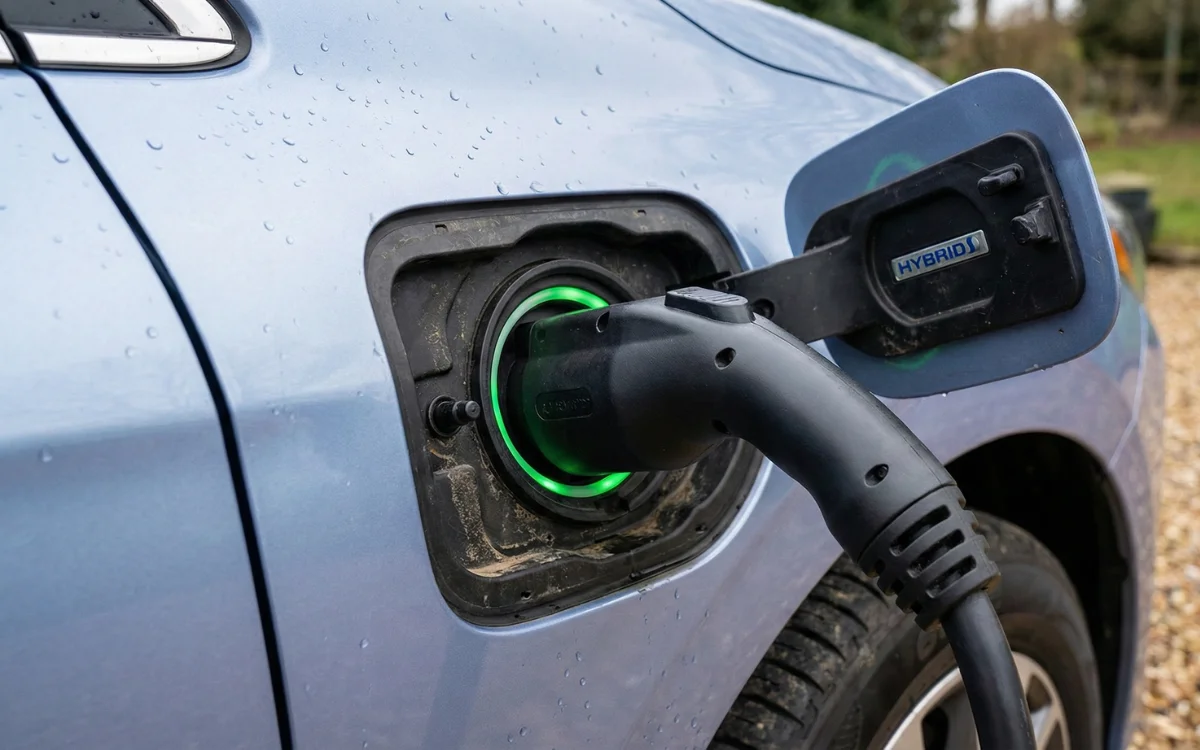
The survey tracks a wide range of issues, including engine and transmission issues, electrical faults, infotainment glitches, and general build quality concerns.
What makes the result especially awkward is that plug in hybrids are often marketed as a clever compromise where drivers get electric power for short trips and a gas engine for longer journeys.
But reliability-wise, the data suggests that compromise brings extra complexity and more chances for something to go wrong.
Two cars in one = double the problems
Consumer Reports points to one main culprit: hybridity.
Plug-in hybrids combine a full engine and fuel system with an electric motor, a larger battery pack, charging hardware, and software that has to constantly manage how everything works together.
That is a lot of moving parts packed into one vehicle, and a lot of opportunities for small issues to turn into costly repairs.
Interestingly, this does not mean all EVs struggle, but Consumer Reports has consistently found that regular hybrids tend to be more dependable than gas-only cars, largely because the technology has had years to get better.
For buyers focused on long term reliability, gas powered cars and standard hybrids still appear to be the safest options, while plug in hybrids remain the most complicated and problem-heavy choice in the lineup.
A quick history of EV batteries
1859: Invention of the lead-acid battery by Gaston Planté—used in early electric carriages
1899: Camille Jenatzy’s electric car, using lead-acid batteries, sets a land speed record of 65 mph
1960s: Nickel-cadmium (NiCd) batteries provide better energy density but are costly
1991: First commercial lithium-ion battery developed by Sony—revolutionizing portable tech
1996: GM EV1 uses advanced lead-acid and nickel-metal hydride (NiMH) batteries in prototypes
2008: Tesla Roadster launches with lithium-ion cells—first car to use laptop-style battery packs
2012: Tesla Model S refines battery cooling and packaging for longer range and safety
2015: Solid-state battery research accelerates, promising faster charging and higher energy density
2020: EV battery costs drop 89% in a decade, reaching ~$137/kWh, enabling mass-market EVs
2023: Panasonic, CATL, and others begin testing next-gen ‘4680’ cell designs for higher performance
DISCOVER SBX CARS: The global premium car auction platform powered by Supercar Blondie