Most powerful production Porsche sets a new record after driving under world's biggest aircraft as it takes off and lands
Published on Jul 31, 2026 at 10:05 AM (UTC-4)
by Daisy Edwards
Last updated on Aug 11, 2026 at 6:53 AM (UTC-4)
Edited by
Ben Thompson
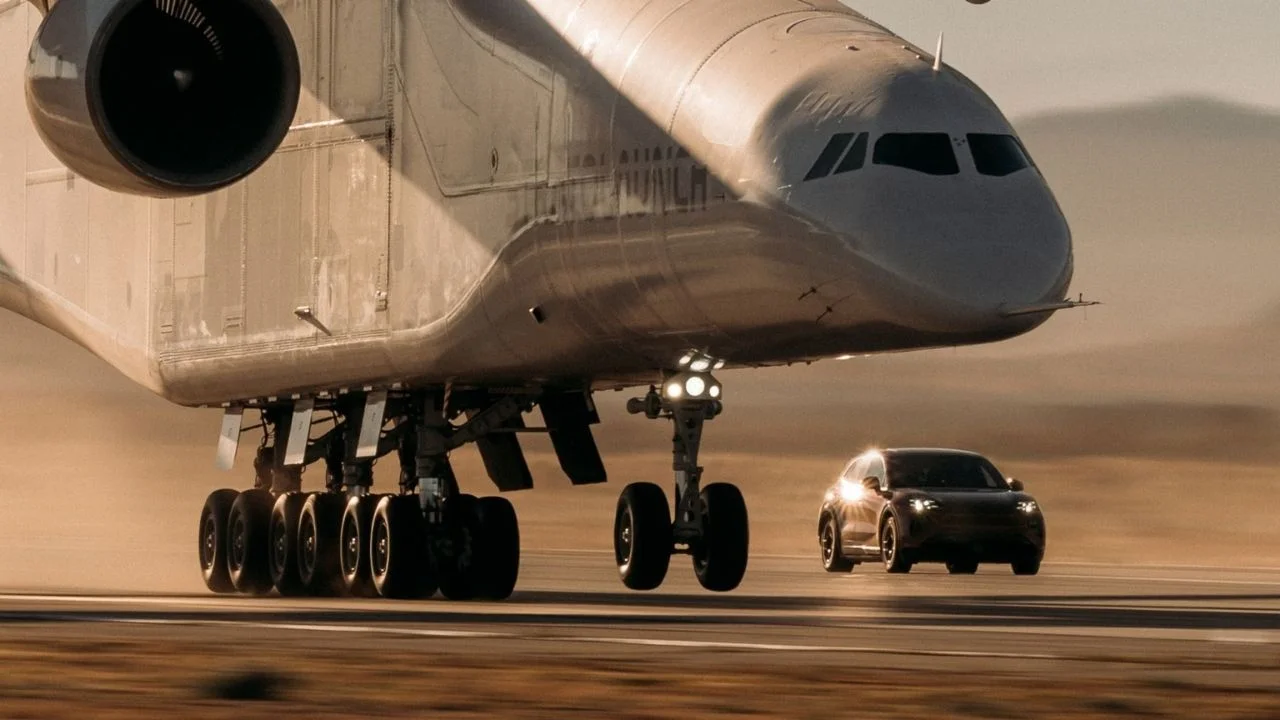

Astronomical engineering met astonishing automotive performance when the most powerful production Porsche ever built set a new record that sounds almost impossible, involving the world’s biggest aircraft.
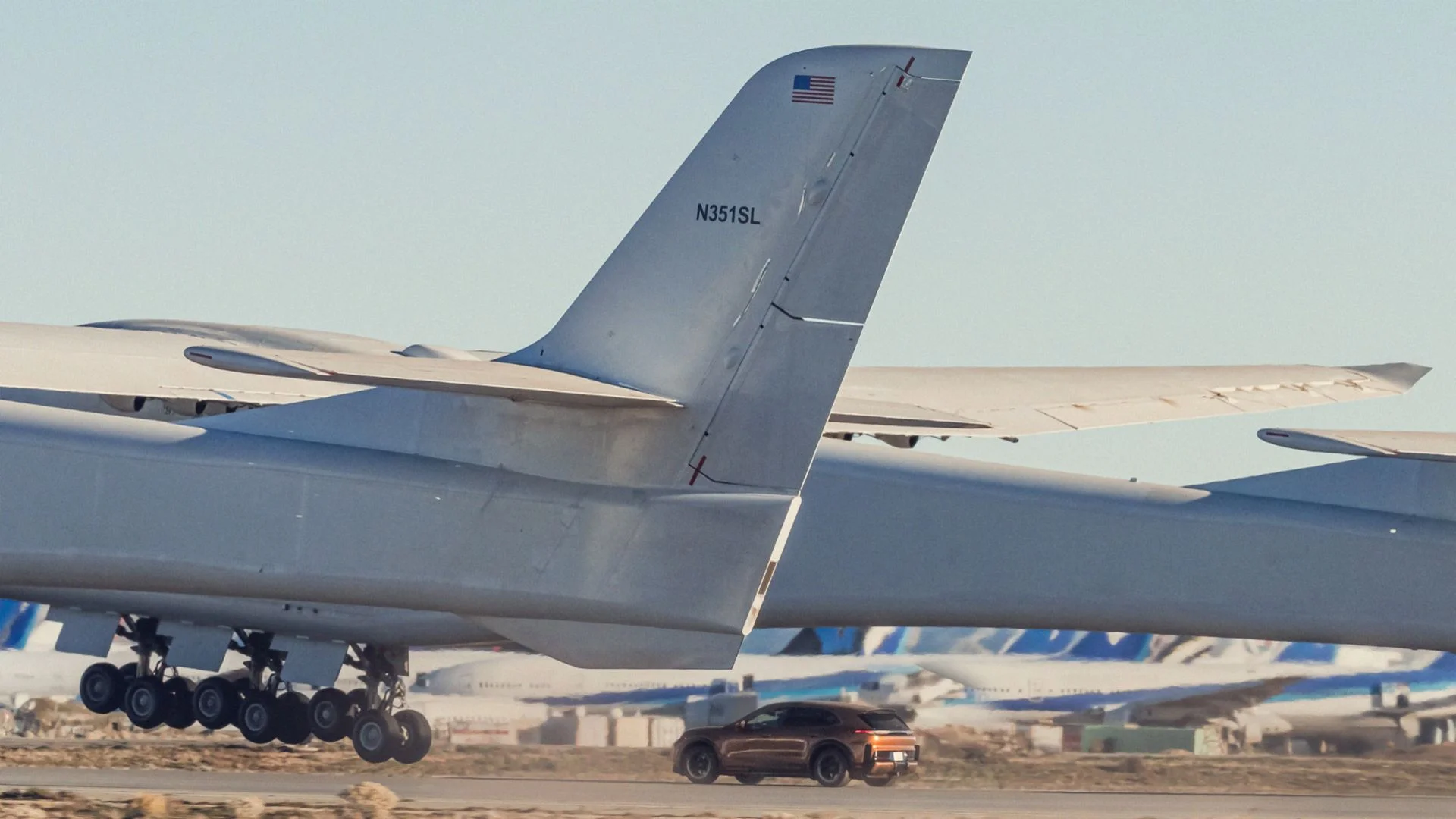
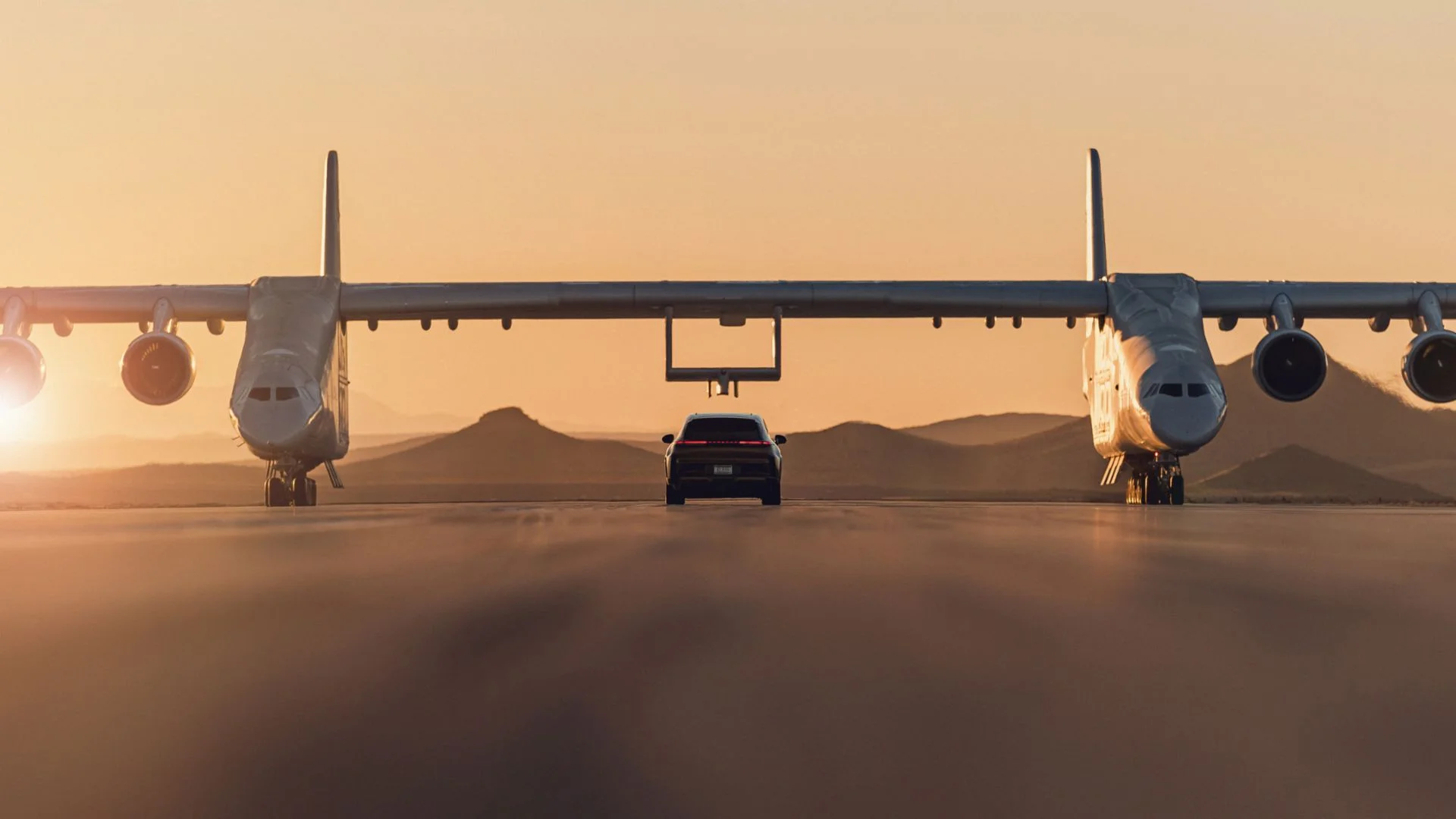
The all-electric Porsche Cayenne Turbo Electric successfully drove beneath the world’s biggest aircraft as it took off and landed, setting a brand-new Guinness World Record in the process.
The daring stunt saw the SUV thread the needle beneath the giant aircraft with barely any room to spare, showcasing the precision and performance of Porsche’s latest EV.
The incredible feat is one of the most unusual records ever attempted by a production car.
Production Porsche vs. the world’s biggest aircraft
Porsche’s latest challenge took place with the help of the WindRunner, the world’s largest aircraft by wingspan, which boasts a staggering 356-foot wingspan.
As the enormous aircraft accelerated down the runway for takeoff, the Cayenne Turbo Electric timed its approach perfectly before passing directly underneath the wing section while the plane climbed into the air.
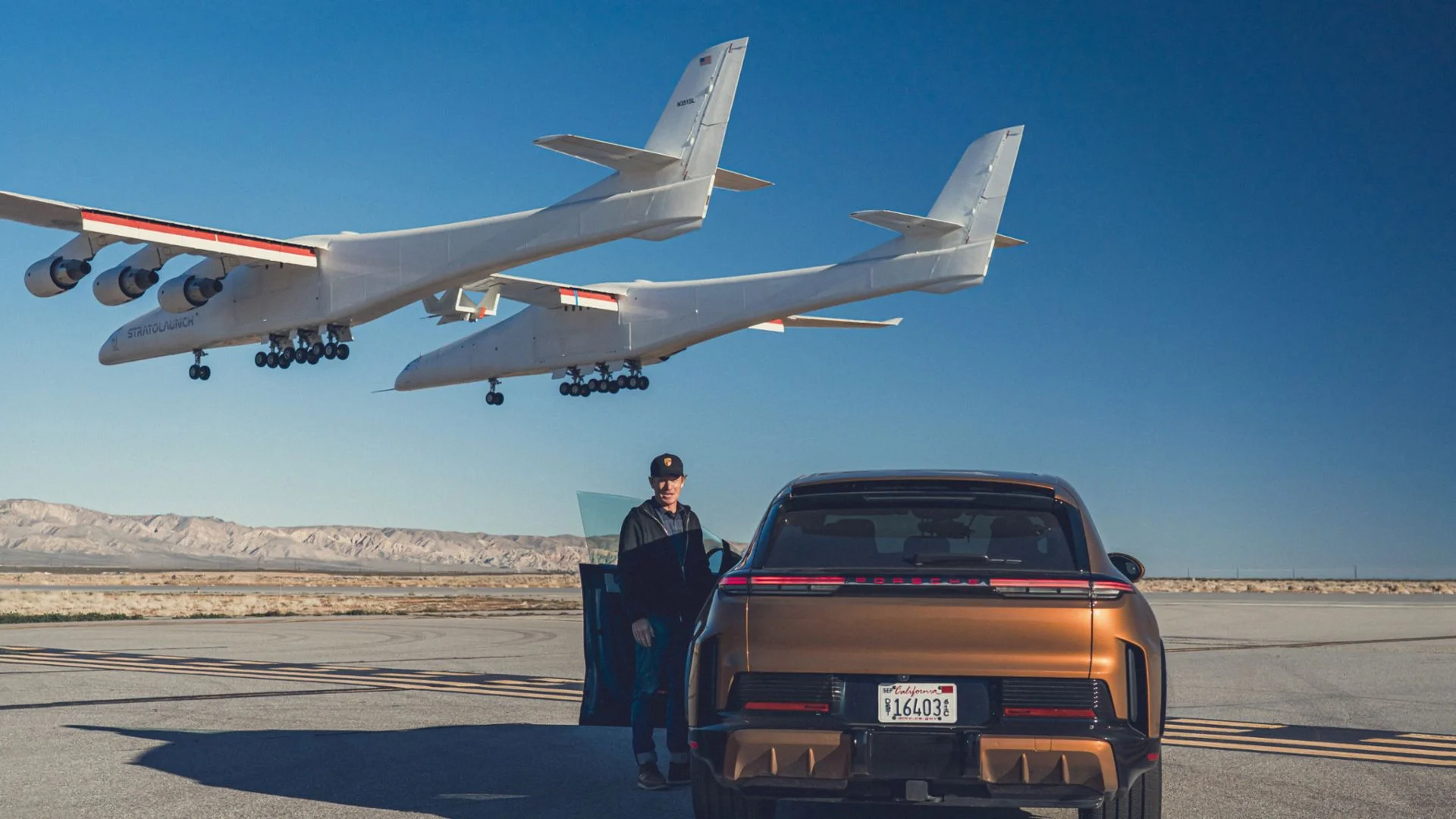
The SUV then repeated the feat as the aircraft returned for landing, completing the challenge twice in what Porsche described as a demonstration of ‘precision meets power’.
The record-breaking vehicle wasn’t just any Porsche either.
The Cayenne Turbo Electric is the most powerful production Porsche ever created, producing up to 1,139 horsepower with Launch Control.
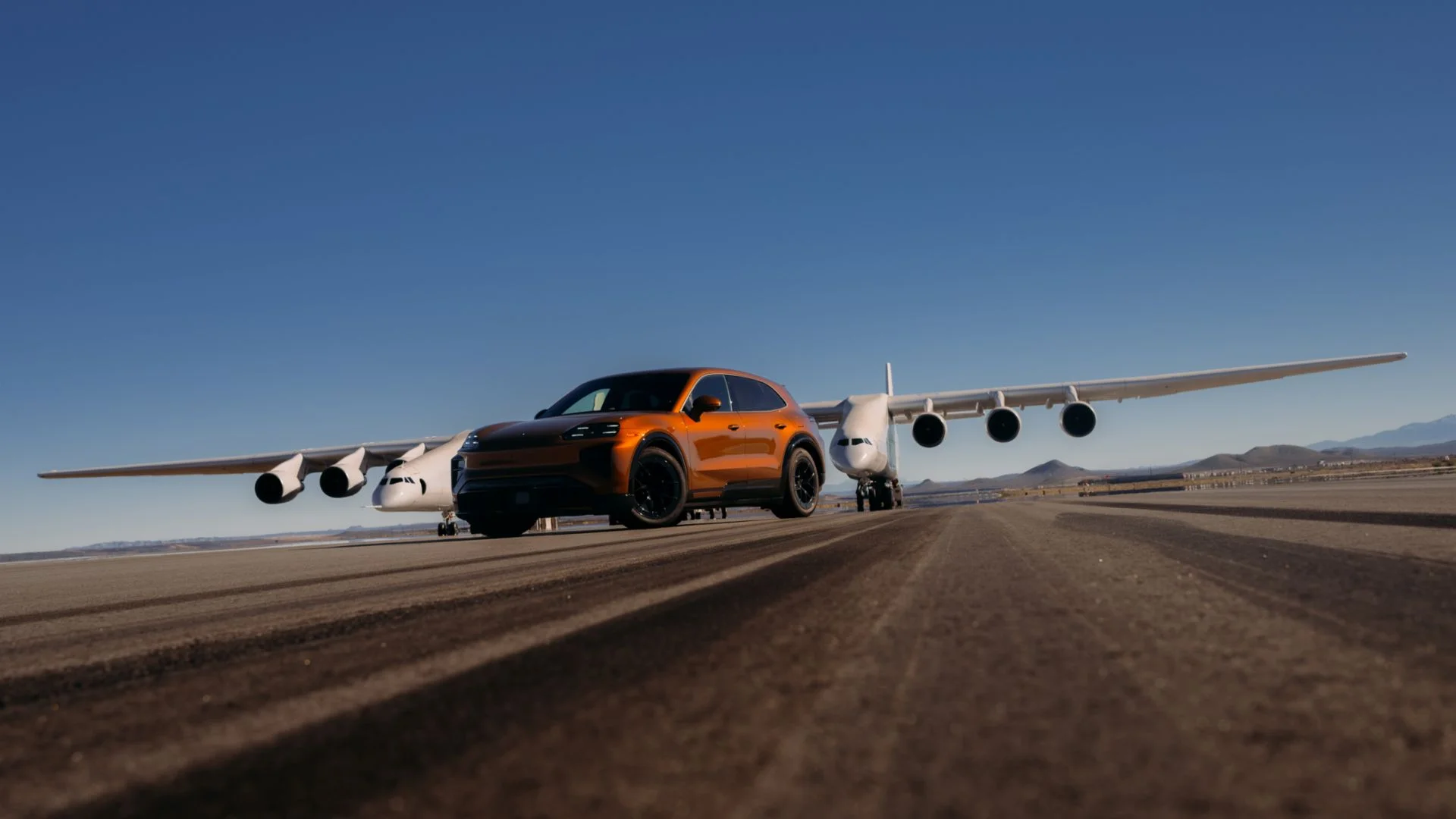
That allows the all-electric SUV to sprint from 0-60mph in just 2.4 seconds, making it one of the quickest SUVs on the planet.
According to Porsche, the challenge was inspired simply by curiosity and a desire to see whether such an extraordinary feat was even possible.
Related
Why the stunt required pinpoint accuracy
While raw power was certainly needed, the stunt depended just as much on pinpoint accuracy.
The Cayenne had to hit the exact point beneath the aircraft at precisely the right moment.
And this was to be done while maintaining enough speed to safely clear the massive wing, as the aircraft lifted off and touched back down.
Porsche says the record highlights the Cayenne Electric’s combination of performance, technology and driver confidence, rather than simply its straight-line speed.
The electric SUV has already built a reputation for impressive performance before its official launch, having previously set records at events including the historic Shelsley Walsh hill climb and demonstrated its capabilities at Goodwood.

Now, it can add an official Guinness World Record for the ‘fastest drive beneath an aircraft during takeoff and landing’ to its growing list of achievements.
It’s certainly not every day that a production car drives beneath the largest aircraft in the world while it’s taking off and landing, but that’s exactly what Porsche wanted for the most powerful road car it has ever built.
Daisy is a technology and automotive journalist covering artificial intelligence, consumer tech, Apple news, cryptocurrency, emerging technologies, and transportation innovation. Since joining the team in 2025, she has reported on everything from AI-powered startups and major iOS updates to viral car stories and the latest developments shaping transportation and the digital economy. Drawing on her background in automotive journalism and a degree in History and Journalism from Goldsmiths, University of London, Daisy specializes in breaking down complex topics into clear, engaging reporting for a global audience. Her work spans cutting-edge technology, innovative vehicles, and the people driving change across both industries. Daisy has gained first-hand access to some of the world's most talked-about technologies and innovators, including meeting Tesla's Optimus humanoid robot during its first European appearance in London. She has also discussed the future of space exploration with an astronaut, bringing unique insights and real-world perspectives to her coverage of emerging technology.