This is the sensor behind your automatic windshield wipers and how it works is brilliantly simple
Published on Jan 12, 2026 at 1:54 AM (UTC+4)
by Molly Davidson
Last updated on Jan 08, 2026 at 10:18 PM (UTC+4)
Edited by
Emma Matthews
Ever wonder how your car‘s windshield wipers magically know that it’s raining – sometimes even before you’ve clocked it yourself?
You set the wipers to auto, forget about them, and they take care of business.
There’s no guessing, no fiddling, no panic swipe when the drizzle suddenly turns serious.
And what’s doing all that work is far simpler – and cleverer – than most people think.
DISCOVER SBX CARS – The global premium auction platform powered by Supercar Blondie
The simple sensor behind automatic windshield wipers
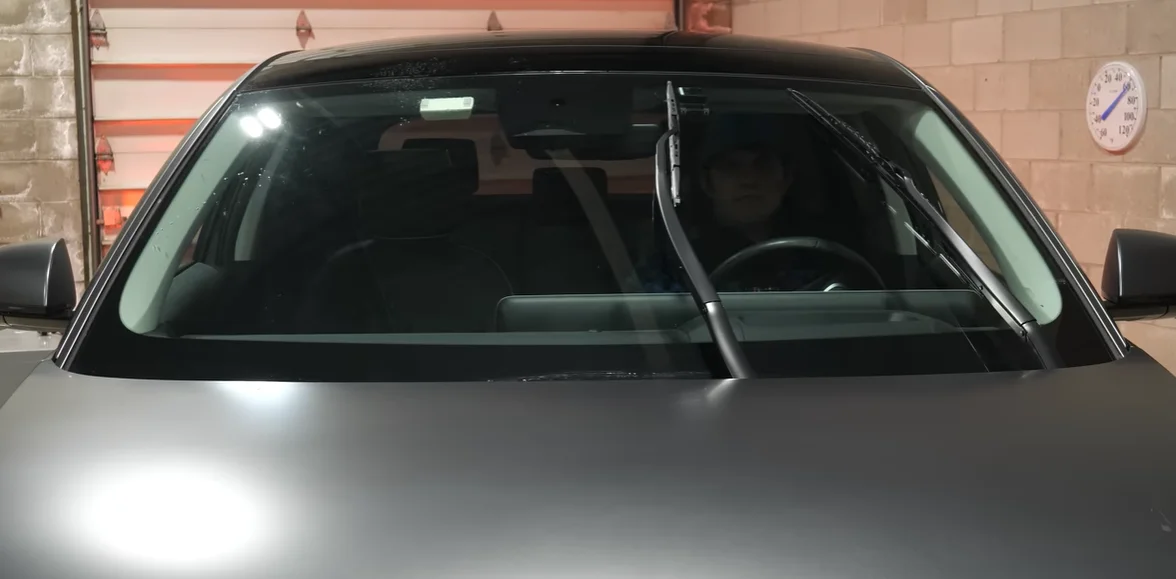
Up near the top of your windshield, there’s a black patch behind the rearview mirror.
That’s not just tint.
Hiding behind it is the rain sensor.
And no, it’s not using a camera.
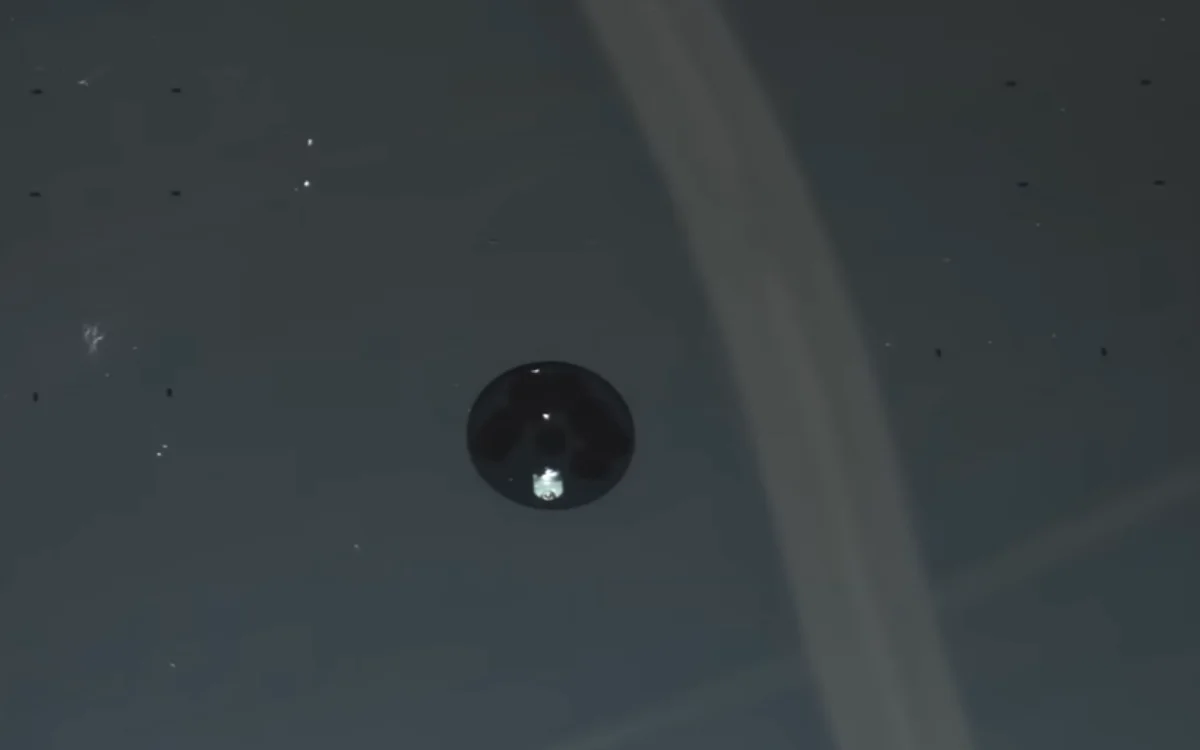
As explained by YouTube channel Technology Connections, using the car’s main camera would actually be a bad idea.
That camera already has enough to worry about, like keeping you in your lane and stopping you crashing into things.
So rain gets its own tiny, dedicated setup.
Inside that sensor are two very basic parts: infrared LEDs and photodiodes.
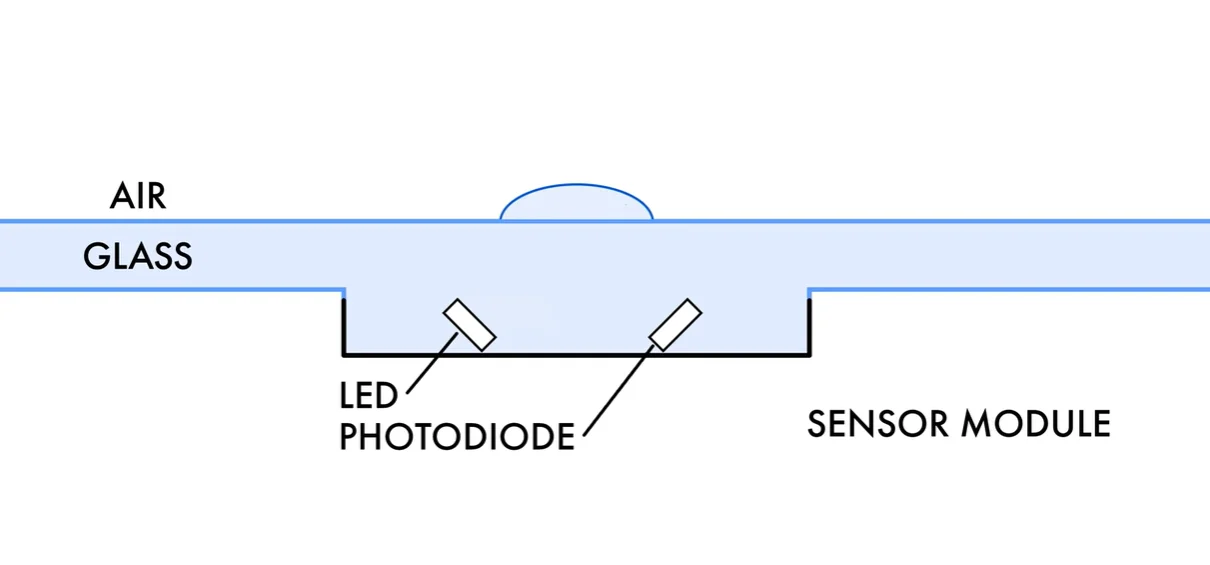
Think of it like this: one part shines invisible light into the windscreen, and the other part waits to see how much light comes back.
When the glass is dry, the light hits the outside of the windscreen and bounces straight back inside.
The sensor sees lots of light and goes, ‘All good. No rain.’
Then water hits the outside of the glass.
Water bends light differently from air.
That tiny difference is enough to mess with the bounce.
Some of the light escapes instead of reflecting back, which means the sensor suddenly sees less light.
Less light = wet windscreen.

From there, it’s basic logic.
A small drop in light triggers a slow wipe.
A bigger drop speeds the windshield wipers up.
The wetter it gets, the harder the wipers work.
The sensor sits right where the wipers sweep across the glass on purpose.
Every wipe clears the water, the signal jumps back up, and the system watches how fast it drops again.
That’s how your car can tell the difference between a light mist and a proper downpour.

Why this low-tech trick still works so well
Perhaps the most surprising part of all of this is that this tech has been around since the 1990s.
That longevity only works because the physical setup is just as simple as the idea itself.
A clear gel sticks the sensor to the windscreen so there’s no air gap, making the glass and sensor behave like one solid piece.
The LEDs also blink in a specific pattern, and the sensor only pays attention to that pattern, so random light doesn’t confuse it.
The only tricky bit is calibration.
Every time you start the car, it has to decide what ‘dry’ looks like.
If you turn the car on while it’s already raining, it might do one random wipe before calming down.
That’s not a glitch – it’s the system resetting itself.
Some cars even use two sensors side by side.
If one sees water and the other doesn’t, the car knows instantly that things have changed.

Automatic windshield wipers aren’t perfect.
Sometimes they panic in drizzle or chill out during heavy rain.
But when they work – and they usually do – it’s thanks to a super simple idea hiding in plain sight.
No cameras, no AI – just light, glass, and a really smart use of physics.
DISCOVER SBX CARS: The global premium car auction platform powered by Supercar Blondie
With roles at TEXT Journal, Bowen Street Press, Onya Magazine, and Swine Magazine on her CV, Molly joined Supercar Blondie in June 2025 as a Junior Content Writer. Having experience across copyediting, proofreading, reference checking, and production, she brings accuracy, clarity, and audience focus to her stories spanning automotive, tech, and lifestyle news.