These AI creatures started blind and ended up with working eyes without anyone teaching them how
Published on Feb 25, 2026 at 5:29 PM (UTC+4)
by Daisy Edwards
Last updated on Feb 25, 2026 at 8:53 PM (UTC+4)
Edited by
Emma Matthews
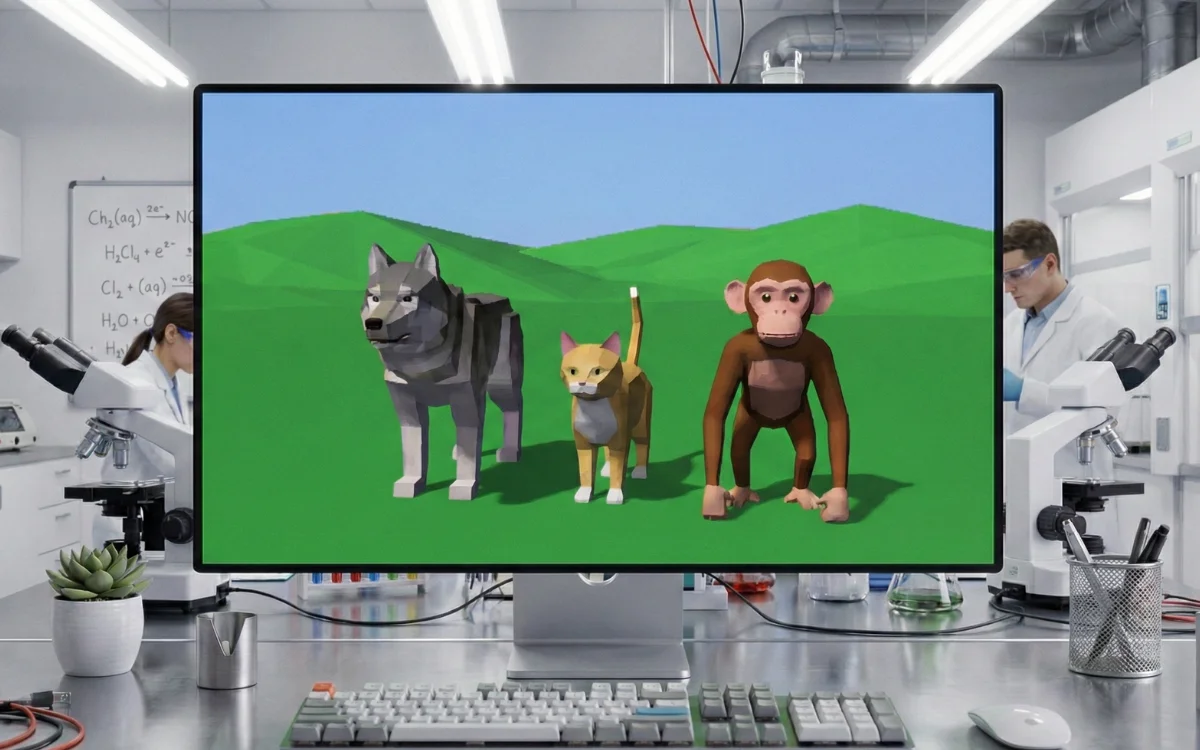

Created by researchers in Sweden, some AI creatures started blind and somehow ended up with working eyes without anyone’s input and it sounds like a sci-fi movie.
Researchers built a digital world, dropped in virtual ‘animals’ with zero vision, and let evolution-like selection do its thing.
Generation after generation, the creatures had to survive by navigating, avoiding obstacles, and finding food.
Somehow, vision emerged from scratch, going from basic light sensitivity to the ability to spot objects, without the researchers training the system on how eyes should work.
EXPLORE SBX CARS – Supercar auctions starting soon powered by Supercar Blondie
These AI creatures started blind
The team behind the crazy tech project is based in Sweden at Lund University, working with institutions including MIT.
They wanted to test a big evolutionary question: can a full vision system arise without being ‘designed’ step by step? In other words, will blind animals evolve eyes?
So they created AI animals in a simulation and released them into a computer-generated environment packed with survival problems.
It’s like a video game where the only way to ‘win’ is to be better at staying alive, and the only way to get better is through tiny changes passed on across generations.
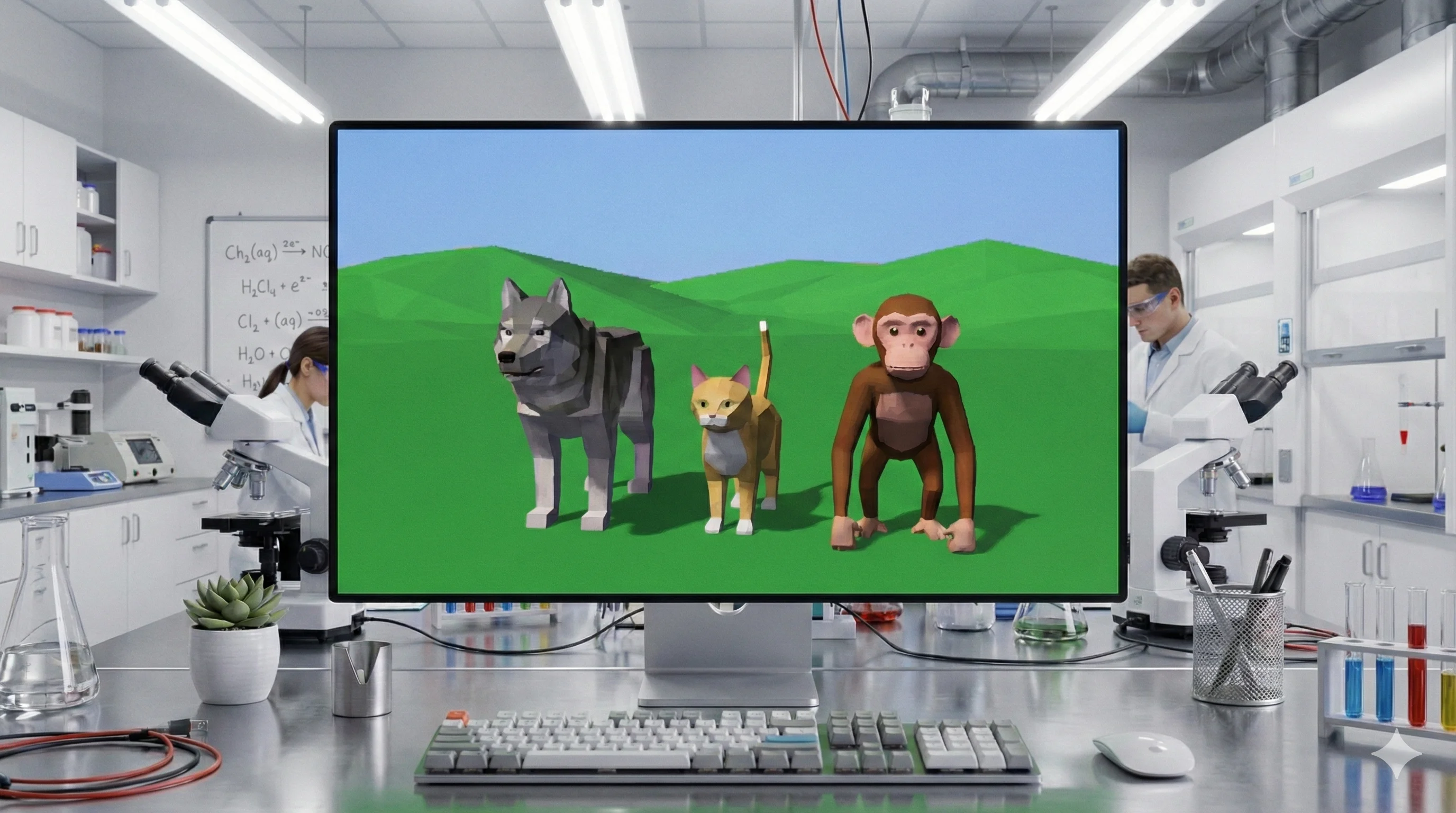
At the beginning, these little digital AI creatures could not see anything.
But gradually, they began reacting to light, then orienting themselves in the world, and eventually developing structures that functioned like eyes connected to a simple brain-like control system.
Click the star icon next to supercarblondie.com in Google Search to stay ahead of the curve on the latest and greatest supercars, hypercars, and ground-breaking technology
Working eyes made from scratch
The wildest part is that the results did not look random.
Professor Dan-Eric Nilsson at Lund University said the simulation produced eye development that resembled what we see in real organisms, even though the digital environment was very simplified.
And it did not settle on just one eye design, either.
The researchers reported seeing multiple familiar solutions appear in the runs, including dispersed photoreceptors, camera-type eyes, and compound eyes, basically the types of eyes we see throughout nature.
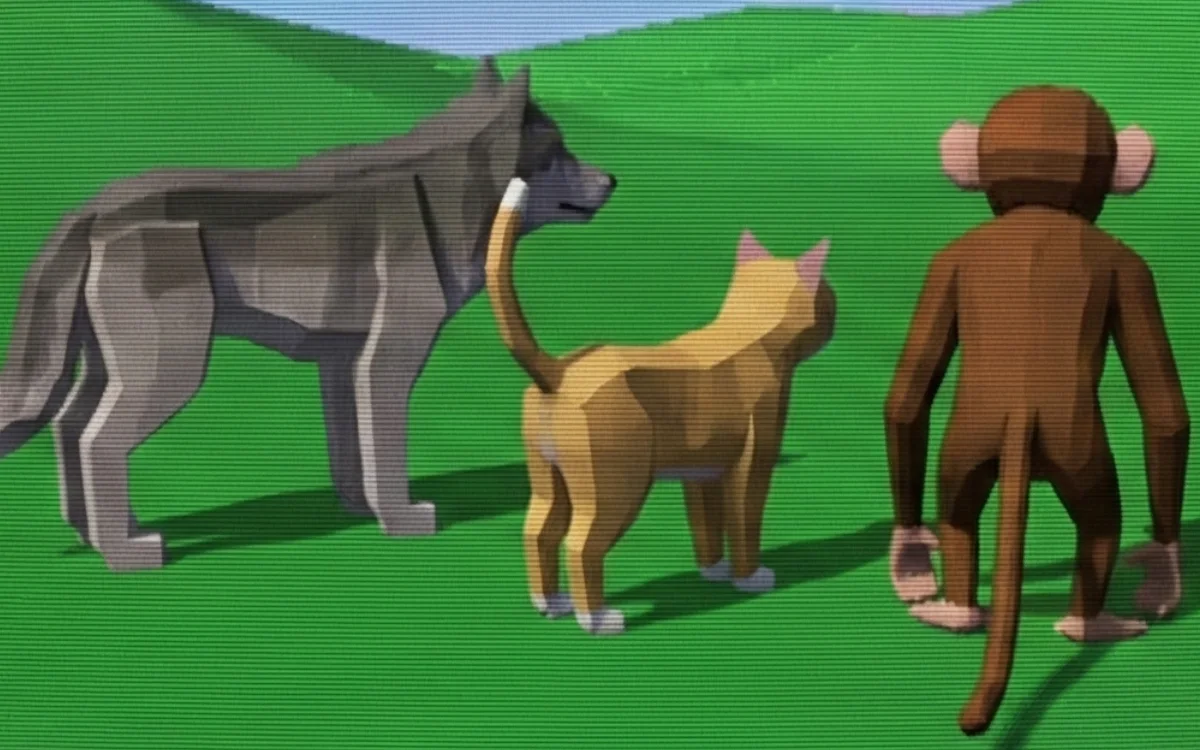
Beyond being seriously cool, the team argues this kind of artificial evolution can help scientists peek into how complex traits evolve, and why evolution keeps reinventing similar solutions over and over.
In other words, this is not just about AI critters evolving with working eyes; it’s also a new way to test big biology ideas using AI.
It also means that we might get to see how we as a species came to be.
DISCOVER SBX CARS: The global premium car auction platform powered by Supercar Blondie