The Artemis II crew watched four asteroids hit the moon and have discovered brand new craters on the far side of the moon that we never knew existed
Published on Apr 07, 2026 at 1:33 PM (UTC-4)
by Daisy Edwards
Last updated on Apr 10, 2026 at 10:38 AM (UTC-4)
Edited by
Emma Matthews


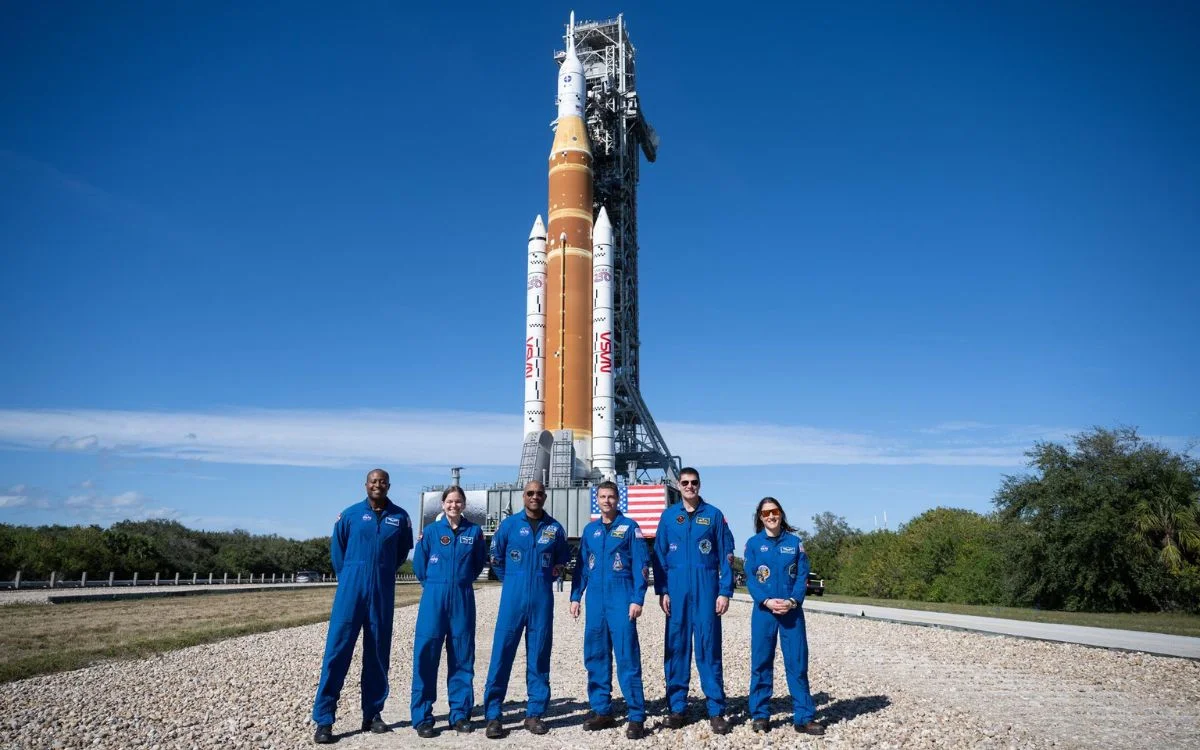
The Artemis II crew discovered something that no one even knew existed as they watched four asteroids hit the far side of the Moon and create brand new craters.
As Orion swept around the lunar far side, the astronauts were cut off from the rest of humanity and treated to a view no human has witnessed in decades, describing dramatic ridges, deep shadows, and subtle shifts in color across the Moon’s surface.
But it was during a rare eclipse moment that things took a dramatic turn, when bright flashes appeared across the Moon as space rocks slammed into it in real-time.
NASA later confirmed the crew observed multiple impact flashes, turning an already historic mission into something even more surreal.
The Artemis II crew watched asteroids hit the Moon in real time
The Space agency had specifically asked the Artemis II astronauts to keep an eye out for impact flashes during the darker phases of the mission, especially when the Sun was blocked, and the surface would be easier to observe.
These flashes are caused by meteoroids hitting the Moon at extremely high speeds, creating brief bursts of light that can be seen from orbit.
For scientists, this is more than just a spectacular sight.

Understanding how often these impacts happen is crucial for future missions, especially as humans prepare to return to the Moon’s surface for longer stays.
The Artemis II crew was effectively acting as observers in a live experiment, capturing crater data that could help shape the safety of future lunar exploration.
Related

They discovered new craters and gave them beautiful names
Alongside the dramatic visuals, the astronauts also spotted previously uncharted craters on the Moon’s far side, areas that have never been seen directly by human eyes before.
What makes this even more special is how those craters are being remembered.

The crew proposed names, including ‘Integrity,’ a nod to the crew’s trusty spaceship, and ‘Carroll,’ named in honor of Commander Reid Wiseman’s late wife, who passed away in 2020.
These names will be formally submitted after the mission, but they already add a deeply human touch to a moment defined by science, and honestly, you’d have a heart of stone not to get misty-eyed at the video.
Between watching the Moon light up from the impacts of the asteroids and helping map brand new features on its hidden side, Artemis II has already delivered moments that feel like they belong in the plot of Project Hail Mary, rather than real life.
No, we’re not crying, you are, when we think about how the crew loved Carroll enough to name a crater after her – they really loved her to the moon and back.
Daisy is a technology and automotive journalist covering artificial intelligence, consumer tech, Apple news, cryptocurrency, emerging technologies, and transportation innovation. Since joining the team in 2025, she has reported on everything from AI-powered startups and major iOS updates to viral car stories and the latest developments shaping transportation and the digital economy. Drawing on her background in automotive journalism and a degree in History and Journalism from Goldsmiths, University of London, Daisy specializes in breaking down complex topics into clear, engaging reporting for a global audience. Her work spans cutting-edge technology, innovative vehicles, and the people driving change across both industries. Daisy has gained first-hand access to some of the world's most talked-about technologies and innovators, including meeting Tesla's Optimus humanoid robot during its first European appearance in London. She has also discussed the future of space exploration with an astronaut, bringing unique insights and real-world perspectives to her coverage of emerging technology.




