Man shows the surprising truth about whether water can stop a lithium battery fire
Published on Apr 29, 2026 at 6:15 AM (UTC-4)
by Daisy Edwards
Last updated on May 22, 2026 at 4:27 AM (UTC-4)
Edited by
Emma Matthews


Lithium batteries are everywhere, powering everything from smartphones to electric cars, but one man has just put a major safety myth to the test in a dramatic experiment, using water and a lithium battery fire.
In a video that quickly grabbed attention, the YouTuber set out to answer a question that’s sparked endless debate online: can water actually stop a lithium battery fire, or does it make things worse?
To find out, he ignored the usual safety warnings and created a worst-case scenario in controlled conditions.
What happened next revealed a surprising truth that could change how people think about battery fires.
Can water stop a lithium battery fire?
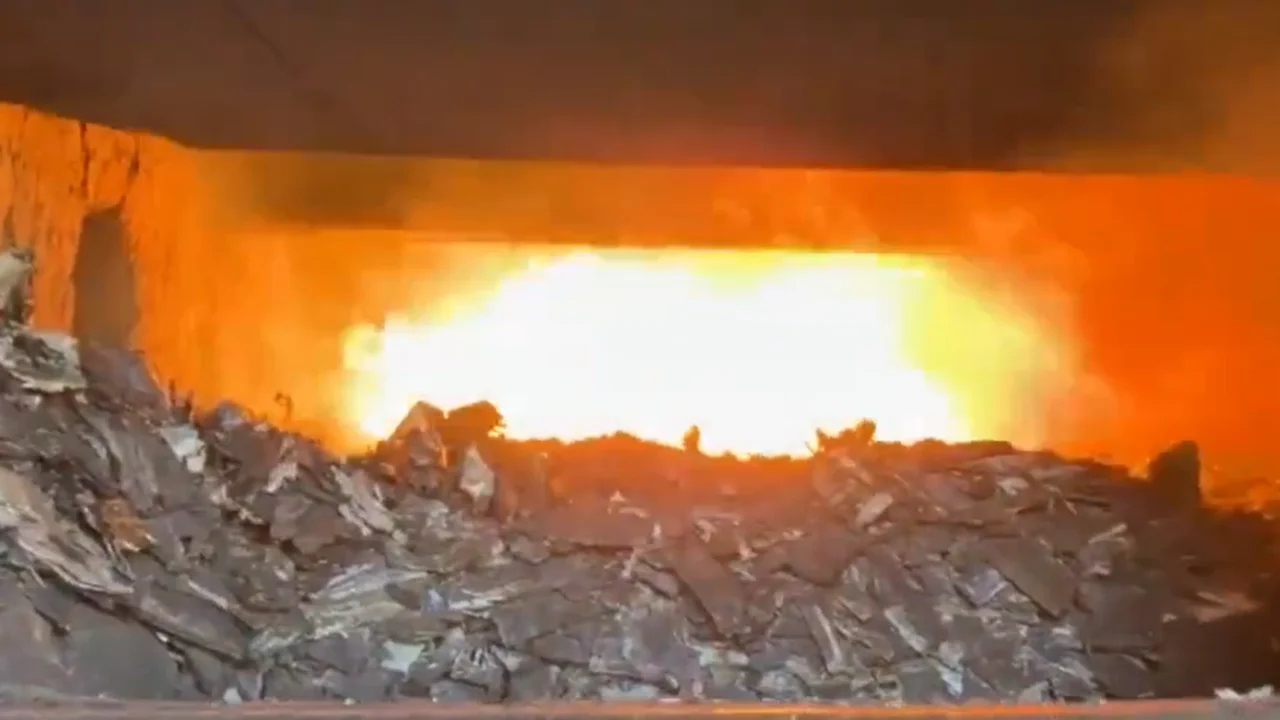
To test the dangerous tech theory, the creator, Concept Crafted Creations, used a fully charged lithium-ion battery and deliberately triggered a failure by puncturing it, causing an instant and intense fire.
But despite how dramatic it looked, this wasn’t the main event.


As soon as the flames erupted, a mechanical setup swung the burning battery straight into a container of water, and the idea was simple: if water works, the fire should stop immediately.
At first, it looked promising; the visible flames appeared to die down once submerged, but a closer look told a very different story.
The fire didn’t behave like a normal one, and even underwater, the reaction inside the battery continued.

Related


You wouldn’t expect what happened
The experiment showed that lithium battery fires don’t rely on external oxygen like typical flames.
Instead, they generate their own heat and, in some cases, even their own oxygen during a process known as thermal runaway.

That means water can cool the outside and temporarily suppress flames, but it doesn’t immediately stop what’s happening inside.
In fact, when the battery was lifted back out of the water, it began heating up again and reignited.

The key thing to understand is that water isn’t useless in this situation, but it’s not a quick fix either.
To truly stop the reaction, the battery needs to be cooled for long enough to bring its internal temperature below a critical level.
It’s a stark reminder that lithium battery fires are difficult to control, and once they start, they can keep going far longer than people expect, so if your tech or your EV starts smoking, you might want to panic.
Daisy is a technology and automotive journalist covering artificial intelligence, consumer tech, Apple news, cryptocurrency, emerging technologies, and transportation innovation. Since joining the team in 2025, she has reported on everything from AI-powered startups and major iOS updates to viral car stories and the latest developments shaping transportation and the digital economy. Drawing on her background in automotive journalism and a degree in History and Journalism from Goldsmiths, University of London, Daisy specializes in breaking down complex topics into clear, engaging reporting for a global audience. Her work spans cutting-edge technology, innovative vehicles, and the people driving change across both industries. Daisy has gained first-hand access to some of the world's most talked-about technologies and innovators, including meeting Tesla's Optimus humanoid robot during its first European appearance in London. She has also discussed the future of space exploration with an astronaut, bringing unique insights and real-world perspectives to her coverage of emerging technology.




