Engineers design 36-mile spacecraft for hypothetical one-way journey spanning 400 years
Published on Oct 01, 2025 at 12:00 AM (UTC-4)
by Daisy Edwards
Last updated on Oct 01, 2025 at 5:33 AM (UTC-4)
Edited by
Amelia Jean Hershman-Jones
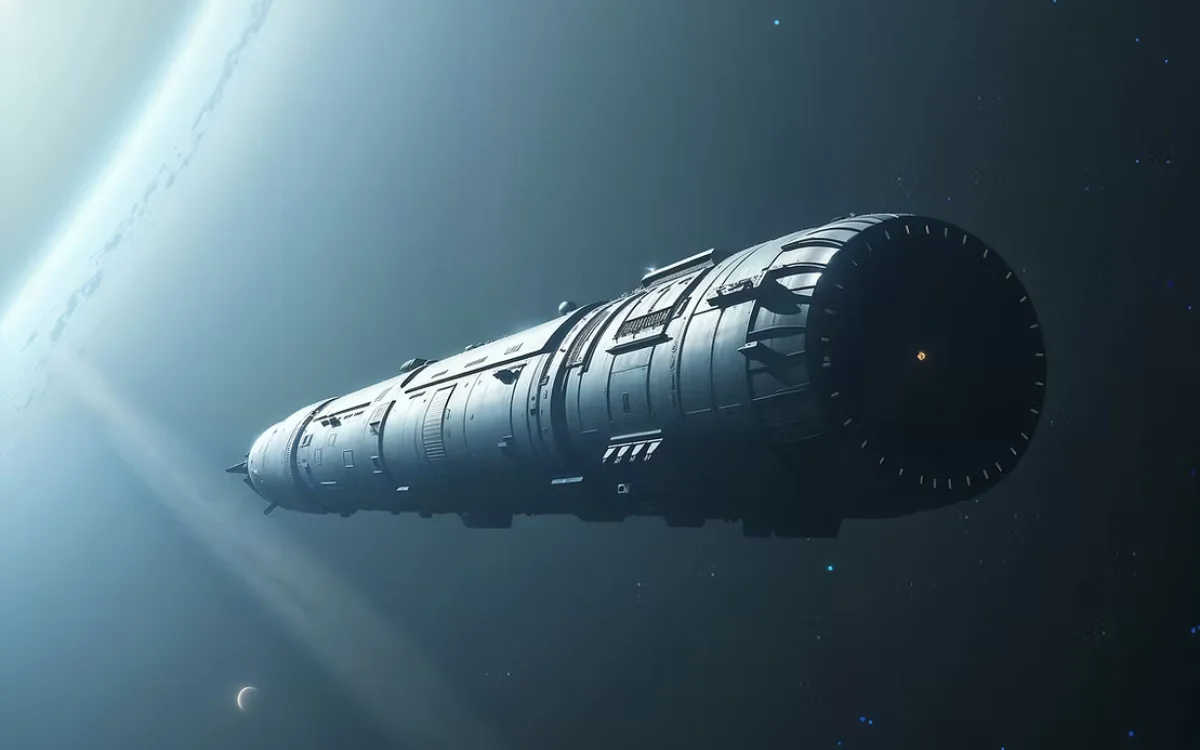

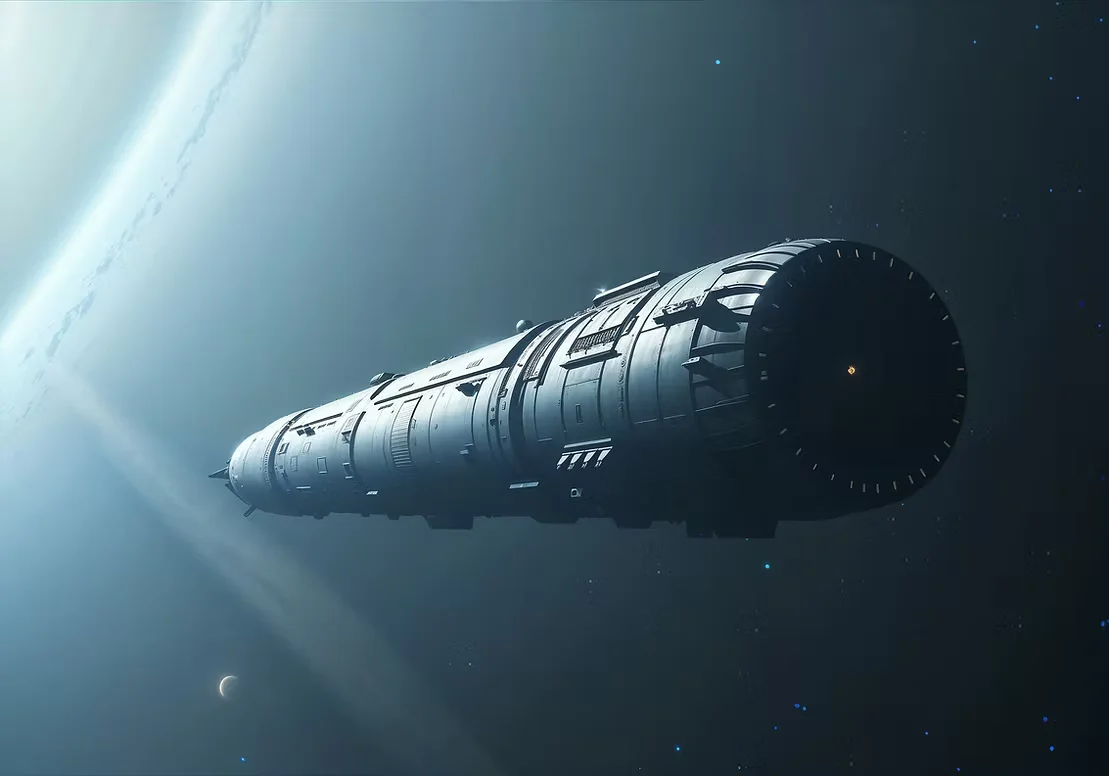
A group of genius engineers has designed a 36-mile spacecraft for a hypothetical one-way journey spanning 400 years – and they even won an award for it.
Meet ‘Chrysalis’, and while it is a spacecraft longer than the whole of Manhattan, it could more easily be described as a mobile mini-Earth.
Designed as a rotating cylinder, it would generate artificial gravity while hosting entire ecosystems, from forests to farms.
The mission? Transport 2,400 passengers on a one-way voyage to Alpha Centauri, our nearest star system, the catch? The original crew would never see the destination.
EXPLORE SBX CARS – Supercar auctions starting soon powered by Supercar Blondie
Planet-sized spacecraft designed for hypothetical one-way journey
A group of engineers and architects entered a competition called Project Hyperion, and the goal was to explore ‘the feasibility of crewed space travel via generation ships, using current and near-future technologies’.
The winning group, made up of Giacomo Infelise, Veronica Magli, Guido Sbrogio, Nevenka Martinello, and Federica Chiara Serpe, created a spacecraft called Chrysalis.
Chrysalis would be built to transport 2,400 passengers on a one-way voyage to Alpha Centauri, which is the nearest star system to Earth.
There was a catch, though; the trip would take a long time, around 400 years, meaning that the crew that got there would be the descendants of the original crew.
Only after roughly four centuries would people land on ‘Proxima Centuri b’, a potentially habitable exoplanet ‘Super Earth’.
Chrysalis could be described as a spacecraft, but it would be better described as a moving mini-Earth, or a functional interstellar ecosystem, perfectly built for humans.
Life during the journey of 400 years
Life onboard the Chrysalis would be different from life on Earth.
It would need to be heavily managed with controlled family planning through human leadership with AI oversight.
Life would need to have a stable population of 1,500, with each family only being allowed a maximum of two children between the ages of 28-31.
The spacecraft would have an inner ring of farms, forests, and life-support, the middle ring would be parks, cultural hubs, and 3D printed homes, and the outer layer would be industrial zones and robotic warehouses.
A particularly sweet special touch would be the cosmos dome, a zero-gravity observatory for stargazing.
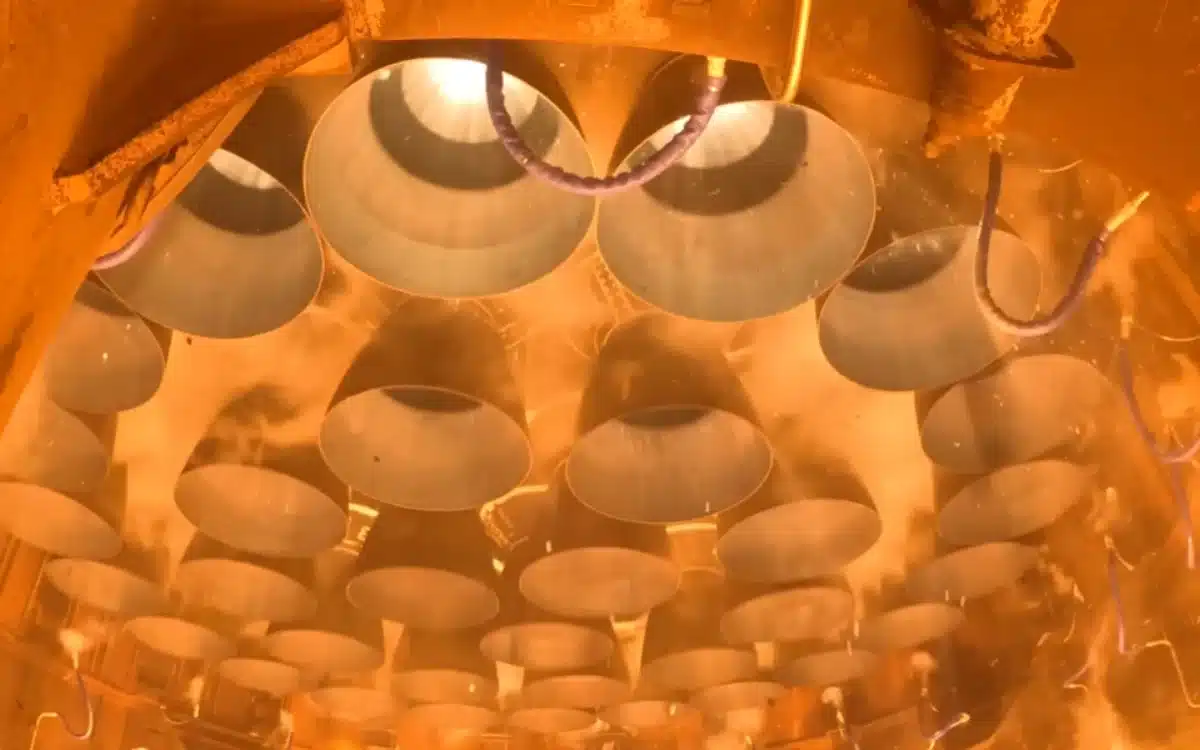
Chrysalis would rely on nuclear fusion engines (technology we don’t have yet) and weigh a staggering 2.4 billion tons. It could only be built in orbit between Earth and the Moon, making it far from practical today.
While this is a hypothetical one-way journey that is currently a non-feasible concept, it doesn’t stop us from dreaming about humanity’s first habitable starship.
Daisy is a technology and automotive journalist covering artificial intelligence, consumer tech, Apple news, cryptocurrency, emerging technologies, and transportation innovation. Since joining the team in 2025, she has reported on everything from AI-powered startups and major iOS updates to viral car stories and the latest developments shaping transportation and the digital economy. Drawing on her background in automotive journalism and a degree in History and Journalism from Goldsmiths, University of London, Daisy specializes in breaking down complex topics into clear, engaging reporting for a global audience. Her work spans cutting-edge technology, innovative vehicles, and the people driving change across both industries. Daisy has gained first-hand access to some of the world's most talked-about technologies and innovators, including meeting Tesla's Optimus humanoid robot during its first European appearance in London. She has also discussed the future of space exploration with an astronaut, bringing unique insights and real-world perspectives to her coverage of emerging technology.




