Google builds incredible Minnesota data center powered by wind, solar, and rust-based iron-air batteries
Published on Mar 10, 2026 at 2:46 PM (UTC+4)
by Daisy Edwards
Last updated on Mar 10, 2026 at 2:46 PM (UTC+4)
Edited by
Mason Jones
Google is building an incredible Minnesota data center powered by wind, solar, and rust-based iron-air batteries.
The huge new Pine Island facility is being designed to run on 1.9 gigawatts of carbon-free electricity, making it one of the company’s most ambitious clean energy projects yet.
What really makes it stand out, though, is the battery tech, because instead of leaning on lithium-ion packs, Google is turning to an unusual system that literally works with rust.
It’s a seriously futuristic setup, and it could change the way massive data centers stay online when the sun isn’t shining and the wind isn’t blowing.
Click the star icon next to supercarblondie.com in Google Search to stay ahead of the curve on the latest and greatest supercars, hypercars, and ground-breaking technology
Google builds a data center powered by wind and solar
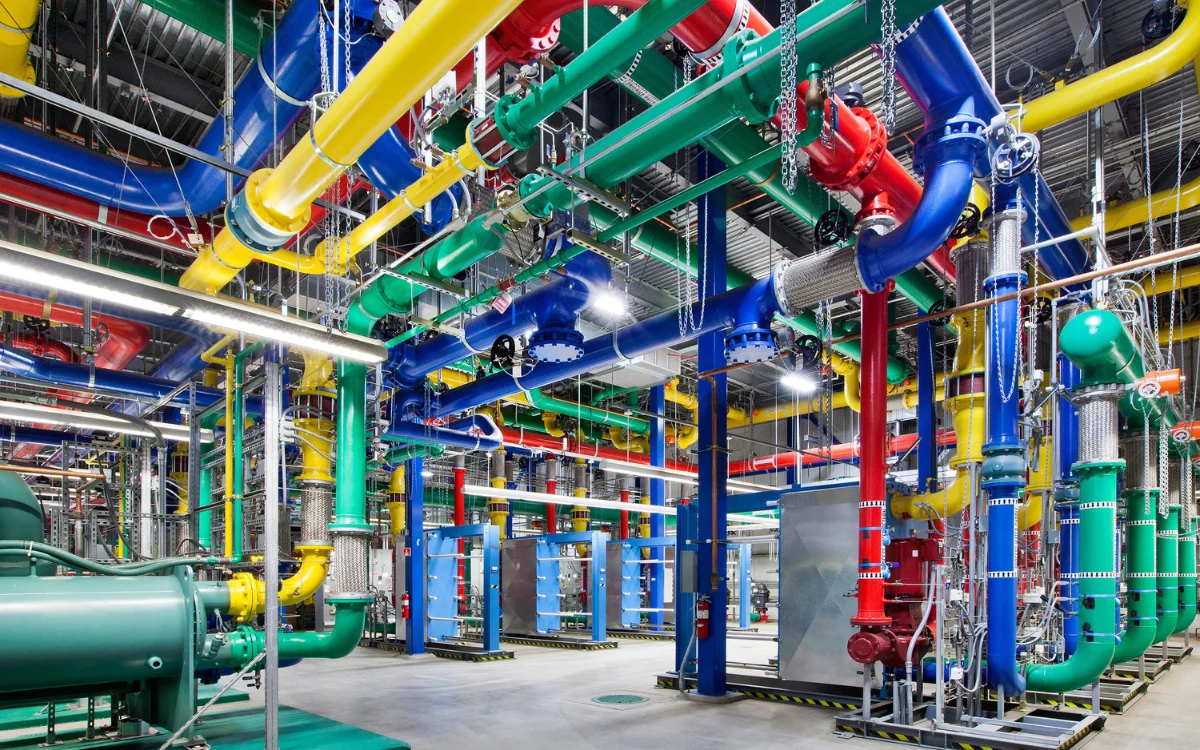
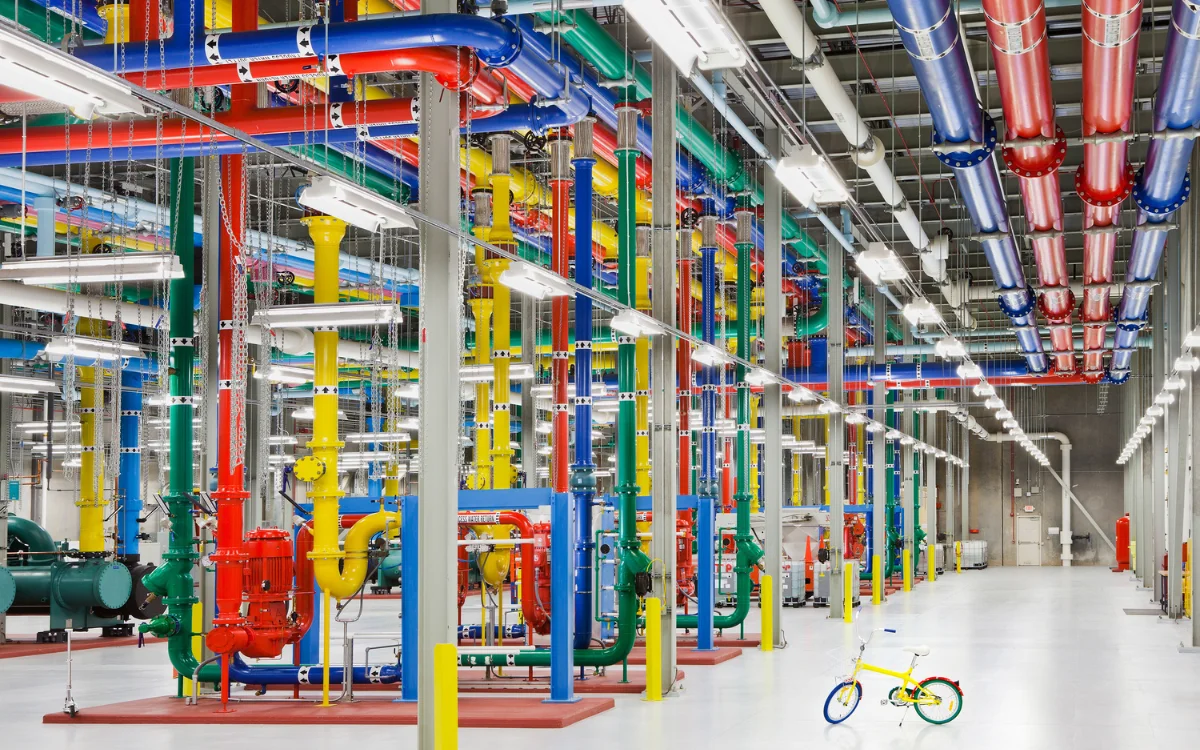
Because it’s Google, it’s no surprise that its data tech centers have an element of ‘Googliness‘ with characteristic blue, red, yellow, and green pipes and wires.
But this new Minnesota site will be Google’s first data center in the state, and it’s being paired with wind and solar infrastructure developed alongside Xcel Energy.
Keeping a giant data center running around the clock on renewables has always been one of the toughest challenges in tech, because clean power sources do not generate electricity consistently every hour of the day.
That is exactly why this project feels so big: Google is not just buying renewable power but also building a system to keep that power flowing more reliably.
The real star of the show is Form Energy’s iron-air battery setup, which can reportedly store up to 30 gigawatt-hours of electricity for up to 100 hours.
That is a totally different approach from the lithium-ion batteries most people know, and it works through a reversible rusting process involving tiny iron pellets and oxygen from the air.
When energy is needed, the iron oxidizes and releases electrons, and when the battery is recharged, the reaction runs in reverse and turns the rust back into iron.
The power comes from rust-based iron-air batteries
These iron-air batteries are not as efficient as lithium-ion systems, but they can be much cheaper and are better suited to storing energy over several days.
Reports suggest round-trip efficiencies of around 50 to 70 percent, compared with more than 90 percent for lithium-ion, but the trade-off is lower cost and much longer storage duration.
That could make them ideal for backing up renewable-heavy grids through long stretches of cloudy, still weather, which is exactly the kind of problem a project like this is trying to solve.
Google is also backing a new utility structure called the Clean Energy Accelerator Charge, which includes a $50 million commitment to Xcel Energy’s Capacity Connect program for distributed storage.
The idea is to help speed up clean energy development and improve grid reliability without pushing extra costs onto residential customers.
If it works, this Minnesota build will not just be an eye-catching new Google facility, but a glimpse at how the next generation of data centers could be powered.
DISCOVER SBX CARS: The global premium car auction platform powered by Supercar Blondie