China's own Hyperloop breaks its own record hitting more than 623 km/h
- The train built by China’s Aerospace Corporation beat its own record by a significant margin
- It is known as a ‘maglev’ train, which stands for magnetic levitation
- It reached a top speed of 387 mph
Published on Feb 09, 2024 at 10:26 AM (UTC-5)
by Alessandro Renesis
Last updated on Feb 13, 2024 at 4:30 AM (UTC-5)
Edited by
Amelia Jean Hershman-Jones
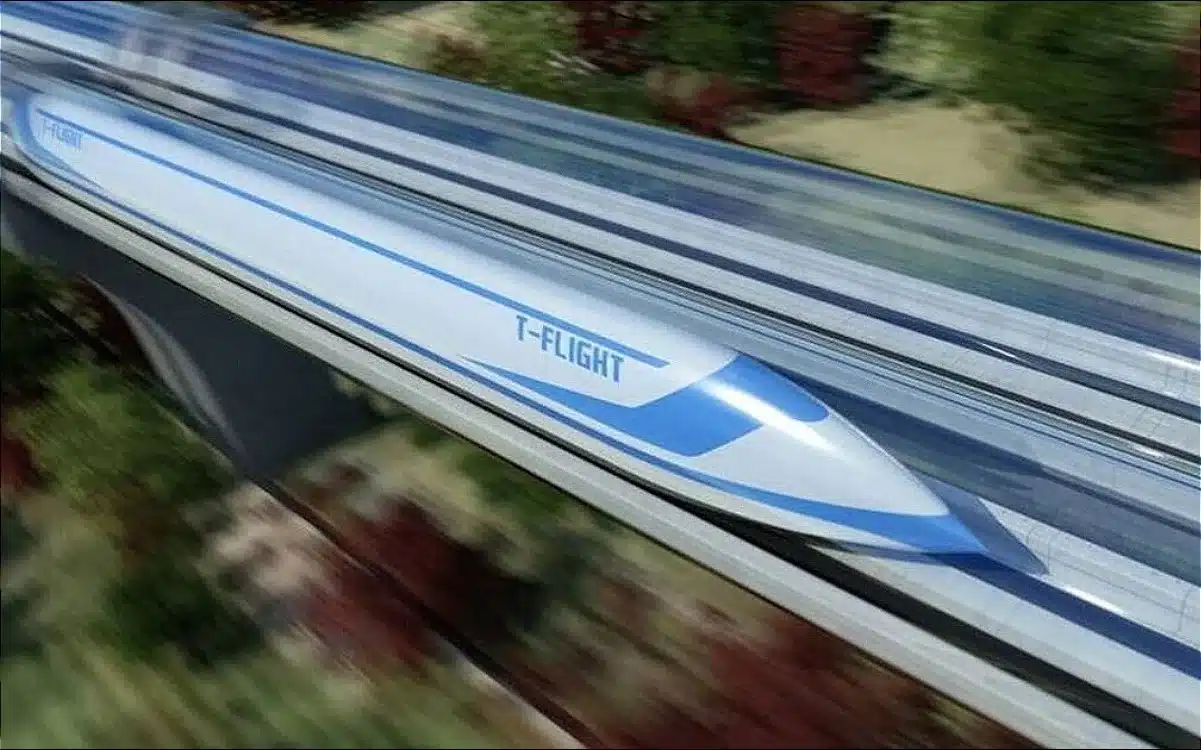

China is working on a system to rival Elon Musk’s Hyperloop.
The high-speed train is capable of reaching the incredible top speed of 387 mph – or 623 km/h.
READ MORE: Elon Musk doesn’t own a home, says he sleeps on couches at his mates’ place
The project is funded and run by the China Aerospace Science and Industry Corporation (CASIC), a state-owned aerospace company that makes rockets, satellites and spacecraft.
For this test, China’s answer to Hyperloop took off from the city of Datong in the Shanxi province in Northern China on a 1.2-mile test course.
The train relies on magnetic levitation, or ‘maglev’ for short, which provides a dual advantage when compared to more ‘traditional’ systems.
Magnetism produces more speed, but it also allows the train to levitate, thus reducing friction almost to zero.
The low-vacuum tube does the rest of the job because it dramatically reduces air resistance.

What makes this attempt particularly notable is that in about a year, China was able to quadruple the speed of its train.
Back in October 2022, the same train was only able to travel at 81 mph – 130 km/h.
In theory, the Hyperloop that Musk’s Boring Company is building would be capable of exceeding 700 km/h, but the company hasn’t tested it yet.


Maglev trains aren’t entirely new.
In fact, at the time of writing, there are seven lines in operation: two in South Korea, one in Japan and the other four are in China.
The thing is, all maglev train systems but one (Shanghai Maglev train, pictured below), and all similar automated systems around the globe, are actually low-speed trains.

This is the type of technology that’s generally only used to connect people through different airport terminals.
In theory, maglev trains could be used to connect different cities as well.
At 387 mph, you’d be able to travel from San Francisco to Los Angeles in just one hour.
The biggest problem is these trains are too expensive to build, and even more expensive to run.
So the ticket would have be incredibly expensive.


Alessandro is an automotive journalist with 10 years of experience covering supercars, automotive history, emerging vehicle technology, and luxury transportation. He wrote the first article published on SupercarBlondie.com when the website launched in 2022 and has since built a reputation for insightful reporting across the automotive and transportation industries. His expertise is grounded in hands-on experience. Alessandro has driven every Tesla model ever produced, from the original Roadster to the Cybertruck, and regularly covers the latest developments in electric vehicles and automotive innovation. His passion for transportation extends beyond cars, he has even flown a Boeing 787 Dreamliner simulator in Addis Ababa, Ethiopia. His reporting spans everything from classic American muscle cars and rare automotive discoveries to luxury yachts, private aircraft, high-end watches, and cutting-edge vehicle technology. Known for his deep knowledge of automotive history and ability to uncover the stories behind iconic vehicles, Alessandro brings readers a blend of historical context, technical expertise, and first-hand experience.




