Man stays at AI hotels in America to see whether human hospitality can be replaced and has damning final verdict
Published on Mar 20, 2026 at 5:24 PM (UTC+4)
by Daisy Edwards
Last updated on Mar 20, 2026 at 5:24 PM (UTC+4)
Edited by
Amelia Jean Hershman-Jones
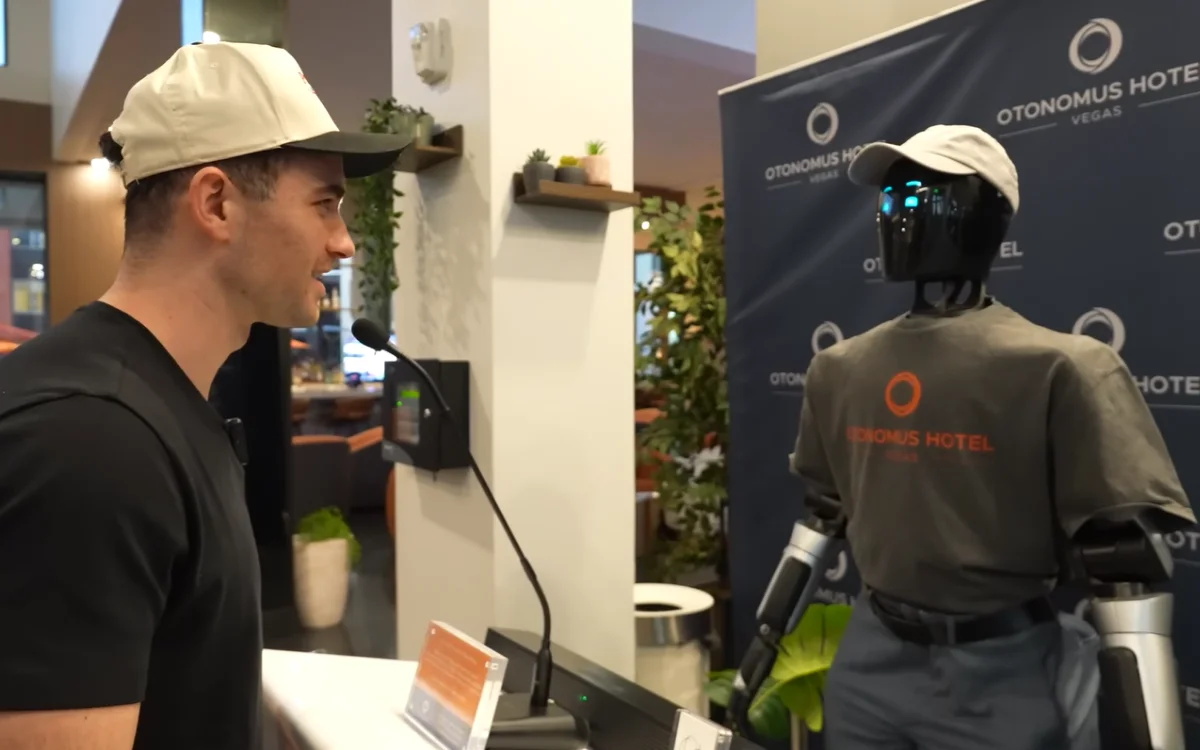

A curious tourist decided to stay at different AI hotels in America to see whether human hospitality can be replaced, and he had a damning final verdict after putting robot butlers and AI concierges to the test.
The creator traveled across the US to try out some of the most futuristic stays across the States, from Las Vegas to New York City.
Along the way, he came across everything from robotic bartenders and luggage arms to silent towel deliveries and autonomous rides between hotels.
But after all the flashing lights, clever gadgets, and moments straight out of a sci-fi movie, his final takeaway was a lot less glowing than you might expect – keep reading to find out what he really thought.
Click the star icon next to supercarblondie.com in Google Search to stay ahead of the curve on the latest and greatest supercars, hypercars, and ground-breaking technology
Can human hospitality be replaced in real life?
The first big stop on his hotel-packed tech tour was the Autonomous Hotel in Las Vegas, which as the world’s first fully AI-powered hotel, claims to be a very quirky place to stay.
Such idiocracies include an AI concierge called Otto, a humanoid robot in the lobby, an unmanned convenience store, and an eButler system that could deliver items such as towels directly to the room.
The YouTuber on the tour, Sambucha, found some of it genuinely impressive.
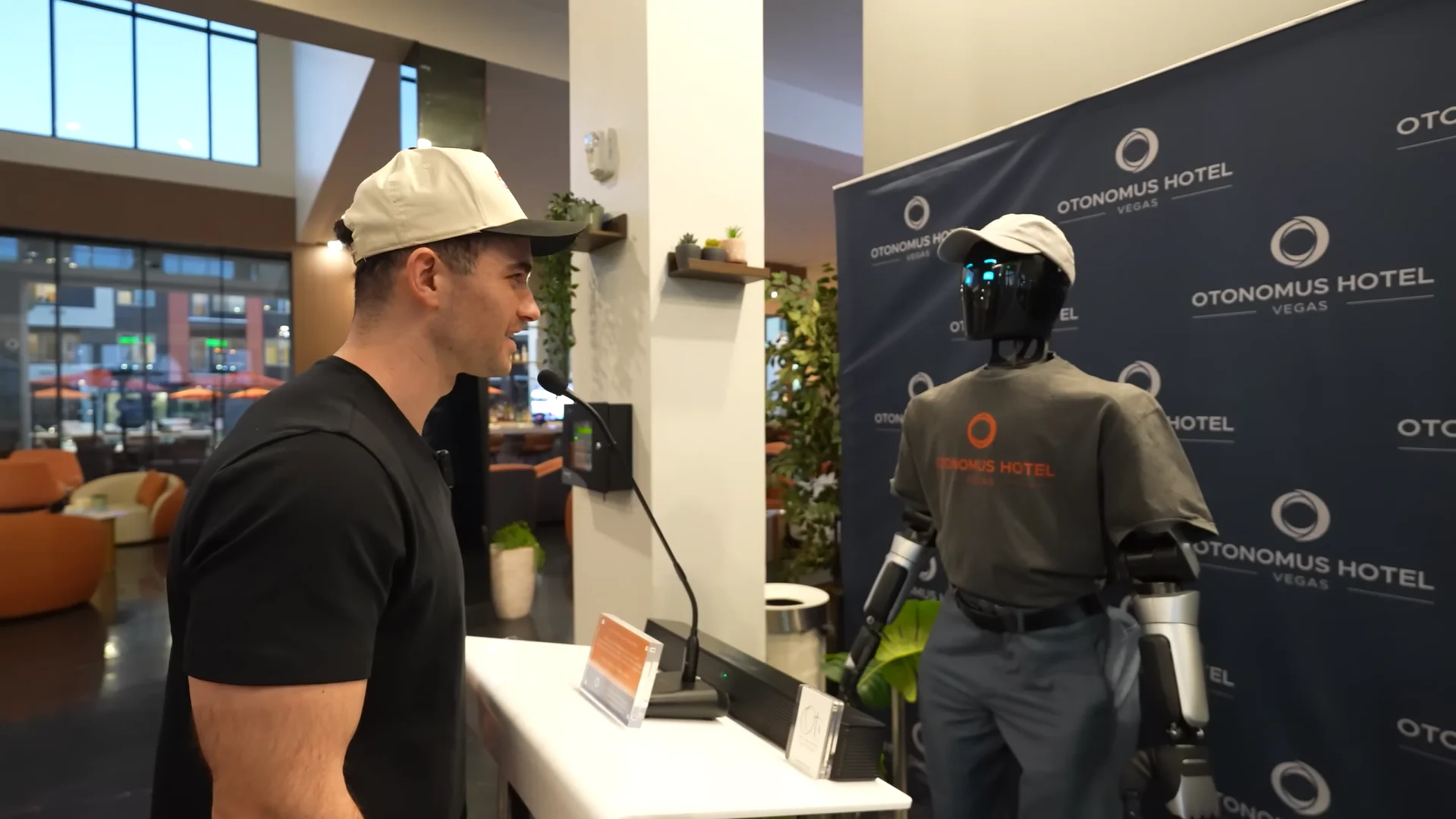
The convenience store checkout wowed him with smart sensors that recognized snacks without the need to scan, while the robot Butler dropped towels into the room so quietly that he barely noticed it happen.
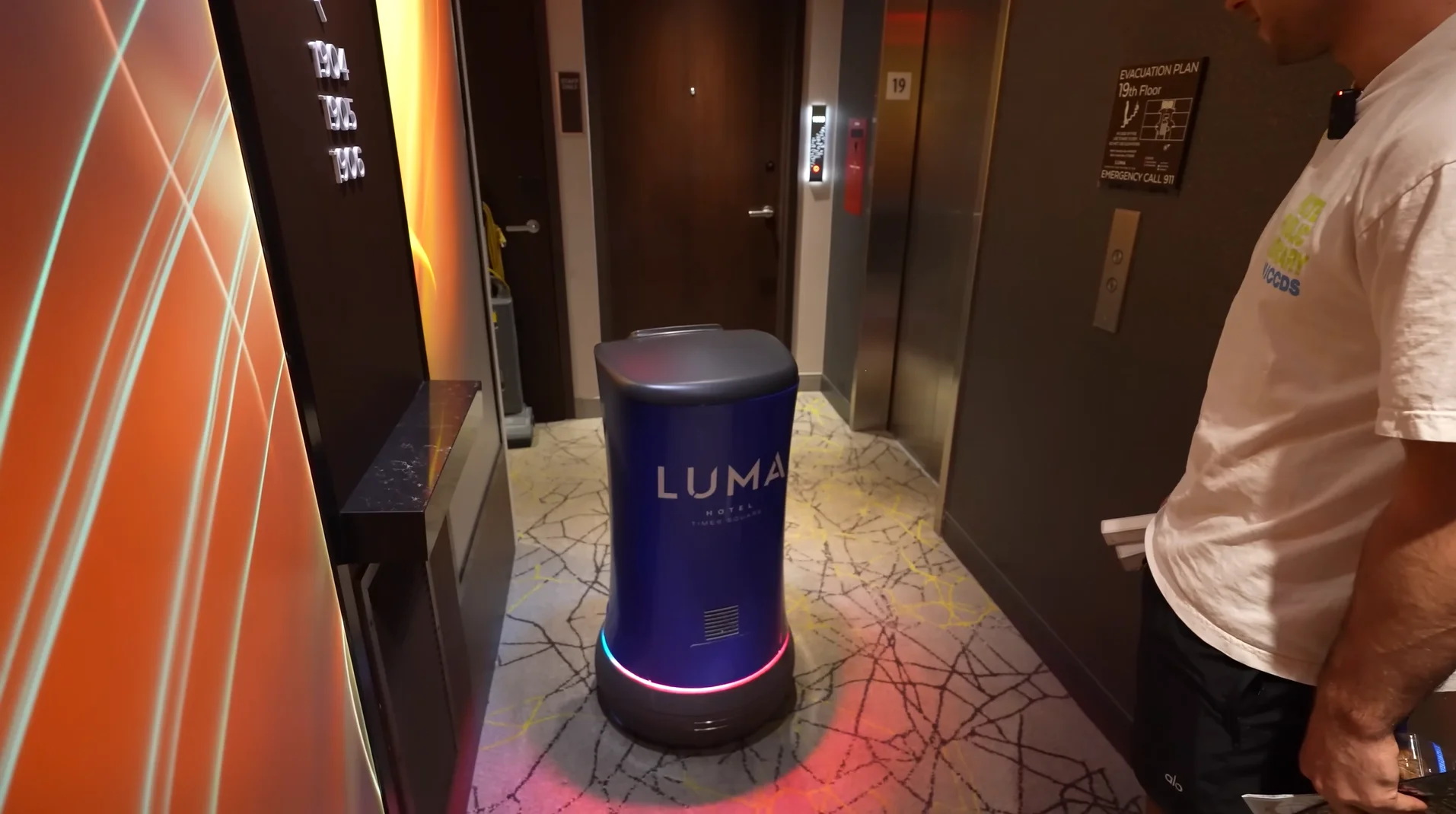
But one of the standout moments came in New York at Luma Hotel, where a robot butler called Alina showed what AI in hospitality could actually look like when it works.
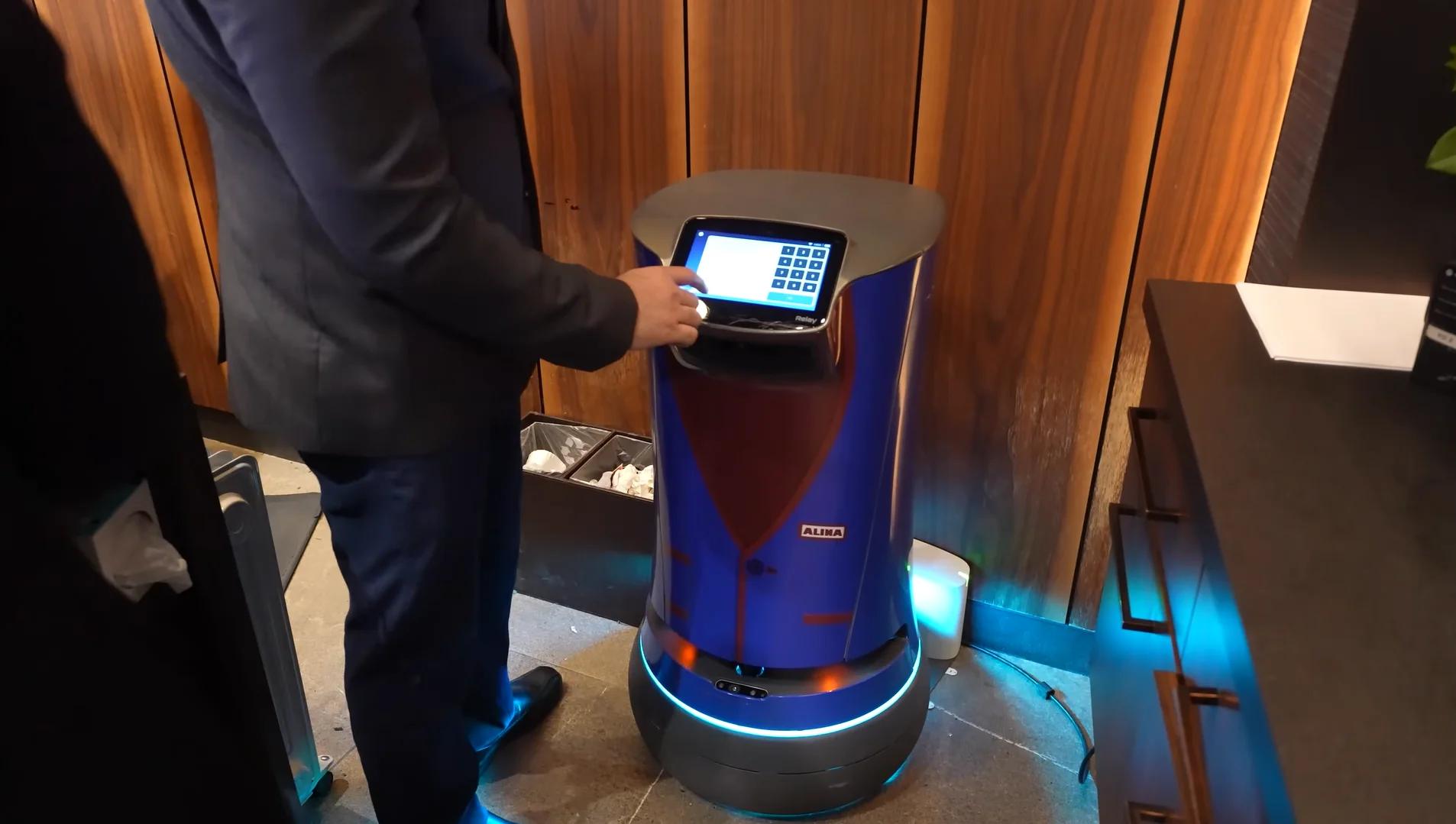
Alina is a small, R2-D2-style robot that can move around the hotel completely on her own, ride elevators, and deliver items like toiletries or food straight to your door.
When he tested it, she navigated the building independently and arrived with items neatly stored inside her compartment, opening up to reveal the delivery before heading back to her docking station.
It felt genuinely useful, like a futuristic upgrade to room service rather than a gimmick.
AI hotels in America lead to damning final verdict on whether human hospitality can be replaced
Elsewhere, the tech started to feel a lot more hit-and-miss.
At Planet Hollywood in Las Vegas, he tried out the Tipsy Robot, a fully robotic bartender that mixes drinks using pre-programmed recipes.
Watching it in action was undeniably cool, as the robotic arm measured, mixed, and served a cocktail with precision, and the drink itself actually tasted great.
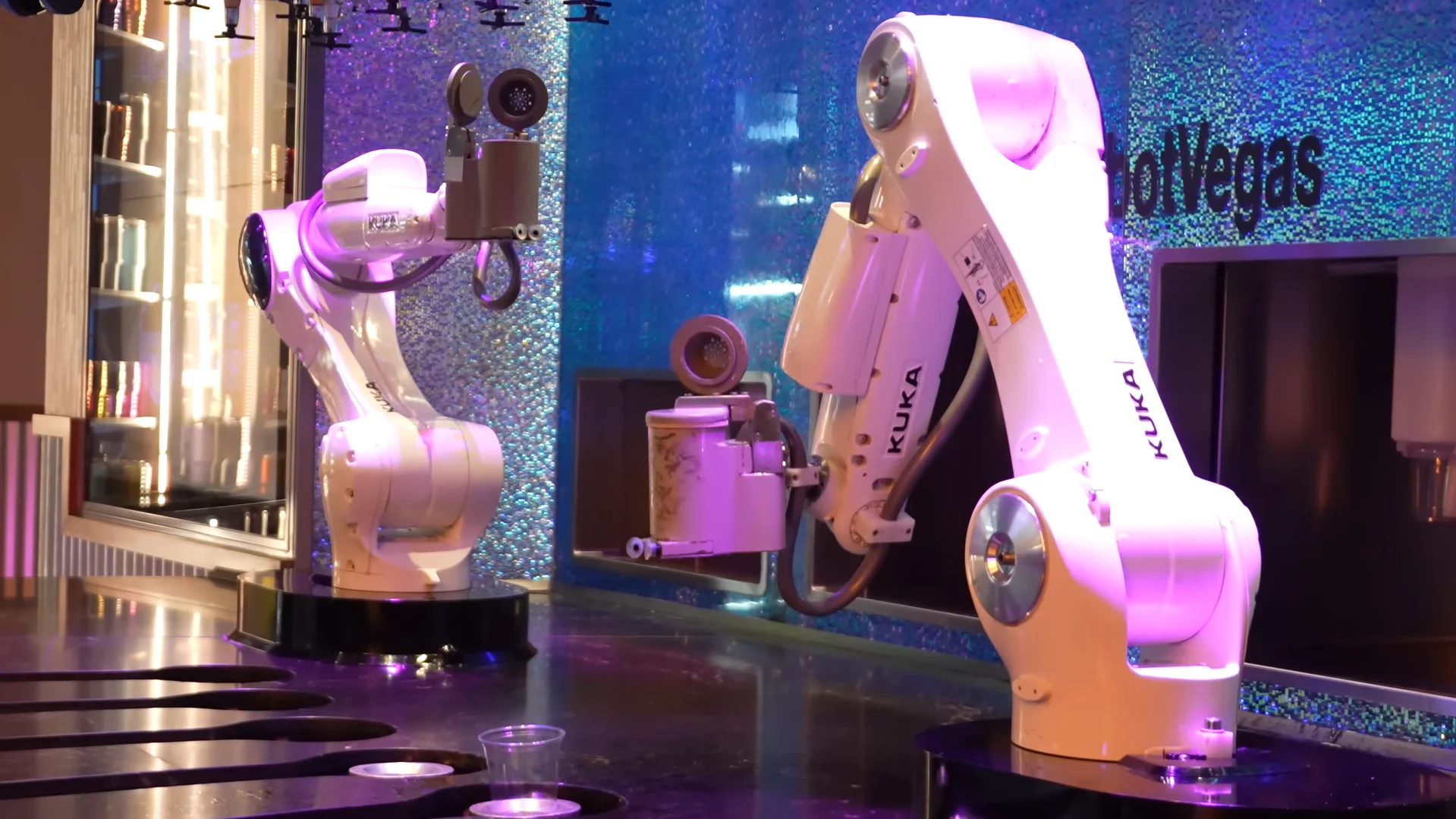
But there was a catch.
The system could only make drinks from a fixed menu, meaning there was no room for customization or human creativity, which made the whole experience feel more like a novelty than a true replacement for a bartender.
That same pattern kept repeating itself throughout the trip across AI hotels.
A self-driving Zoox shuttle struggled with real-world traffic and had to end the ride early, while an AI concierge at another hotel felt scripted and limited despite a few helpful moments.

By the end, his final verdict was blunt.
While some tech from the AI hotels like Alina showed real promise and others like the Tipsy Robot were fun to experience, none of it could truly replace human hospitality.
Instead, it often felt cold, restricted, or underwhelming compared to the warmth and flexibility you get from real people.
DISCOVER SBX CARS: The global premium car auction platform powered by Supercar Blondie