NASA's Curiosity Rover makes discovery on Mars that changes our understanding of the red planet
- NASA’s Curiosity rover just discovered something incredible on Mars
- The rover has been active for 4,600+ days
- It has so far covered around 30+ km on Mars
Published on Mar 30, 2025 at 12:14 AM (UTC-4)
by Alessandro Renesis
Last updated on Mar 30, 2025 at 12:14 AM (UTC-4)
Edited by
Emma Matthews
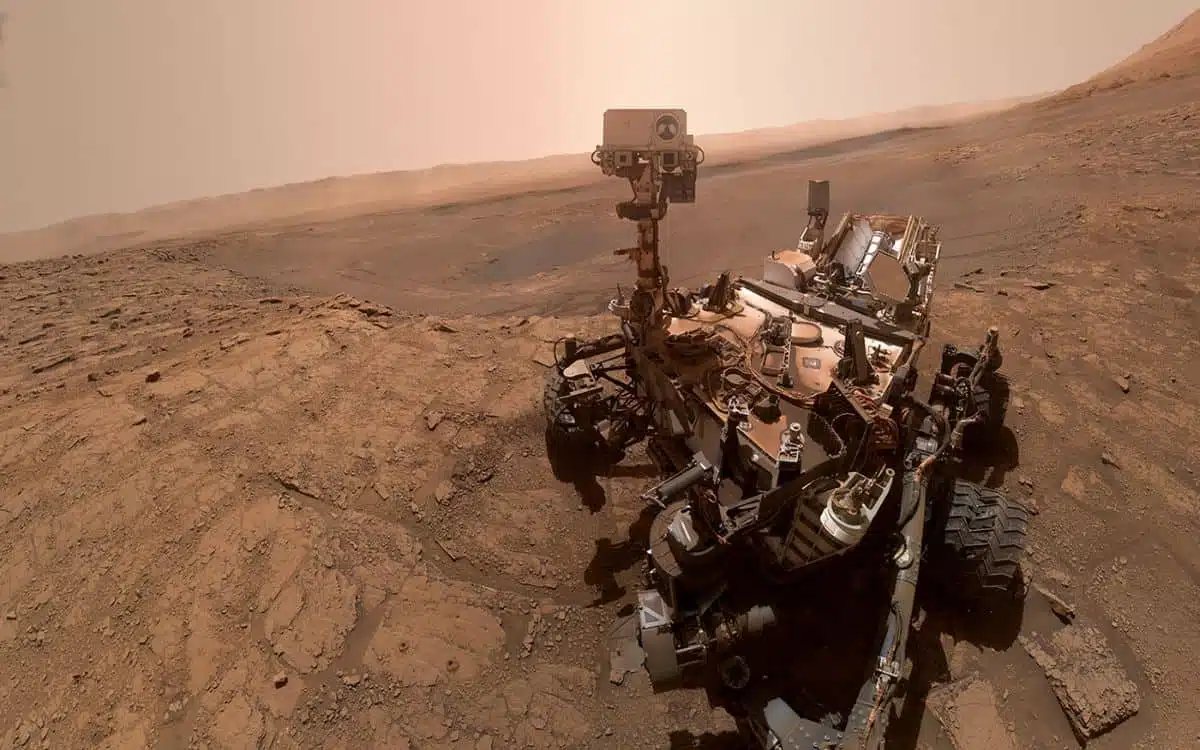

Curiosity, one of the most advanced and newest rovers designed by NASA, just discovered something incredible on Mars.
The little rover identified organic-like molecules preserved in the planet’s mudstone.
This discovery stems from 12 years of analysis and research, but it’s further – potential – proof that there was life on Mars at some point.
Now just we have to wait for Mr Musk and SpaceX to take us there.
DISCOVER SBX CARS – Bid now on supercar auctions powered by Supercar Blondie
Groundbreaking news from Mars
NASA‘s Curiosity was launched in November 2011 and has spent the last 14 years collecting data from the red planet.
These molecules, embedded in mudstone, are the largest organic compounds ever found on Mars.
The presence of organic molecules, like alkanes, brings extra fuel to the fire for people who believe Mars once had conditions potentially suitable for life.
Although we should probably point out that this discovery obviously doesn’t directly confirm the existence of anything.
Yet.
Related

About Curiosity and its multi-billion dollar mission

Curiosity is a tiny rover that’s been active on Mars for over 4,600 days.
It launched in November 2011 and was deployed nine months later in August 2012.
The rover is currently exploring Gale crater, which most scientists agree is actually a dry lake.
It’s 2.9 meters long and around 900kg in weight, making it roughly the same size and weight as the first-generation Smart car.

The little rover has been collecting data and sharing images for well over a decade, and it’s definitely done at good job so far.
Among other things, Curiosity discovered liquid water ripples on Mars. It also detected sulfur under the surface which, according to scientists, ‘shouldn’t be there.’
As of March 2025, Curiosity has covered a distance of nearly 30km on Mars.
According to NASA, Curiosity has a life-cycle cost north of $3 billion, although obviously this value will continue to go up due to inflation.
But the data and sheer brilliance it’s sent back are priceless.
Alessandro is an automotive journalist with 10 years of experience covering supercars, automotive history, emerging vehicle technology, and luxury transportation. He wrote the first article published on SupercarBlondie.com when the website launched in 2022 and has since built a reputation for insightful reporting across the automotive and transportation industries. His expertise is grounded in hands-on experience. Alessandro has driven every Tesla model ever produced, from the original Roadster to the Cybertruck, and regularly covers the latest developments in electric vehicles and automotive innovation. His passion for transportation extends beyond cars, he has even flown a Boeing 787 Dreamliner simulator in Addis Ababa, Ethiopia. His reporting spans everything from classic American muscle cars and rare automotive discoveries to luxury yachts, private aircraft, high-end watches, and cutting-edge vehicle technology. Known for his deep knowledge of automotive history and ability to uncover the stories behind iconic vehicles, Alessandro brings readers a blend of historical context, technical expertise, and first-hand experience.




