San Francisco prankster built a real-time parking cop tracker and the city had to scramble to shut it down
Published on Mar 03, 2026 at 6:25 AM (UTC-5)
by Daisy Edwards
Last updated on Mar 03, 2026 at 12:18 PM (UTC-5)
Edited by
Emma Matthews


A prankster from San Francisco built a real-time parking cop tracker, which was great news for local drivers, but not so great for the city’s administration.
For a few glorious hours, San Franciscan drivers felt like they had unlocked a cheat code for street parking in one of America’s toughest cities.
A 23-year-old software engineer turned public data into a live map showing where parking enforcement officers had just issued tickets.
The internet loved it, but the city certainly didn’t.
EXPLORE SBX CARS – Supercar auctions starting soon powered by Supercar Blondie
The prankster who built a real-time parking cop tracker
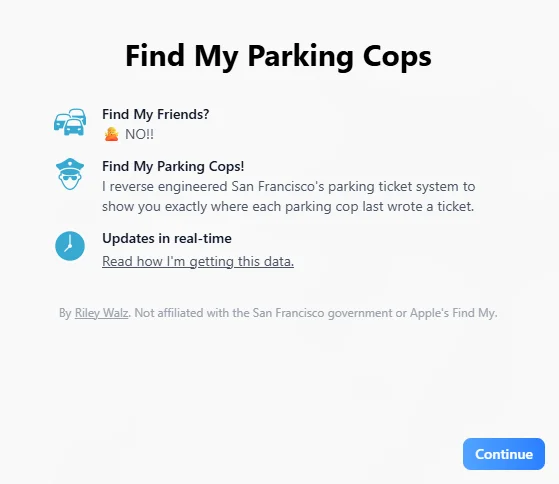
The mastermind behind the chaos was Riley Walz, a young tech engineer known for playful internet experiments.
His site, widely referred to as a parking cop tracker, pulled from publicly available San Francisco Municipal Transportation Agency data and translated it into something drivers could instantly understand.
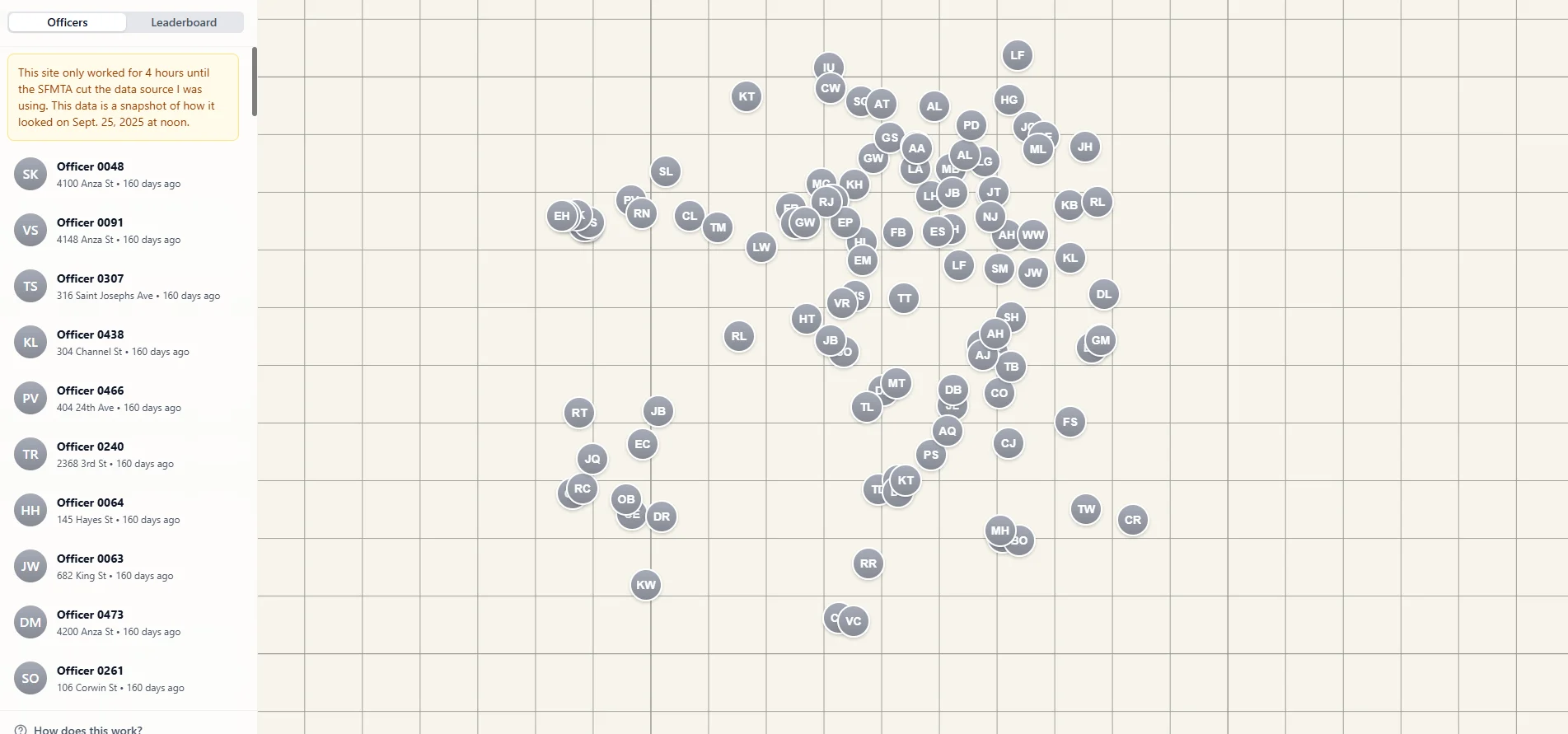
Using citation data, the app displayed officers’ initials and plotted the approximate location of their most recent tickets on a live map.

It also showed stats like how many tickets had been written, giving users a surprisingly detailed snapshot of enforcement patterns across the city.
It even included a leaderboard with the traffic cops who’d given out the most tickets sitting at the top.
Walz described the project as a creative use of open data, built to highlight how much information is already out there.
But once the link began circulating on social media, it quickly became clear that plenty of drivers saw it as a tactical advantage in the daily battle for curb space.
Click the star icon next to supercarblondie.com in Google Search to stay ahead of the curve on the latest and greatest supercars, hypercars, and ground-breaking technology


The city had to scramble to shut it down
The tracker’s lifespan was short but dramatic, and within roughly four hours of launch, the site stopped functioning after the city altered or restricted the data feed that powered it.
Officials said they support transparency and innovative uses of transportation data, but concerns over staff safety and the visibility of enforcement activity pushed them to act quickly.
The rapid shutdown showed just how powerful real-time information can be when it is packaged in a way that helps drivers, not the city.
For a brief window, San Francisco drivers had a live look at the city’s parking enforcement playbook.
By lunchtime, the experiment was over, but it proved one thing loud and clear: with the right skills and a public dataset, one developer can shake up an entire city.
Daisy is a technology and automotive journalist covering artificial intelligence, consumer tech, Apple news, cryptocurrency, emerging technologies, and transportation innovation. Since joining the team in 2025, she has reported on everything from AI-powered startups and major iOS updates to viral car stories and the latest developments shaping transportation and the digital economy. Drawing on her background in automotive journalism and a degree in History and Journalism from Goldsmiths, University of London, Daisy specializes in breaking down complex topics into clear, engaging reporting for a global audience. Her work spans cutting-edge technology, innovative vehicles, and the people driving change across both industries. Daisy has gained first-hand access to some of the world's most talked-about technologies and innovators, including meeting Tesla's Optimus humanoid robot during its first European appearance in London. She has also discussed the future of space exploration with an astronaut, bringing unique insights and real-world perspectives to her coverage of emerging technology.




