Man with Tesla Model 3 compares a slow EV charger and a fast EV charger to see which saves the most money and is left surprised
Published on Jan 22, 2026 at 3:30 AM (UTC+4)
by Grace Donohoe
Last updated on Jan 22, 2026 at 9:37 PM (UTC+4)
Edited by
Amelia Jean Hershman-Jones

This Tesla Model 3 owner needed to top up his EV to prepare it for the colder weather about to hit his neighborhood in the UK, and he had a big decision to make when it came to which charger to use.
He had the choice between a 50kWh outlet and a 350kWh fast charger at the same charging hub.
But, in order to settle the ongoing fast versus slow charger debate, he decided to compare the benefits and prices of each on offer.
Considering the battery of his Model 3 was at 50 percent, there was one clear option for the drive, and it might not be what you’d expect.
VISIT SBX CARS – View live supercar auctions powered by Supercar Blondie
This Tesla Model 3 needed some more juice
The Tesla Model 3 is often favored by drivers looking to switch from a gas car to an EV, and it’s not hard to see why.
The car offers cheaper running prices, and with the sports sedan’s recent refresh, it is now available in three options.
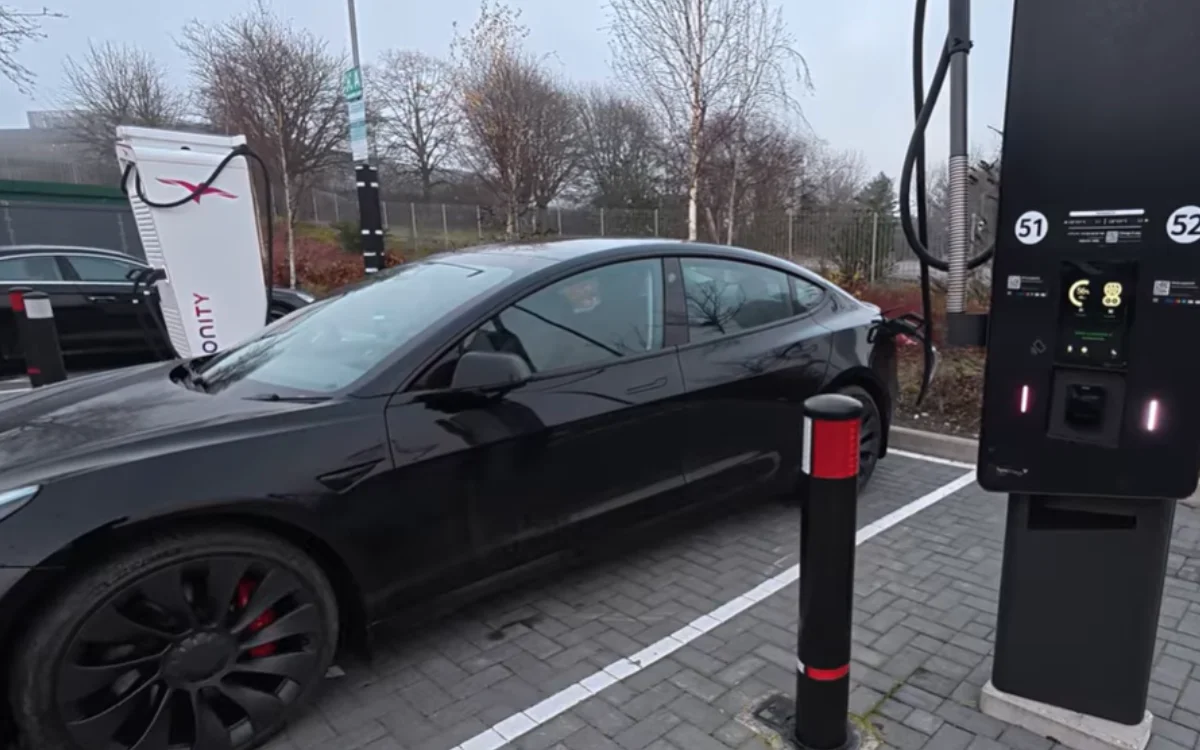
Tesla offers the Model 3 in Standard, Premium, and Performance trims to suit a variety of needs and budgets.
Creator Nice & EV documented the charging process of his Tesla Model 3 at a charging hub in Essex, England, but he had to decide which speed charger to use.

Rocking up to the charger with a 50 percent charge and the aim of getting to 90 percent, he was debating between the 350kWh or 50kWh outlet.
As he was in no rush, he opted for a chilled charging session and used the slower adapter, and what he found may surprise you.
Slow and steady wins the EV charging race
As soon as the 50kWh charging got underway, and by the end of the session, the verdict was in.
At 46p (around 62 cents USD) per kWh versus 74p (around 99 cents USD), there was a big gap in pricing, with the total session costing just £17.62 ($23.67).
“It’s been 51 minutes, and I’m not quite sure if the 350kWh charger would have been much quicker.
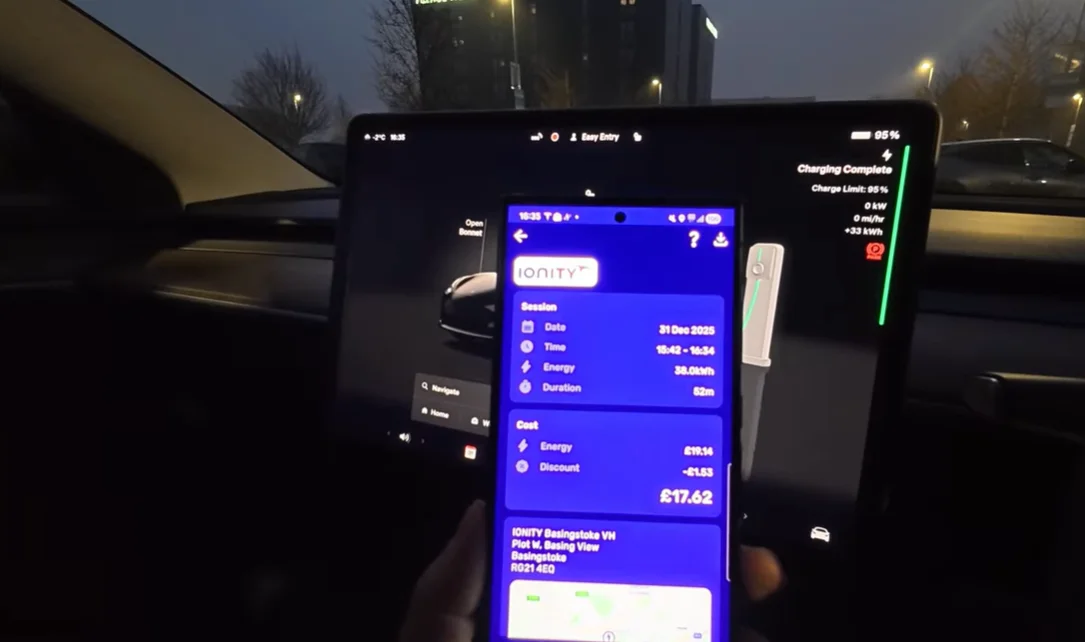
“Certainly a lot cheaper, I suggest,” he said.
The creator explained that even if he used the fast EV charger, the full power wouldn’t actually be fully utilised due to the car topping out at a lower level when at a low level of charge.
“This car can only pull 250kWh anyway,” he said.
He also discussed the possibility of the number being used as a tactic to entice people to use the faster charger, rather than the cheaper option.
So there you have it – as the old saying suggests, in some circumstances, slow and steady really does win the race.
Tesla Model 3 timeline
2016: The Model 3 was unveiled at an event in Hawthorne, California, with reservations opening that same day. 180,000 were placed within 24 hours.
2016 – 2017: Development and production ramped up.
July 2017: The first Model 3 ‘production unit’ rolled off the line, and the first 30 customers received their cars.
Late 2017: Output remained low as supply chain issues were resolved.
2018: The Model 3 became more widely accessible as production accelerated.
DISCOVER SBX CARS: The global premium car auction platform powered by Supercar Blondie
Beginning her career as a lifestyle reporter and social-media manager, Grace joined Supercar Blondie in February 2025. Since coming on board, has thrown herself into the busy daily writing schedule. Her editorial sweet spots include writing about luxury properties and the quirky features inside them that the one percent are investing in, as well as groundbreaking advancements in space exploration.