There's a North American traffic rule that would be completely alien to drivers in Europe
- There’s a North American traffic rule that’s alien to most Europeans
- It’s as old as time, but some people still find it surprising
- Mind you, this rule still applies in some European countries
Published on May 29, 2025 at 9:16 AM (UTC-4)
by Alessandro Renesis
Last updated on May 29, 2025 at 1:23 PM (UTC-4)
Edited by
Emma Matthews


There’s a traffic rule that’s absolutely normal in North America but baffling to most drivers in European countries.
It’s as old as time, but still sometimes surprising to tourists who drive in the US or Canada for the first time.
The same rule also applies in Mexico, by the way.
Mind you, it’s also a thing in some countries in Europe.
DISCOVER SBX CARS: The global premium car auction platform powered by Supercar Blondie
Most people know you can still turn right even if there’s a red light in North America.
The traffic rule, sometimes known as turn on red, is permitted with few exceptions everywhere in North America.
Unless otherwise stated, that is.
However, what some people may not know is that this rule/principle also applies – with some limitations – in a few European countries.
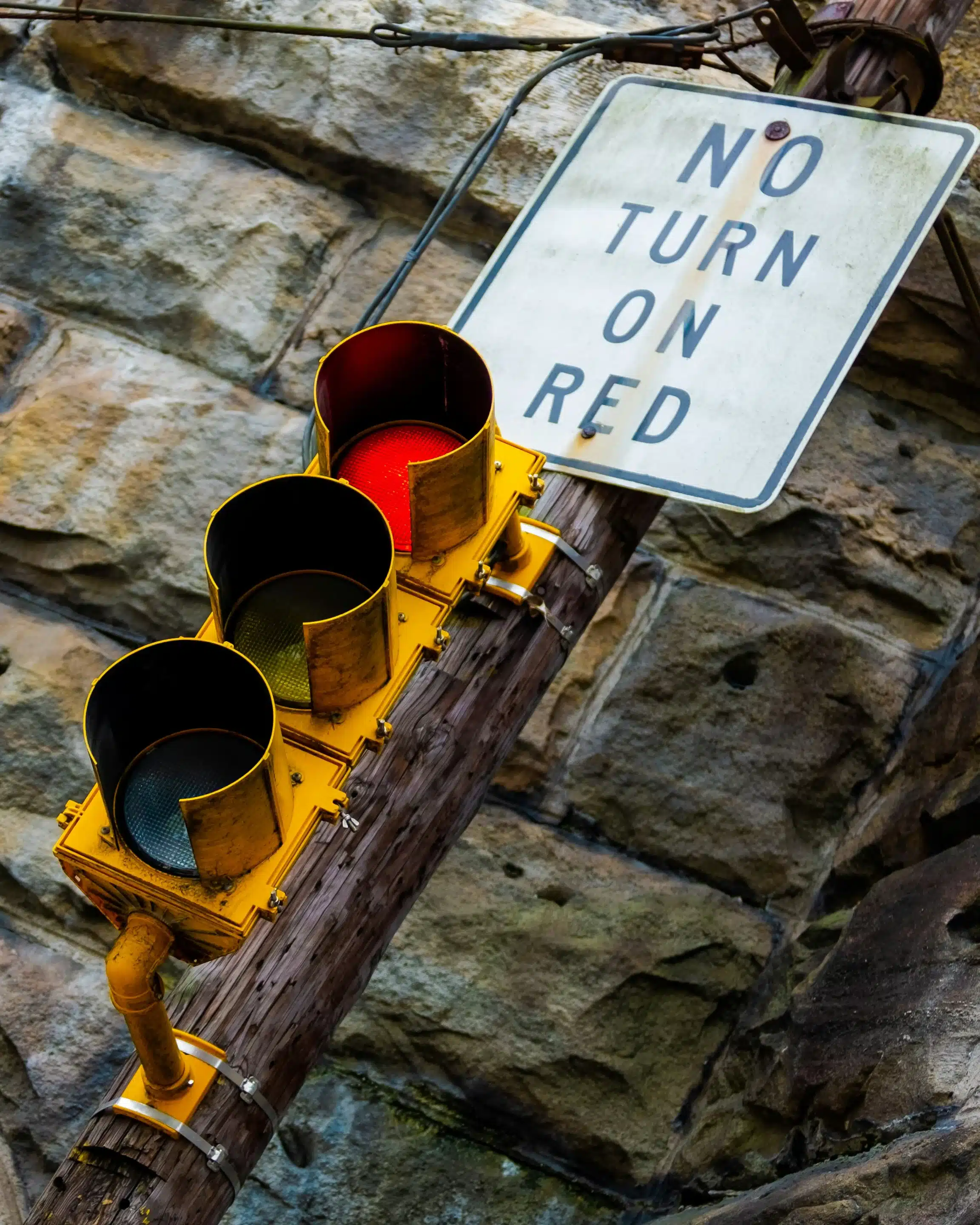
For example, right turns on red are also permitted in Germany as long as there’s a sign that says you can do that.
It’s basically the opposite of North America.
In North America, you can turn on red unless otherwise stated, whereas in Germany, you cannot do it unless otherwise stated.
There are similar or equivalent signs in France, Poland, and also other countries.
With exceptions, most people only drive in their own country, which is why it’s natural to assume other countries every similar laws, but that’s not always the case.
Speeding, for example, is relative, because different countries, and sometimes different regions within the same country, have different speed limits.
There are famously only two places in the world with no speed limits.
The first one, the one that most people might be aware of, is the German Autobahn network.
More than half of the total length of the German highway network has no speed limit at all.
Through the years, both manufacturers and private collectors have taken advantage of this unique feature.
Driving your supercar at 200mph or more on the Autobahn in your car and recording it is frowned upon, but technically not illegal.
The other is a small island that’s part of the UK, known as the Isle of Man. And its rural roads also have no speed limit.
So, if you really feel the need for speed, you might need to visit Europe!
Alessandro is an automotive journalist with 10 years of experience covering supercars, automotive history, emerging vehicle technology, and luxury transportation. He wrote the first article published on SupercarBlondie.com when the website launched in 2022 and has since built a reputation for insightful reporting across the automotive and transportation industries. His expertise is grounded in hands-on experience. Alessandro has driven every Tesla model ever produced, from the original Roadster to the Cybertruck, and regularly covers the latest developments in electric vehicles and automotive innovation. His passion for transportation extends beyond cars, he has even flown a Boeing 787 Dreamliner simulator in Addis Ababa, Ethiopia. His reporting spans everything from classic American muscle cars and rare automotive discoveries to luxury yachts, private aircraft, high-end watches, and cutting-edge vehicle technology. Known for his deep knowledge of automotive history and ability to uncover the stories behind iconic vehicles, Alessandro brings readers a blend of historical context, technical expertise, and first-hand experience.