Ronald Reagan was never pictured in one of his favorite vehicles that he received as part of a bizarre deal
Published on Feb 22, 2026 at 9:33 AM (UTC-5)
by Alessandro Renesis
Last updated on Feb 22, 2026 at 9:33 AM (UTC-5)
Edited by
Kate Bain
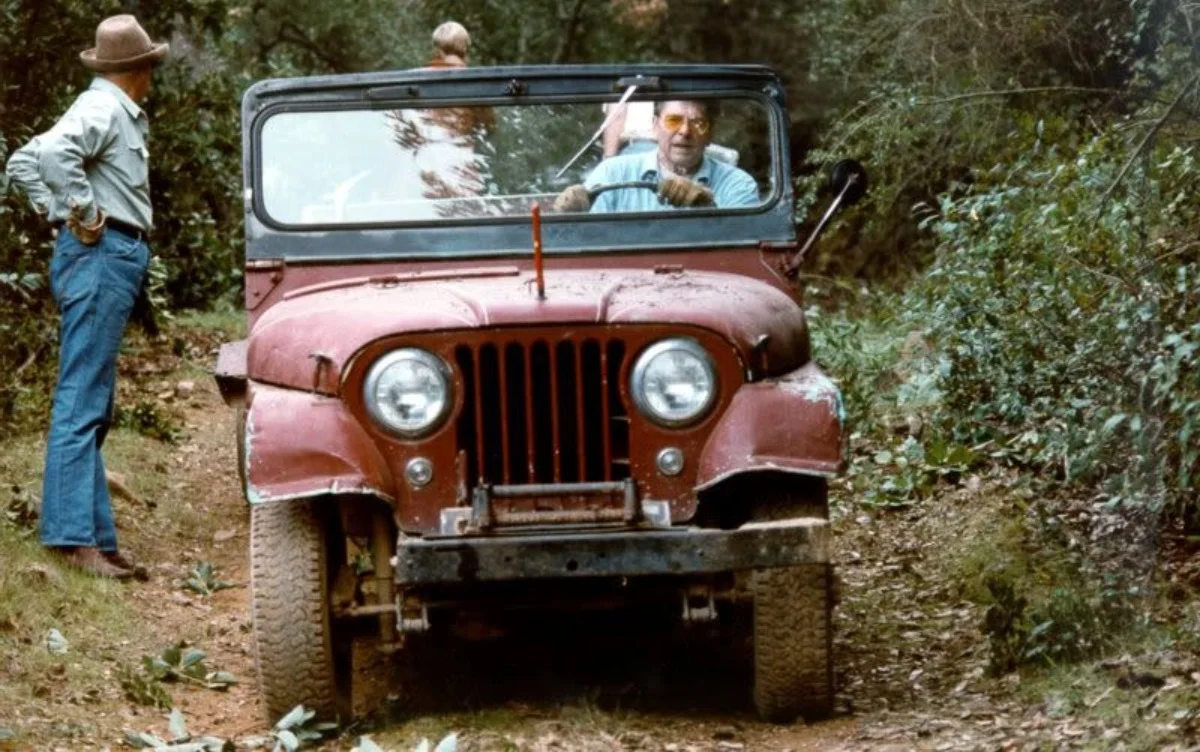

Former US President Ronald Reagan was also a secret Subaru test driver.
Now, those are some words you wouldn’t expect to find in the same sentence.
In his ‘free’ time, Reagan apparently drove a Subaru truck at his ranch in California.
And there’s a reason why this story remained a secret until now.
DISCOVER SBX CARS: The global premium car auction platform powered by Supercar Blondie
This story sounds fake, but it’s true
According to a report from Benjamin Preston shared by Jalopnik, Ronald Reagan was a secret Subaru test driver.
It all happened quite organically – as marketing people would put it.
We should also point out that this happened before he became President.
Back then, the would-be President quietly began driving Subaru BRAT at his (private) ranch in California.
The key word is ‘private’, which explains why he was allowed to drive it in the first place, and also why he was never photographed at the wheel of this tiny truck.
Apparently, there was a secret agreement between Reagan and Subaru that basically made Reagan a de-facto Subaru test driver.
There are a couple of things worth noting.
First, the (unfortunate) name BRAT actually stood for Bi-drive Recreational All-terrain Transporter.
And second, this only came to public light recently because back then, for geopolitical reasons, no US politician wanted to be seen anywhere near a Japanese vehicle.
In the same way you wouldn’t see the current US President in a Chinese-made car or the current Chinese President in a Cadillac today.
Click the star icon next to supercarblondie.com in Google Search to stay ahead of the curve on the latest and greatest supercars, hypercars, and ground-breaking technology
The reason why Reagan couldn’t drive his car in public
Ronald Reagan, like any other US President since 1958, was not allowed to drive this car on the road.
Or any other car, for that matter.
There’s a little-known law – technically it’s an ‘act’ – that prohibits any former (and of course current) US President from driving on a public road.
The law applies to the current US President in the same way it does to Bill Clinton, Barack Obama, Joe Biden, and George W. Bush.
It has nothing to do with age, seniority, or how long since they’ve been in office: it’s essentially a lifetime ban.
The reason is simple: security.
The US Secret Service evidently believes that having been President, even if it was just for one day three decades ago, makes you potentially vulnerable to threats, which is why all former US Presidents have drivers and never drive themselves on a public road.
So this is today’s lesson: if you love driving, don’t run for office.
Alessandro is an automotive journalist with 10 years of experience covering supercars, automotive history, emerging vehicle technology, and luxury transportation. He wrote the first article published on SupercarBlondie.com when the website launched in 2022 and has since built a reputation for insightful reporting across the automotive and transportation industries. His expertise is grounded in hands-on experience. Alessandro has driven every Tesla model ever produced, from the original Roadster to the Cybertruck, and regularly covers the latest developments in electric vehicles and automotive innovation. His passion for transportation extends beyond cars, he has even flown a Boeing 787 Dreamliner simulator in Addis Ababa, Ethiopia. His reporting spans everything from classic American muscle cars and rare automotive discoveries to luxury yachts, private aircraft, high-end watches, and cutting-edge vehicle technology. Known for his deep knowledge of automotive history and ability to uncover the stories behind iconic vehicles, Alessandro brings readers a blend of historical context, technical expertise, and first-hand experience.