Xiaomi becomes first Chinese brand to create a Vision Gran Turismo car as its Human x Car x Home ecosystem connects over 1 billion devices worldwide
Published on Mar 10, 2026 at 4:23 PM (UTC+4)
by Alessandro Renesis
Last updated on Mar 10, 2026 at 4:39 PM (UTC+4)
Edited by
Emma Matthews
Xiaomi took MWC 2026 by storm by unveiling a Vision Gran Turismo hypercar as well as a tech ecosystem called Human x Car x Home.
The Vision Gran Turismo is designed for the digital tarmac of Gran Turismo 7, but Human x Car x Home is designed for the real world.
This ecosystem is capable of connecting one billion devices worldwide.
So no pressure then.
Click the star icon next to supercarblondie.com in Google Search to stay ahead of the curve on the latest and greatest supercars, hypercars, and ground-breaking technology
What Xiaomi Vision Gran Turismo represents for the brand
In the olden days, Gran Turismo was just a car video game.
Today, it’s also a marketing tool, and automakers are always happy to design concept cars for the game.
Xiaomi is actually the first Chinese brand to join the Vision Gran Turismo project, the first pure technology company to participate, and the 36th marque to join the project in total.
Also, as an extra note of color, this is going to be the 51st concept car in the iconic series, and it was created specifically because Kazunori Yamauchi, CEO of Polyphony, asked Xiaomi if they wanted to get involved with the legendary video game.
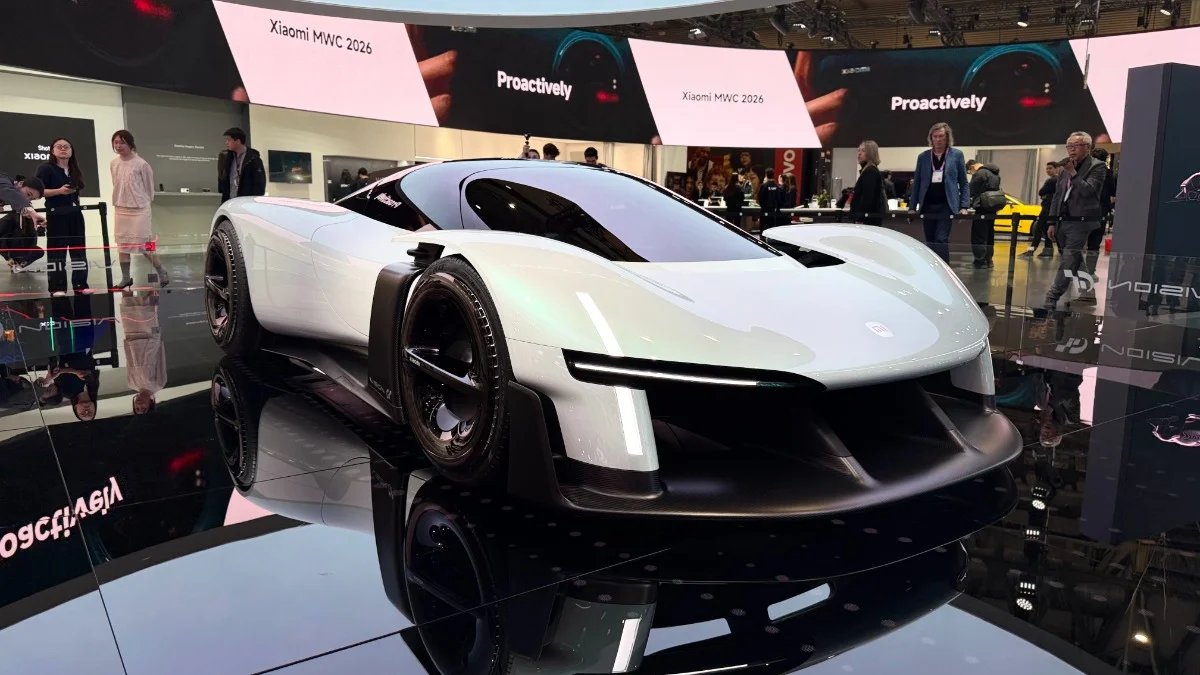
“When I saw that Xiaomi had resolved the contradiction between low drag and high downforce, I was truly amazed,” Yamauchi said.
Xiaomi’s Vision Gran Turismo also signals the brand’s growing ambitions in the high-performance automotive space, and it’s further proof that the brand is in transition from a smartphone brand to a serious player in the global car industry.
In order to create it, Xiaomi designers focused on something they call Aerodynamic Efficiency.
It was sculpted by the wind, with body panels shaped by aerodynamics.
In other words, airflow logic defines the shape, not decorative styling.
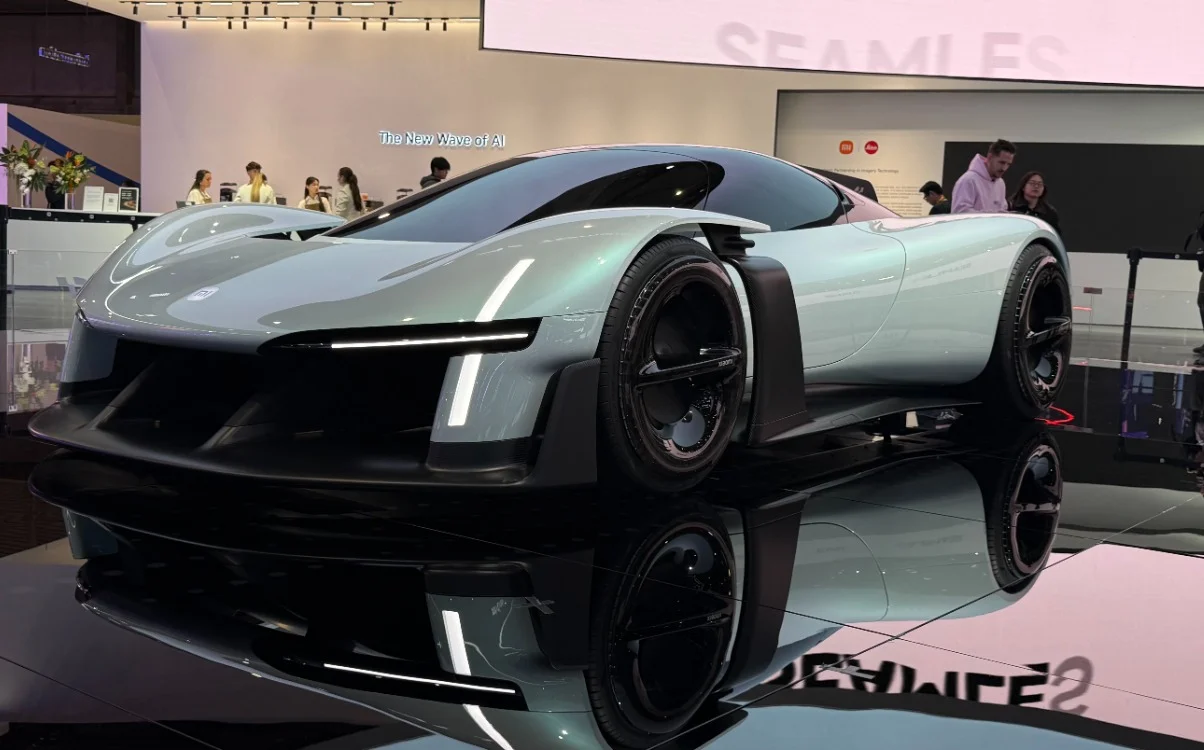
The concept is defined by its ultra-low stance, teardrop-shaped cockpit canopy, and a clean, uninterrupted roofline.
Even so, the car still features all of Xiaomi’s signature design cues, from the familiar cross-shaped headlights to the halo taillight.
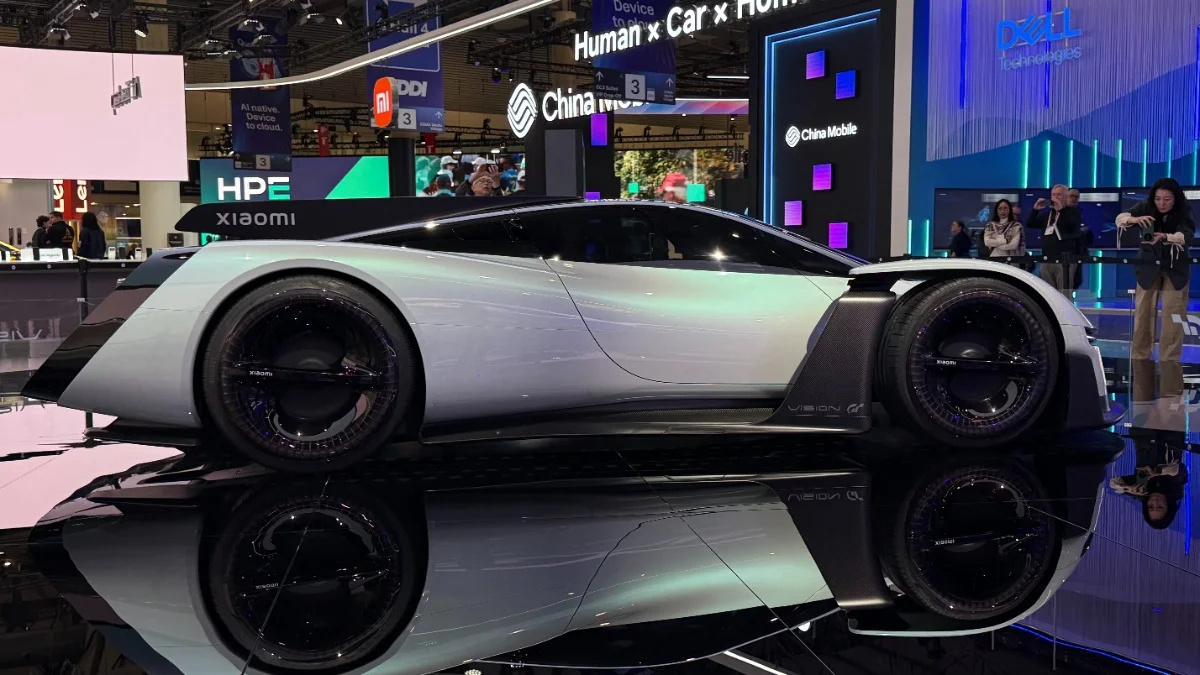
It’s fitted with Active Wake Control, which means that instead of having a massive wing, the car uses controlled airflow to manage turbulence, keeping the silhouette clean and streamlined.
The wheels are also designed to suck heat away from the brakes while also smoothing out airflow.
For the same reason, Xiaomi also designed integrated airducts.
Through iterative simulated testing, the concept achieves a drag coefficient of just 0.29, downforce of negative 1.2, and an aerodynamic efficiency rating of 4.1.
For the interior, Xiaomi moved away from the traditional bucket seat layout found in most hypercars.
They call it the ‘Sofa Racer’ concept.
The dashboard, door panels, and seats flow together as one, creating a cocoon-like cabin – not a ‘harsh’ and uncomfortable cockpit.
The ‘Human × Car × Home’ ecosystem
Based on Xiaomi HyperOS, the Human x Car x Home ecosystem is designed to unify one billion devices from smartphones to cars and even your home.
In short, this means that your living room, your phone, and your cockpit all speak the same AI language.
As showcased at MWC 2026, the Human × Car × Home ecosystem manages personal devices, your home, and your car, which all operate on the same underlying system.
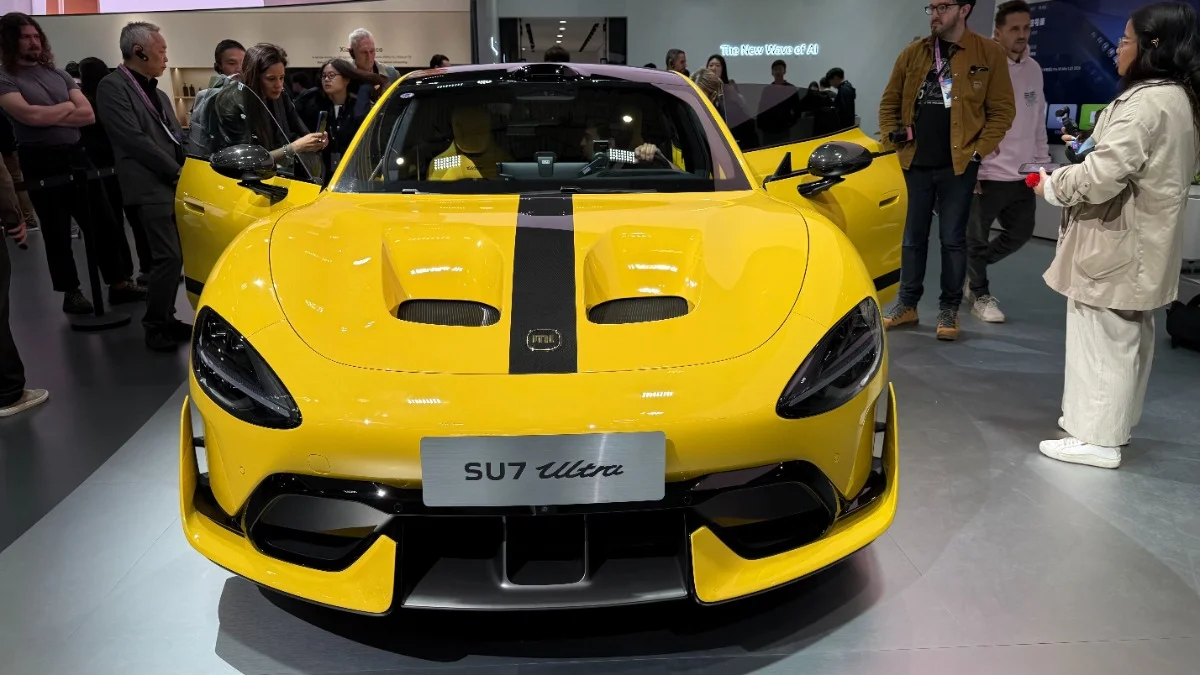
Today, this smart ecosystem is already operating on a global scale.
There are over one billion connected devices, more than 200 product categories, covering around 95 percent of daily life scenarios from your home to your tech devices, and of course, your car.
Pretty neat.
And further proof that the future is already here.
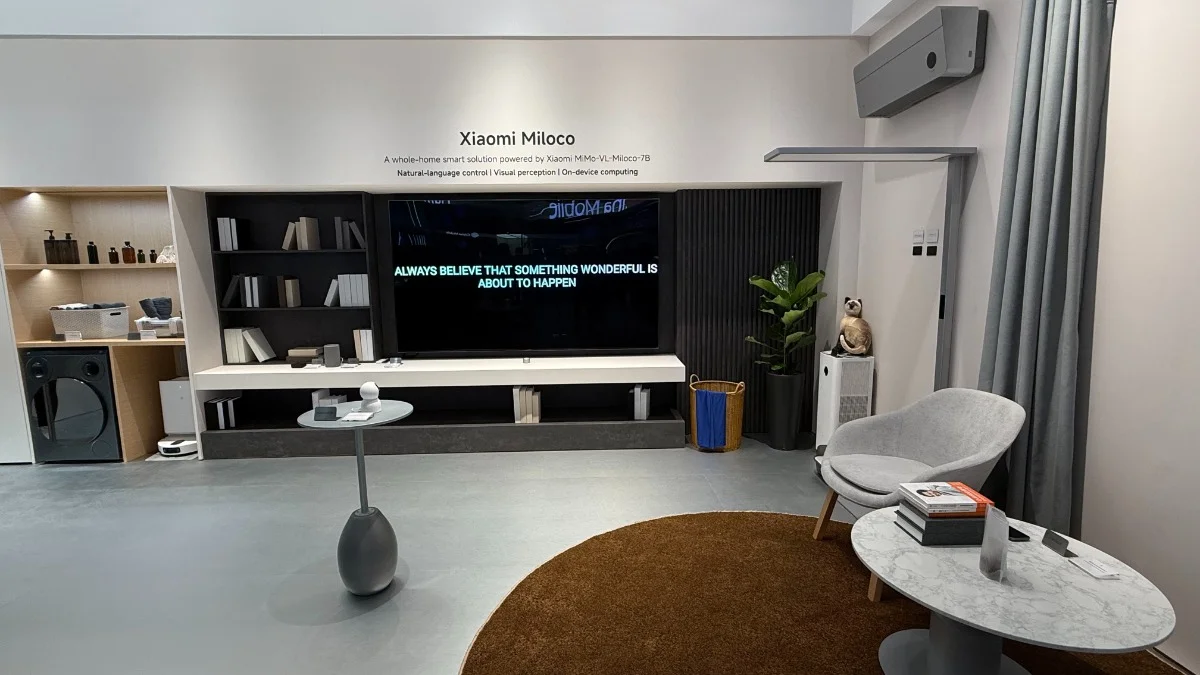
AI Tomorrow is a new type of intelligence; with it, AI isn’t confined to your screen, it becomes an active presence in the physical world.
Cars become context-aware, and they learn from your habits and scenarios.
The system is powered by Xiaomi MiMo, their self-developed foundation model and the AI backbone of the ecosystem, and it allows the car to actively perceive, learn, and respond to a person’s habits, coupled with Xiaomi Miloco (Xiaomi Local Copilot), which is a system that transforms home automation.
DISCOVER SBX CARS: The global premium car auction platform powered by Supercar Blondie
After beginning his automotive writing career at DriveTribe, Alessandro has been with Supercar Blondie since the launch of the website in 2022. In fact, he penned the very first article published on supercarblondie.com. He’s covered subjects from cars to aircraft, watches, and luxury yachts - and even crypto. He can largely be found heading up the site’s new-supercar and SBX coverage and being the first to bring our readers the news that they’re hungry for.