Apollo 12 astronauts ordered three identical Corvettes to match their lunar module and only one survived
Published on Apr 17, 2026 at 6:53 AM (UTC-4)
by Molly Davidson
Last updated on Apr 17, 2026 at 9:56 AM (UTC-4)
Edited by
Emma Matthews
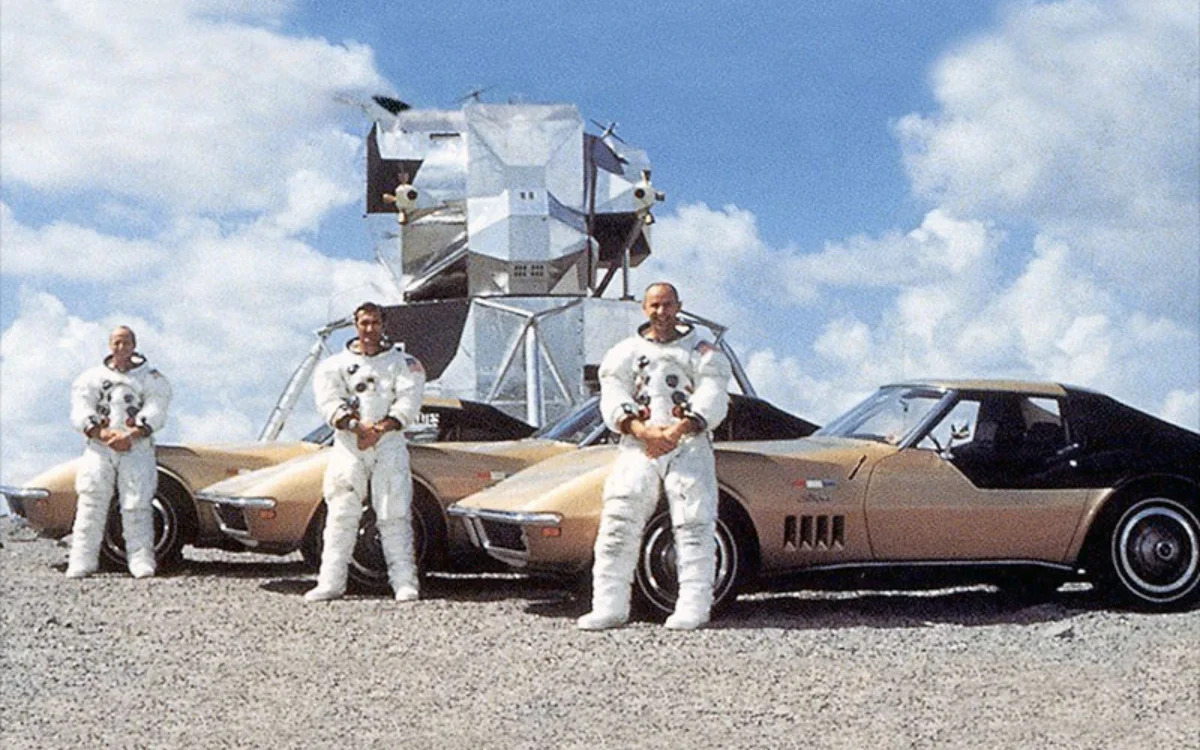

Turns out that Apollo 12 astronauts didn’t just leave their mark on the Moon.
When they got back, three of them decided not to entirely abandon (space) ship on Earth.
It involved a Corvette, but not in the way you’d expect.
Because this wasn’t about owning a beautiful car – it was about keeping the dream of flying into space alive.
The matching Apollo 12 Corvettes
Back in the late 1960s, astronauts had access to one of the most unusual perks in the car world.
Through a deal set up by Indy 500 winner and Chevrolet dealer Jim Rathmann, they could lease a brand-new Chevy for just $1 a year, and many gravitated toward Corvettes.
By the time Apollo 12 rolled around, that had become the norm.
As the National Corvette Museum explained to Supercar Blondie: “The Apollo 12 cars sit squarely within [a] broader AstroVette story”.
It was a time when astronauts were regularly driving Corvettes and helping cement the car’s place in American culture.
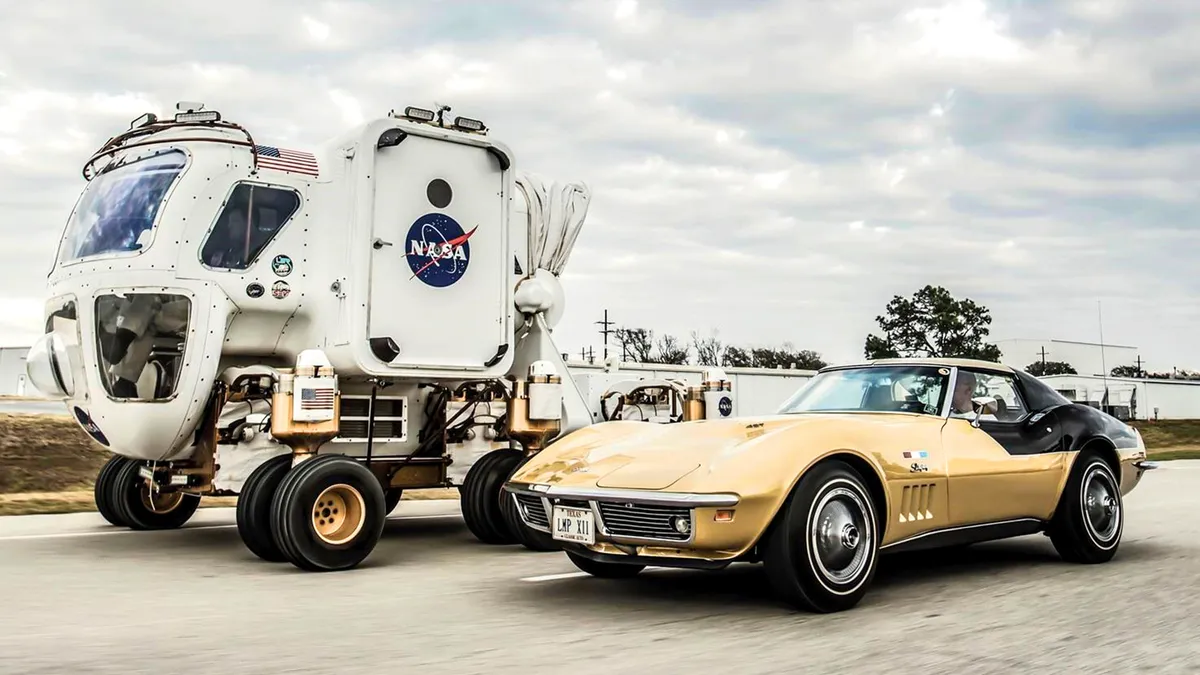
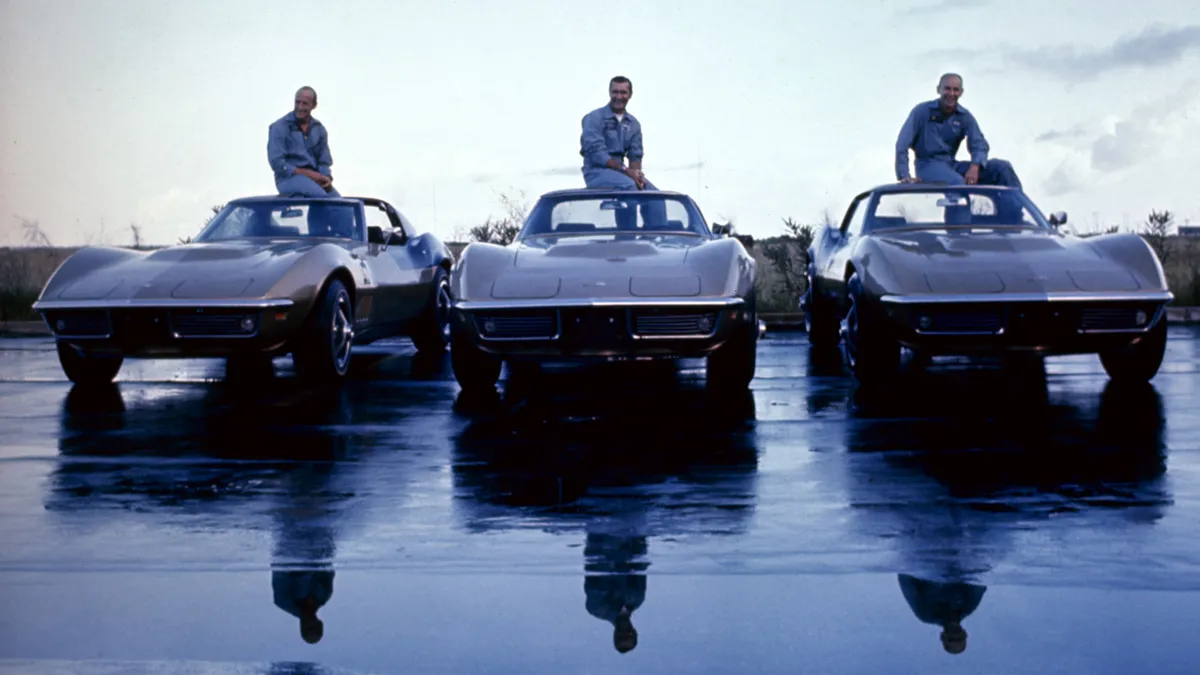
But Alan Bean, Charles Conrad, and Richard Gordon took it further.
Instead of choosing their own specs, they aligned.
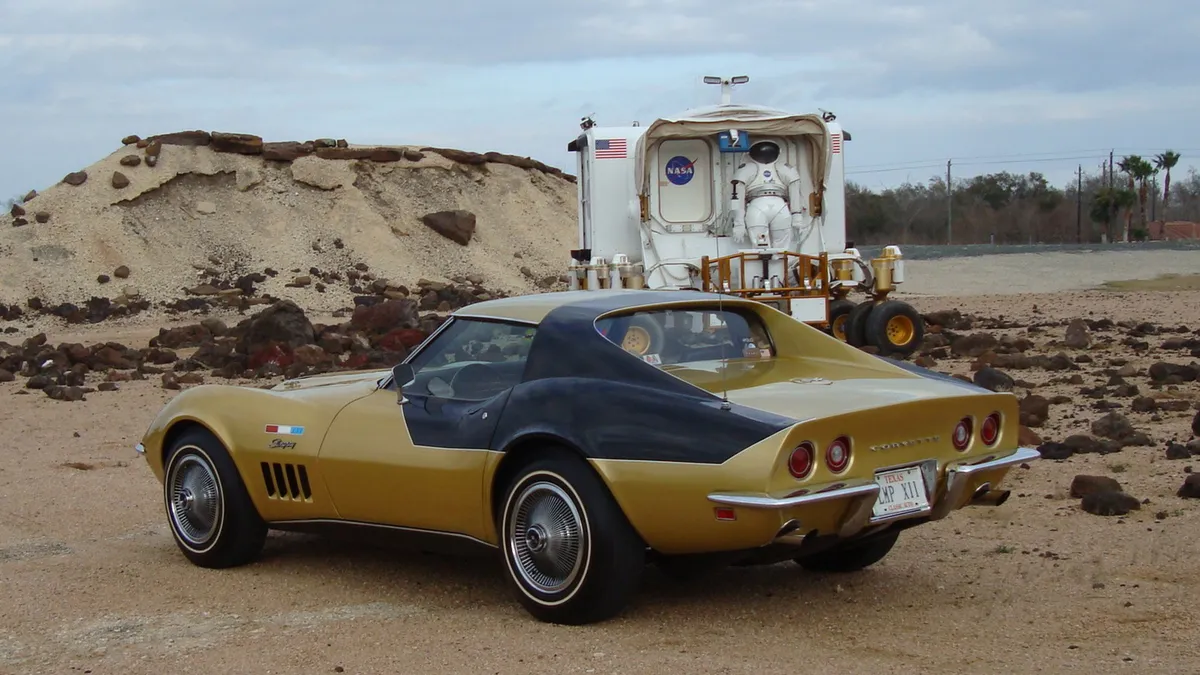
Each ordered a 1969 Corvette Stingray finished in black and gold.
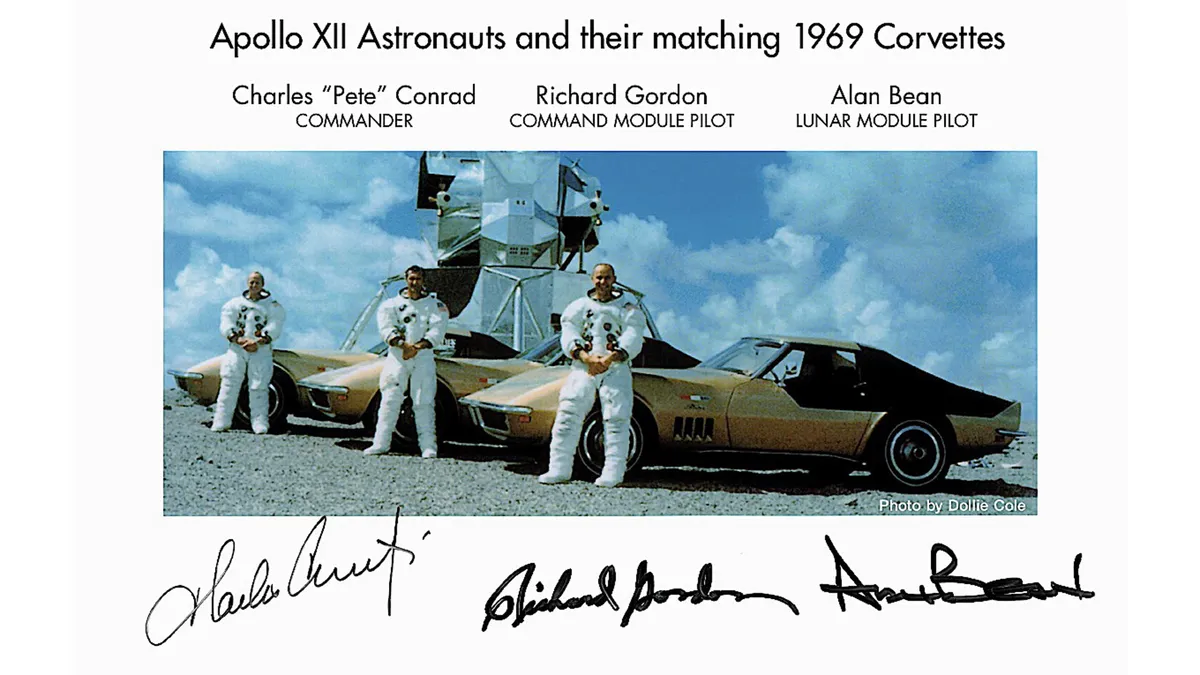
A deliberate nod to the lunar module they had just used on their mission.
It wasn’t a factory package or a coordinated promotion.
It was three astronauts making the same call at the same time, tying their cars directly to the spacecraft that took them to the Moon.
That level of coordination is what makes these stand out now, even among the other Corvettes astronauts were driving at the time.
At the time, though, they weren’t treated as anything special.
These were leased cars, driven like any other, and eventually moved on.
Related
Only one of the three Apollo 12 Corvettes is still accounted for
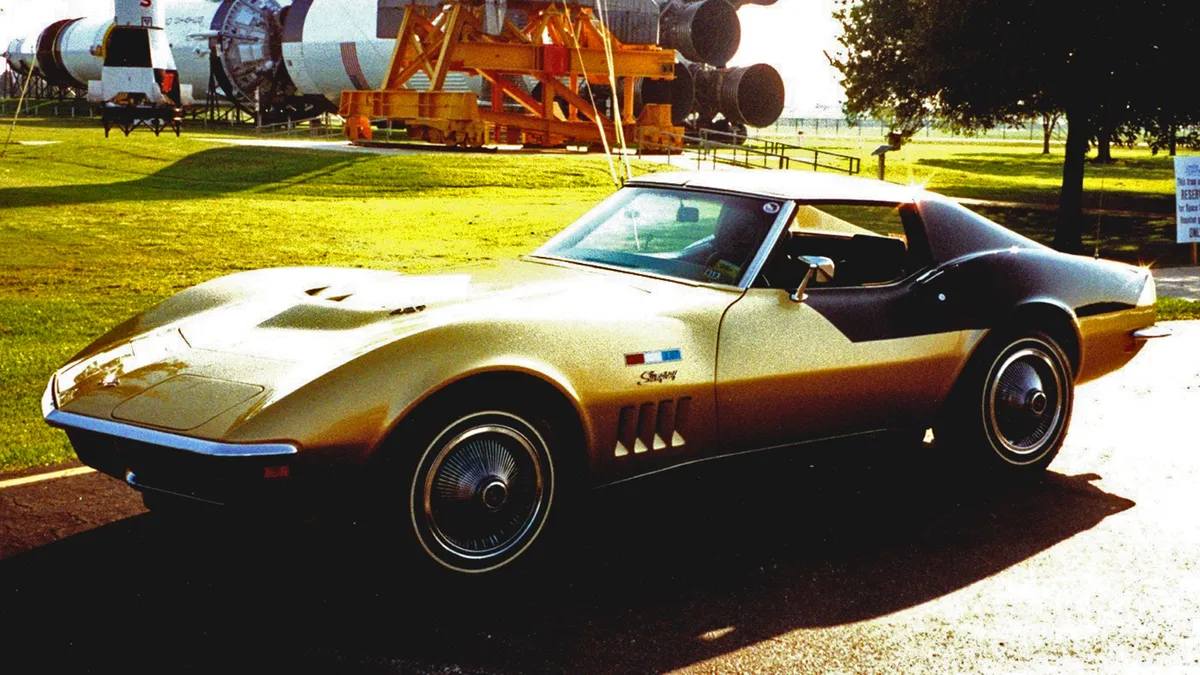
Alan Bean’s Corvette was sold in the early 1970s for $3,230 – barely more than a used car at the time.
Decades later, it was restored to its original condition in the 1990s.
But unlike the other two, it didn’t vanish.
Collector Danny Reed spotted Bean’s Corvette on a GMAC used car lot in 1971 and bought it after recognizing its distinctive black-and-gold paintwork.
That decision ended up preserving the only surviving example from the Apollo 12 trio.
By the 1990s, the car had been restored to its original standards, bringing it back to the exact look it had when the Apollo 12 crew first took delivery.
The other two Corvettes never got that second chance.
Over time, they slipped out of sight – sold on, modified, or simply lost to history.
No confirmed trace, no preserved example, no clear record of where they ended up.
Which leaves Bean’s car in a completely different category – ‘a rare link between the Moon program and America’s Sports Car’, as the National Corvette Museum described it.
NASA’s Corvette era came to an abrupt end
At its peak, the astronaut-Corvette relationship felt almost normal.
The $1 lease program meant astronauts could spec their cars however they liked, and many did.
Big engines, bold options, manual gearboxes – these weren’t subtle builds.
But the visibility of it all was part of the appeal.
Astronauts were national heroes, and their choice of car carried weight.
Corvette leaned into that connection, and thus the ‘AstroVette’ nickname was born.
But the arrangement didn’t last.
By 1971, General Motors ended the program, and over time, NASA introduced stricter ethics rules that prevented active astronauts from accepting deals like that altogether.
The shift changed more than just what astronauts drove.
Now, the idea of three astronauts coordinating matching sports cars to reflect a mission would be unthinkable.
Which is exactly why that one surviving Corvette matters.
It’s not just the last of three cars.
It’s an echo from a time when space history and car culture overlapped in a way that hasn’t really happened since.
With roles at TEXT Journal, Bowen Street Press, Onya Magazine, and Swine Magazine on her CV, Molly joined Supercar Blondie in June 2025 as a Junior Content Writer. Having experience across copyediting, proofreading, reference checking, and production, she brings accuracy, clarity, and audience focus to her stories spanning automotive, tech, and lifestyle news.