How foldable screens like the new iPhone Duo could make their way into supercars sooner than we think
Published on Sep 10, 2026 at 5:39 AM (UTC-4)
by Alessandro Renesis
Last updated on Sep 16, 2026 at 5:37 AM (UTC-4)
Edited by
Ben Thompson
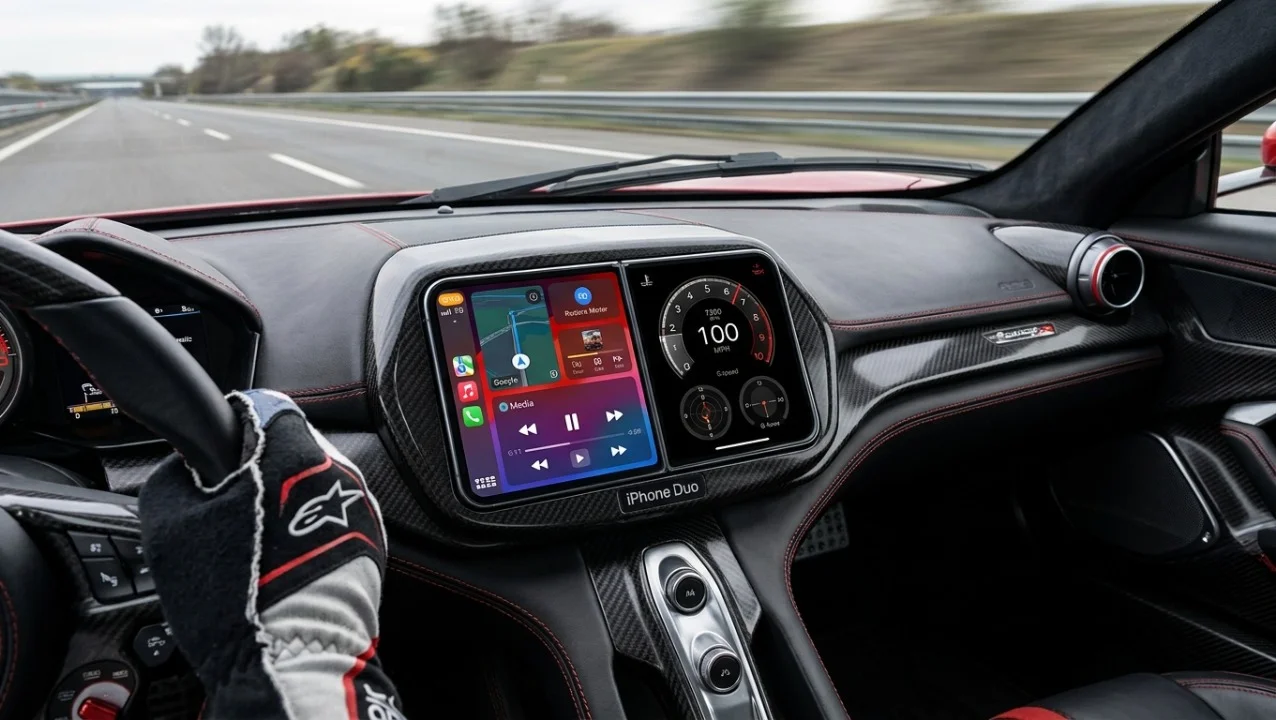

We were all expecting a foldable Apple iPhone and we did get one: it’s called the iPhone Duo.
It’s more intriguing than we expected.
Apple execs have always maintained that they don’t necessarily care about being first, just the best.
And now everyone’s wondering how the Duo design could be used in cars.
What Apple did differently
Apple never mentions its main rivals directly – in fairness, very few companies do that – and when John Ternus began talking about foldable phones, he explained why Apple hadn’t built one yet.
In short, Ternus said that most rival foldables look like two phones glued together.
They’re too big, and the shape is sort of unnatural.
Every other foldable available falls under one of two categories as it’s either a flip phones that folds vertically or book-style foldable that folds horizontally.
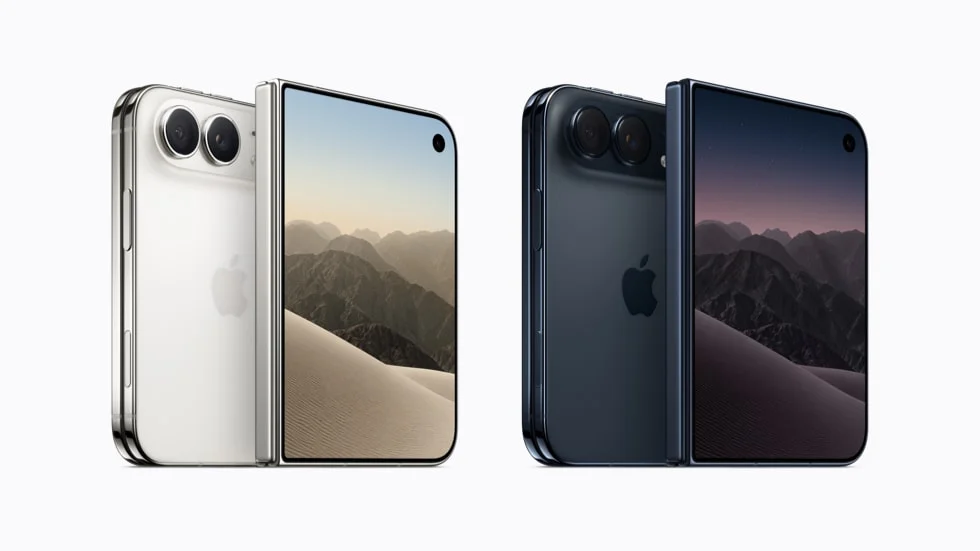
The flip phones are essentially the size of a normal phone when they’re open, and much, much smaller when they’re folded.
Book-style phones do indeed look like two phones glued together.
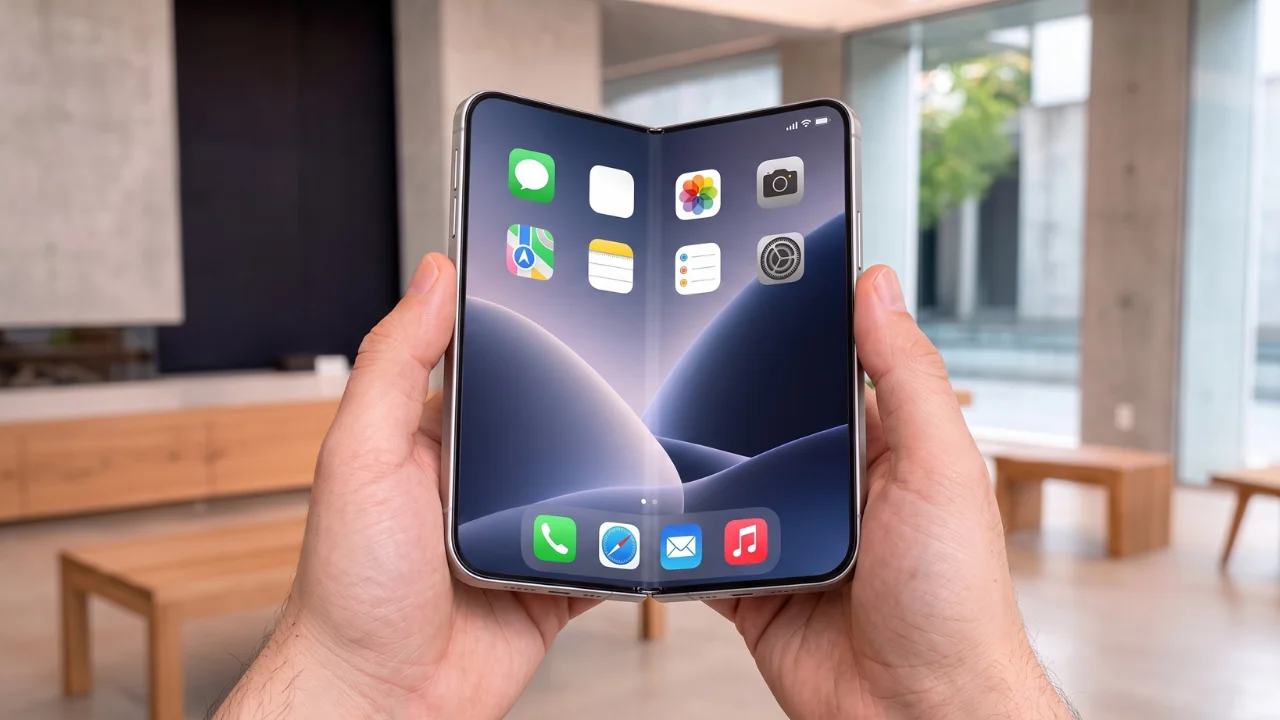
The iPhone Duo looks different.
Also, Apple somehow managed to reduce the annoying central crease to almost nothing.
So now people are asking: What if we used that as an infotainment screens for phones?
Related

Why people would like to use iPhone Duo as an infotainment screen
Some people, especially purists, don’t particularly like infotainment screens partly because they can be a distraction, but mostly because they believe they ruin the overall design of the dashboard.
So, one of the ideas would be to turn the Duo into a removable infotainment screen.
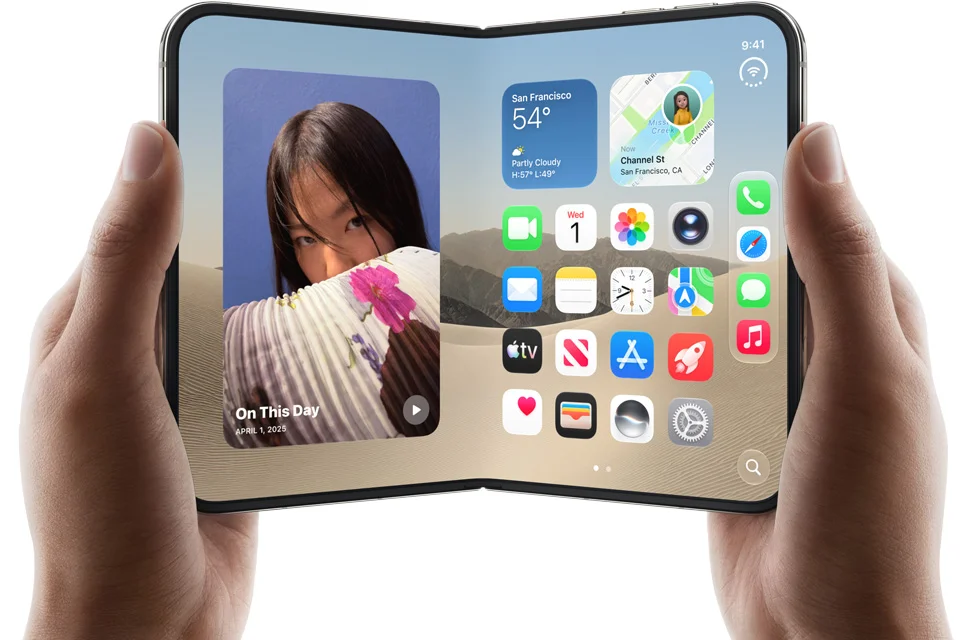
It could be a digital co-driver: navigation on one half, live vehicle data on the other – like speed, tire pressure, range, lap times, and so on.
You could also use it on the passenger side for route planning, Spotify/Apple Music/Apple TV, weather apps, and the list goes on.
Also, the iPhone Duo could be the infotainment screen that doesn’t have to live in the car.
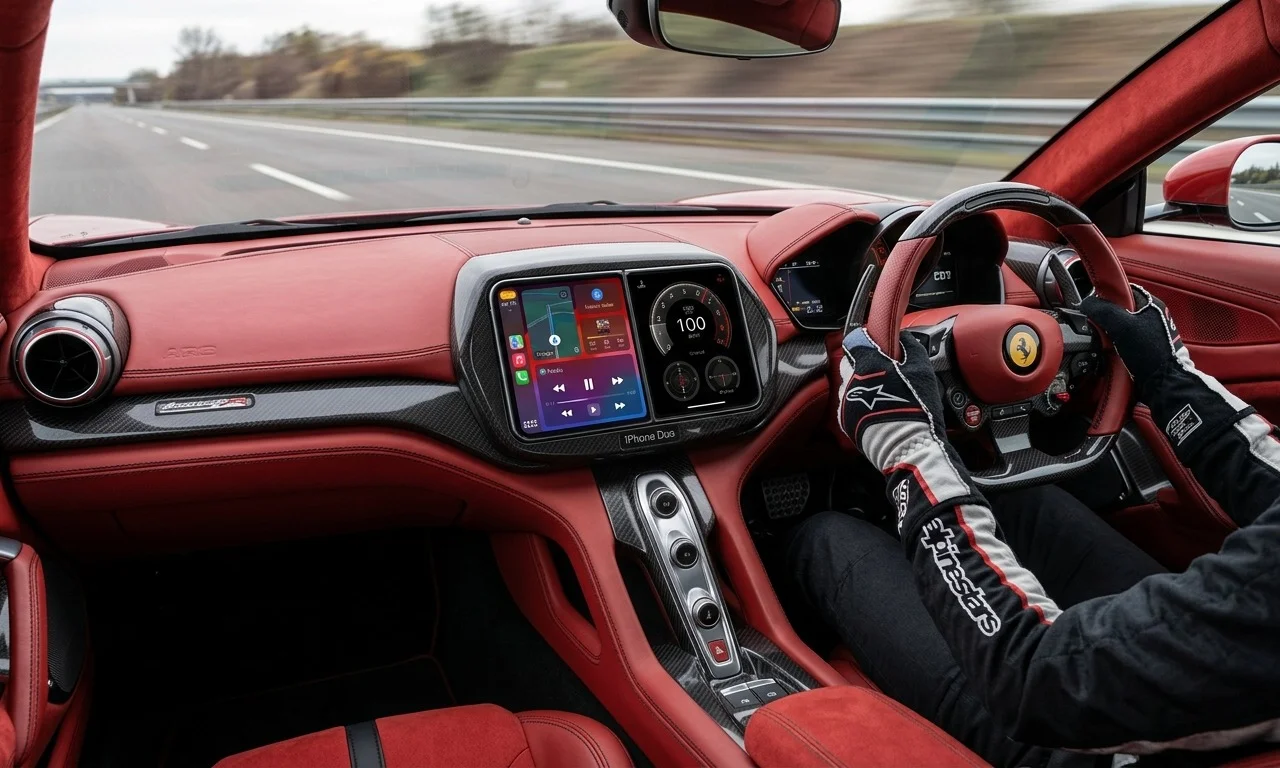
Instead of permanently gluing a large black rectangle onto your dashboard, a supercar could have a discreet magnetic/dock mount for the Duo.
When you want navigation, music, CarPlay, vehicle information or a road-trip display, unfold the phone and you’ve got a 7.6-inch infotainment screen.
When you arrive, fold it shut and take it with you – leaving the dashboard clean.
Historically, Apple has always been copied right after being criticized.
It happened when they became the first tech company to sell a phone for $1,000+, when they removed the audio jack, when they removed headphones from the box, when they pioneered Bluetooth headphones.
Who knows, maybe it’ll happen again with iPhone Duo’s design.
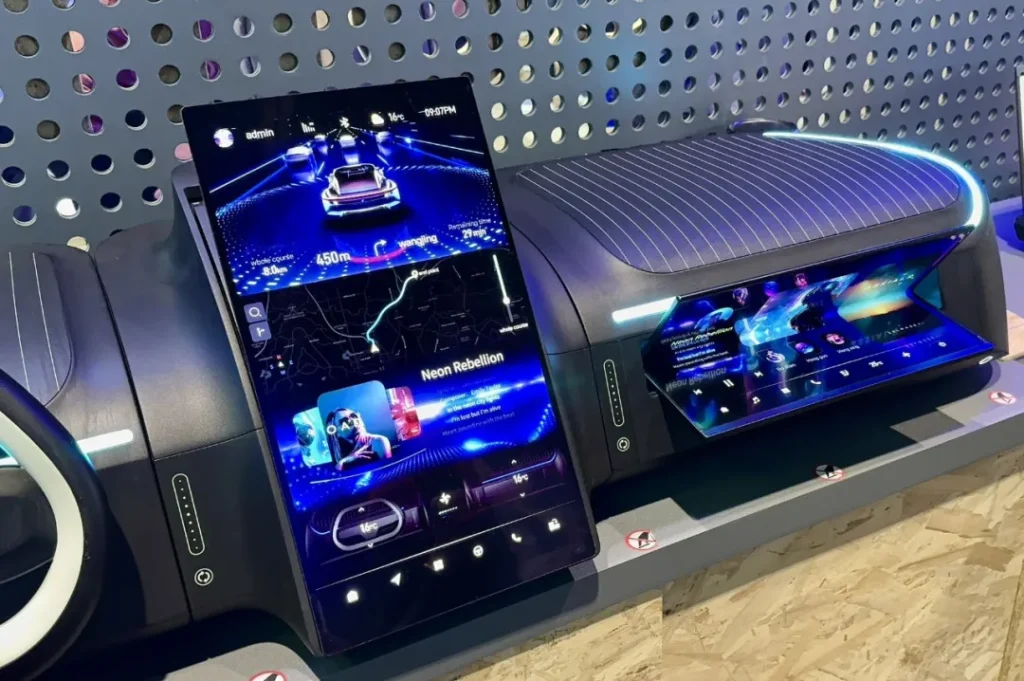
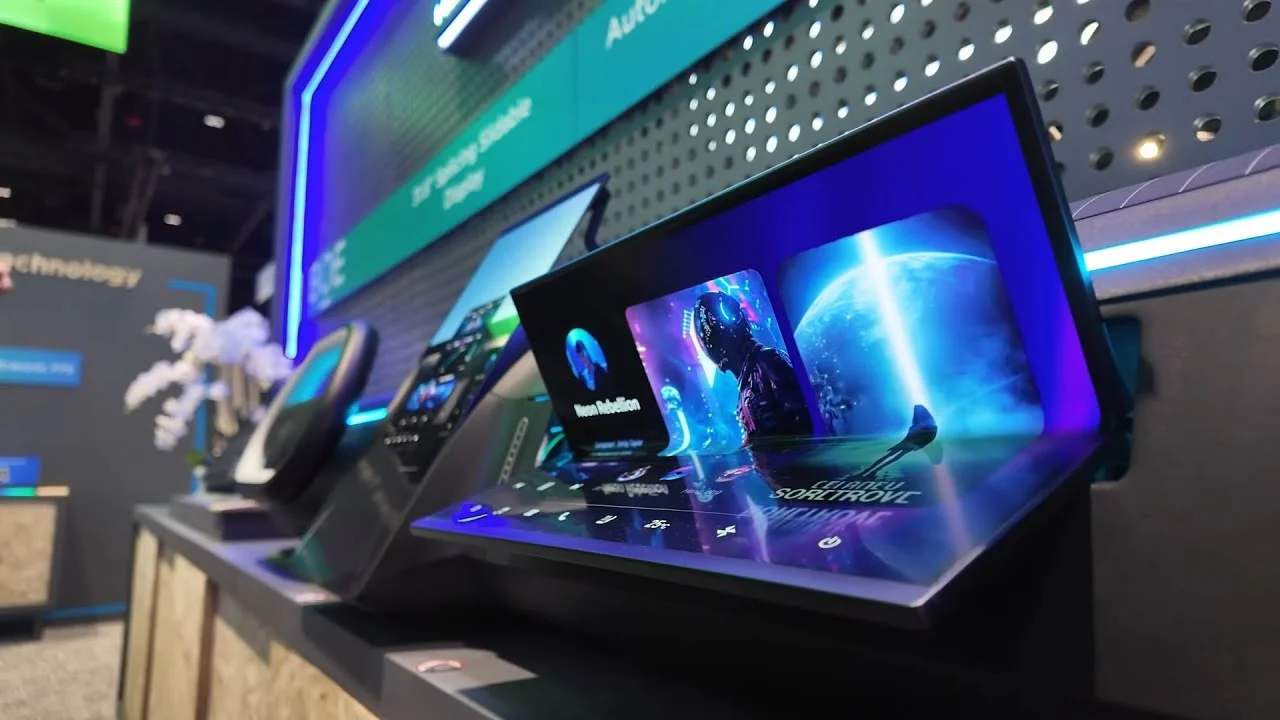
In fact, there’s a company in China that’s already been doing it.
It’s called BOE, and it’s been developing flexible and foldable OLED displays.
BOE created a 31.6-inch U-shaped sliding-rolling display that adjusts size, retracts into the dashboard, or moves for passenger movie modes.
The company actually won CES Innovation honors for this display.
Alessandro is an automotive journalist with 10 years of experience covering supercars, automotive history, emerging vehicle technology, and luxury transportation. He wrote the first article published on SupercarBlondie.com when the website launched in 2022 and has since built a reputation for insightful reporting across the automotive and transportation industries. His expertise is grounded in hands-on experience. Alessandro has driven every Tesla model ever produced, from the original Roadster to the Cybertruck, and regularly covers the latest developments in electric vehicles and automotive innovation. His passion for transportation extends beyond cars, he has even flown a Boeing 787 Dreamliner simulator in Addis Ababa, Ethiopia. His reporting spans everything from classic American muscle cars and rare automotive discoveries to luxury yachts, private aircraft, high-end watches, and cutting-edge vehicle technology. Known for his deep knowledge of automotive history and ability to uncover the stories behind iconic vehicles, Alessandro brings readers a blend of historical context, technical expertise, and first-hand experience.