Before EVs took over the road, General Motors tried to save the American car with a coal-burning turbine
Published on Feb 09, 2026 at 8:26 AM (UTC+4)
by Keelin McNamara
Last updated on Feb 06, 2026 at 6:02 PM (UTC+4)
Edited by
Amelia Jean Hershman-Jones

Did you know that General Motors once tried to save the American car with a coal-burning turbine? Yep, coal.
It happened long before EVs started to dominate the road.
The plan actually came about as a result of the devastation of the 1970s.
And it led to General Motors creating a car with a turbine that ran on coal.
DISCOVER SBX CARS: The global premium car auction platform powered by Supercar Blondie
1973 Oil Embargo hammers American auto industry
The early 1970s were not a fun time for the American car industry.
In fact, this period of history directly led to the eradication of the muscle car as we once knew it.
But to explain why, we have to go through a bit of a history lesson.
In 1968, an organisation called the Organisation of Arab Petroleum Exporting Countries (OAPEC) was formed.
As you probably know, the Middle East is pretty vital to the global oil industry.
Back in 1973, OAPEC instituted a global oil embargo against countries in the West.

This included, but was far from limited to, the United States.
And the effect was seismic.
The embargo led to an enormous fuel shortage, which, in turn, led to enormous gas prices.
American cars rapidly started downsizing and focusing on fuel economy.
This was also coupled with the growing popularity of Japanese cars in the early 1970s.
Click the star icon next to supercarblondie.com in Google Search to stay ahead of the curve on the latest and greatest supercars, hypercars, and ground-breaking technology
General Motors provides possible solution
At this point, the American car industry was staring down the barrel.
What could it do to evolve and keep pace with the changes happening around it?
Well, General Motors thought that it had the answer.
The solution it came up with was a coal-burning turbine engine.
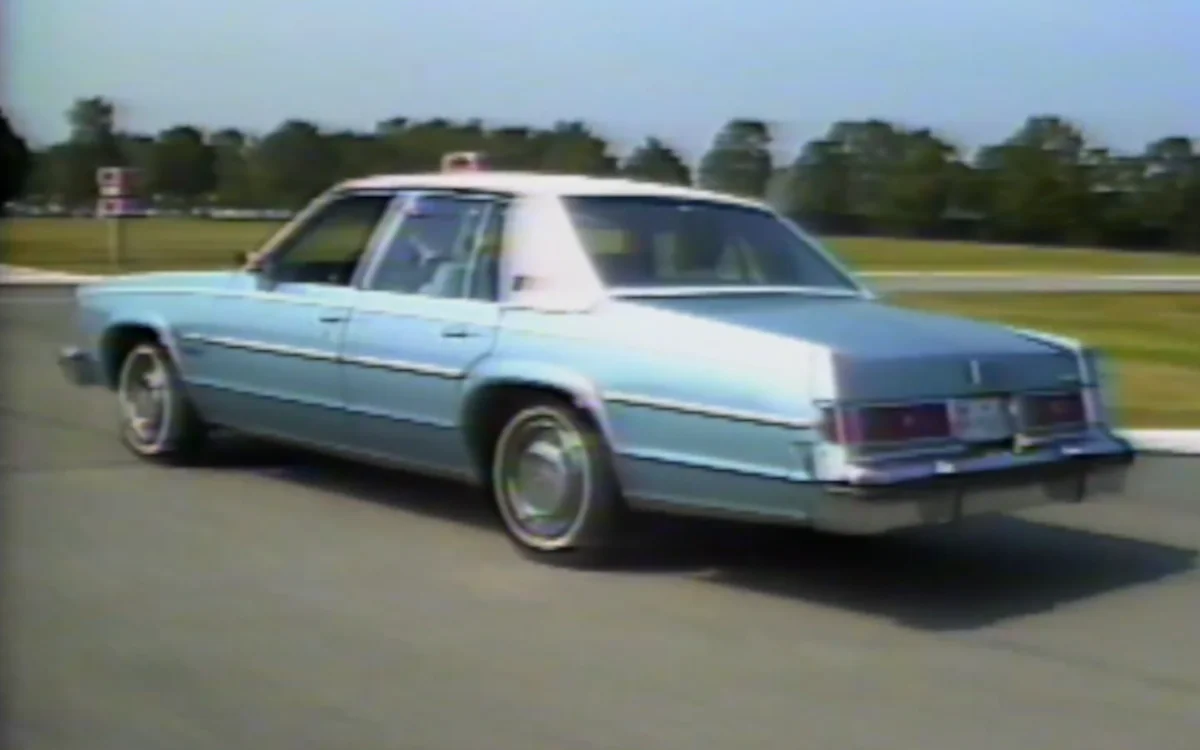
What is even better is that the company made a functioning 1978 Cadillac Eldorado and 1977 Oldsmobile Delta 88 that ran on powdered coal.
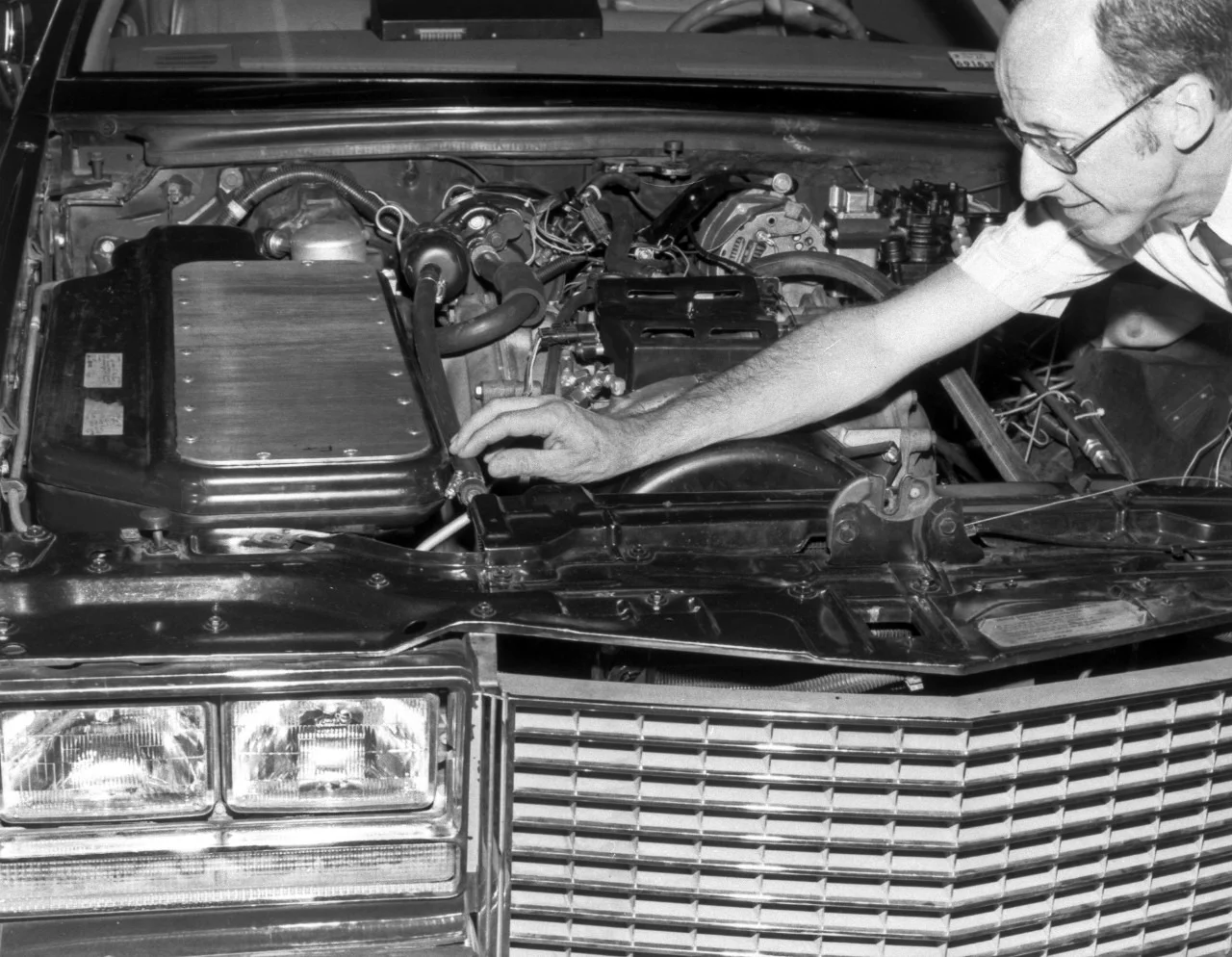
The advent of turbine technology was actually quite fascinating.
It had been proven to work in land-based vehicles such as trucks and locomotives.
Turbines also promised smaller packaging, better efficiency, and much smoother operation.
Some manufacturers considered turbine engines the ultimate solution.
But why choose coal over other fuel options?
Well, there was once a time when America had an incredible abundance of coal reserves.
It was estimated in the 1970s and 1980s that America had a 600-year supply of coal.
So – problem solved, then.
In 1981, General Motors presented its first coal-burning turbine car to the world.
The car in question was a re-worked 1978 Cadillac Eldorado.
General Motors lovingly referred to it as the ‘Coal-Dorado’.
How did it all work in practice?
Incredibly, General Motors engineers actually figured out a way to make it all work.
By this time, low-ash powdered coal was available that was fine enough to actually work in the turbine.
Of course, coal needs to be stored before it can be burned.
But this problem was solved with the enormous space available under the hood.
John Schult, an engineer who worked on the process in the 1980s, explained it all.
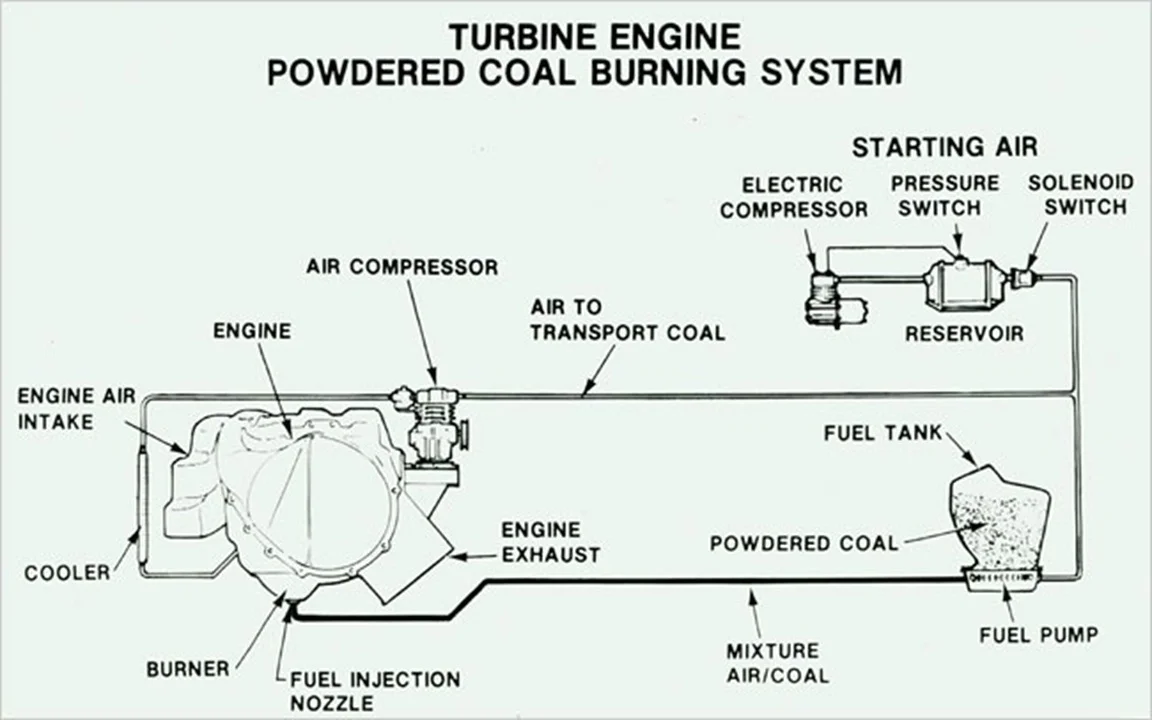
“To keep the coal dust ready for delivery to the engine, it had to be continuously agitated,” he said.
“Then a small conveyor belt delivered the coal to the gasifier.”
This gasifier was the first section of GM’s automotive turbine engine.
“When you stepped on the gas pedal, it actually moved a potentiometer that varied the speed of the coal conveyor belt. More fuel resulted in more power.”
What General Motors achieved was extremely impressive, but it also had a number of problems.
Engineers admitted that the coal-burning turbine proved the idea could work, but it was perhaps a bit too exotic to put into production.
Then there were the small issues of the unbelievable amount of noise, as well as cleaning the emissions produced.
The 1990s came knocking, and so did a focus on massively reducing emissions.
But General Motors’ ingenuity is definitely worthy of celebrating.