Man compares how electric cars fare in deep water with gas and diesel cars and there are some surprising results
Published on Feb 22, 2026 at 8:23 AM (UTC+4)
by Callum Tokody
Last updated on Feb 23, 2026 at 10:28 PM (UTC+4)
Edited by
Amelia Jean Hershman-Jones

Electric cars on flooded roads often reveal how water depth really affects modern vehicles once conditions turn bad.
Most of the time, that breakdown has nothing to do with electronics, software, or bad luck.
It usually comes down to one basic component and where it sits on the car.
What really stands out is how differently electric cars act compared to their fossil fuel counterparts – is this where EV performance fizzles out, or will their performance switch drivers to electric for good?
VISIT SBX CARS – View live supercar auctions powered by Supercar Blondie
Electric cars vs flooded roads
On petrol and diesel cars, the air intake is usually the main reason engines fail in deep water.
That intake sits low at the front and feeds air into the engine.
As long as it stays above the water line, the car keeps running.
Once water reaches it, the engine pulls that water straight in and shuts down almost immediately.
This is why flooded roads catch so many drivers off guard.
People enter slowly, realise the water is deeper than expected, then press the accelerator.
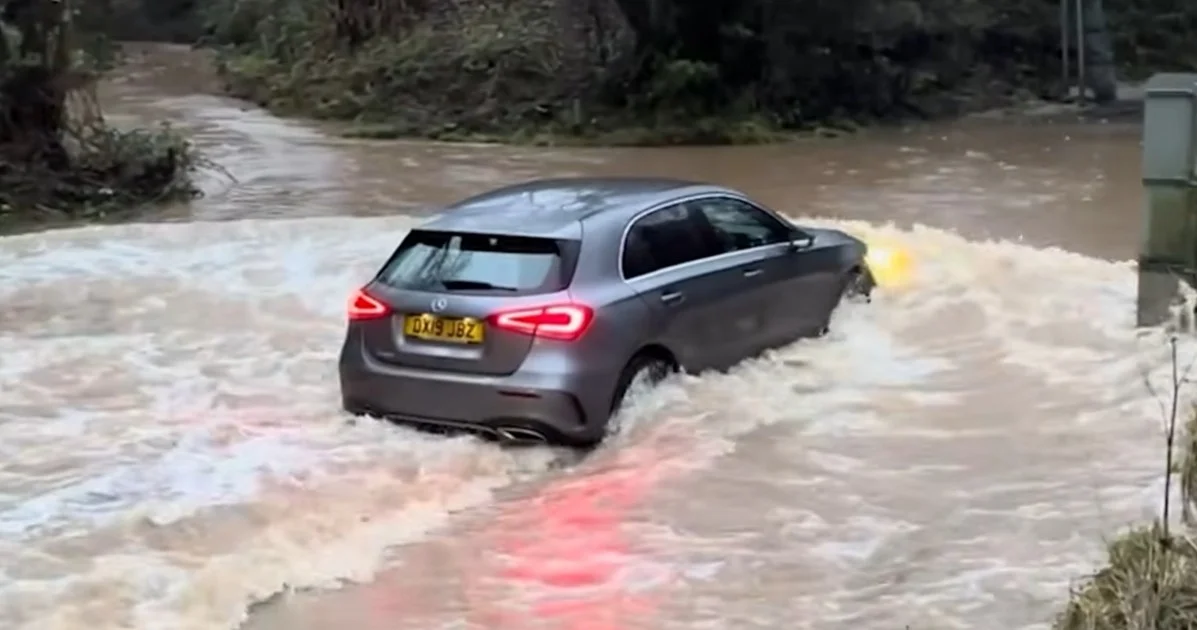
That surge pushes water up toward the intake. Once water goes in, the engine can suffer serious damage, sometimes enough to write it off completely.
Electric cars avoid this specific problem because they do not need air to operate.
There is no intake feeding an engine.
Electric motors and battery packs, on the other hand, are sealed units, designed to keep moisture out.
Some systems are even pressure-managed to prevent water ingress if water depth gets too high.
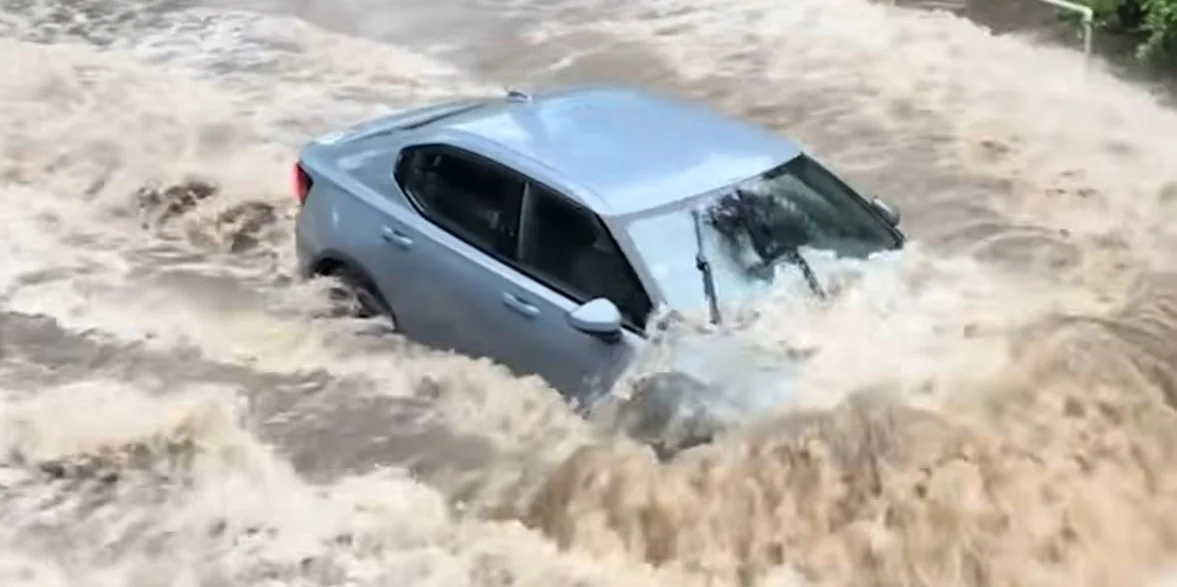
There are also fewer moving parts, which means fewer paths for water to reach something critical.
That design difference explains why electric cars often fare better on flooded roads.
They are far less likely to stop simply because water reaches the front of the vehicle.
As long as the crossing is brief and controlled, they usually continue moving where combustion cars fail.
What water can still damage, electric or not
None of this makes electric cars immune to flood damage.
Water can still enter the cabin and affect low-mounted electronics.
Lights, door systems, pedals, and other auxiliary components can all suffer if water gets high enough.
Sensors mounted around the car, including radar units and parking sensors, are also vulnerable.
Speed plays a bigger role than many drivers realise.
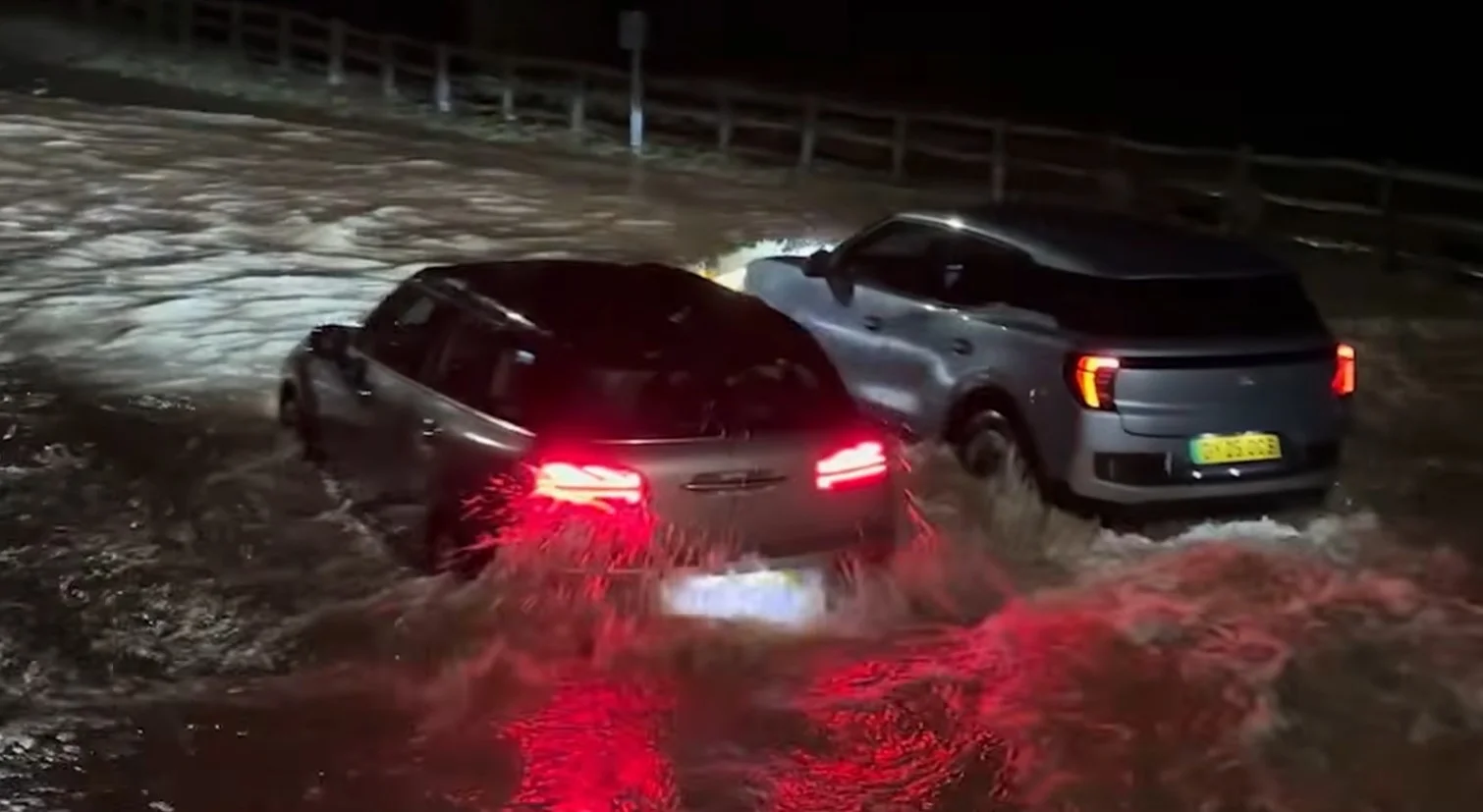
Driving through water quickly increases pressure, not just splash.
That pressure can rip off number plates, trim, and body panels.
In extreme cases, bumpers can tear loose. Underneath the car, suspension components, wiring, and brake systems are not designed to take sustained high-pressure water.
Corrosion is another risk that appears later. Floodwater can reach seams, connectors, and cavities that normally stay dry.
Once moisture sits there, corrosion can begin. This affects all cars, electric or combustion.
No vehicle is protected from long-term water exposure.
The safest advice remains simple: if there is a dry route, take it. If you must cross flooded roads, go slowly and keep the water depth as low as possible.
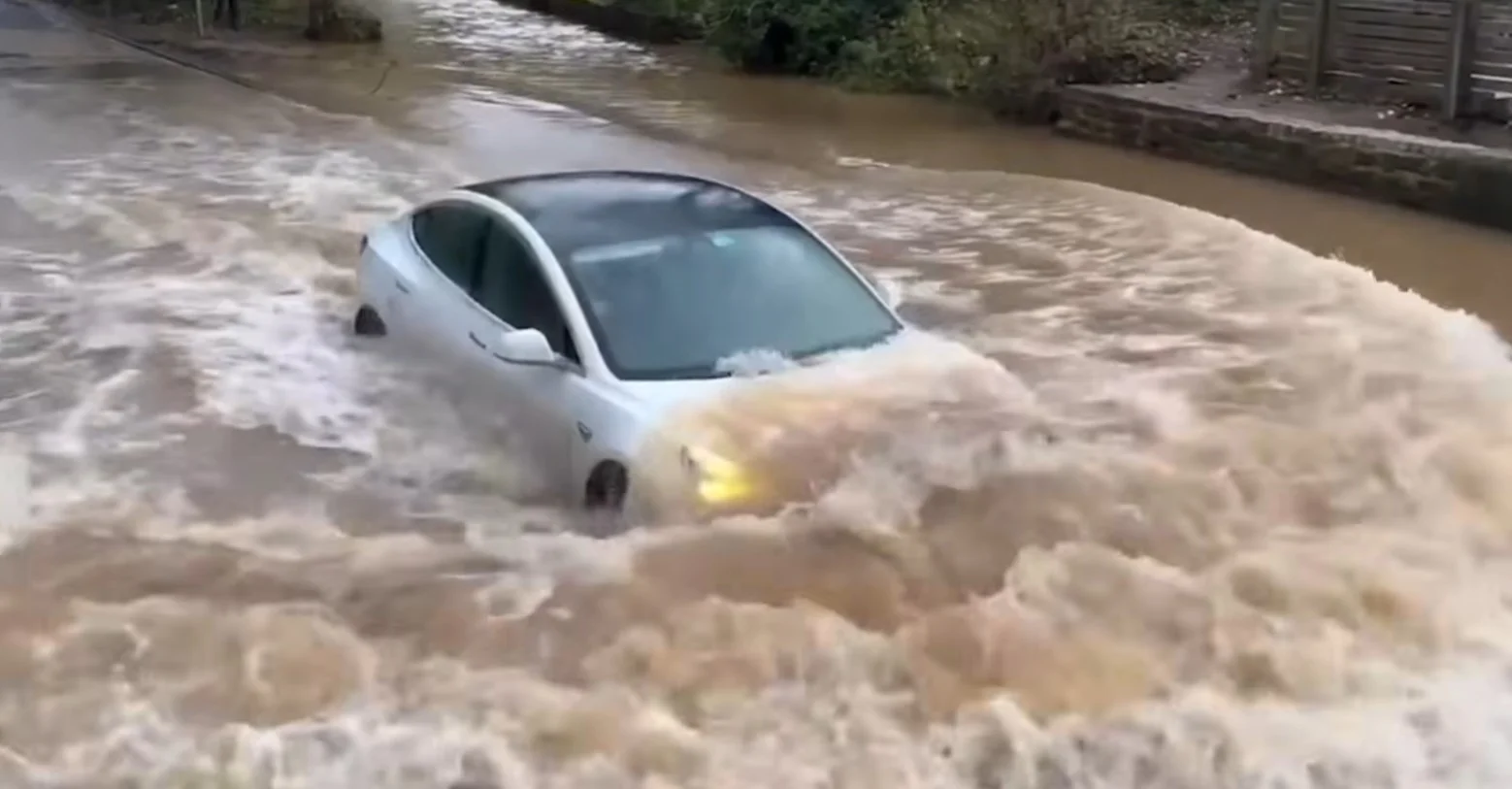
Avoid sudden acceleration and do not assume water depth based on appearance alone.
Some drivers use a last-resort method in combustion cars by reversing slowly through shallow water, keeping the intake trailing behind the wake.
It can reduce risk, but it is not a guarantee. The smarter choice is still avoiding the water altogether.
Electric cars have a clear advantage in flooded conditions because they remove the single most common cause of engine failure.
That advantage does not make floodwater safe or predictable.
Careful judgement, slow speed, and knowing when to turn around matter more than drivetrain choice.
When it comes to flooded roads, the best outcome still comes from not driving into them at all.
DISCOVER SBX CARS: The global premium car auction platform powered by Supercar Blondie