The Ferrari Luce accelerates so hard that NASA scientists had to be called in to make sure the g-force wouldn't harm the people inside it
Published on Mar 25, 2026 at 4:40 AM (UTC+4)
by Henry Kelsall
Last updated on Mar 24, 2026 at 4:41 PM (UTC+4)
Edited by
Emma Matthews

We haven’t fully seen it yet, but it sounds like the Ferrari Luce, Maranello’s first EV, accelerates so quickly that NASA has had to be called in to check on the g-force inside the cabin.
The company’s first EV is promising a lot, and the automotive world is super curious as to what the Italian marque will share next about the 1,000hp car.
But this much power comes with potential issues, and that’s the rapid acceleration of Ferrari’s first-ever electric car.
In fact, it became such a worry that NASA was called in to address a possible g-force problem.
Enter our competition to win a stunning 2006 Ford GT or $400,000 cash!
Why NASA has been called in with the Ferrari Luce
The news of NASA’s involvement emerged in an interview with Autocar India.
Company CEO Benedetto Vigna said that the acceleration of the Luce had proven to be exceptionally rapid.
So NASA was called in to test when it started to become uncomfortable for those inside the car.
A company like NASA will know this firsthand, thanks to its work alongside pilots and astronauts.
The Italian marque doesn’t want to push things to an extreme.
But it does want to find the happy tolerance level for occupants.

For example, its paddle shifters are used to control how much torque is sent to the wheels.
This can have an impact on the sharpness of the car as it pulls away.
This is what else we know about Ferrari’s first EV
While details are scarce, we do have some information on the new EV.
We know it will have four electric motors under the hood, producing up to 1,000hp.
We also know that the Ferrari Luce will have enough range for at least 310 miles.
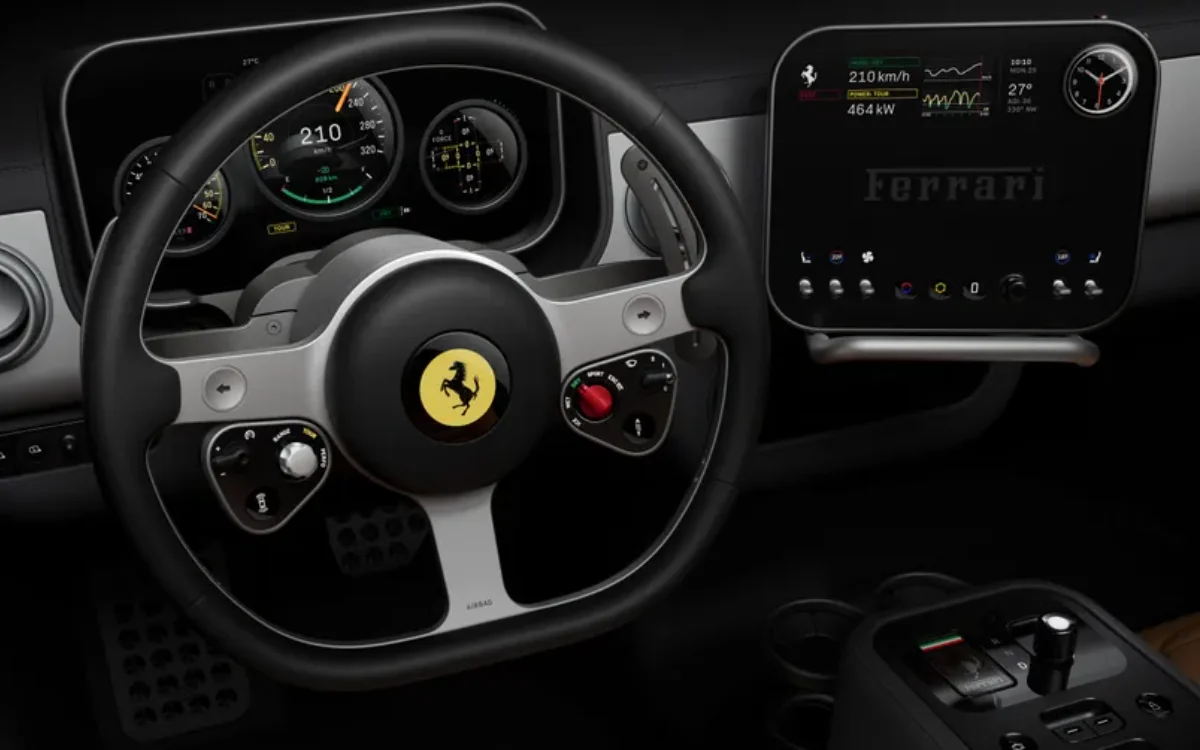
Maranello has revealed images of the car’s interior, which it says will be a Grand Tourer.
It certainly looks set to offer a unique cabin experience unlike any other Ferrari seen before.
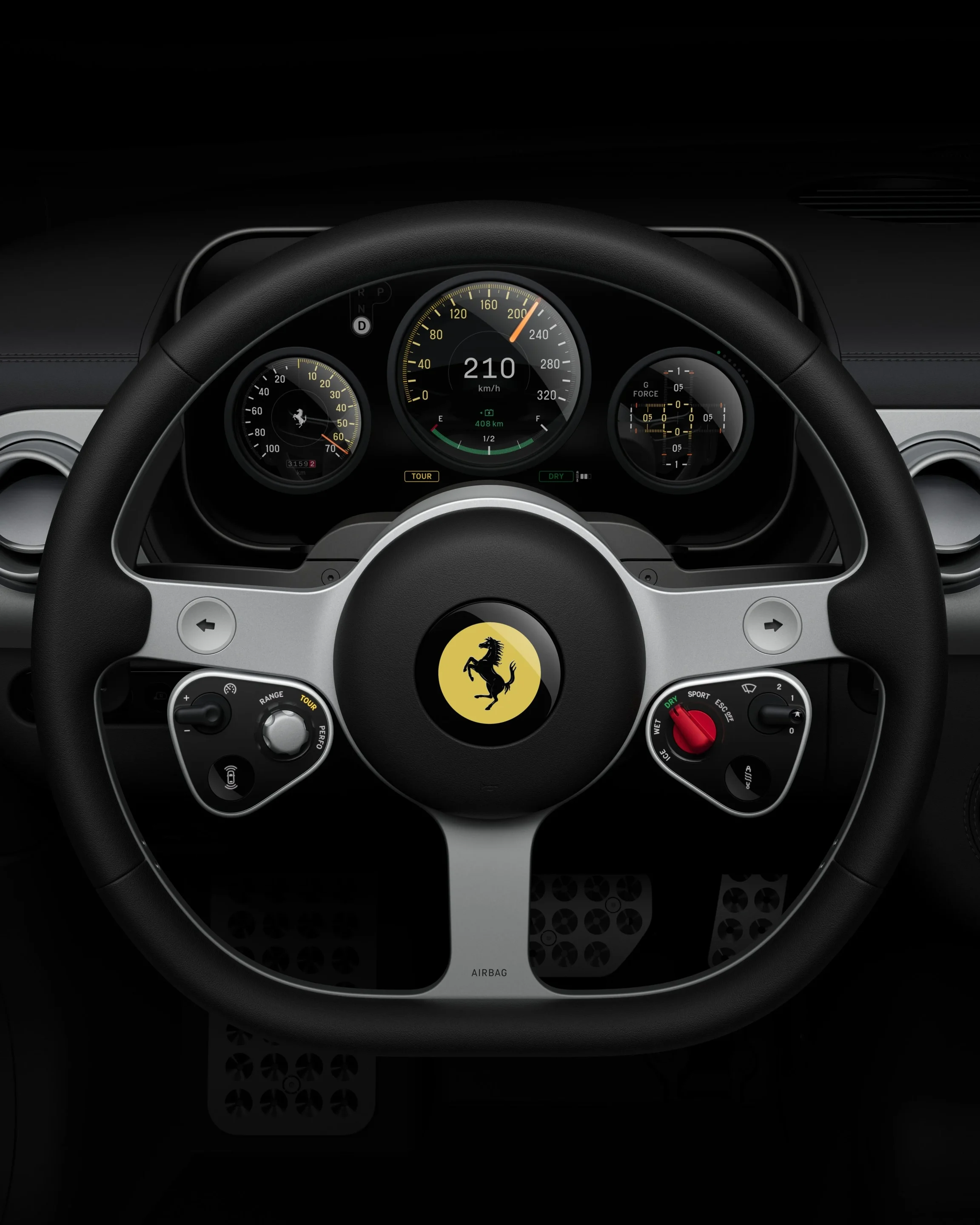
The wheel, for example, is quite simple and minimalist, while the dashboard features a g-force meter.
In fact, it isn’t called a dashboard now, with Ferrari calling the display in front of the driver a binnacle.
Whatever it is called, the Luce promises to be something special.
It was only a matter of time before Ferrari produced an EV.
Ferrari’s supercar evolution
1984 288 GTO: The origin of the company’s modern supercar lineage
1987 F40: Built to celebrate 40 years – twin-turbo icon
1995 F50: F1 tech brought to the road with a V12
2002 Enzo: Advanced aerodynamics and carbon chassis
2013 LaFerrari: Maranello’s first hybrid hypercar, 963hp
2024 SF90 XX Stradale: Track-ready evolution of the hybrid supercar
DISCOVER SBX CARS: The global premium car auction platform powered by Supercar Blondie
Henry joined the Supercar Blondie team in February 2025, and since then has covered a wide array of topics ranging from EVs, American barn finds, and the odd Cold War jet. He’s combined his passion for cars with his keen interest in motorsport and his side hustle as a volunteer steam locomotive fireman at a heritage steam railway.