Man spots the $450M superyacht owned by Google's co-founder that costs $45M a year to maintain and it looks almost menacing
Published on Apr 17, 2026 at 6:19 AM (UTC-4)
by Ben Thompson
Last updated on Apr 17, 2026 at 12:19 PM (UTC-4)
Edited by
Emma Matthews
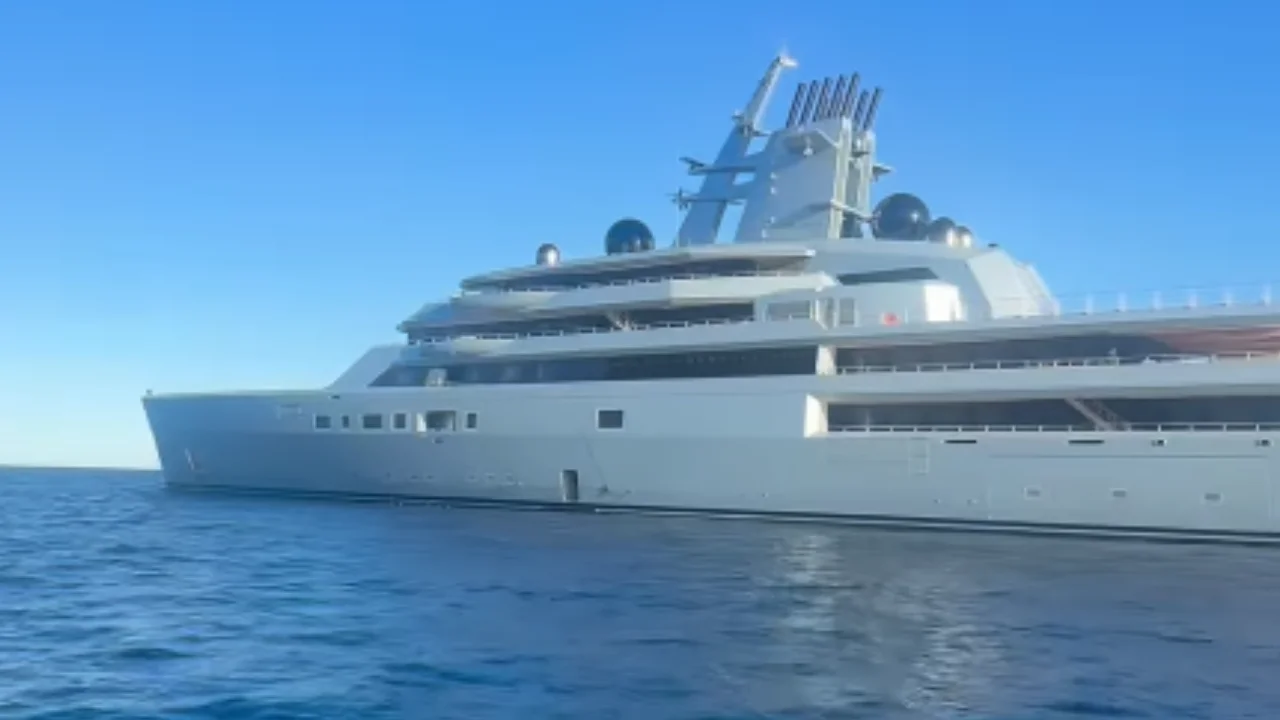

This $450 million superyacht belongs to Google’s co-founder and costs $45m a year to maintain – and it’s not just in expenses that this vessel is daunting.
While this boat may be named Dragonfly, there is nothing dainty about it.
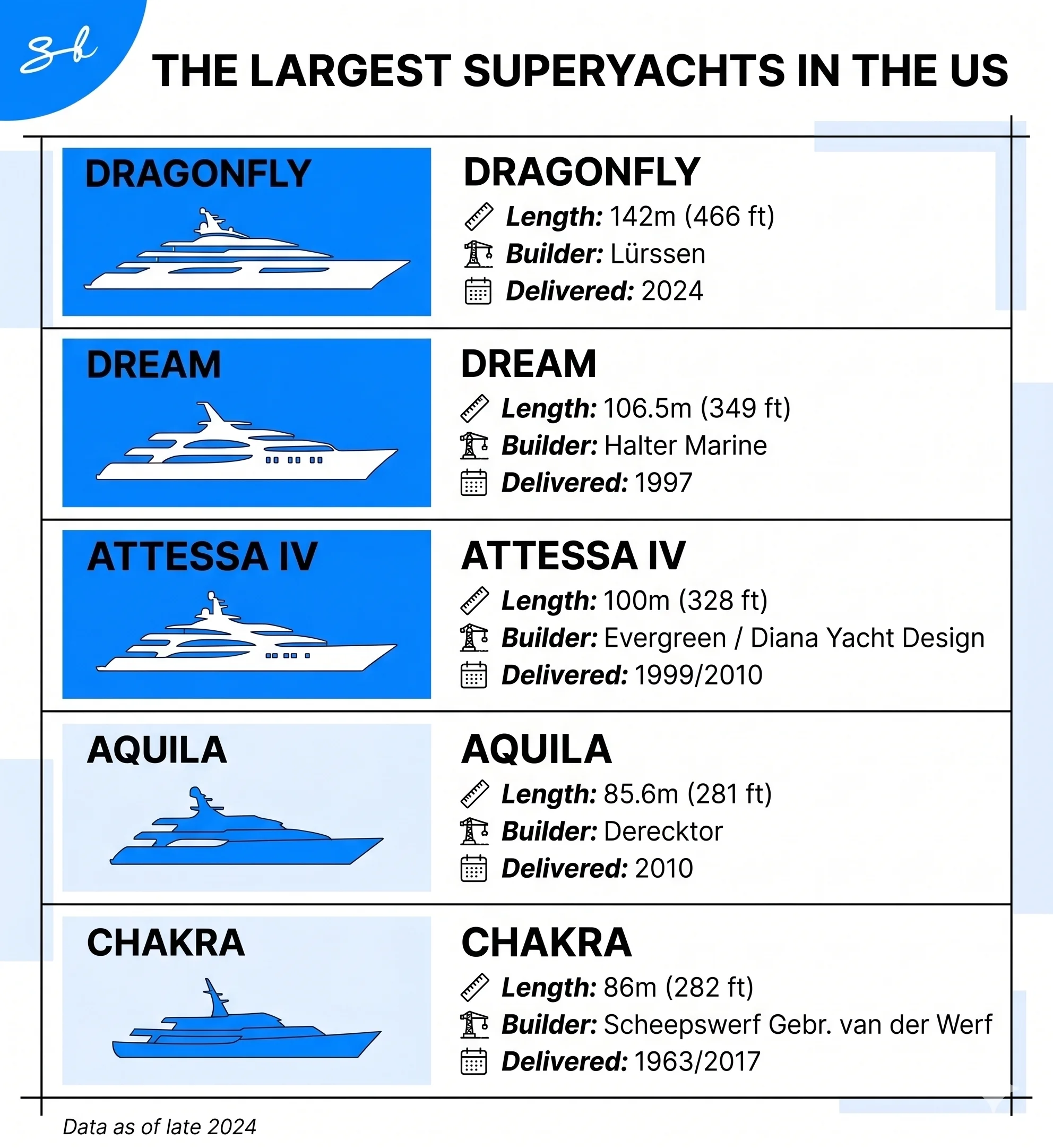
Measuring out at 142 meters long, this superyacht has space for two helipads and a glass-bottom pool.
But some people couldn’t help but note that Dragonfly was almost intimidating.
Google’s co-founder has a superyacht called Dragonfly – but it’s no insect
This formidable vessel belongs to Sergey Brin, who founded Google alongside Larry Page.
Earlier this year, Brin was named the world’s third richest person, so it’s no wonder he can afford to keep Dragonfly going.
Completed in December 2024, this boat has continuously made headlines for its sheer size.
Whether it’s reducing passengers to the size of ants by comparison or dwarfing Miami, this boat is the epitome of ‘large and in charge’.
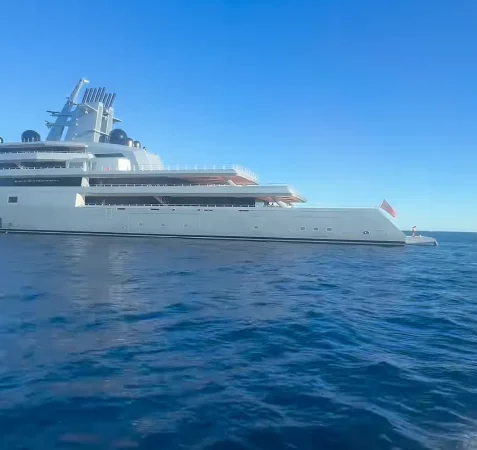
This yacht is even larger than Jeff Bezos’ Koru, and that takes some doing.
The list of luxury amenities onboard Dragonfly would almost be as long as the boat itself.
It has a glass-bottom pool, a gym, a beauty salon, and a bespoke double-folding stern platform.
In addition to all of the above, Dragonfly also features a spa, a private cinema, and a water sports center.
And that’s not forgetting two helipads.
The superyacht’s scale was put on full display in a video shared on Instagram by Jonny Dodge, the CEO at My Ocean Yachts.
In the clip, Dragonfly was out at sea, while a guy hosed off the back deck.
“Every Google search you’ve ever made helped pay for this,” Dodge wrote.
“Looks more like a villain’s warship than a yacht.”
Related



Some people found Dragonfly to be intimidating
In the comments section of Dodge’s video, people were struck by the numbers attached to this mighty boat.
“$45 million for maintenance is crazy,” one stunned commenter wrote.
The scale of Dragonfly also drew a lot of commentary.
“Looks like a warship,” one person noted.
“That’s a frigging battleship,” another concurred.
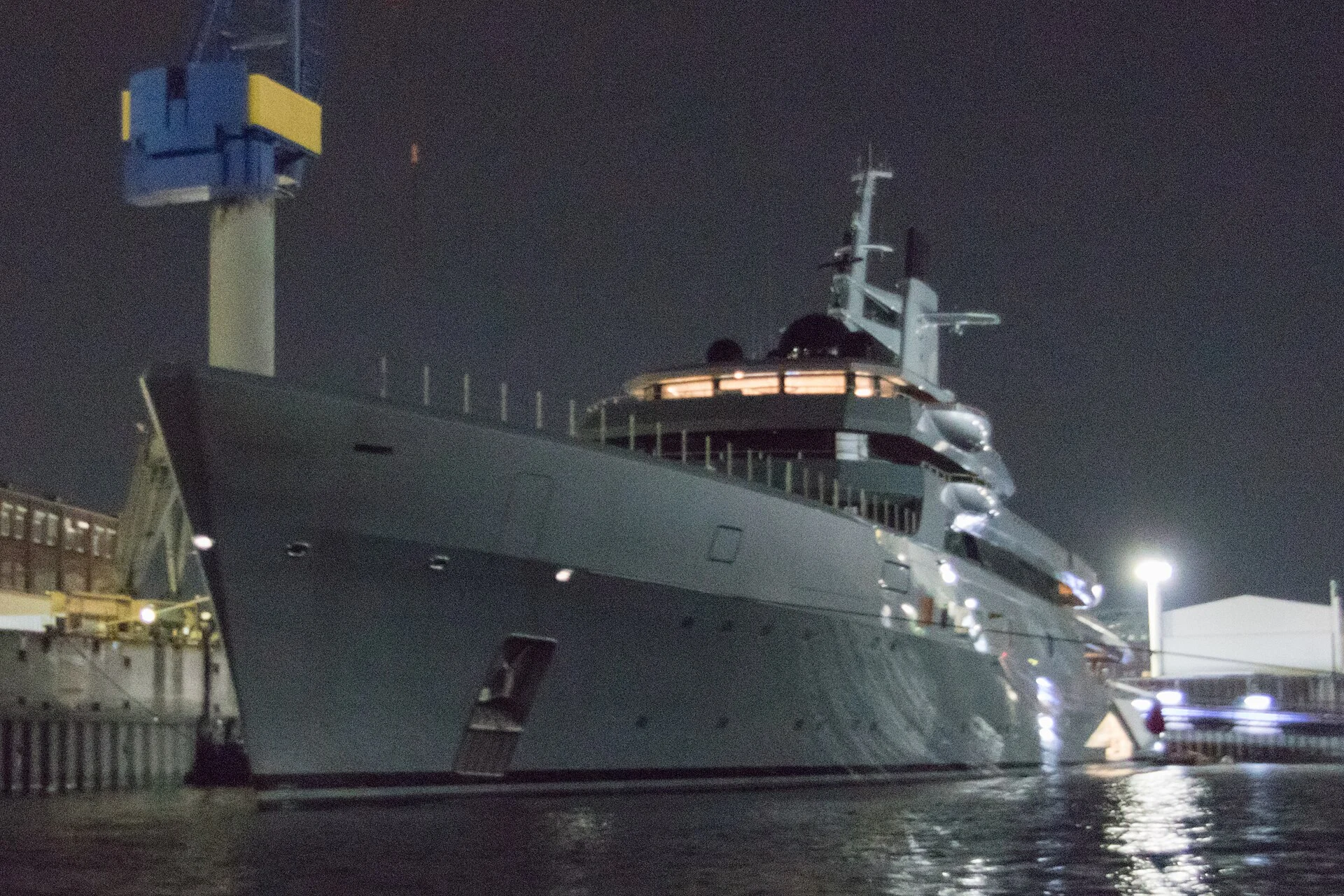
Is bigger always better when it comes to superyachts? That’s down to everyone’s individual tastes at the end of the day.
Superyacht lawyer Benjamin Maltby has noticed an upward trend in superyacht sizes.
“Over the past decade, vessels have grown not just incrementally, but emphatically. Average lengths have crept upwards into the 40-50 metre range, but that statistic rather misses the point,” Maltby told Supercar Blondie.
“The real story lies at the top end, where yachts exceeding 100 metres have become the industry’s defining symbols.
“In 2025 alone, around 10 yachts over 100 metres were delivered, a record that would have seemed fanciful not long ago.
“Even more telling is gross tonnage (GT), the measure of internal volume. Modern yachts are not just longer; they are bulkier, with some exceeding 10,000 GT – placing them closer to small cruise ships than pleasure craft.”
Timeline of Dragonfly
2019: The boat was commissioned at the Lürssen shipyard in Germany. It was originally commissioned by Russian billionaire Leonid Mikhelson under the codename Project Alibaba.
2020: Official start of the construction.
2023: Launched from the Lürssen facility in December 2023. During this phase, ownership reportedly shifted to Google’s co-founder Sergey Brin as the original owner faced sanctions and complications.
2024: Vessel completes extensive sea trials.
December 2024: Officially delivered to Brin.
2025: Public debut in Miami and Gibraltar, going on to win Yacht Style Award for superyachts over 80m.
Ben joined Supercar Blondie in February 2025 after being published by international organizations including LADbible, The Sun, the New York Post, and the Daily Mail. He covers supercars, rare and collectible vehicles, aviation, luxury assets, and the fascinating people behind them. His reporting has explored everything from seven-figure supercars and historic Ferrari collections to unusual aircraft adventures and extraordinary automotive discoveries from around the world. Ben has also gained first-hand insight into vehicle craftsmanship and customization, including visiting specialist workshops to see bespoke vehicles up close.