Jay Leno checks out the hydrogen car that broke world records when it hit 406 mph and shares his honest verdict on it
Published on Nov 27, 2026 at 8:33 AM (UTC-5)
by Alessandro Renesis
Last updated on Nov 27, 2026 at 8:33 AM (UTC-5)
Edited by
Alessandro Renesis
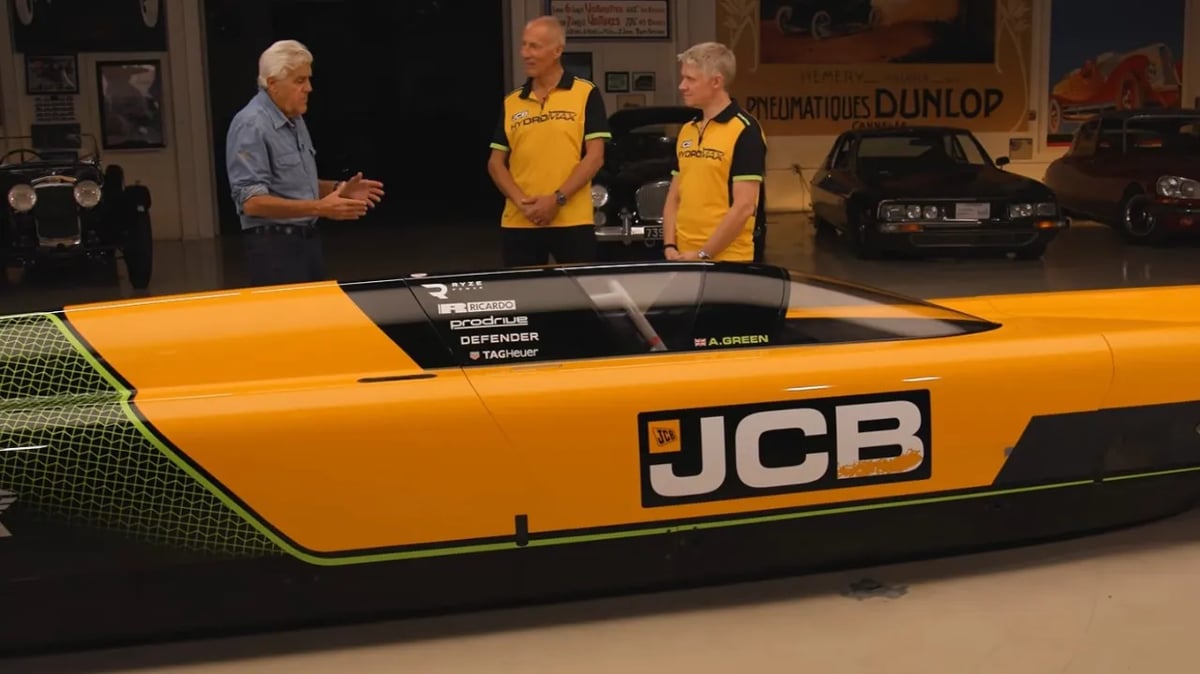

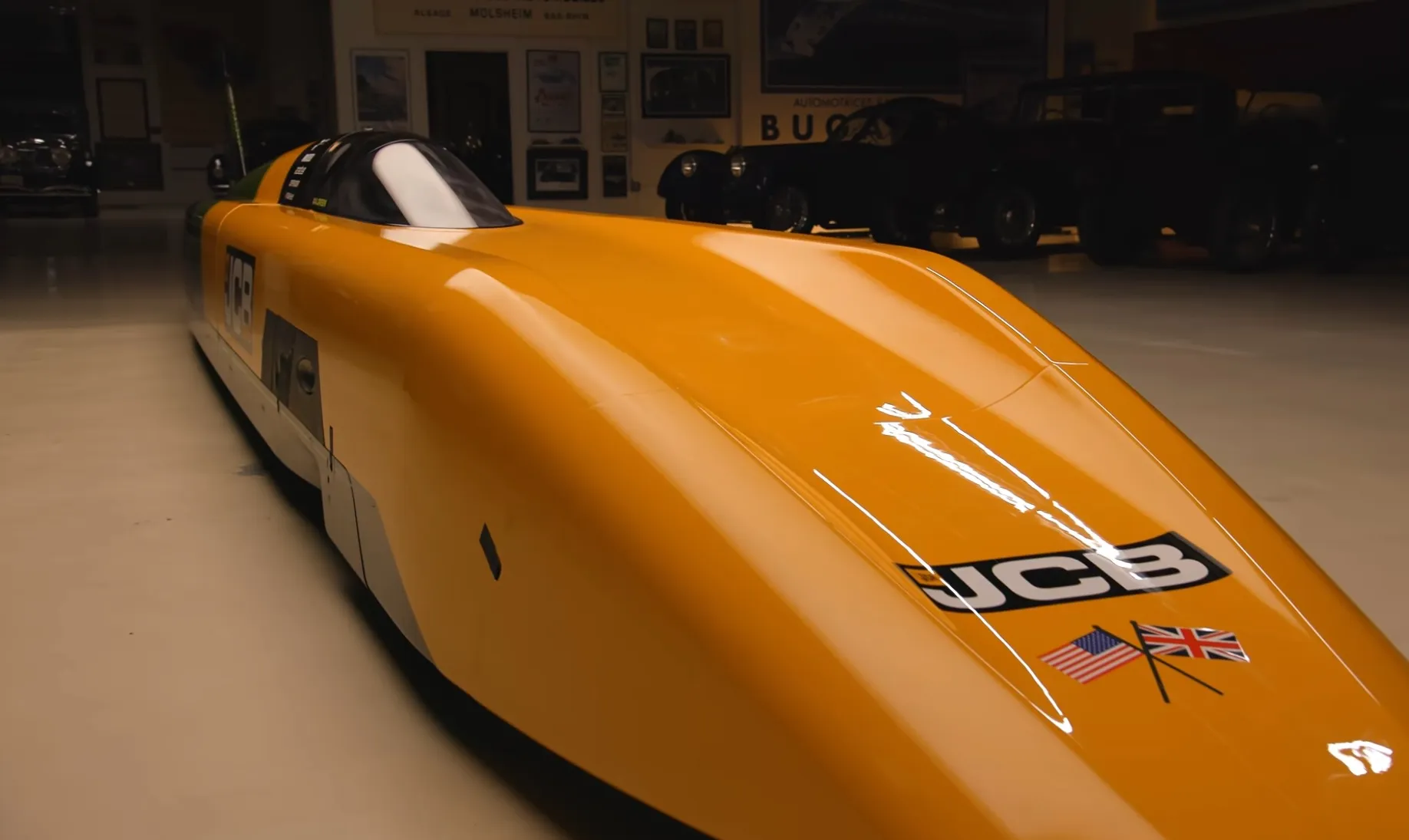
Jay Leno just tested a hydrogen car that’s probably the fastest vehicle he’s ever featured on his channel.
It’s a vehicle designed specifically for world records, and it’s easy to see why.
You’ll never guess what he had to say about it.
Or where the engine actually comes from.
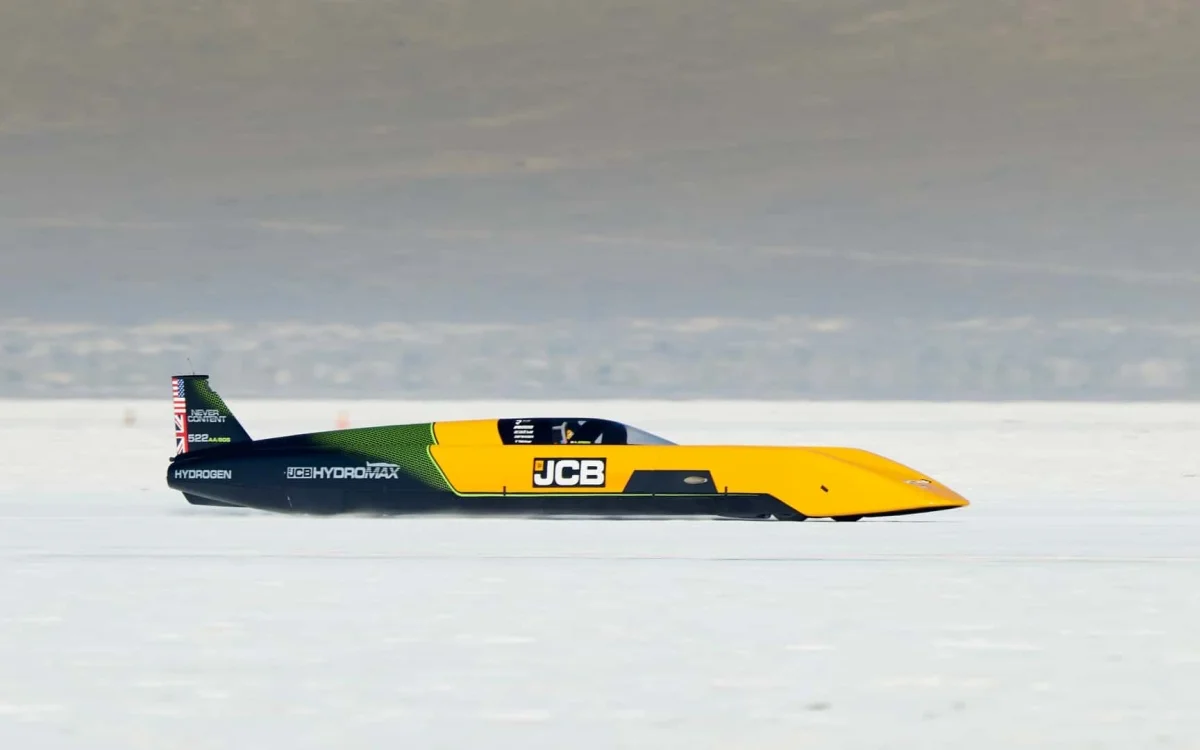
The engine secret behind the world’s fastest hydrogen car
Most speed record contenders use aerospace turbines, Formula 1 powerplants, or battery-powered electric drivetrains.
And yet, somehow, the JCB Hydromax uses the same engine as a heavy-duty construction machine.
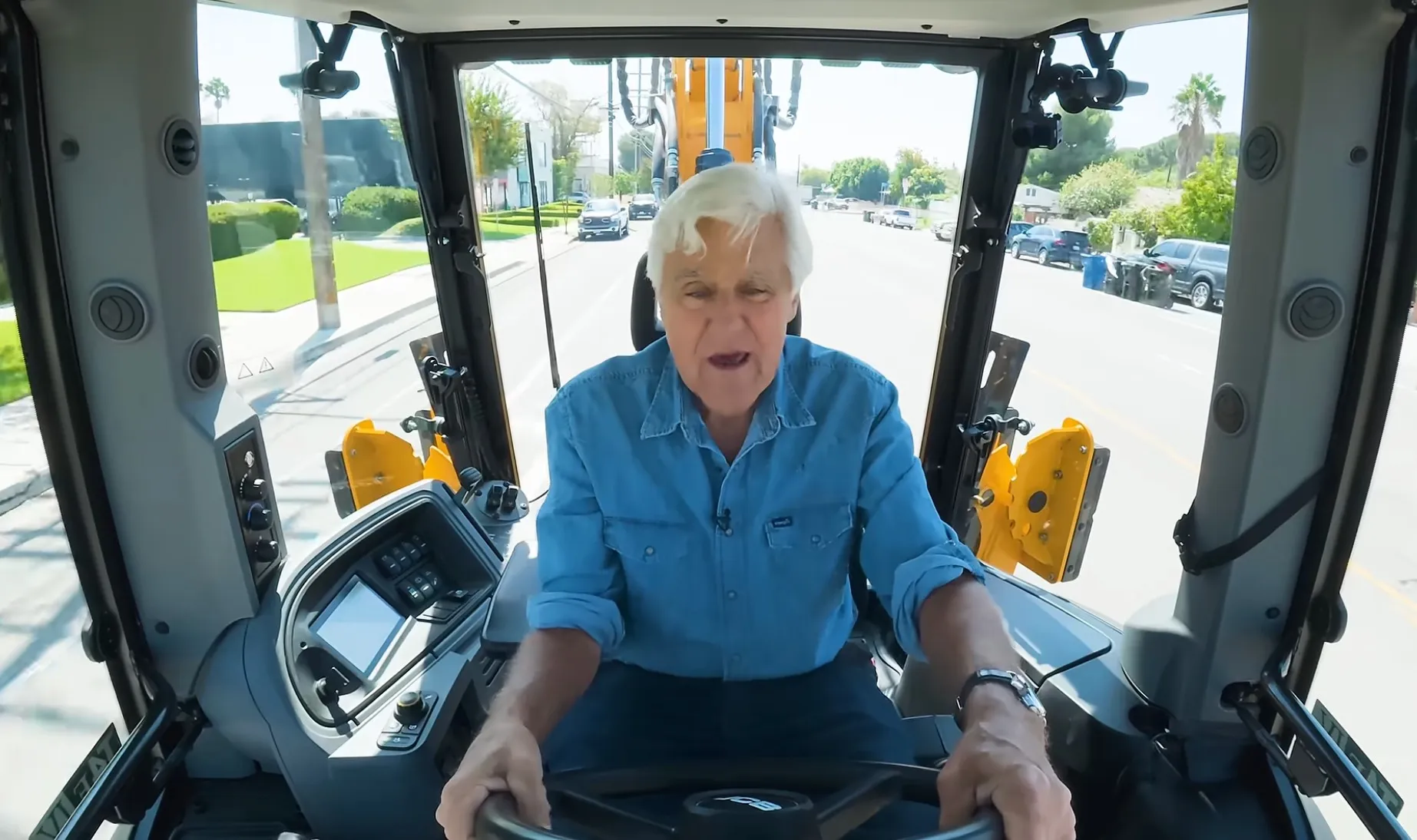
Built by JCB – the brand most people know for its tractors – the Hydromax reached 406.320mph (653.91 km/h) on the Bonneville Salt Flats.
And Jay Leno got an up-close look at it.
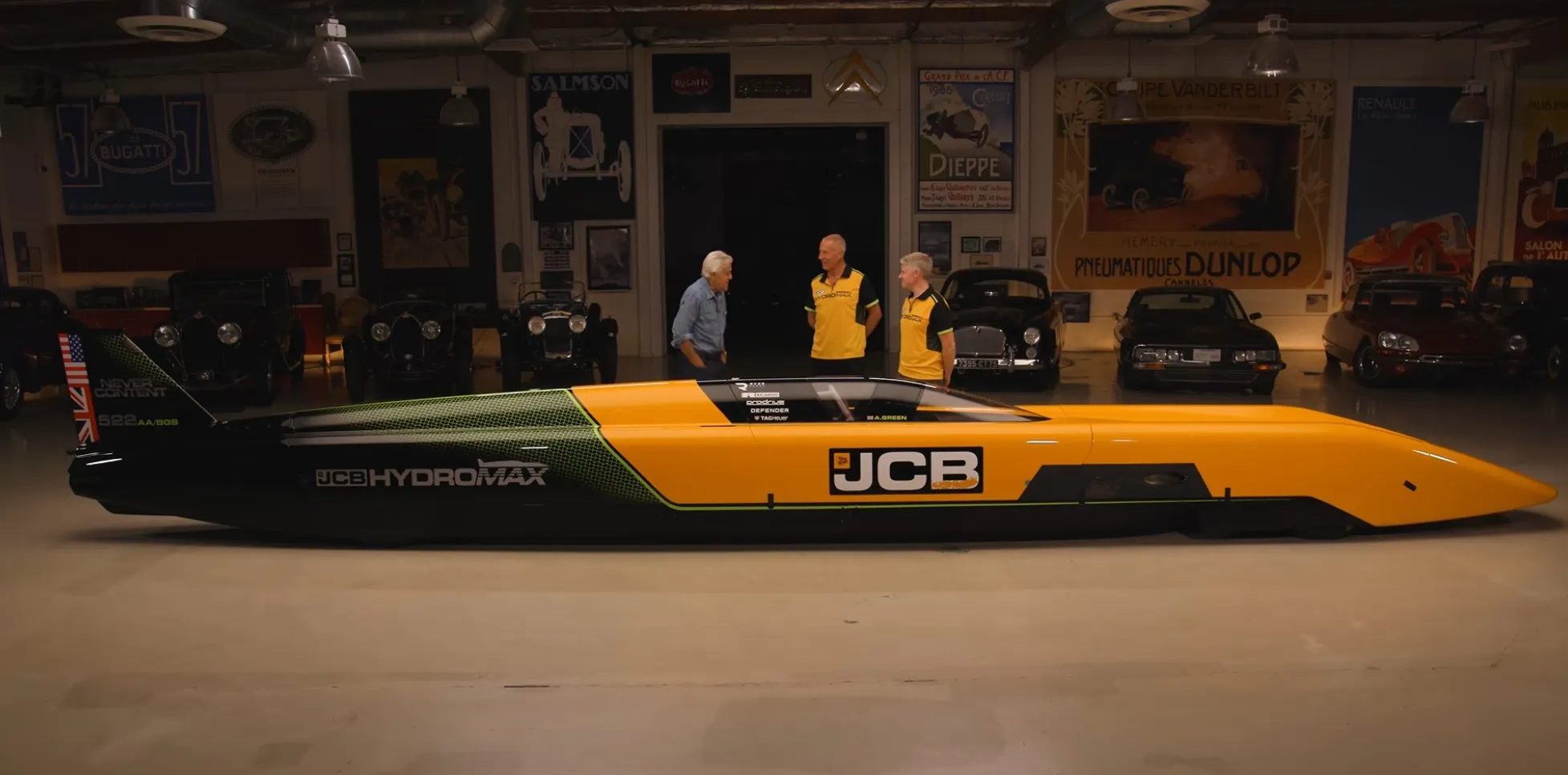
How JCB turned this 74-horsepower digger engine into a 1,600-horsepower hydrogen car
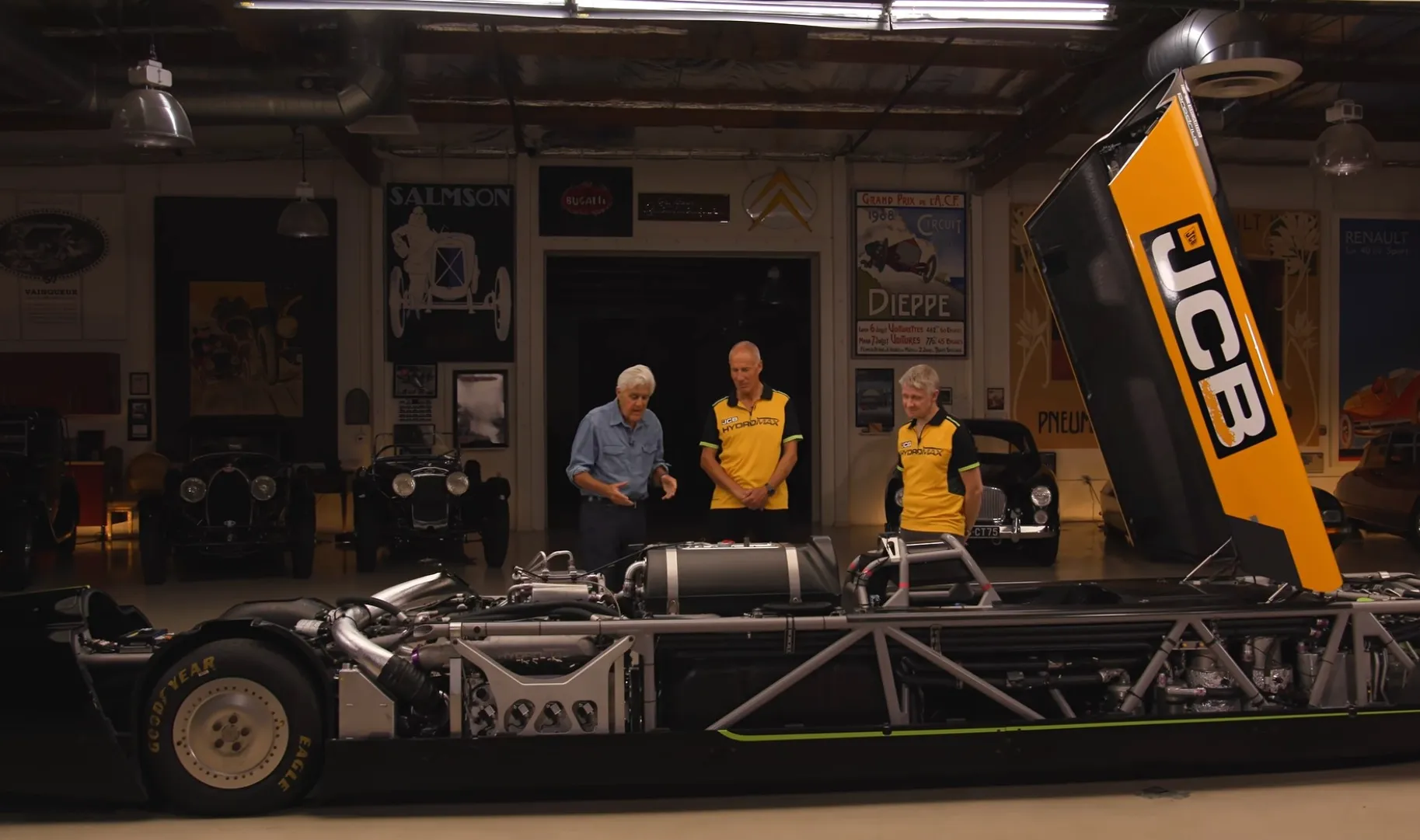
The JCB Hydromax is powered by two 4.8-liter, four-cylinder engines.
But the crazy thing is these two engines are based on the exact same powertrain that standard JCB backhoe loaders use.
On a typical construction site, that engine is tuned for low-end torque, durability, and reliability, producing a modest 74hp.
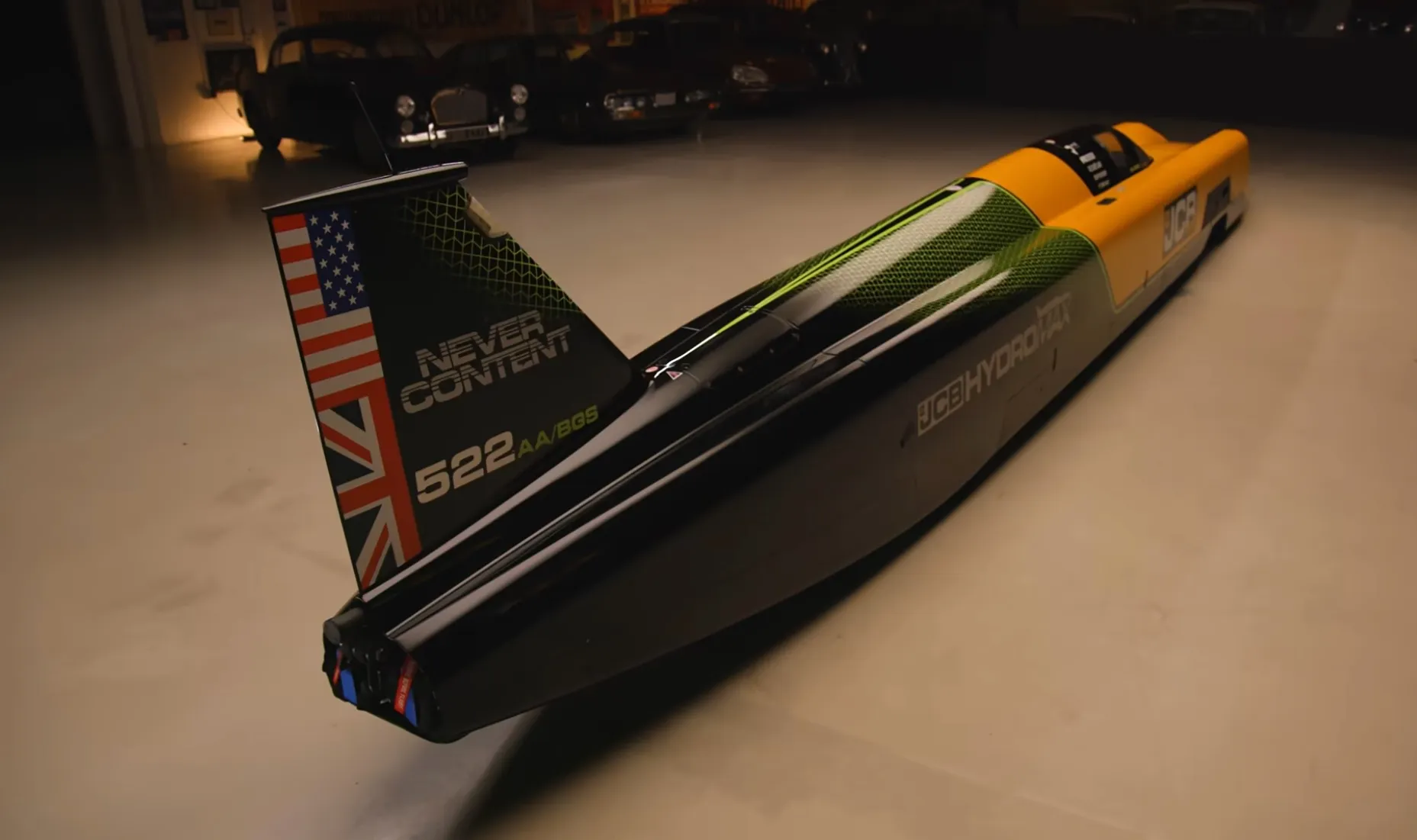
To propel a streamliner past the 400mph barrier, JCB’s engineering team overhauled the engines to run on hydrogen, extracting an astonishing 800hp from each unit – a combined 1,600hp.
This is the main point Jay Leno had to make about the car.
Because, despite being so complicated, it looks fairly simple from the outside.
“I think an automobile enthusiast who knew nothing about it could look at it and kind of figure it out fairly easily, you know, and that’s what makes it fun,” he said in the video.
The main engineering feature has definitely nothing to do with the loaders
The car operates on high-pressure gaseous hydrogen and emits only water as a byproduct, which is great.
But then JCB faced a bigger problem.
Because it reaches speeds over 400mph, standard JCB brakes wouldn’t cut it.
It’s not just about stopping power, it’s about the heat.
That’s why JCB did two things.
First, they fitted specialized carbon fiber racing brakes designed to stop the 2.5-ton vehicle that’s capable of reaching immense heat.
Second, the car is also equipped with two parachutes.

Sadly, it’s not for sale.
Then again, that’s the other thing that Jay Leno admired.
“I’m glad the company does that, you know, because you don’t make any this is not a profit thing. You do it because you love it. Yeah. And that’s what’s fun,” he said.
The best of Supercar Blondie, every Sunday
The week's best car stories, straight to your inbox. Free.
Alessandro is an automotive journalist with 10 years of experience covering supercars, automotive history, emerging vehicle technology, and luxury transportation. He wrote the first article published on SupercarBlondie.com when the website launched in 2022 and has since built a reputation for insightful reporting across the automotive and transportation industries. His expertise is grounded in hands-on experience. Alessandro has driven every Tesla model ever produced, from the original Roadster to the Cybertruck, and regularly covers the latest developments in electric vehicles and automotive innovation. His passion for transportation extends beyond cars, he has even flown a Boeing 787 Dreamliner simulator in Addis Ababa, Ethiopia. His reporting spans everything from classic American muscle cars and rare automotive discoveries to luxury yachts, private aircraft, high-end watches, and cutting-edge vehicle technology. Known for his deep knowledge of automotive history and ability to uncover the stories behind iconic vehicles, Alessandro brings readers a blend of historical context, technical expertise, and first-hand experience.