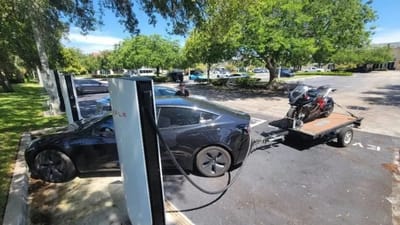
Man drives 626 miles in a Volvo EX40 EV and reveals the final cost to see if it's cheaper than driving a gas car
Published on Nov 13, 2026 at 3:08 PM (UTC-5)
by Daisy Edwards
Last updated on Nov 13, 2026 at 3:08 PM (UTC-5)
Edited by
Mason Jones

A UK-based YouTuber decided to drive 626 miles in a Volvo EX40 without planning a single charging stop.
Rather than using a Tesla and its convenient Supercharger network, he wanted to see what the experience would be like for someone relying on different public charging providers.
After three days on the road, four charging stops and almost two hours plugged in, he finally revealed whether driving electric was actually cheaper than filling up a gas-powered SUV.
The Volvo EX40 completed the journey without any major problems
The EV roadtrip experiment was carried out by Ben Goes Electric, who deliberately left his Tesla Model 3 at home for the trip.
Instead, he got behind the wheel of a Volvo EX40 Twin Motor, which has an 82kWh battery, 79kWh of usable capacity and all-wheel drive.
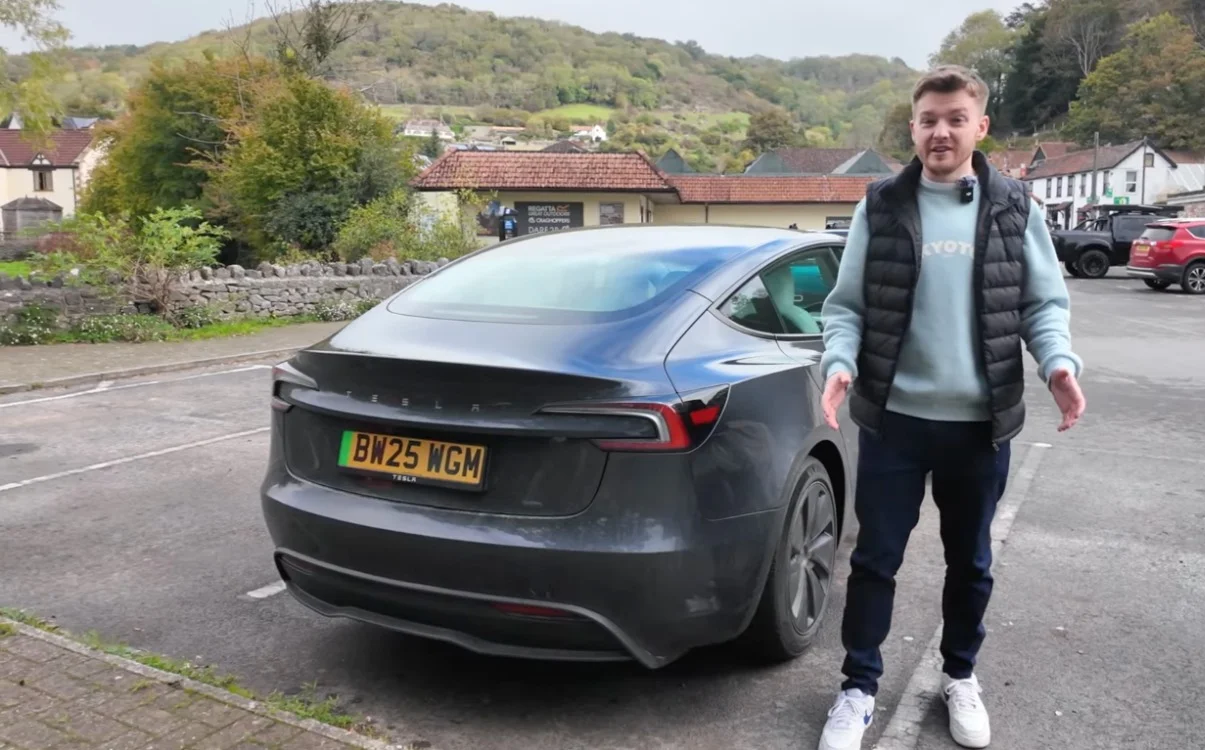
He also made a conscious decision not to plan his charging stops in advance or search for the cheapest electricity.
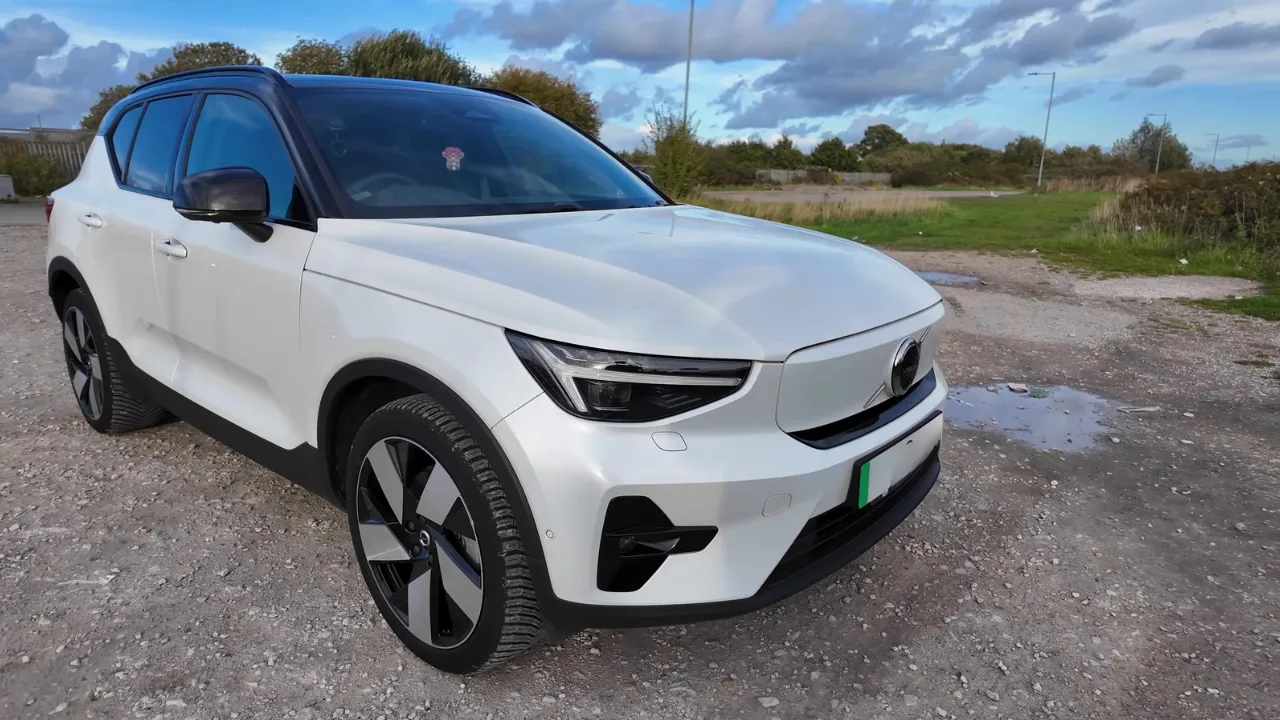
The idea was to replicate how someone might approach a long-distance journey in a gas-powered car, stopping when necessary and using whichever convenient gas station was available.
Speaking to Supercar Blondie, Ben explained that the experiment was deliberately designed to prioritize convenience rather than finding the cheapest possible way to travel.
“For this experiment, I deliberately took the convenience-first approach to see what the experience would be like for someone who simply wants to get in their car and drive, much like they would in a petrol or diesel vehicle,” he said.
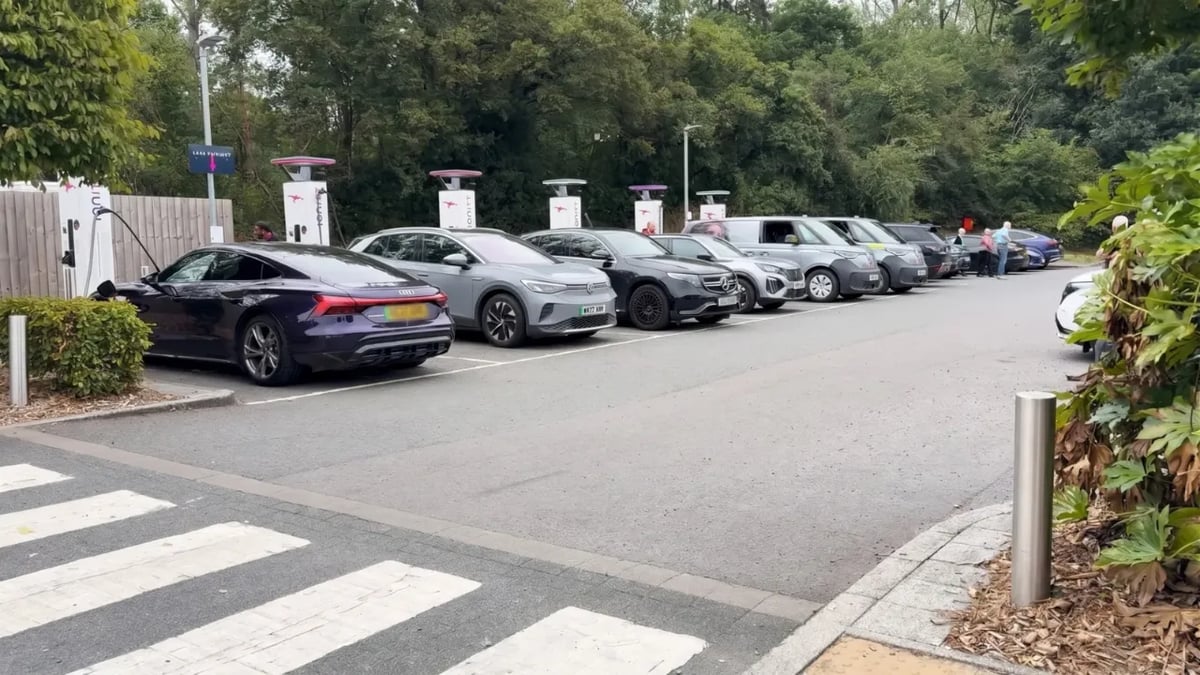
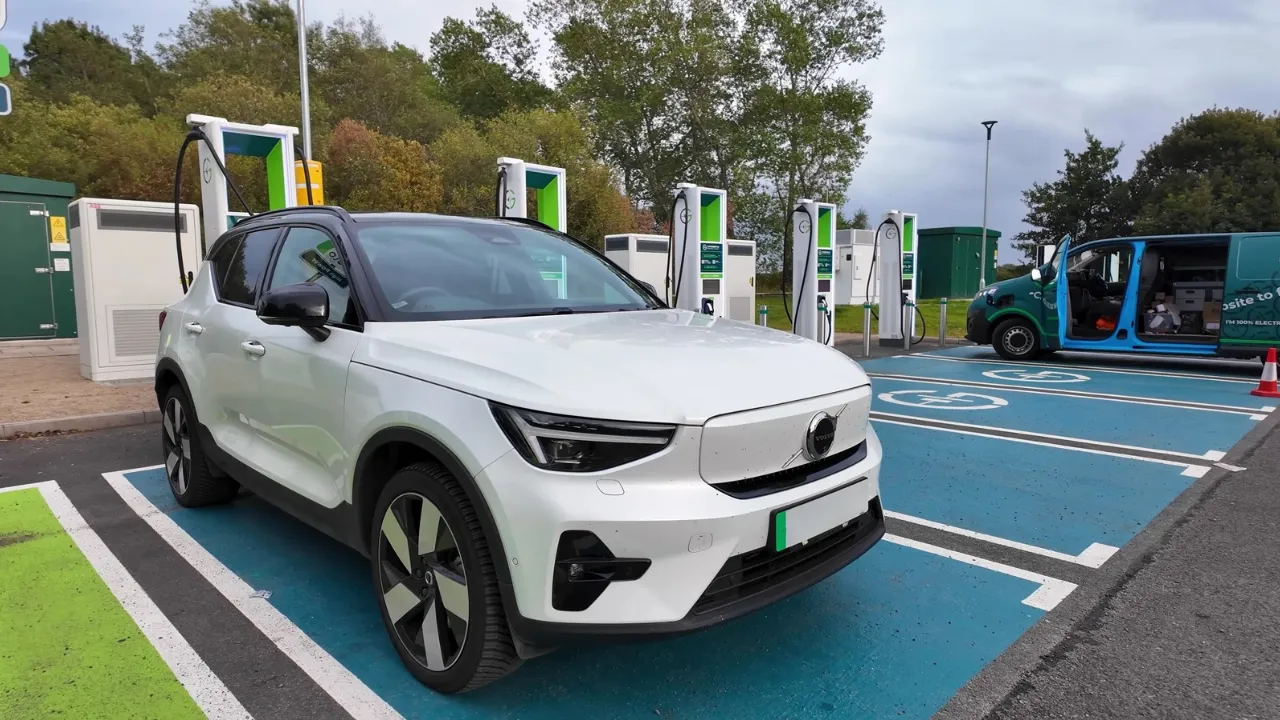
His first charging stop was Cherwell Valley Services, where he plugged into a Gridserve rapid public charger.
Although the chargers were advertised as offering up to 350kW, power restrictions meant they were delivering just 38kW during his visit.
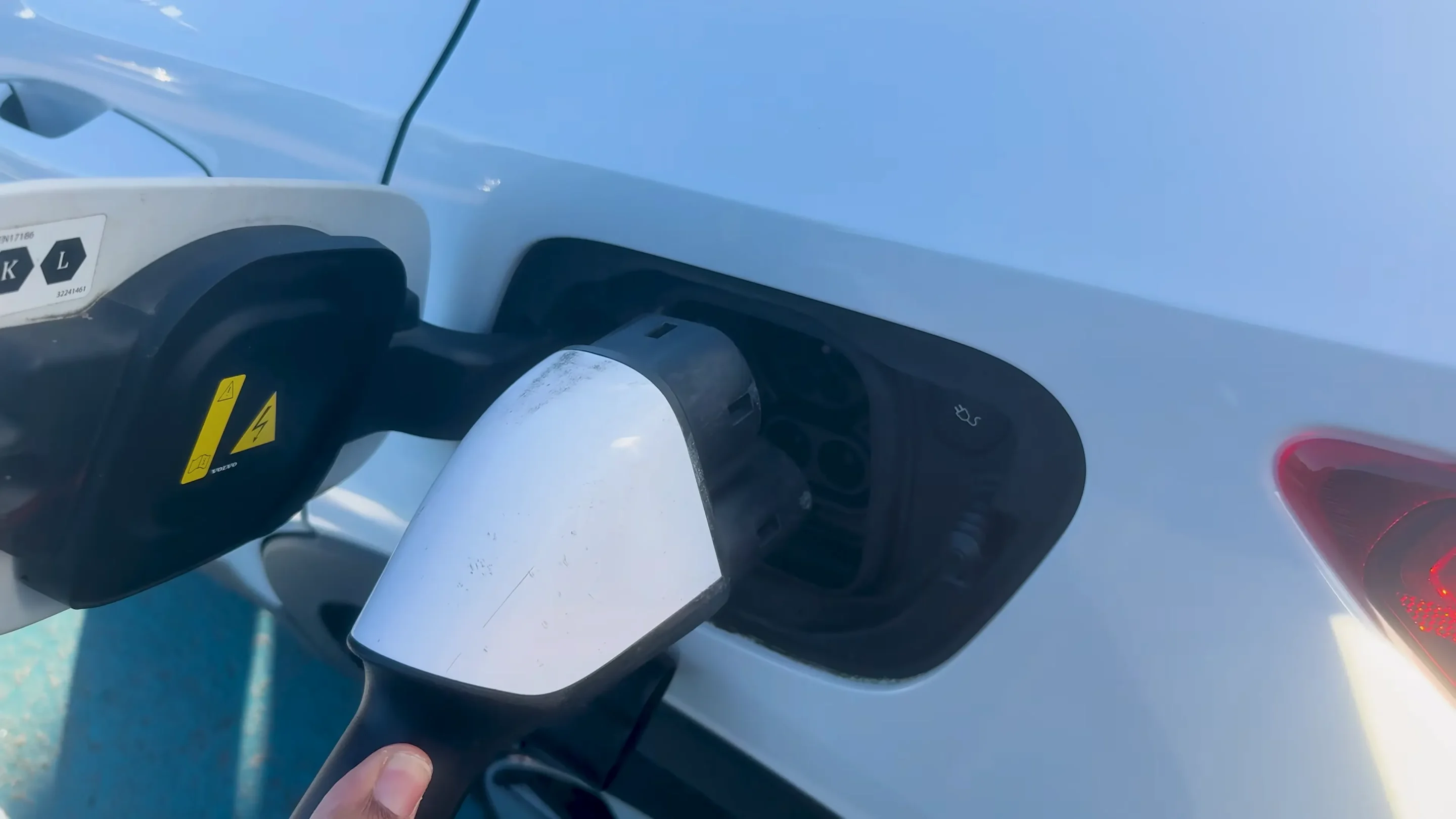
After 16 minutes, he had increased the battery from 22 to 36 percent, but the relatively small amount of electricity cost him £8.65 ($12 approximately).
Things got considerably more expensive at Beaconsfield Services, where he spent 40 minutes charging from 14 to 80 percent.
That single stop cost £49.98 ($67 approximately), with Gridserve charging 92p per kWh.
Ben said the experience highlighted just how dramatically public charging prices can differ from what EV owners pay at home.
“Some of the chargers I used cost as much as 92p per kWh, which is incredibly expensive compared with what many EV owners pay when charging at home,” he explained.
By the time he reached Eastbourne, he had already spent £58.63 ($79 approximately) on public charging.
The Volvo itself performed well, averaging 2.94 miles per kWh across the first 285 miles.

Public charging made the electric road trip surprisingly expensive
On the second day, he headed from Eastbourne to London, stopping at an Ionity charging station near Lewes.
Charging from 28 to 80 percent took 28 minutes and cost another £36.28 ($49 approximately).
He also discovered that the hotel where he was staying had broken EV chargers, despite advertising charging facilities.
Ben said the charging infrastructure itself has improved considerably, but believes pricing remains one of the biggest obstacles to wider EV adoption in the UK.
“Someone who can charge at home will generally have a completely different experience of EV running costs compared with someone who relies entirely on public charging,” he said.
As a Tesla Model 3 owner, he pays around 7.5p per kWh on his overnight home electricity tariff, compared with the 92p per kWh he encountered during the experiment.
For the final leg home, he stopped at an MFG EV Power station in Banbury, where he managed to reduce the charging price from 79p to 59p per kWh by using the company’s app.
That final charging session cost £33.75 ($45 approximately).
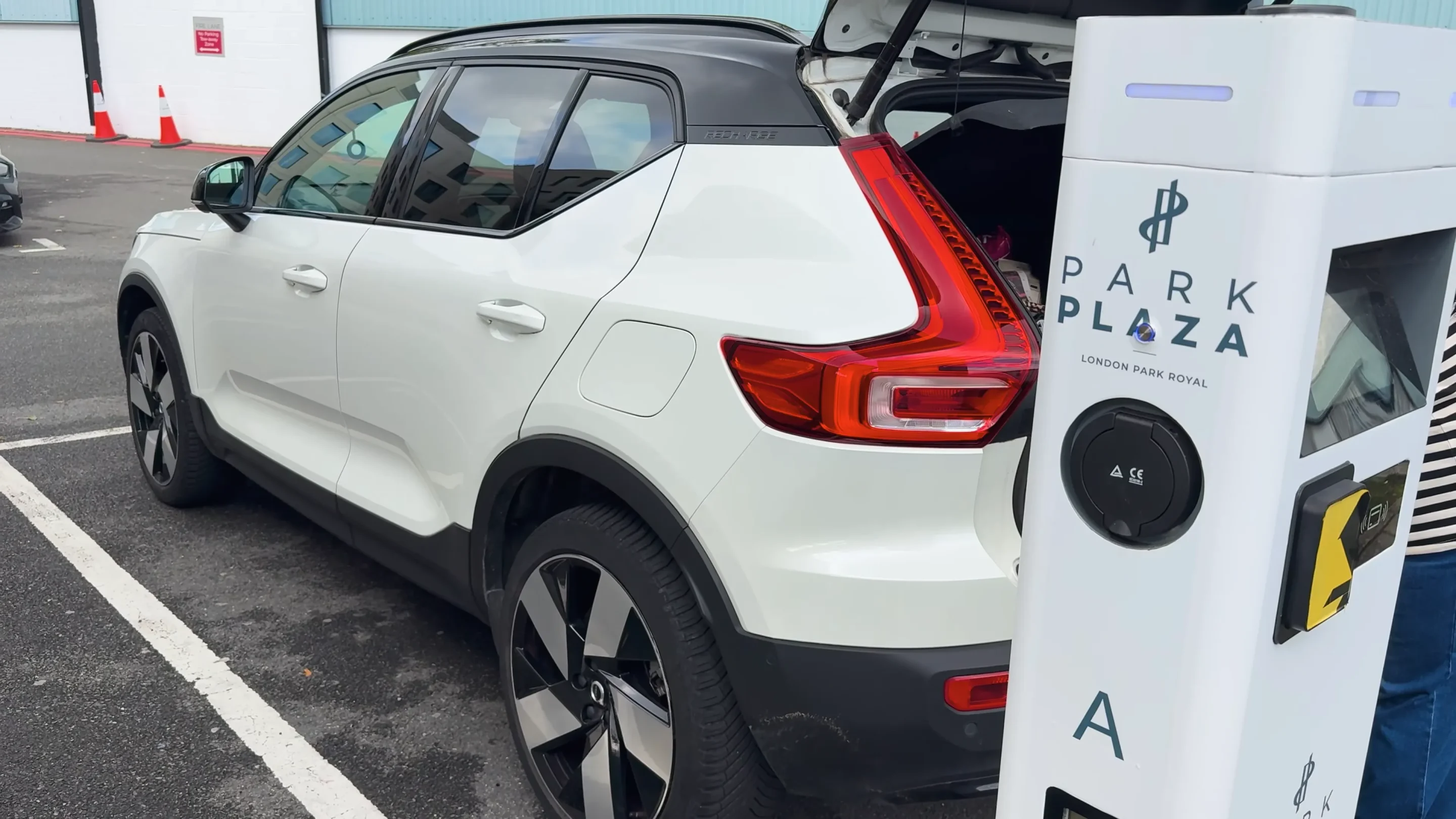
He said he would approach the journey differently if his main priority was saving money, using alternative charging networks, app discounts and potentially subscriptions to bring down the cost.
However, he believes the experiment was valuable precisely because it showed what could happen when drivers prioritize convenience over carefully planning every stop.
After driving 626 miles over three days, the Volvo arrived home with 14 percent battery remaining.
Across four public charging stops, he had spent £128.66 ($173 approximately) and spent one hour and 54 minutes plugged into rapid chargers.
However, because he started the journey with a fully charged battery, he also needed to account for the electricity required to restore it to 100 percent.
Charging the remaining battery at home cost another £5.10 ($7 approximately), bringing the total to £133.76 ($179 approximately).
That works out at approximately 21.4p ($0.29) per mile.
A gas-powered SUV would actually have been cheaper
Perhaps the most surprising part of the experiment came when he compared the final bill with what a gas-powered SUV would have cost.
Using a hypothetical SUV capable of achieving 40 miles per gallon and an average gas price equivalent to £1.72 per liter, he calculated that the same 626-mile journey would require around 71 liters of fuel.
That would bring the total fuel bill to approximately £122 ($164), making the gas-powered SUV around £11 ($15) cheaper than the Volvo.

Ben said he wasn’t entirely surprised by the result, but stressed that the comparison also depended on how drivers approached refueling.
“I also think it’s important to make a fair comparison with petrol. A petrol SUV could potentially complete much of this journey using fuel purchased locally before setting off, rather than relying entirely on expensive motorway service stations,” he explained.
Of course, the comparison depends on the efficiency of the gas-powered vehicle, as well as the electricity prices paid along the way.
The Volvo EX40 Twin Motor is also a relatively heavy and powerful electric SUV, meaning it isn’t necessarily the most efficient choice for long highway journeys.
Ben averaged approximately 33.9kWh per 100 miles during the trip, while he believes his Tesla Model 3 Long Range would use considerably less electricity over the same distance.
He pointed out that charging an EV at home can be significantly cheaper, particularly when using an overnight electricity tariff.
He also suggested that future electric vehicles with much longer ranges could make a big difference by allowing drivers to complete more of their journeys using cheaper home electricity.
He added that Tesla’s Supercharger network can also offer considerably lower prices than some of the public rapid chargers used during the experiment, depending on the location, time and vehicle eligibility.

Ultimately, he said he would happily make the same journey in an electric car again, but probably wouldn’t do it without checking charging prices first.
He also recommended that EV drivers make use of built-in navigation systems and third-party route planners such as A Better Routeplanner and Zapmap to compare charging locations and prices.
“My advice would be to make use of the technology available and always have an alternative charging location in mind,” he said.
His biggest takeaway was that the problem wasn’t the Volvo’s range or performance, but the cost of public charging.
Reflecting on the experience, Ben said: “For me, the biggest takeaway wasn’t that electric cars are expensive to run.
“It was that the cost of public charging can vary enormously depending on where and how you choose to charge.”
He added: “EV road trips don’t have to be expensive, but I think drivers should have the option of convenient, reasonably priced charging without needing multiple subscriptions or extensive planning.”
The best of Supercar Blondie, every Sunday
The week's best car stories, straight to your inbox. Free.
Daisy is a technology and automotive journalist covering artificial intelligence, consumer tech, Apple news, cryptocurrency, emerging technologies, and transportation innovation. Since joining the team in 2025, she has reported on everything from AI-powered startups and major iOS updates to viral car stories and the latest developments shaping transportation and the digital economy. Drawing on her background in automotive journalism and a degree in History and Journalism from Goldsmiths, University of London, Daisy specializes in breaking down complex topics into clear, engaging reporting for a global audience. Her work spans cutting-edge technology, innovative vehicles, and the people driving change across both industries. Daisy has gained first-hand access to some of the world's most talked-about technologies and innovators, including meeting Tesla's Optimus humanoid robot during its first European appearance in London. She has also discussed the future of space exploration with an astronaut, bringing unique insights and real-world perspectives to her coverage of emerging technology.