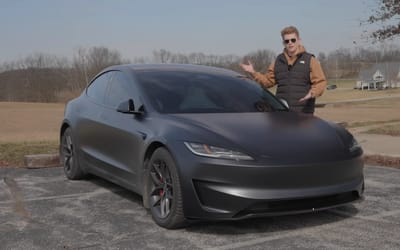
New self-driving car chip has been unveiled that can detect danger four times faster than humans
Published on Feb 13, 2026 at 6:34 AM (UTC+4)
by Grace Donohoe
Last updated on Feb 12, 2026 at 5:35 PM (UTC+4)
Edited by
Emma Matthews

Self-driving cars are the future, and now new technology could mean that the reaction time behind the wheel could be hugely improved, thanks to what is essentially a ‘self-driving car chip’.
The clever tech was developed by replicating a process that occurs in humans, to make sure the system was as realistic as possible.
Now, the data has been published online, and the results may shock you.
In a world where robotics and artificial intelligence are on the rise, this could be the breakthrough that the self-driving industry has been looking for.
VISIT SBX CARS – View live supercar auctions powered by Supercar Blondie
This self-driving car chip could be the future
Driving carries lots of dangers and requires the person behind the wheel to multitask, or, in 2026, the self-driving car system.
From checking windows and mirrors to making sure the correct lights are on and abiding by road rules, there is a lot to think about.
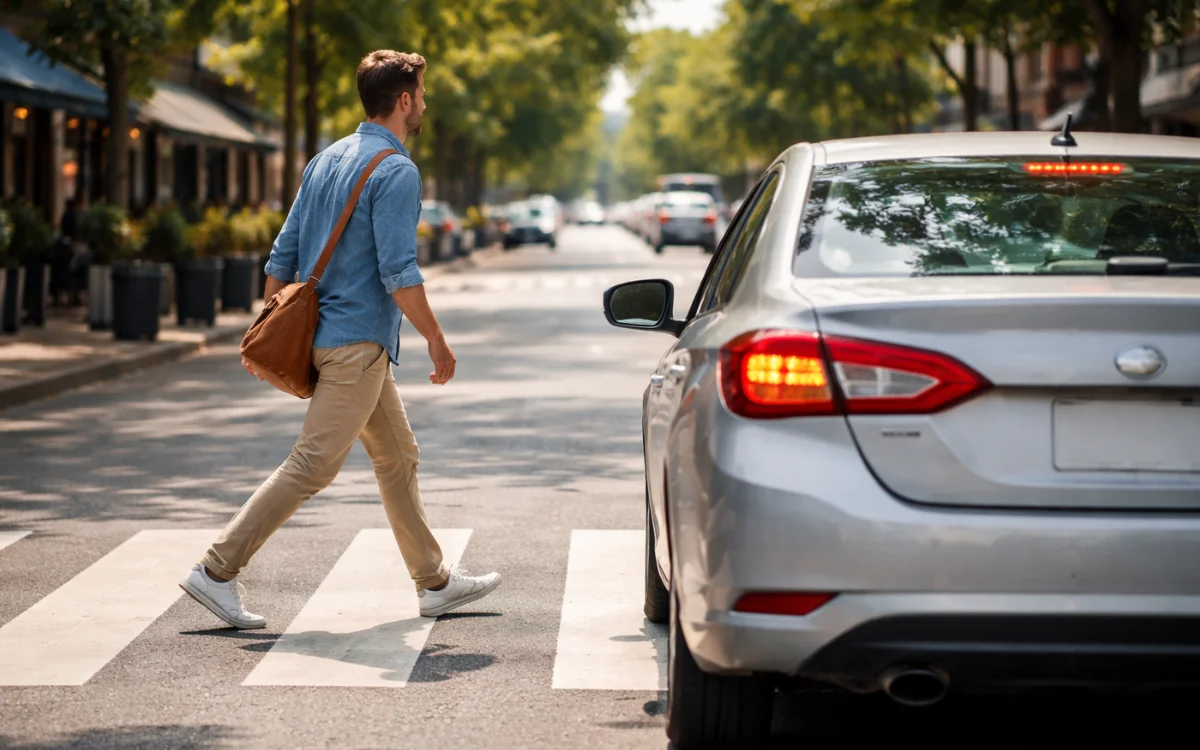
However, the struggle of being able to detect danger quickly could be eradicated thanks to new research that has unveiled a ‘machine eye’ self-driving car chip.
It’s essentially a hardware system that replicates the interaction between the retina and the brain to ‘extract temporal motion cues directly in hardware’.
When tested, the system, or ‘self-driving car chip,’ provided impressive results.
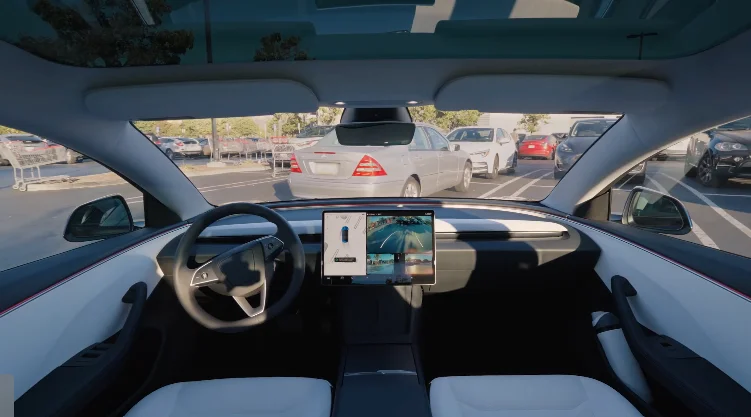
The chip is reportedly able to focus on the things that have changed in the scene in front of it.
Why is this important, you ask?
Well, the current algorithms allegedly have time delays, which means mistakes can happen; these scientists, though, aim to implement this technology to make the reaction time quicker, and therefore, cars safer.
The research study and results were posted online via the Nature Communications journal.
Click the star icon next to supercarblondie.com in Google Search to stay ahead of the curve on the latest and greatest supercars, hypercars, and ground-breaking technology
What did the results of the tests really show?
Well, according to the online journal, processing times were ‘significantly accelerated’ by around 400 percent, which surpassed human-level speed.
In a vehicle scenario, the performance was increased by 213.5 percent, which means that in the future, robots will be able to handle situations more easily than ever before.
In real-world tests, an 0.2 second improvement was found, reducing the braking distance at 80km/h by 4.4 meters.
“We hope to equip autonomous vehicles with this ‘hardware-level reflex’ system, enabling them to respond more sensitively than humans when handling sudden road conditions, thereby fundamentally enhancing the safety of unmanned systems,” Co-corresponding author Gao Shuo said.
DISCOVER SBX CARS: The global premium car auction platform powered by Supercar Blondie
Beginning her career as a lifestyle reporter and social-media manager, Grace joined Supercar Blondie in February 2025. Since coming on board, she has thrown herself into the busy daily writing schedule. Her editorial sweet spots include writing about luxury properties and the quirky features inside them that the one percent are investing in, as well as groundbreaking advancements in space exploration.