New Tesla Roadster spotted up close at the California museum reveals six key details most people completely missed
Published on Oct 30, 2026 at 11:02 AM (UTC-4)
by Daisy Edwards
Last updated on Oct 30, 2026 at 11:02 AM (UTC-4)
Edited by
Ben Thompson
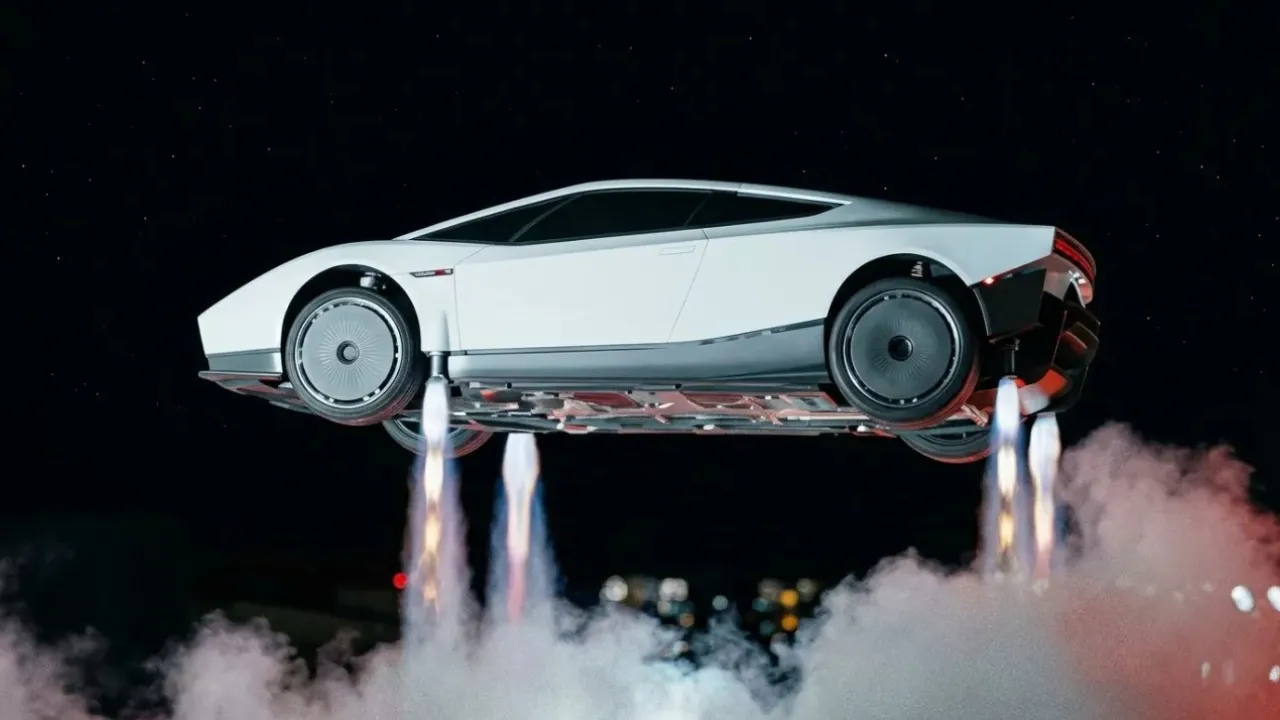

Tesla’s long-awaited next-generation Roadster has finally been seen up close, giving car enthusiasts a much better idea of what the EV supercar actually looks like.
The white prototype recently appeared at the Petersen Automotive Museum in Los Angeles, where visitors could get a closer look at its unusual design.
While the headline-grabbing performance claims have attracted plenty of attention, there are some fascinating details hiding in its exterior design.
A closer inspection of the EV from Tesla Owners Silicon Valley reveals six features worth taking a second look at, from its unusual glass canopy to the active aerodynamic technology built into its rear wing.
1. The wheels are more than just a styling feature
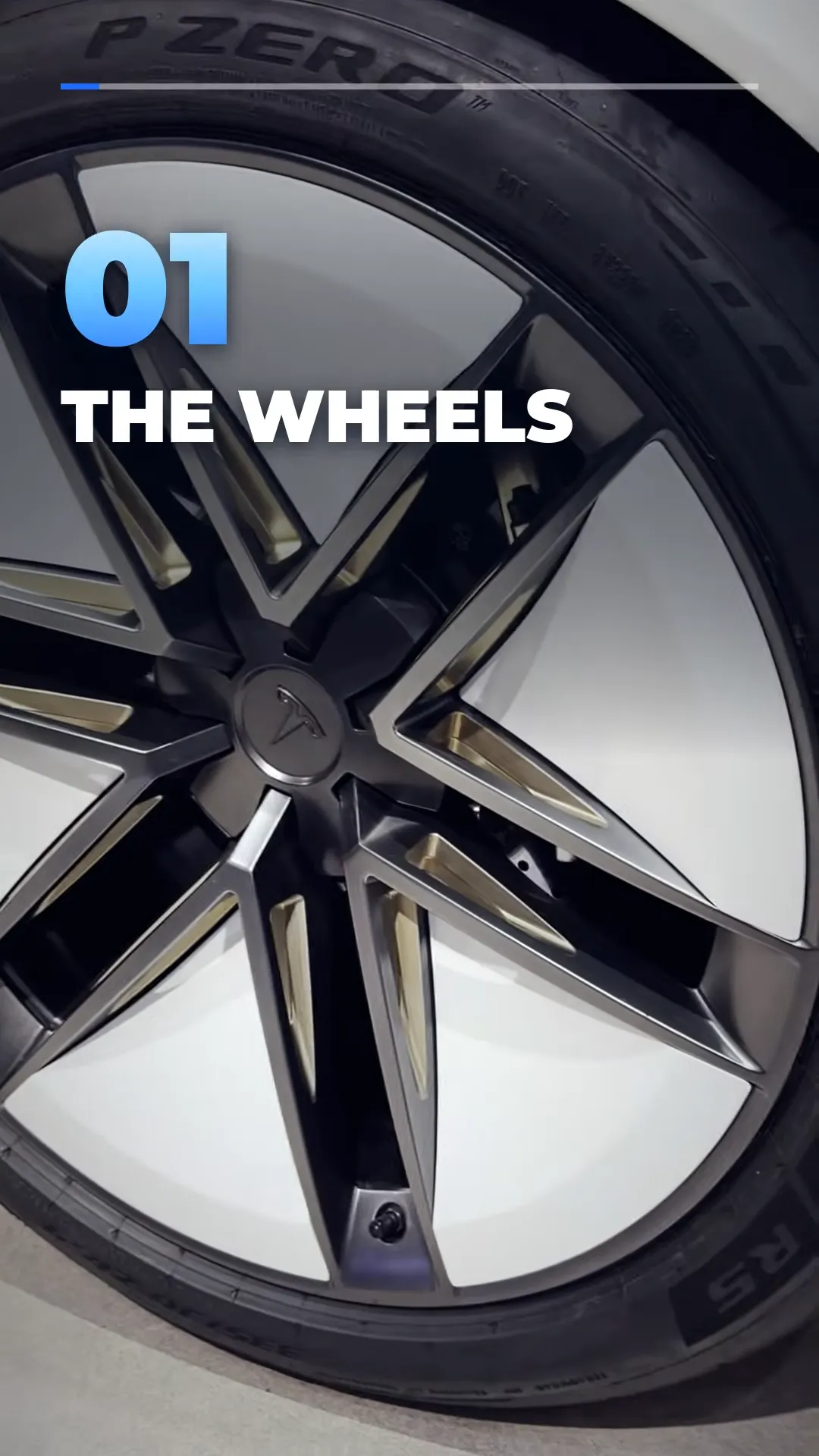
The Roadster’s wheels are one of the first details worth examining, particularly because they look rather different from what you might expect on a conventional supercar.
Tesla’s design combines lightweight-looking spokes with a futuristic appearance that fits the car’s wider aerospace-inspired styling.
The company’s official Roadster website describes the wheels as superlight, with thin spokes designed to reinforce their structural strength.
2. The canopy gives the Tesla Roadster a fighter-jet feel
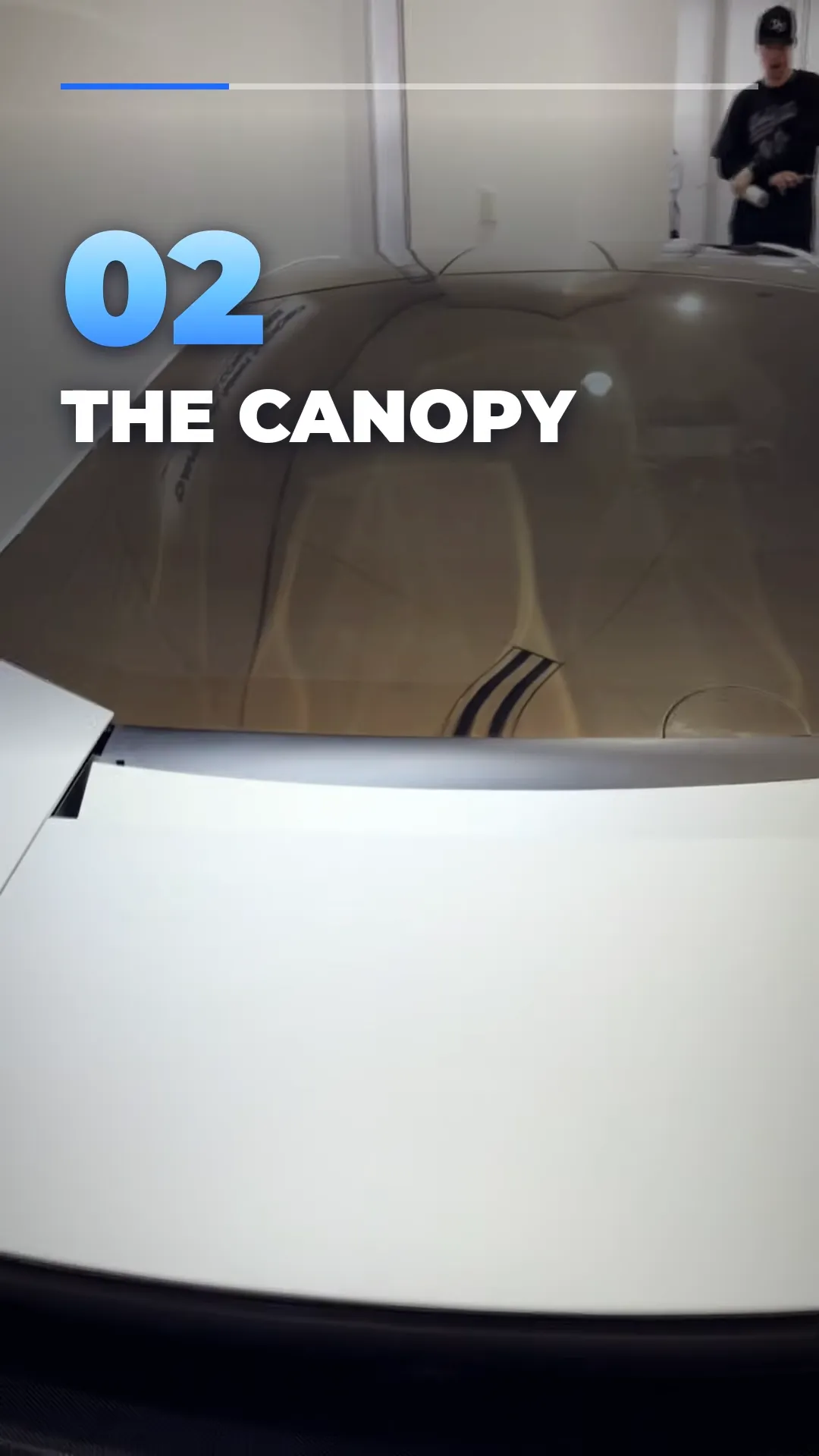
Another particularly interesting feature is the glass canopy, which gives the Roadster an almost aircraft-like appearance.
The tinted glass has a distinctive golden hue, something Tesla says was inspired by the copper coating found on spacesuit visors.
It helps give the car a very different look from the usual panoramic glass roofs found on electric vehicles.
Tesla has also taken inspiration from aircraft such as the SR-71 Blackbird and F-35 fighter jet when developing the Roadster’s overall design.
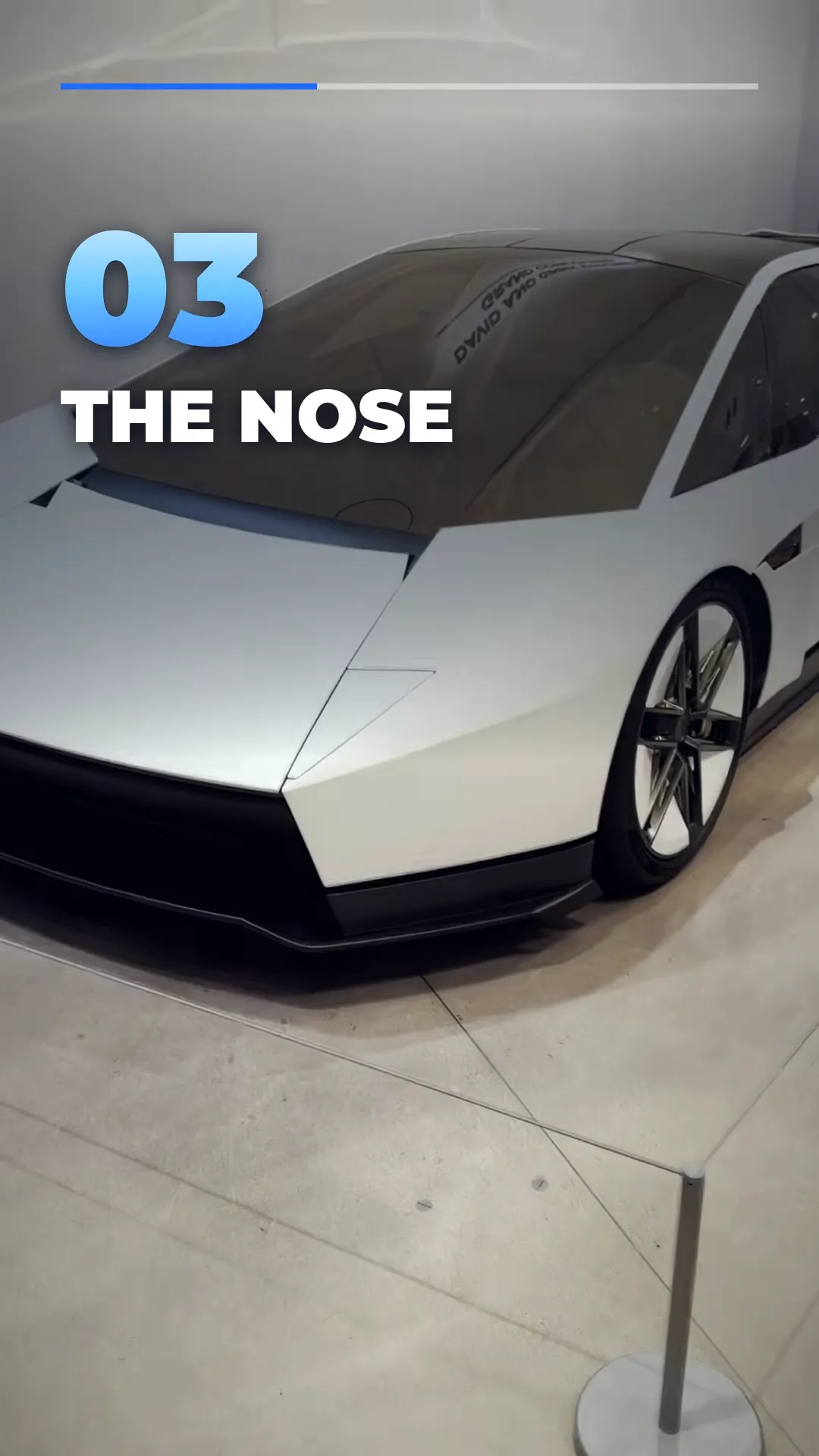
3. The nose is surprisingly minimalist
The front end is another area where Tesla has gone for a very distinctive look.
Rather than filling the nose with traditional vents and oversized intakes, the Roadster has a remarkably smooth front section, with slim lighting elements and a low, pointed profile.
The headlights are integrated into the bodywork, helping maintain the clean appearance.
Tesla describes the design as having hidden headlights and flush-mounted aerodynamics, meaning some of the more technical features are deliberately concealed.
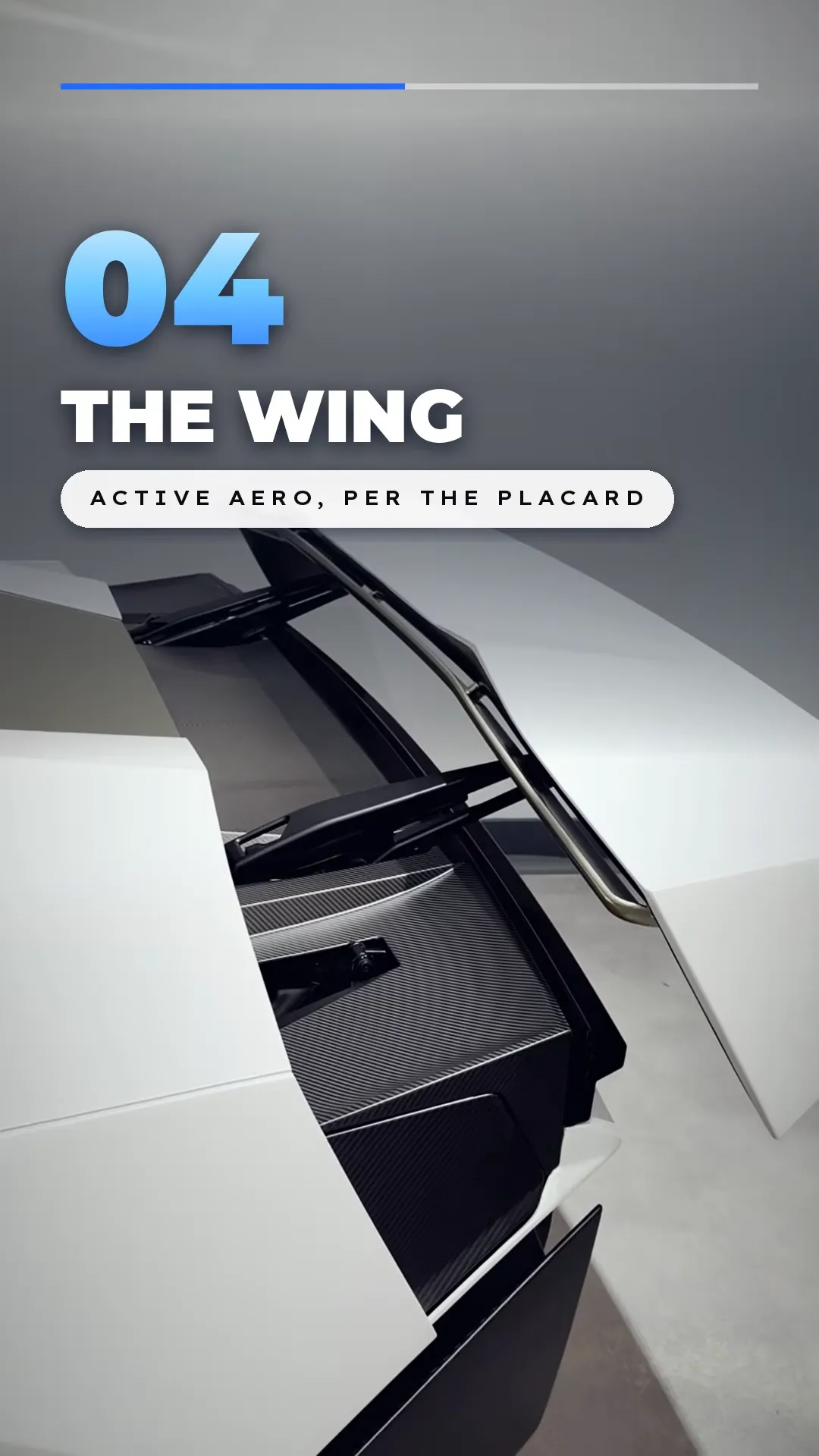
4. The rear wing features active aerodynamics
The rear wing is particularly interesting because it isn’t simply there to make the Roadster look more aggressive.
According to the information displayed alongside the vehicle, it features active aerodynamics, allowing it to adjust depending on what the car is doing.
Tesla’s website explains that the wing can operate in high-downforce or low-drag modes, helping the car balance cornering grip with aerodynamic efficiency.
It’s another example of how Tesla is trying to make the Roadster’s design functional as well as futuristic.
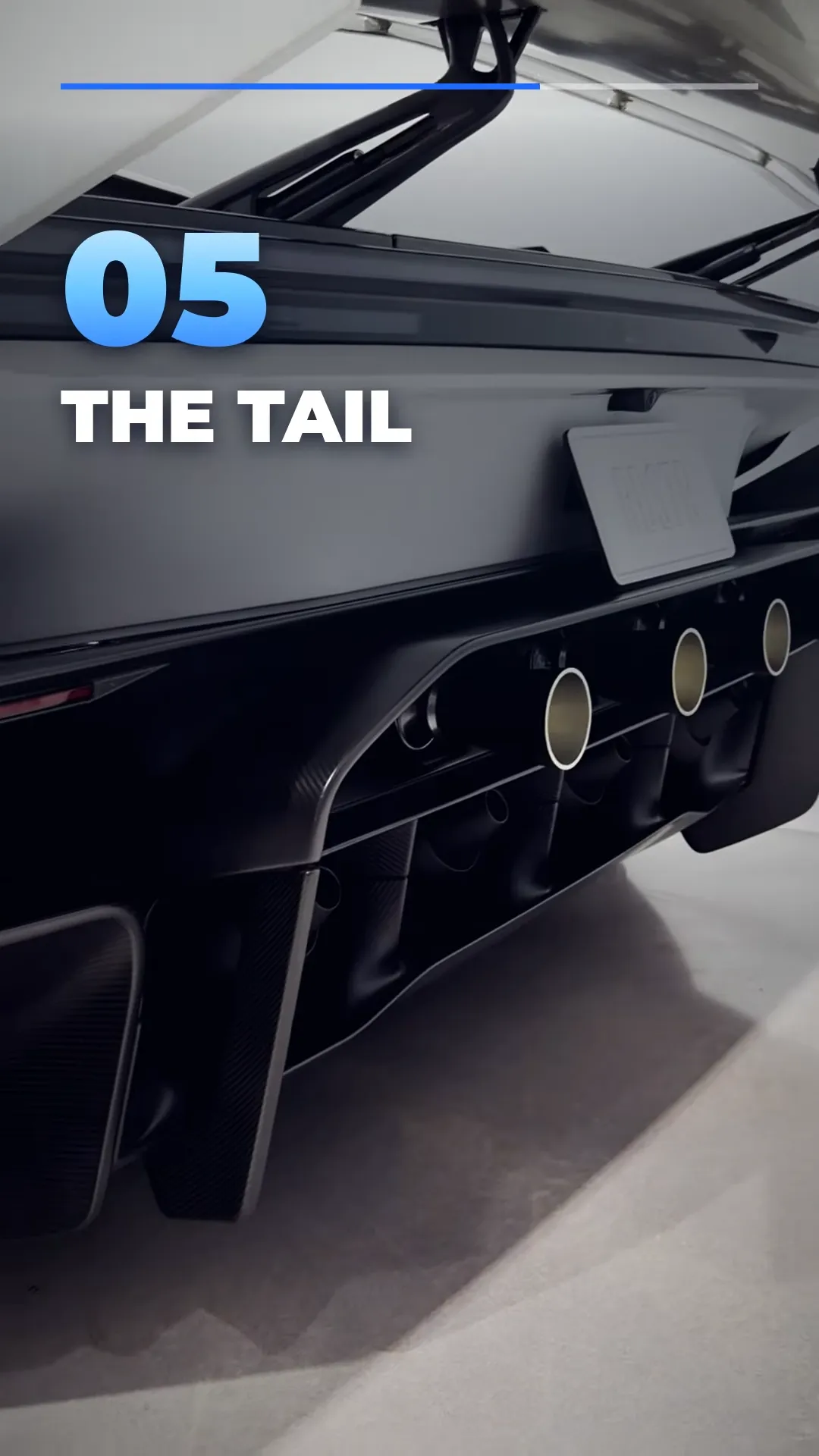
5. The tail hides some seriously unusual technology
The rear of the Roadster might be the most fascinating part of the entire car.
A full-width taillight stretches across the back, but look a little closer and you’ll spot the hardware that makes this particular version so unusual.
The Thrust prototype features four cold-gas thruster outlets, positioned above its fan-driven suction system. These are the components responsible for helping the car achieve the extraordinary acceleration figures Tesla has been talking about.
The thrusters are part of the more extreme Thrust configuration, which Tesla says can accelerate from 0 to 60mph in under one second.
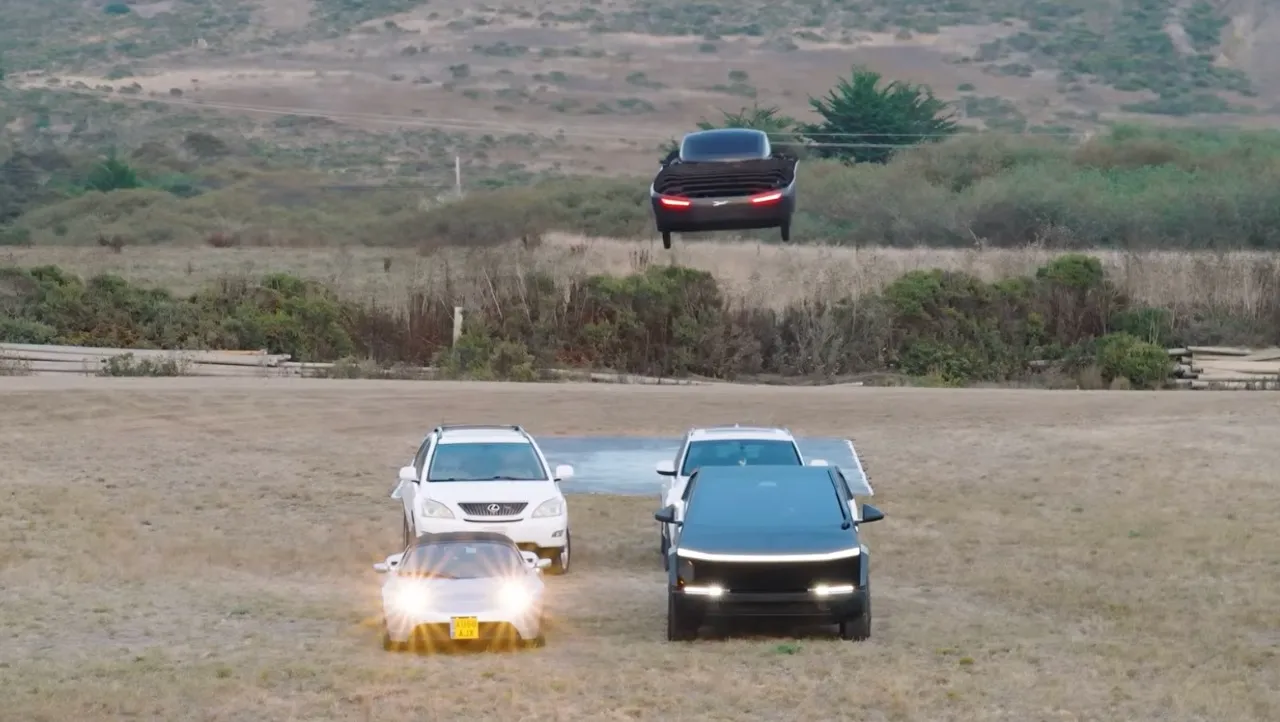
The even more ambitious Rocket version takes things further, with additional thrusters around the vehicle that Tesla claims can allow it to fly.
6. The museum placard reveals exactly which Tesla Roadster this is
Perhaps one of the most important details is the information displayed next to the car.
The Petersen Automotive Museum identifies the vehicle as the 2028 Tesla Roadster Thrust Prototype, rather than the more extreme Rocket version that attracted so much attention during the unveiling.
The museum also describes how its active aerodynamics and multi-mode fan-driven suction system can generate extreme downforce, even when the vehicle is inverted and stationary.

It confirms that the Roadster Thrust achieved a sub-one-second 0-60mph acceleration time during its unveiling in Texas.
That distinction matters because Tesla has several different versions planned, with different performance capabilities and hardware.
The Petersen’s display gives visitors a chance to see the Thrust prototype that shared the stage with Elon Musk and the Tesla team during the October unveiling.
And while the Tesla Roadster has already made some pretty extraordinary promises, seeing the actual hardware and design details up close makes the whole project even more intriguing.
Daisy is a technology and automotive journalist covering artificial intelligence, consumer tech, Apple news, cryptocurrency, emerging technologies, and transportation innovation. Since joining the team in 2025, she has reported on everything from AI-powered startups and major iOS updates to viral car stories and the latest developments shaping transportation and the digital economy. Drawing on her background in automotive journalism and a degree in History and Journalism from Goldsmiths, University of London, Daisy specializes in breaking down complex topics into clear, engaging reporting for a global audience. Her work spans cutting-edge technology, innovative vehicles, and the people driving change across both industries. Daisy has gained first-hand access to some of the world's most talked-about technologies and innovators, including meeting Tesla's Optimus humanoid robot during its first European appearance in London. She has also discussed the future of space exploration with an astronaut, bringing unique insights and real-world perspectives to her coverage of emerging technology.




