London to New York in an hour? $19 trillion maglev tunnel proposal promises speedy travel
- A proposed tunnel would connect NYC to London in about an hour
- The tunnel would serve as a platform for maglev trains
- The train could reach 3,000MPH or more
Published on Feb 25, 2025 at 1:20 PM (UTC-5)
by Alessandro Renesis
Last updated on Feb 26, 2025 at 2:52 AM (UTC-5)
Edited by
Kate Bain


There’s a plan to build a new tunnel to connect London to New York with a maglev train.
The tunnel would cost $19 trillion, and presumably several decades, to build.
But, when complete, it would allow travelers to reach New York from London in about an hour.
It sounds far-fetched, but it would be a true travel game changer.
DISCOVER SBX CARS: The global premium car auction platform powered by Supercar Blondie
An incredibly expensive maglev tunnel
The first thing that stands about this plan is the cost.
The Transatlantic Tunnel, apparently backed by Elon Musk – after the failure of his Hyperloop project – would cost $19 trillion.
Some sources, though, quote £19 trillion, which is actually 24 trillion US Dollars, but that’s a tomato-tomatoe argument.
Because that number, either in GBP or USD, has enough zeros in it to give everyone a headache.

The tunnel would use vacuum tubes and magnetically levitating trains – known as maglevs – which would enable speeds surpassing 3,000MPH.
For reference, the distance from New York to London is around 3,400 miles.
Maglev trains, though, are becoming quite popular.
China built one that can exceed 600 mph and the fastest train in the world, also in China, uses maglev technology.
But even with that in mind, a 3,400-mph train does sound a bit rich, and that’s before we talk about the environmental cost.
At least for now.



The proposed tunnel raises a good point
Even though this proposed tunnel is still decades – and trillions of dollars – away, it raises a good point and addresses a recurring issue with transoceanic travel.
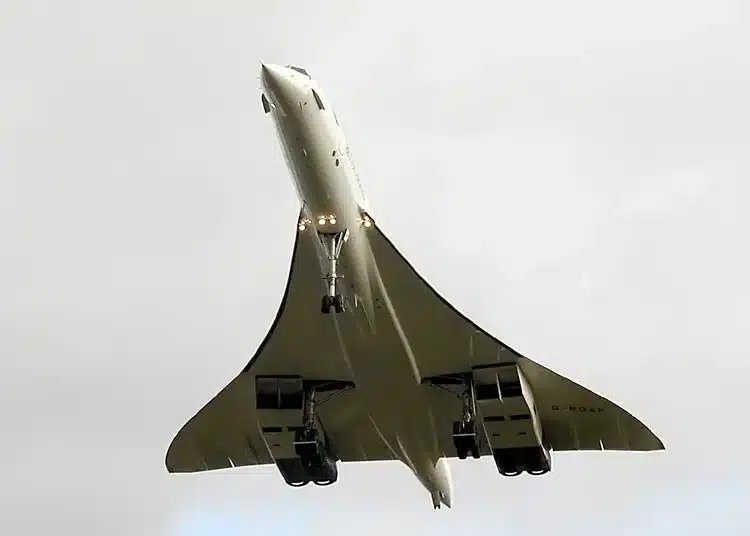
Concorde first took off in 1969 utilizing supersonic travel, but was retired 20-some years ago following safety concerns.
But even though we are seeing a global attempt at flying supersonic again, we haven’t had any commercial supersonic flights since.
This means that just about any journey from any point A to any point B takes a lot less time today than it did in the past.
So flying across the Atlantic is now significantly slower than it was 50 years ago.
That is, to use a polite and neutral term, a bit unusual at the very least.
Let’s hope we can come up with a speedier way to get across the pond that doesn’t cost quite so much…
Some images for this article were generated with AI
Alessandro is an automotive journalist with 10 years of experience covering supercars, automotive history, emerging vehicle technology, and luxury transportation. He wrote the first article published on SupercarBlondie.com when the website launched in 2022 and has since built a reputation for insightful reporting across the automotive and transportation industries. His expertise is grounded in hands-on experience. Alessandro has driven every Tesla model ever produced, from the original Roadster to the Cybertruck, and regularly covers the latest developments in electric vehicles and automotive innovation. His passion for transportation extends beyond cars, he has even flown a Boeing 787 Dreamliner simulator in Addis Ababa, Ethiopia. His reporting spans everything from classic American muscle cars and rare automotive discoveries to luxury yachts, private aircraft, high-end watches, and cutting-edge vehicle technology. Known for his deep knowledge of automotive history and ability to uncover the stories behind iconic vehicles, Alessandro brings readers a blend of historical context, technical expertise, and first-hand experience.