Razer's new Alexa rival Project AVA puts an anime character on your desk with human-like vision and contextual awareness
Published on Jan 08, 2026 at 8:41 AM (UTC+4)
by Molly Davidson
Last updated on Jan 08, 2026 at 11:41 AM (UTC+4)
Edited by
Kate Bain

Tech company Razer has just revealed a new AI assistant, and it’s not hiding inside a speaker or yelling answers from across the room.
This one sits right on your desk and reacts to what you’re doing.
It’s called Project AVA, and it looks like a tiny digital person living inside a glass tube on your desk.
And yes, it’s very clearly aimed at gamers, but it’s also trying to do a lot more than that.
DISCOVER SBX CARS – The global premium auction platform powered by Supercar Blondie
So what exactly is Project AVA?
At CES 2026, Razer unveiled Project AVA as a physical AI desk companion designed to live beside your PC.
The device itself is a small cylinder with a clear outer shell.
Inside is a full-body animated character, projected as a 5.5-inch 3D hologram.
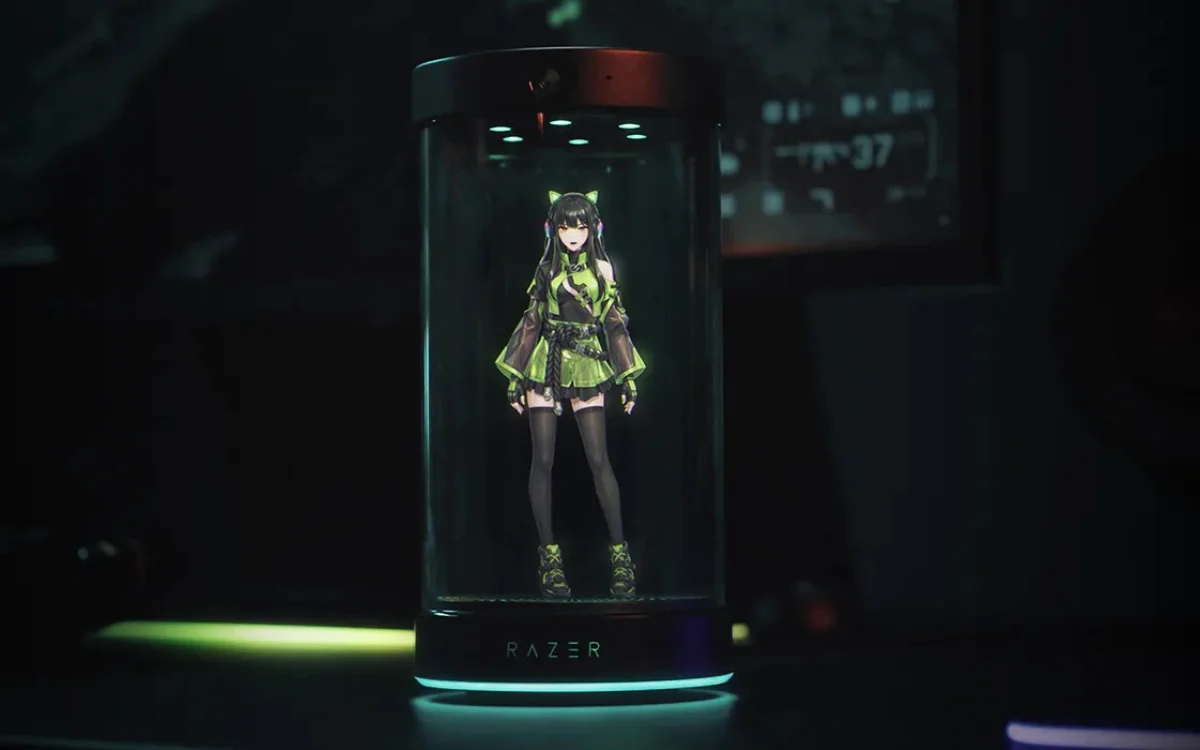
Because it has its own display, AVA doesn’t take over your screen.
Instead, it stays in your peripheral vision, visible but not in the way.
How does Project AVA work?
To make it work, Project AVA is packed with sensors.
There’s a camera on top, microphones for voice input, and an ambient light sensor.
Together, they let AVA see and hear what’s happening around your setup.
On top of that, AVA connects directly to a Windows PC using a USB-C cable.

This wired link enables ‘PC Vision Mode,’ which allows the assistant to analyze what’s on your screen in real time.
So whether you’re gaming, working, or bouncing between tabs, AVA knows what you’re looking at and can respond accordingly.
Where gaming fits in
Unsurprisingly, gaming is where Project AVA feels most at home.
While you’re playing, AVA acts as a live coach, offering tips, loadout suggestions, and tactical advice as games unfold.
But Razer is careful to stress that this isn’t automation or cheating.
AVA doesn’t play the game for you – it just helps you understand what’s happening and how to improve.
Think of it as a backseat gamer that knows when to speak up.
What AVA does the rest of the time
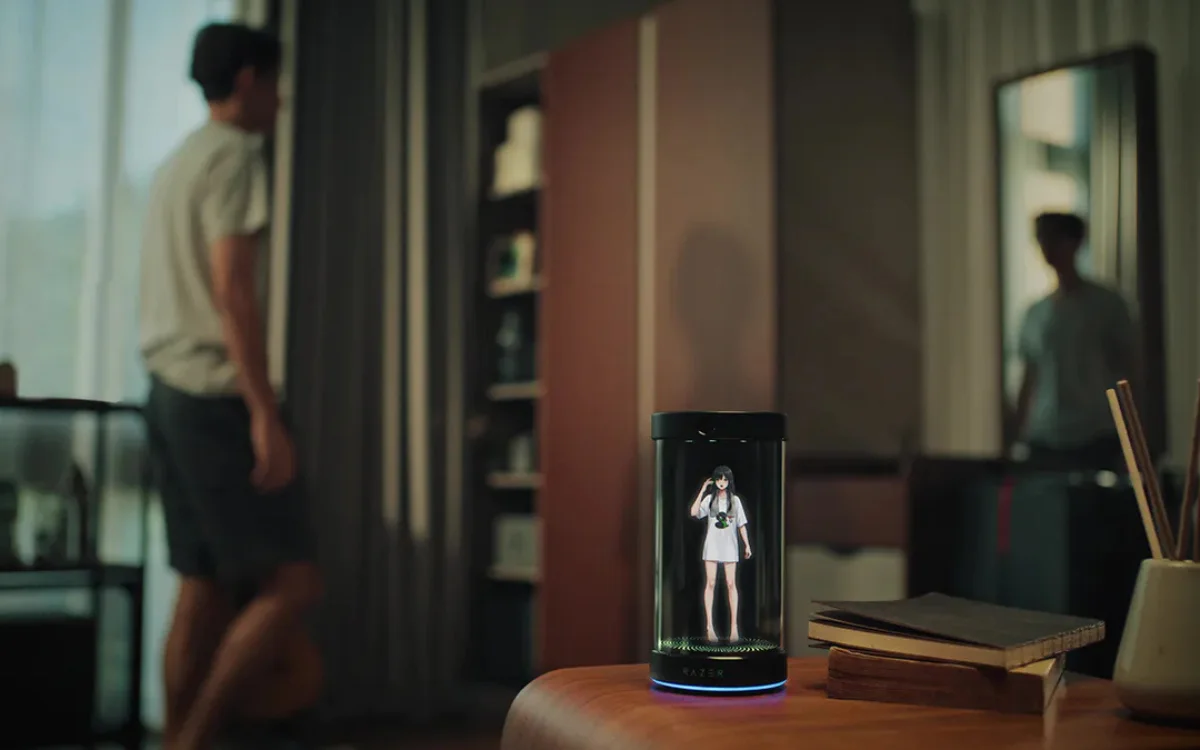
When you’re not gaming, AVA doesn’t shut off.
Instead, it shifts into everyday desk companion mode.
That includes helping organize your calendar, suggesting meals, assisting with work or school tasks like brainstorming, and tracking routines tied to habits and wellness.
The idea is continuity.
AVA is meant to stay useful whether you’re playing, studying, or just trying to plan your day.
Avatars, AI, and what comes next
Powering the current demo is Grok, developed by xAI.
Razer says Project AVA is built with an open architecture, meaning it’s designed to support other AI platforms later on, including a future Razer AI.
Just as important are the avatars themselves.
Users will be able to choose from multiple characters, each with a distinct personality.
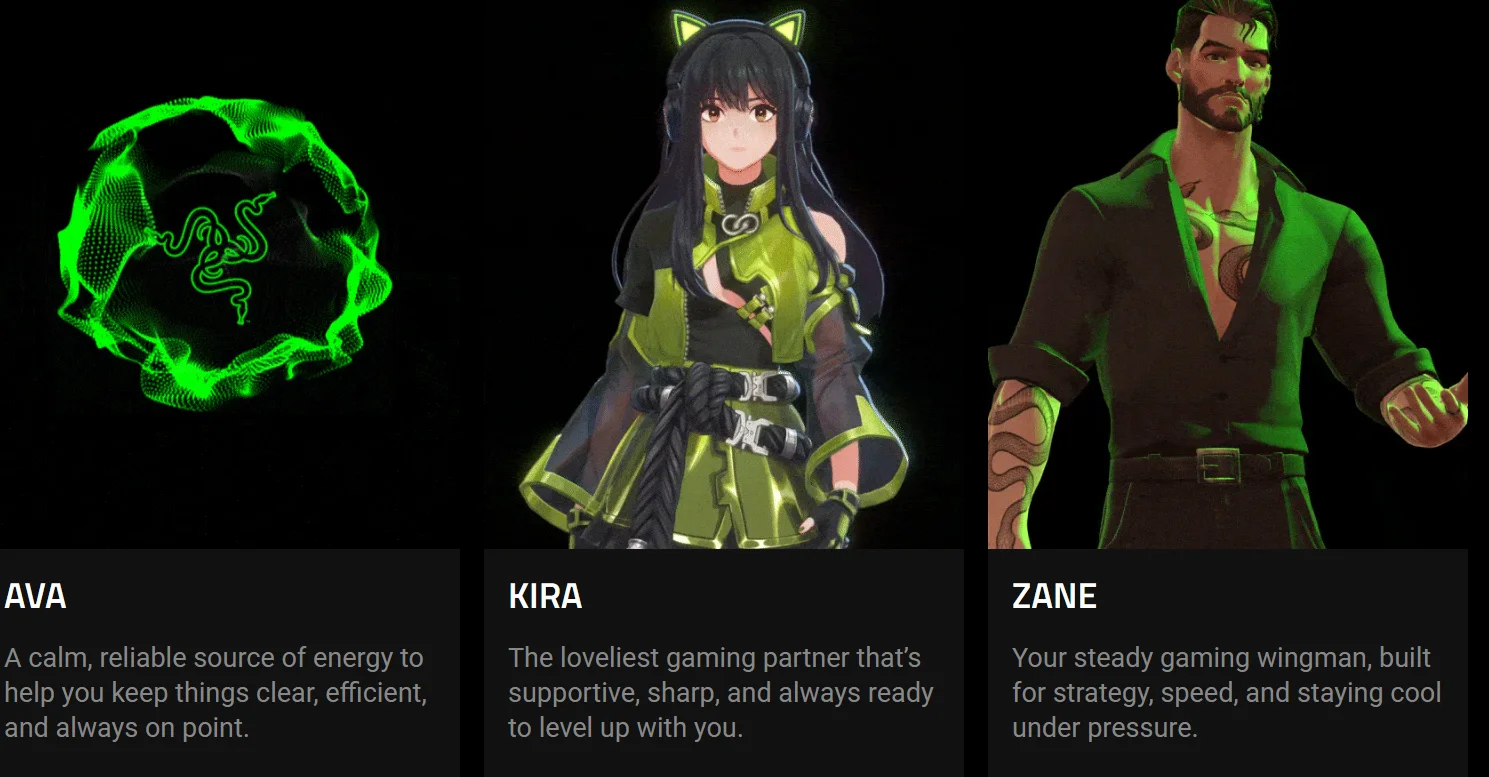
Options shown so far include AVA, KIRA, ZANE, SAO, and a version based on esports star Faker.
These characters move, blink, and react in real time inside the hologram, with more customization planned as development continues.
Project AVA is still targeting a launch in the second half of 2026, with reservations already open in the US.
For now, it’s a clear look at how Razer imagines AI assistants working.
Not hidden away, but sitting on your desk, on the look-out for ways to make your day simpler.
DISCOVER SBX CARS: The global premium car auction platform powered by Supercar Blondie
With roles at TEXT Journal, Bowen Street Press, Onya Magazine, and Swine Magazine on her CV, Molly joined Supercar Blondie in June 2025 as a Junior Content Writer. Having experience across copyediting, proofreading, reference checking, and production, she brings accuracy, clarity, and audience focus to her stories spanning automotive, tech, and lifestyle news.