Six different automotive brands that you might not expect have a BMW engine under the hood
Published on Dec 28, 2025 at 9:19 AM (UTC+4)
by Jason Fan
Last updated on Dec 11, 2025 at 7:55 PM (UTC+4)
Edited by
Kate Bain

You might not believe it, but the same BMW engine that powers your neighbor’s 3 Series also powers a lot of other cars.
BMW’s engines have become some of the most borrowed engines in the business, with everyone seemingly wanting a bit of Bavarian muscle under their bonnet.
After all, if you’re going to borrow an engine, you might as well borrow a good one.
If you have any of the following six cars, you might just have a BMW engine under your hood.
SBX CARS – View live supercar auctions powered by Supercar Blondie
A BMW engine is considered the gold standard
BMW’s willingness to share its engines isn’t new.
The company famously supplied the V12 that powered the legendary McLaren F1 in the 1990s.
This was an engine that helped create one of the fastest and most revered supercars in history.
Fast-forward to today, and BMW’s engineering know-how continues to fuel cars far beyond its own lineup.
The most obvious recipients of BMW engines are Mini and Rolls-Royce, which are both brands under the BMW Group.
Next is Toyota, whose latest GR Supra is basically a BMW Z4 in disguise.
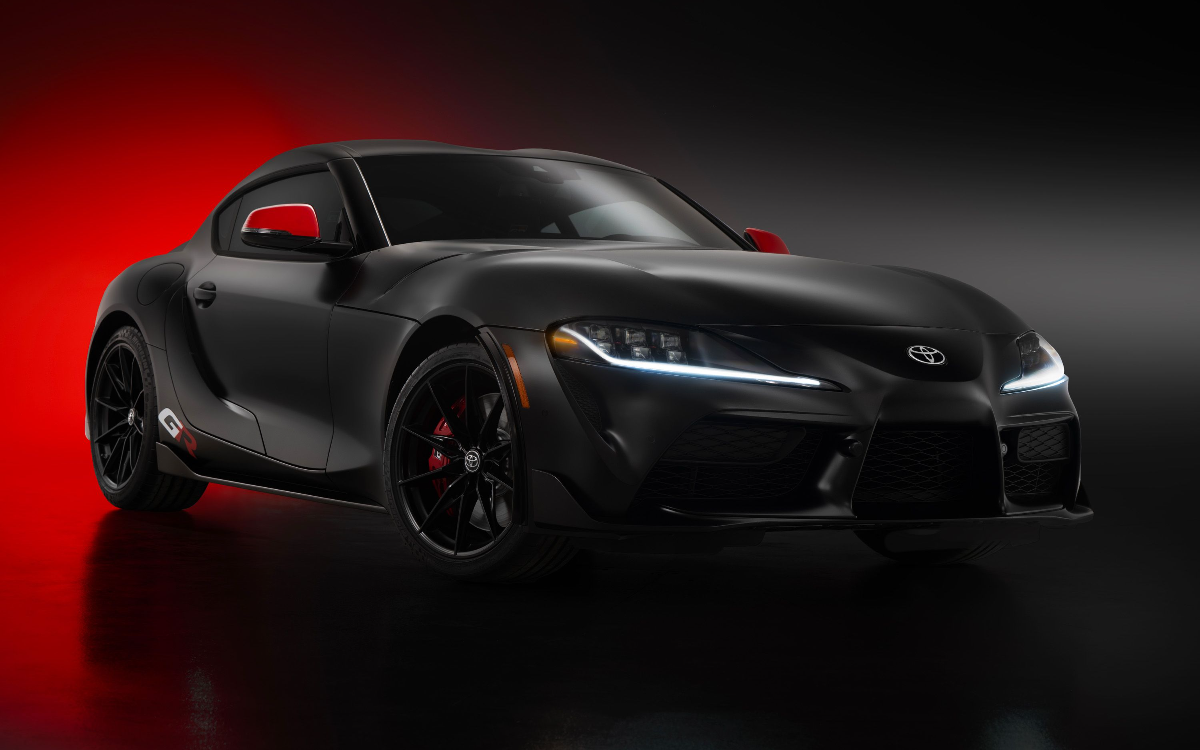
Under the hood sits BMW’s brilliant 3.0-liter turbocharged B58 inline-six, churning out up to 382 horsepower.
The partnership allowed both brands to build the sports cars they wanted without blowing their budgets.
Toyota even tuned the manual transmission to feel sharper than BMW’s own, putting a JDM spin on the already impressive engine.
Then there’s Land Rover, which swapped its aging in-house V8 for BMW’s cleaner, more powerful 4.4-liter twin-turbo.
The Range Rover and Defender now benefit from the same engines found in BMW’s M cars, including the S63, which pumps out a thundering 626 horsepower in the Range Rover Sport SV.

Across the pond, Morgan has been using BMW engines for over 25 years, proving that classic looks and modern performance can coexist beautifully.
Its retro Plus Four uses the peppy B48 turbo-four, paired with a BMW ZF eight-speed automatic and even a BMW shifter inside.

Developing an engine from scratch is very expensive
Perhaps the most unusual brand on the list is Ineos Automotive, which is part of Ineos Group.
While the parent company is the ninth-largest chemical company in the world, it has very little experience building a car.
This was why the company decided to incorporate a BMW engine into its very first vehicle, the Grenadier, allowing it to meet both US and European emissions standards.

But why exactly do these companies decide to use BMW engines in their own vehicles?
While the exact reason may vary among the different carmakers, one thing is for sure.
Developing an engine from scratch is insanely expensive, and BMW already has a stable of efficient, emissions-compliant powertrains ready to go.
DISCOVER SBX CARS: The global premium car auction platform powered by Supercar Blondie