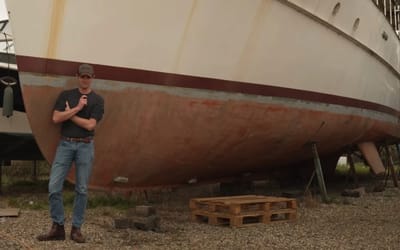
Man who spent 200 days building a solar-powered explorer yacht that can run forever takes it out for its maiden voyage
Published on Jan 19, 2026 at 10:10 PM (UTC+4)
by Daisy Edwards
Last updated on Jan 30, 2026 at 6:01 PM (UTC+4)
Edited by
Kate Bain
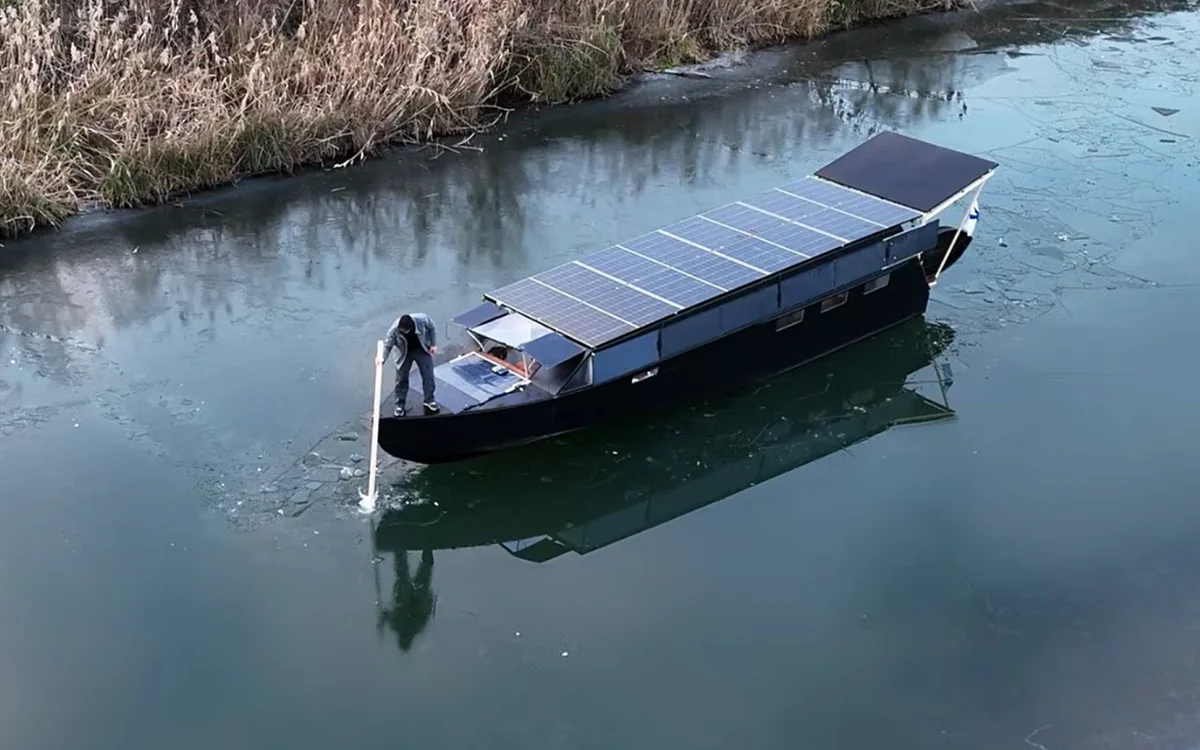

A man who spent 200 days building a solar-powered explorer yacht that can run forever has finally taken it out for its maiden voyage.
The YouTuber just launched Helios 11, a solar yacht prototype he built in Finland, then sailed into the frozen canals of France.
With winter ice slowing his progress, he used the downtime to pressure test his new concept.
But its maiden voyage didn’t get off to a smooth start.
EXPLORE SBX CARS – Supercar auctions starting soon powered by Supercar Blondie
His solar-powered explorer yacht had a frosty maiden voyage
Helios 11 was designed to be a practical yacht that lived on sunlight and could keep moving without the need for marinas or fuel stops along the way.
But the maiden voyage of his solar-powered explorer yacht did not start with perfect conditions.
After reaching the canals of France, sections were frozen, leaving the boat stuck until conditions improved.
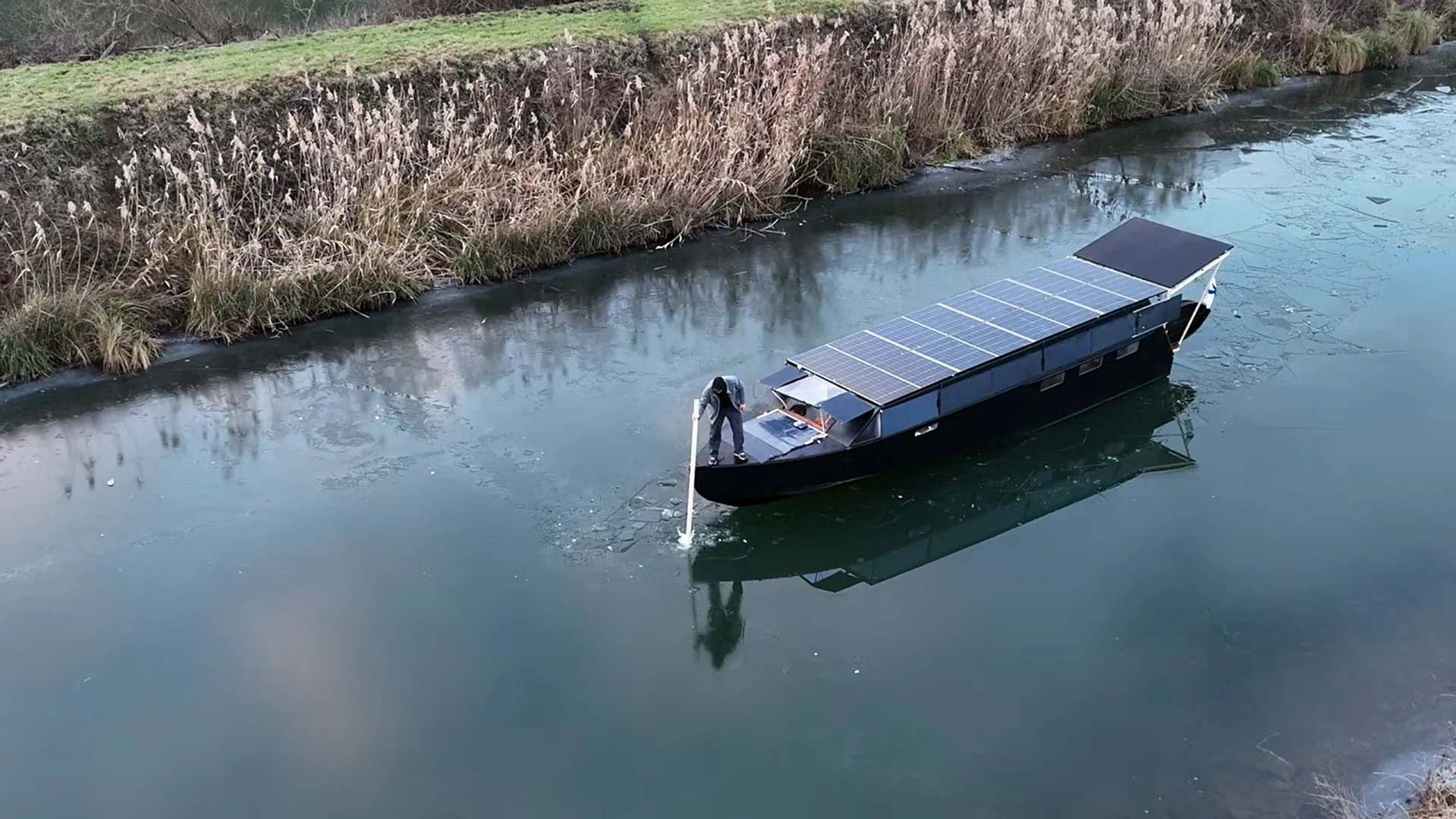
Instead of calling it a pause, he treated it as a moment to test out his new solar-powered yacht project.
The goal remained the same: a solar vessel that could travel forever, powered by the sun, but also feel like a steady, comfortable place to live.
Designing a vessel that won’t capsize
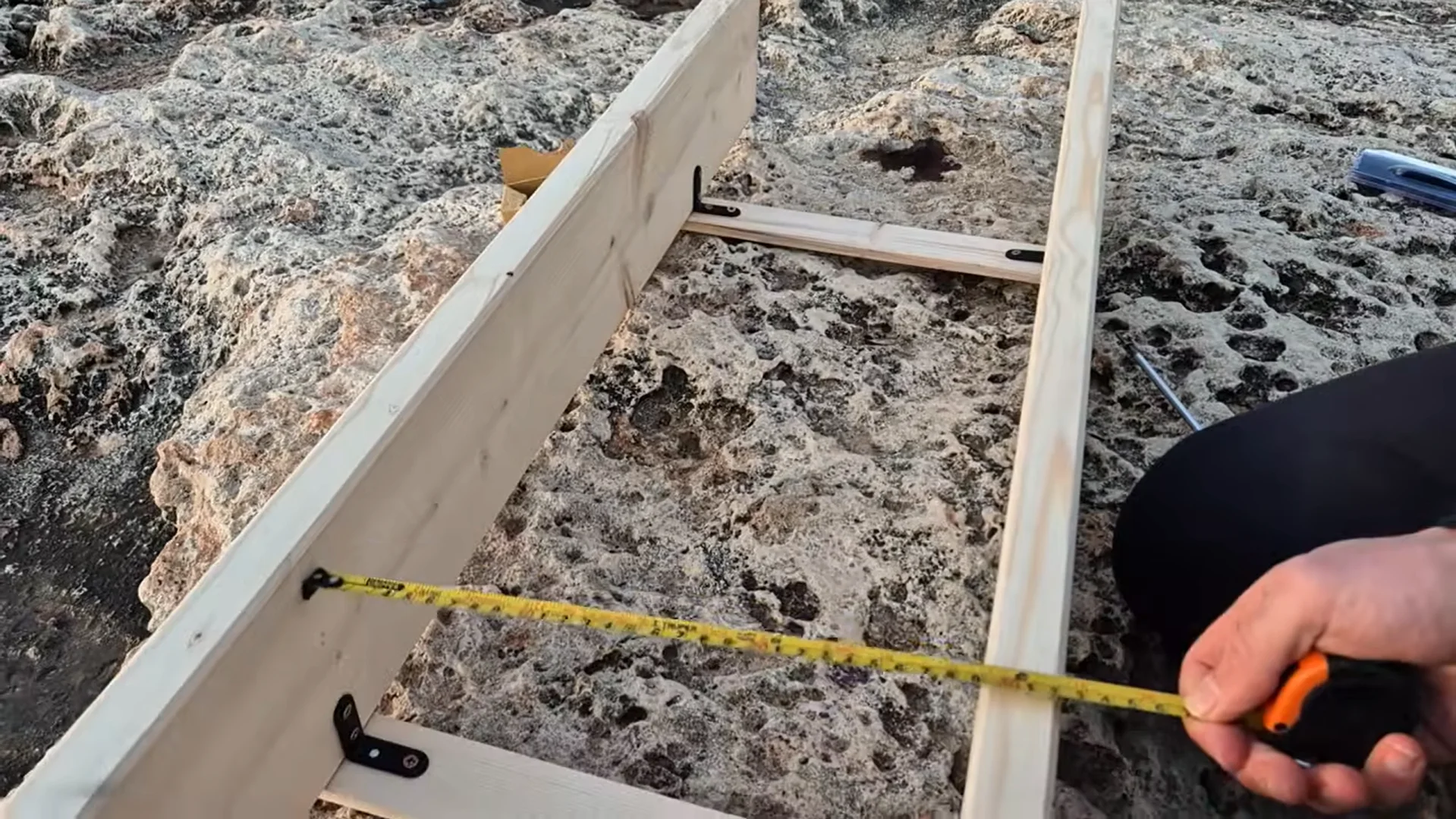
While Helios 11 remained stuck in frozen water, the builder took the time to test a new platform: an ultra-narrow catamaran concept he calls Halo 13.
He built a 1:13 scale model with two very skinny boat hulls, then weighted it to match a realistic center of gravity for the full-size boat.
It was this experiment that made him realize he’d designed something game-changing.
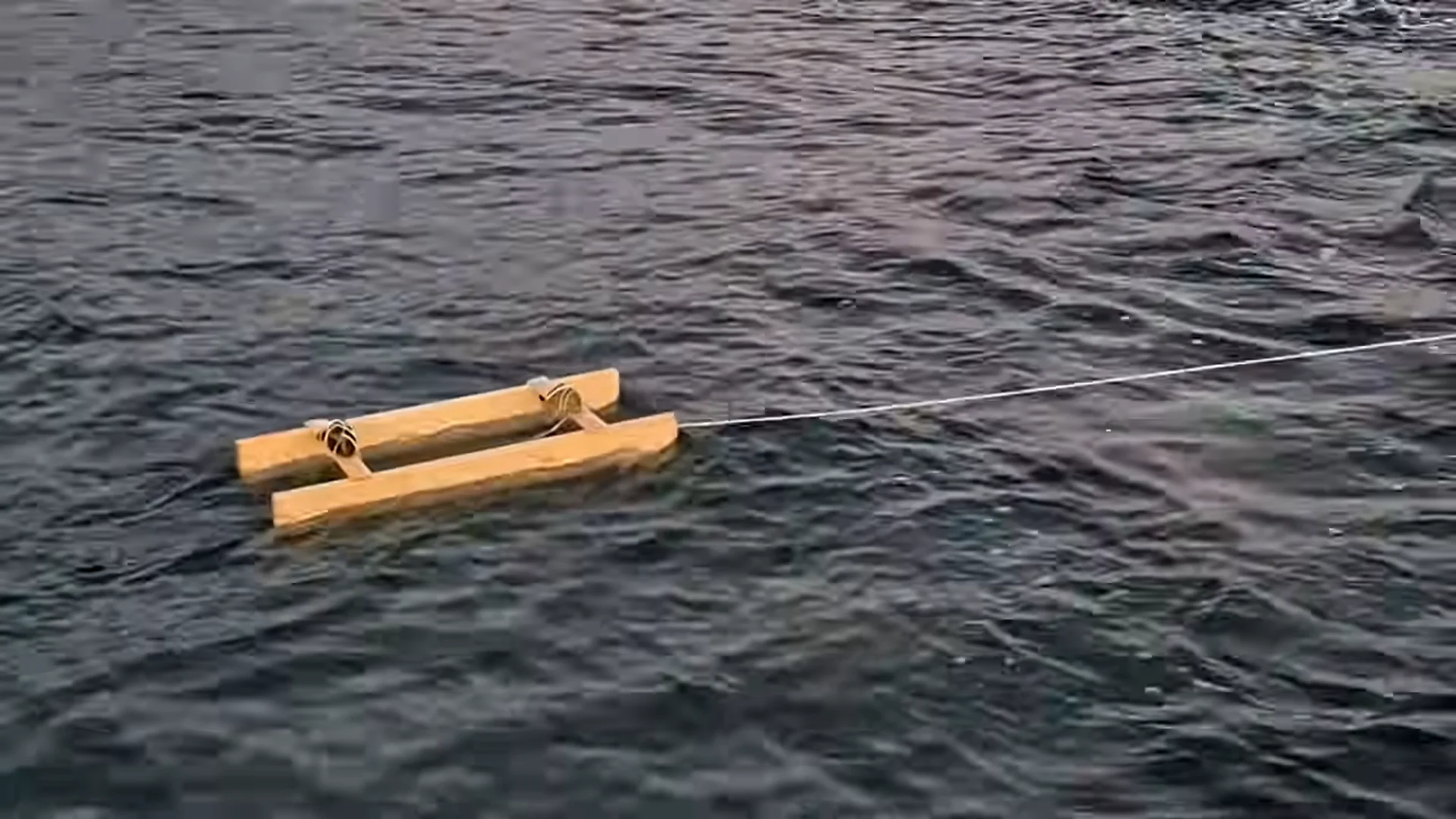
In the water, the model stayed calm in waves coming from the side, head-on, and diagonally.
The real standout was his discovery that it was very unlikely to capsize.
Despite a relatively narrow beam for its length, the model appeared highly resistant to rolling over, with the builder suggesting only an extreme breaking wave at the wrong angle would pose a serious threat to it.

Next up, he planned to refine the shape of his new catamaran, run more tests, and build a scaled Helios 11 model to compare the two designs side-by-side.
We look forward to watching his progress.
And in the meantime, let’s hope that water unfreezes so he can continue his voyage in his solar yacht prototype Helios 11.
How do solar-powered yachts work?
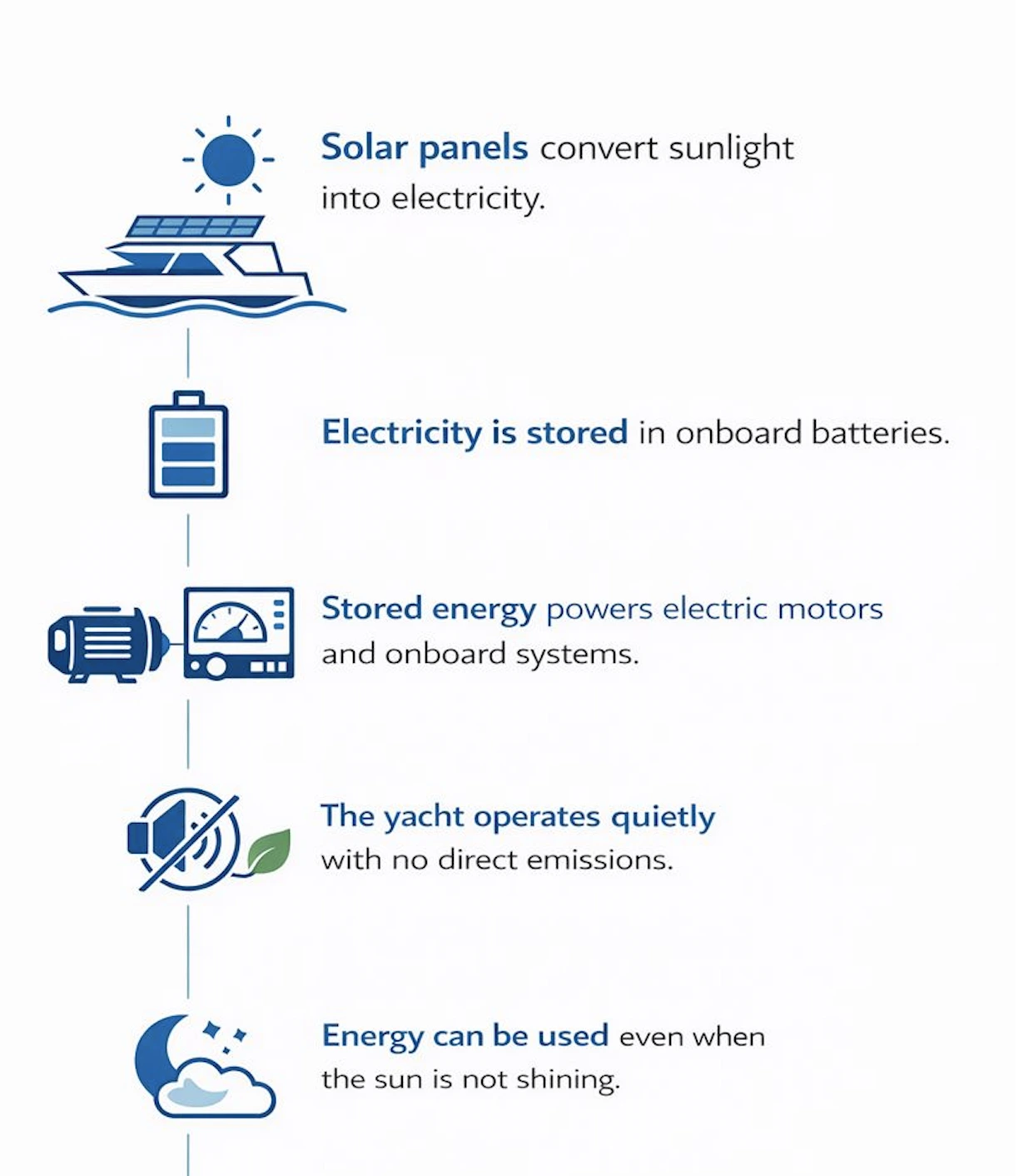
Solar panels generate power
High-efficiency solar panels mounted on the yacht capture sunlight and convert it into electrical energy throughout the day while the vessel is underway or at anchor.
Energy is stored onboard
The electricity produced is stored in advanced battery systems, allowing excess energy to be saved rather than wasted.
Electric propulsion
Stored energy supplies electric motors for propulsion as well as onboard systems such as lighting, navigation, climate control, and appliances.
Quiet, emission-free operation
Because the yacht relies on electric motors, it runs quietly and produces no direct exhaust emissions, reducing environmental impact.
Power is available at all times
Even when there is no sunlight, such as at night or during cloudy conditions, the yacht can continue operating using energy stored in its batteries.
DISCOVER SBX CARS: The global premium car auction platform powered by Supercar Blondie