Man who spent 200 days building a solar-powered explorer yacht that can run forever spends $1,900 to extend it even further
Published on Mar 07, 2026 at 1:09 AM (UTC+4)
by Callum Tokody
Last updated on Mar 06, 2026 at 3:57 PM (UTC+4)
Edited by
Amelia Jean Hershman-Jones
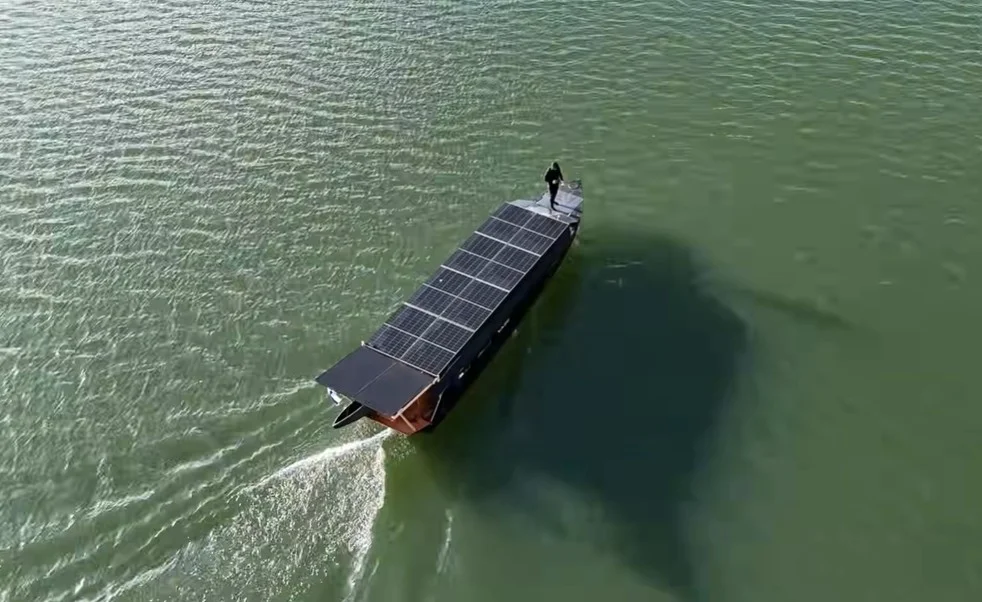

The solar-powered Helios 11 recently received a $1,900 battery upgrade that allows the 11-meter yacht to cover 100 nautical miles in a single day without using any fuel.
This project is the result of 200 days of development focused on creating a hull that extracts the maximum possible efficiency from the sun.
The vessel utilizes a narrow beam and a long waterline to minimize drag while moving through coastal waters.
New data from recent sea trials shows exactly how this specific hardware configuration handles the realities of long-distance independent travel.
The math behind the solar-powered range
The installation of two additional 48V 100 amp batteries constitutes the latest battery upgrade for the Helios 11.
This configuration provides 22 kilowatt hours of usable energy to the solar-powered propulsion system.
These batteries allow the vessel to cover 100 nautical miles during a standard 24-hour cruising period.
Actual performance varies based on local weather conditions and the duration of direct sunlight.
Sunny summer days can push these nautical miles to a total of 150 when utilizing the auxiliary sail.
The roof array generates approximately 15 kilowatt-hours of energy on a typical day to feed the system.
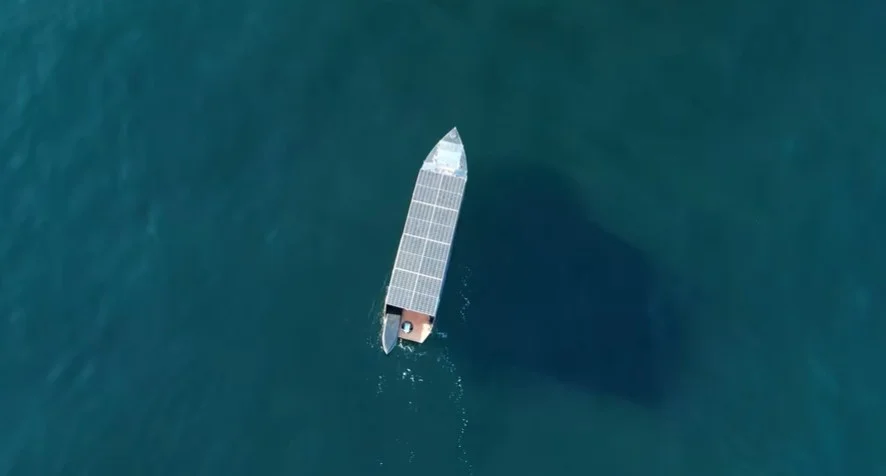
Total energy capacity reaches 37 kilowatt-hours when combining the solar input with the storage from the battery upgrade.
A steady cruise speed of 5 to 5.5 knots ensures the motor operates within its peak efficiency range.
Standard rigid panels remain the primary energy source for the Helios 11 due to their reliability and lower market cost.
Strategic placement of the batteries beneath the waterline improves the stability of the solar-powered yacht in choppy conditions.
This weight distribution counteracts the mass of the solar array located on the roof of the Helios 11.
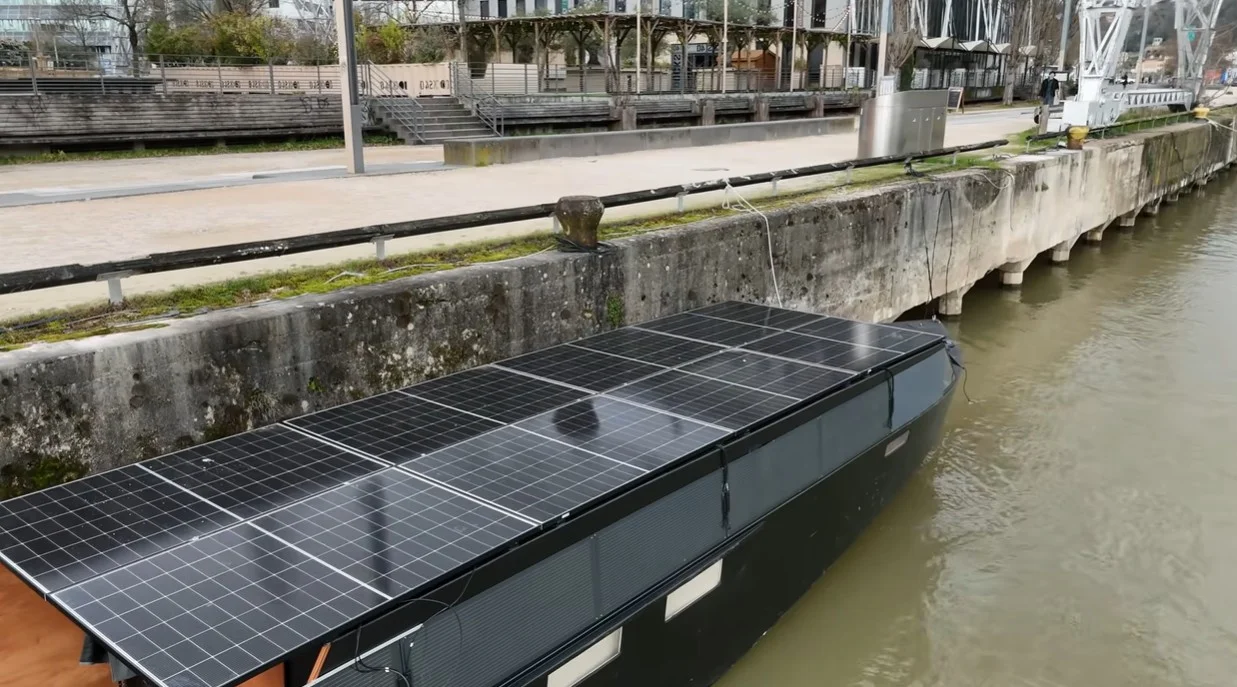
The vessel functions as a self-righting structure to maintain safety during long-distance nautical miles.
Onboard living amenities include an electric stove, a lightweight fridge, and a portable flushable toilet system.
While flexible CIGS panels offer a better wattage-per-mass ratio, they provide lower yield per square meter than the current solar-powered roof.
The builder opted for rigid panels to keep the center of gravity low and the battery upgrade expenses within a $1,900 budget.
Current data suggests a 1.5-ton boat can achieve this level of performance for a total build cost under $50,000.
Building an off-grid maritime future
The Helios 11 demonstrates a functional application for solar-powered maritime engineering and sustained long-range travel.
Plans for the vessel include the addition of rainwater harvesting and advanced water filtration systems.
These integrated technologies allow the Helios 11 to operate for extended periods without visiting a marina.
The swimming platform will soon feature lightweight safety railings and additional solar-powered surface area.
It’s hoped that these modifications will increase energy margins for onboard electronics and Starlink connectivity during remote nautical miles.
Better hull insulation will also be necessary for the solar-powered vessel to navigate colder northern climates.
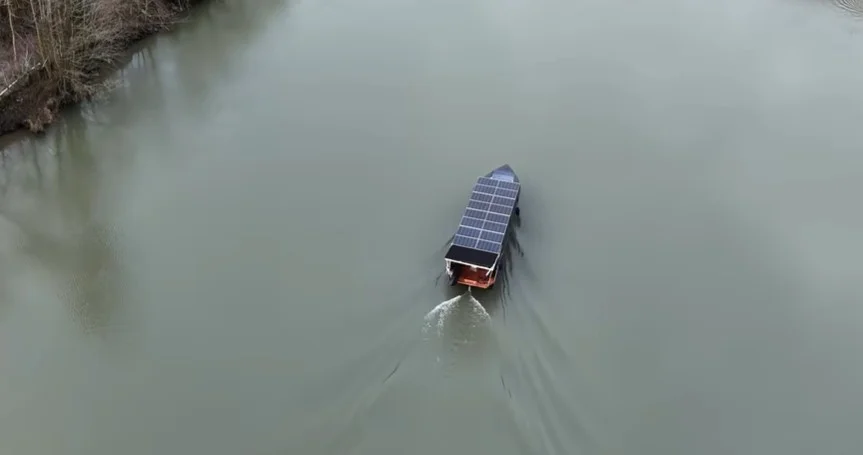
The successful battery upgrade confirms that sustainable sea travel is achievable for independent operators today.
Using solar-powered propulsion removes the requirement for diesel fuel and traditional engine maintenance.
The Helios 11 functions as a mobile office and residence for those pursuing a nomadic lifestyle at sea.
Consistent performance in overcast conditions indicates the yacht is a practical tool for travel over significant nautical miles.
This prototype will likely influence future designs as battery and panel technologies continue to improve.
Solar-powered systems offer a clear path toward reducing the environmental impact of private maritime exploration – and that can only be a good thing.
DISCOVER SBX CARS: The global premium car auction platform powered by Supercar Blondie