NASA's 'Son of Concorde' X-59 jet makes history as it flies 'quiet' supersonic for the first time
Published on Jun 09, 2026 at 1:13 AM (UTC-4)
by Alessandro Renesis
Last updated on Jun 09, 2026 at 9:53 AM (UTC-4)
Edited by
Mason Jones
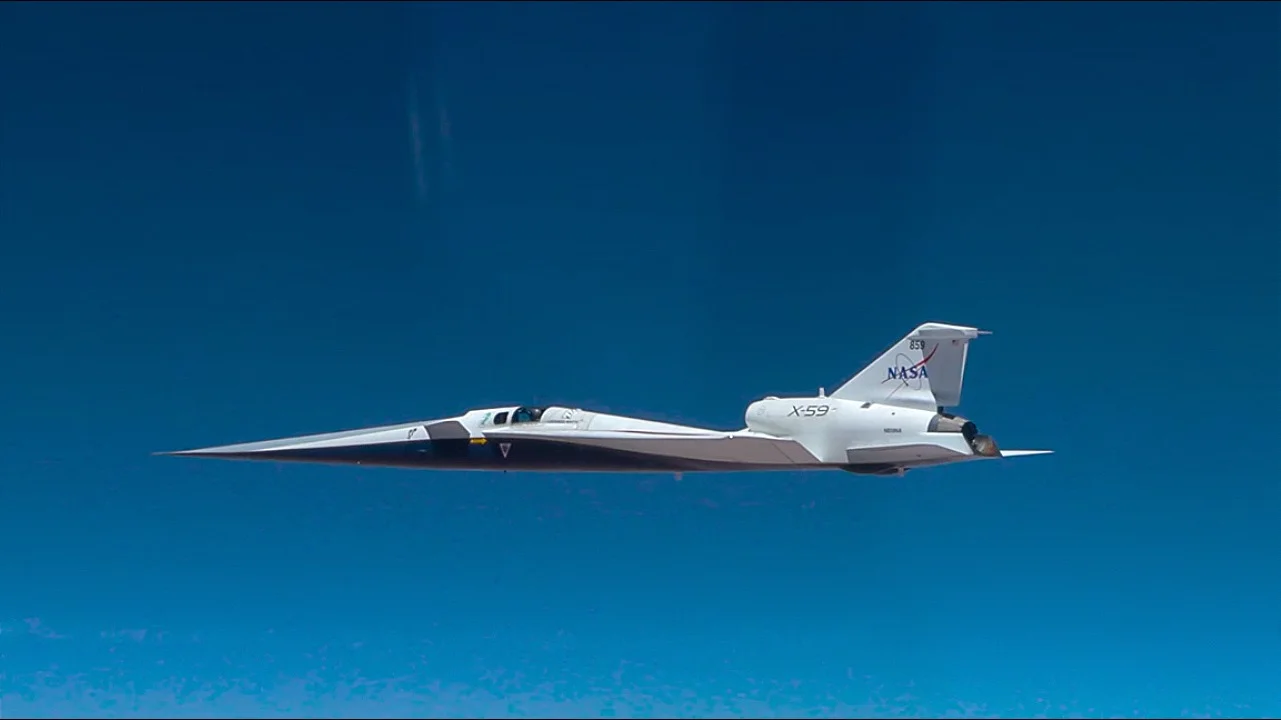

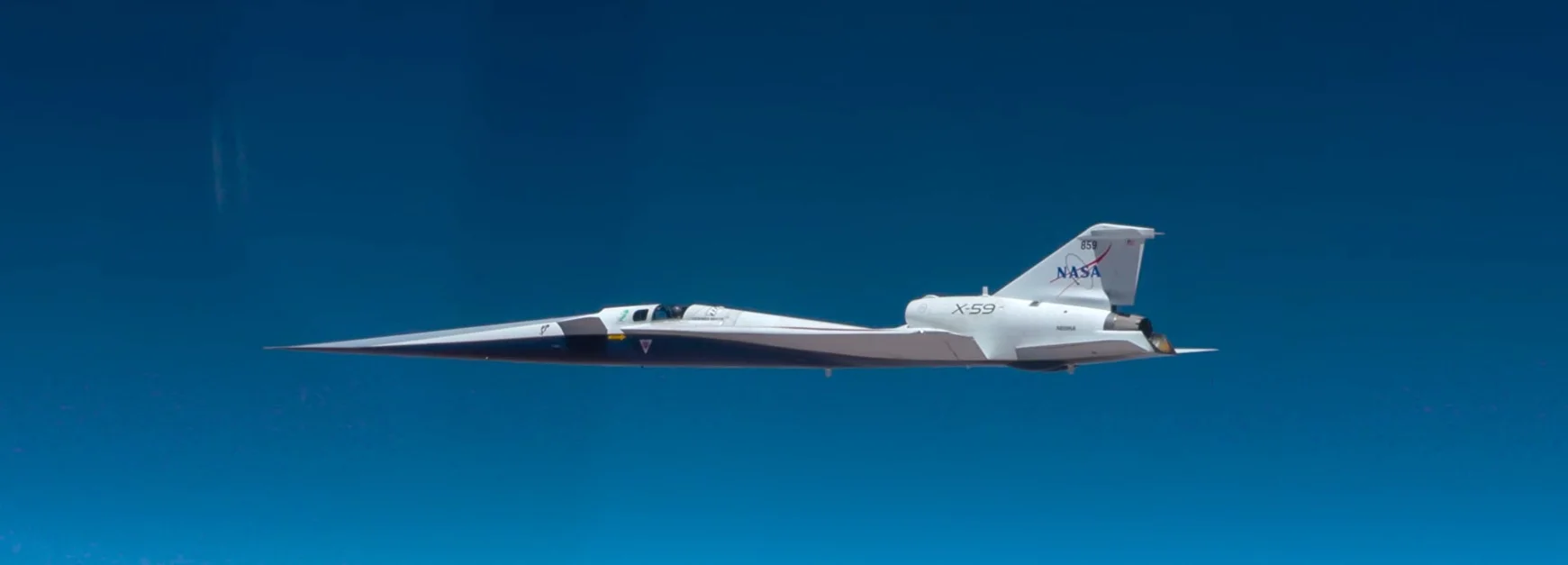
NASA just reached another huge milestone with the supersonic aircraft everyone’s already calling the Son of Concorde – the X-59.
The upcoming supersonic aircraft is currently being tested, and NASA just nailed the test that mattered the most.
Ironically, it had to do with speed, but not in the way most people assume.
However, this test was super important because it provides a solution to a potential legal problem.
Where are we with NASA’s X-59?
NASA has been working on the X-59 aircraft for a few years at this point.
People have already given it a nickname: Son of Concorde.
The idea is to finally fly supersonic commercially, something we haven’t been to do since the demise of Concorde around 20 years ago.
NASA isn’t alone; private firm Boom Supersonic recently successfully flight-tested its XB-1 demonstrator, reaching supersonic speeds in 2025.
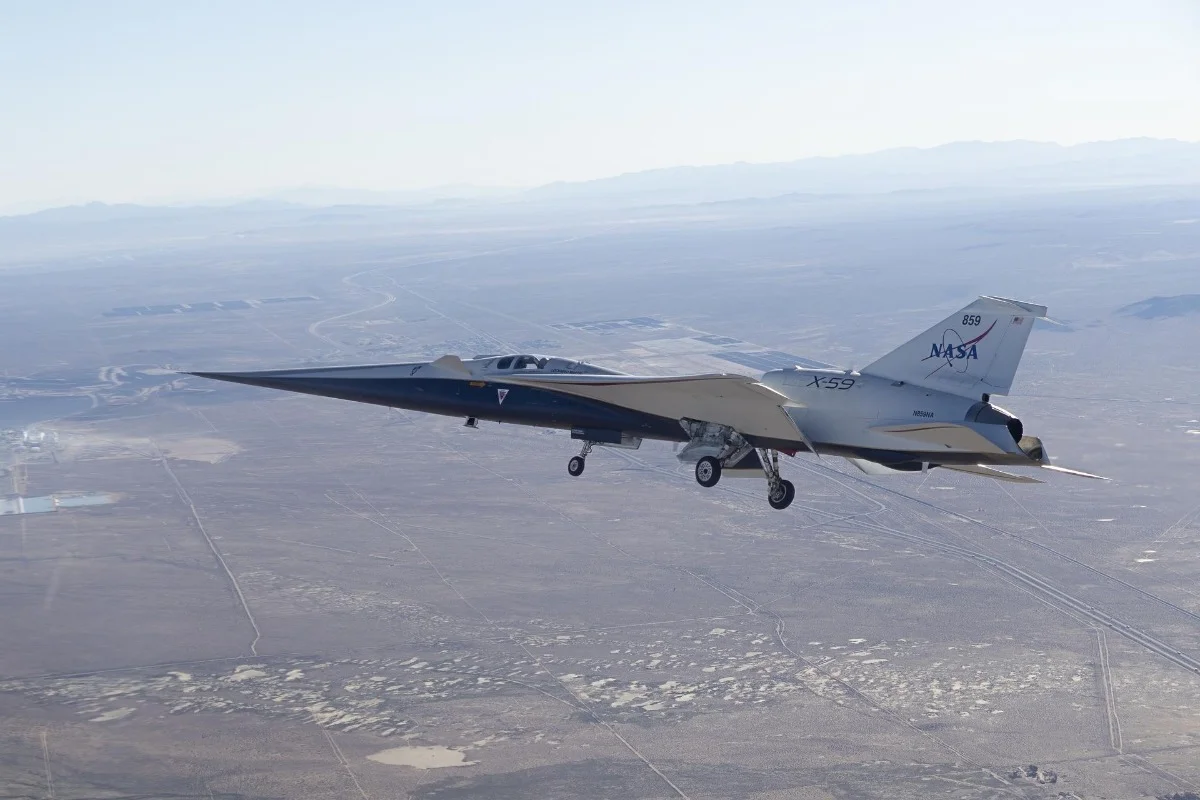
“Quesst is the name of our mission to enable commercial, faster-than-sound air travel over land,” these are NASA’s exact words.
The first test went well, but, for a crucial reason, the second went better.
The X-59 ‘Son of Concorde’ has apparently solved the main problem
After building a functioning prototype for X-59 and completing a couple of test flights, NASA stepped it up a notch with the first supersonic flight.
Earlier this year, NASA test pilot Jim ‘Clue’ Less – we’re not joking, this was literally on its website – left Armstrong Flight Research Center in Edwards, California, and flew for 90 minutes, reaching 20,000 feet and 460mph.
Now, once again with Jim ‘Clue’ Less piloting the jet, it reached Mach 1.077 (around 713 mph) at around 43,400 feet.
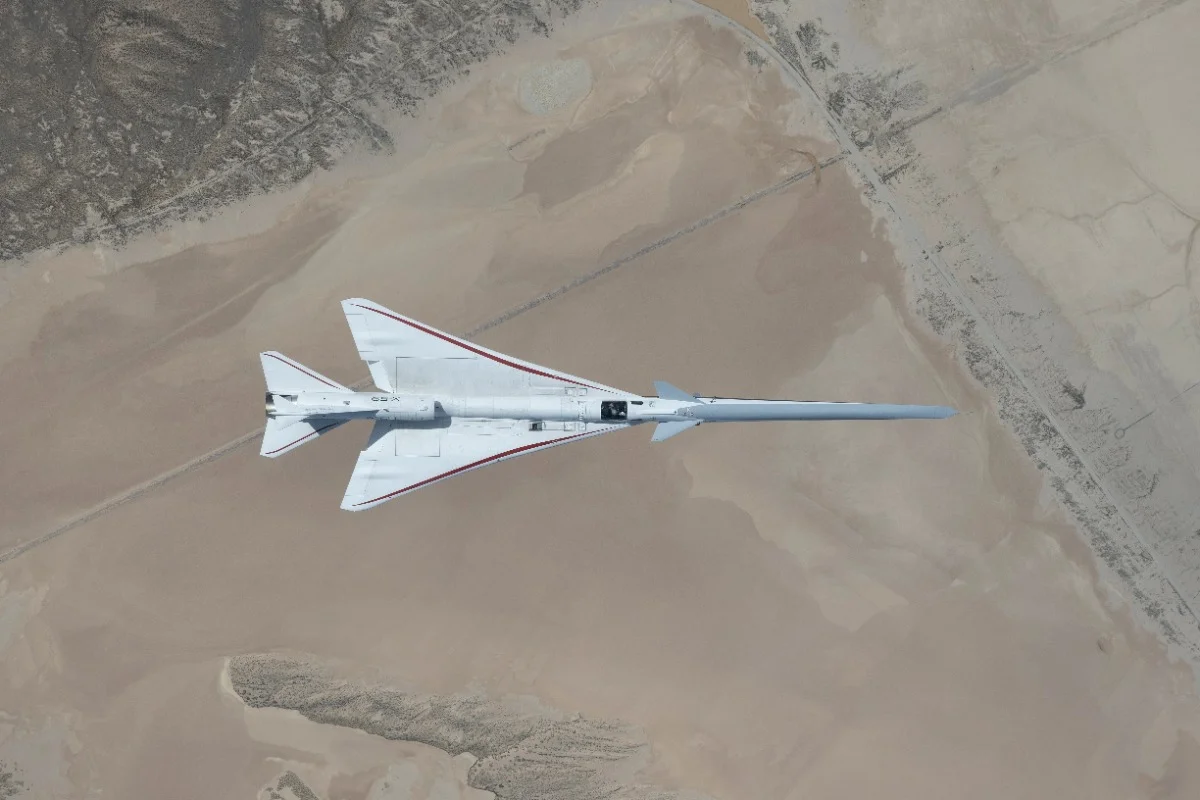
The flight lasted 81 minutes and, this is the key element, it produced no sonic boom.
The aerospace agency somehow managed to reduce the loud sonic boom into a sonic ‘thump.’
That’s the really good part because some countries simply banned supersonic airliners outright precisely for the sonic boom.
The timeline still stretches far into the horizon
Earlier this year, we spoke with Robert Cullemore, an independent aviation consultant and expert with 19 years of experience in the industry, and in his view, there are three changes we can expect in the aviation industry ahead of supersonic flights.
The first concerns eVTOLs (electric vertical take-off and landing aircraft), and the second revolves around fuel.
“For the vast majority of the aviation industry, [in the foreseeable future] we will see increases in fuel efficiency as well as an increase in use of sustainable aviation fuel (SAF) across narrow-body and wide-body operations,” he told Supercar Blondie.
The third thing is about ultra-long-range flight.
“You’ll see a lot of headline-grabbing direct routes thanks to these long-range aircraft, like the Airbus A350-1000ULR that’s going to be used by Qantas for ‘Project Sunrise’, connecting London and Sydney with a non-stop flight,” he said.
But he also added that whether this transitions from a headline-grabbing marketing tool to a money-making business remains to be seen.
“Just how many direct routes are economically viable with flight durations of over 17 hours remains
to be seen,” he added.

Alessandro is an automotive journalist with 10 years of experience covering supercars, automotive history, emerging vehicle technology, and luxury transportation. He wrote the first article published on SupercarBlondie.com when the website launched in 2022 and has since built a reputation for insightful reporting across the automotive and transportation industries. His expertise is grounded in hands-on experience. Alessandro has driven every Tesla model ever produced, from the original Roadster to the Cybertruck, and regularly covers the latest developments in electric vehicles and automotive innovation. His passion for transportation extends beyond cars, he has even flown a Boeing 787 Dreamliner simulator in Addis Ababa, Ethiopia. His reporting spans everything from classic American muscle cars and rare automotive discoveries to luxury yachts, private aircraft, high-end watches, and cutting-edge vehicle technology. Known for his deep knowledge of automotive history and ability to uncover the stories behind iconic vehicles, Alessandro brings readers a blend of historical context, technical expertise, and first-hand experience.