I asked ChatGPT what the best prompts are to use and this is what it told me
Published on Sep 11, 2026 at 8:44 AM (UTC-4)
by Daisy Edwards
Last updated on Sep 11, 2026 at 8:44 AM (UTC-4)
Edited by
Alessandro Renesis


Who knew that the future would be spent trying to get a good answer from ChatGPT and realizing it isn’t always about asking a complicated question or convoluted prompts?
In fact, the AI says some of the best prompts are simply the ones that give it enough information to understand what you actually want.
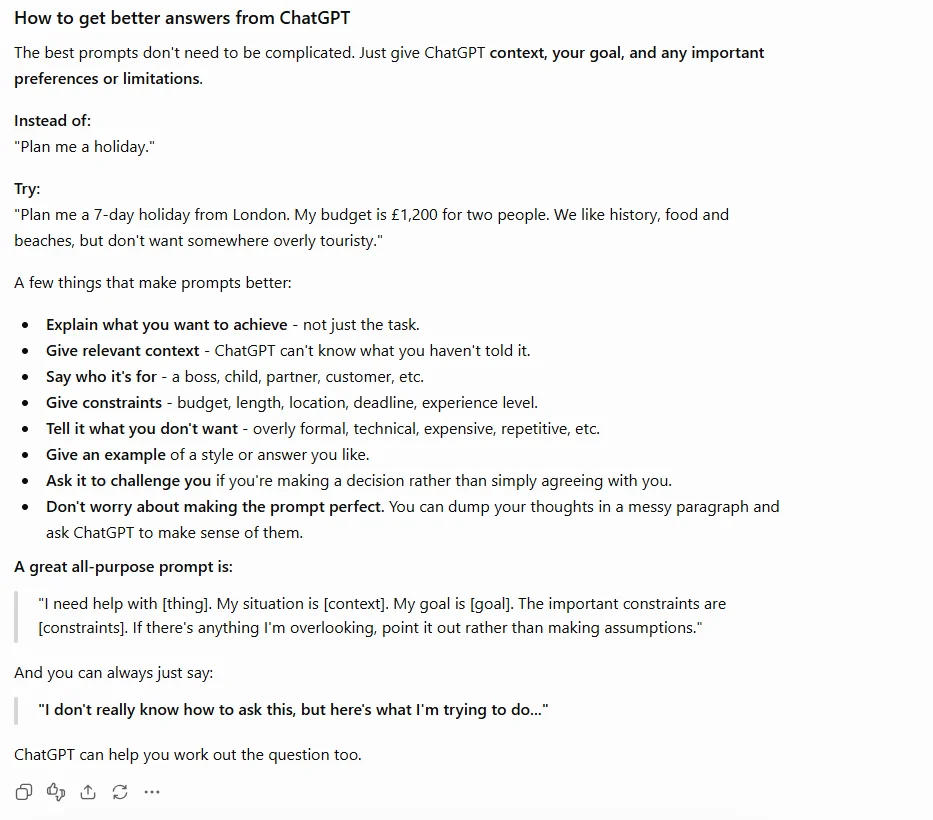
I asked ChatGPT what makes a prompt better, and its advice was surprisingly straightforward.
So if you’ve ever stared at the chat box wondering what on earth you’re supposed to type, this might help.
Start with what you’re trying to achieve
One of the biggest mistakes is telling ChatGPT what to do without explaining why you want it done.
Instead of simply typing “Plan me a holiday,” for example, you could explain that you’re looking for a seven-day trip from London, have a $1,200 budget for two people and enjoy history, food and beaches but don’t want somewhere overly touristy.
That extra context gives ChatGPT a much better idea of what you’re looking for, meaning it doesn’t have to fill in all the blanks itself.
It’s also worth explaining who the answer is for; a message written for your boss probably shouldn’t sound the same as one written for your partner, child, or customer.
Related


Don’t be afraid to give ChatGPT rules
ChatGPT also suggested being upfront about any constraints that could affect the answer.
That could mean mentioning your budget, deadline, location, experience level or how much time you have available.
You can also tell it what you don’t want, whether that’s something overly formal, technical, expensive, repetitive or complicated.
And if there’s a particular style you like, give it an example, because showing ChatGPT an example of something you like can be much easier than trying to explain exactly what you want it to sound like.

Ask ChatGPT to challenge you
There’s another trick that could be particularly useful when you’re making a decision.
Instead of asking ChatGPT to simply help you choose between two options, you can tell it to challenge your thinking and point out anything you might have overlooked.
That means you’re not just getting an answer that agrees with you, you’re actually asking it to look for potential problems, weaknesses, or assumptions you might have missed.
It can be particularly useful when you’re buying things, planning something expensive, or trying to decide between several options.
You don’t need to be good at prompting ChatGPT
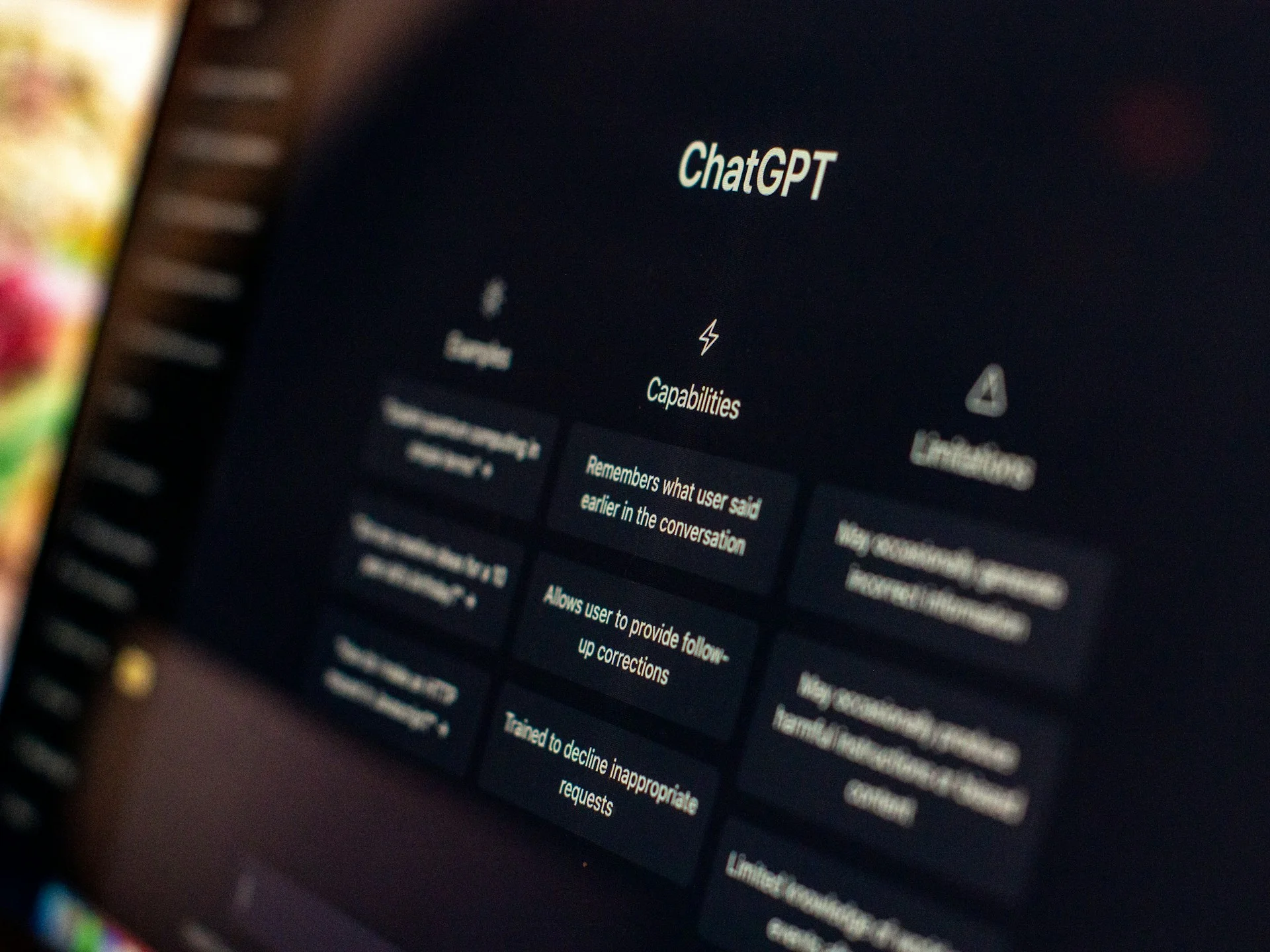
Perhaps the most reassuring piece of advice from ChatGPT was that you don’t need to know how to write the perfect prompt.
You can simply throw all your thoughts into one messy paragraph and ask ChatGPT to work out what you’re trying to achieve.
You can even start with: “I don’t really know how to ask this, but here’s what I’m trying to do…”
From there, ChatGPT can help you turn those thoughts into a clearer question rather than expecting you to figure everything out first.
The all-purpose prompt
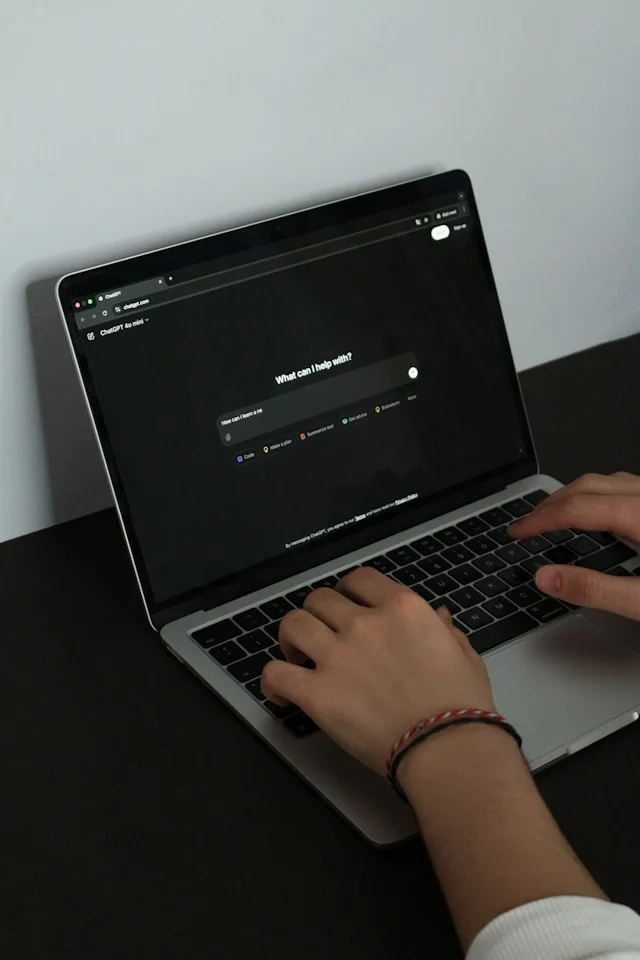
If you do want one prompt that works for almost anything, ChatGPT suggested keeping it simple.
You can tell it what you need help with, explain your situation, describe your goal and then list any important constraints.
Then add one final instruction: “If there’s anything I’m overlooking, point it out rather than making assumptions.”
Sometimes the best prompt is the one that makes you realize you’ve been asking the wrong prompts all along.
Daisy is a technology and automotive journalist covering artificial intelligence, consumer tech, Apple news, cryptocurrency, emerging technologies, and transportation innovation. Since joining the team in 2025, she has reported on everything from AI-powered startups and major iOS updates to viral car stories and the latest developments shaping transportation and the digital economy. Drawing on her background in automotive journalism and a degree in History and Journalism from Goldsmiths, University of London, Daisy specializes in breaking down complex topics into clear, engaging reporting for a global audience. Her work spans cutting-edge technology, innovative vehicles, and the people driving change across both industries. Daisy has gained first-hand access to some of the world's most talked-about technologies and innovators, including meeting Tesla's Optimus humanoid robot during its first European appearance in London. She has also discussed the future of space exploration with an astronaut, bringing unique insights and real-world perspectives to her coverage of emerging technology.




