California AI team broke Apple's security system it spent 5 years building up in just 5 days
Published on May 21, 2026 at 3:44 AM (UTC-4)
by Daisy Edwards
Last updated on May 21, 2026 at 3:44 AM (UTC-4)
Edited by
Mason Jones

In a story that sounds like it came straight out of a hacker movie, an AI team from California claim to have broke Apple’s security system, which it spent five years building up, in just 5 days.
A small cybersecurity startup called Calif says it managed to crack Apple’s brand-new Memory Integrity Enforcement (MIE) protection using help from Anthropic’s AI model, Mythos Preview.
The security feature was designed to protect Apple’s latest M5 Macs and iPhone 17 devices from some of the nastiest hacking attacks out there.
But despite Apple reportedly spending half a decade building the system, the California researchers claim they found a way to break it in less than a week.
Apple’s security system took five whole years to build and just days to hack
Apple introduced its futuristic update MIE as one of its biggest security upgrades yet.
The system was created to stop memory corruption attacks, which are considered some of the most dangerous exploits hackers can use to take control of a device.
According to Calif, the company teamed up with Anthropic’s AI assistant to speed up the research process and uncover weaknesses hidden inside the protection system.
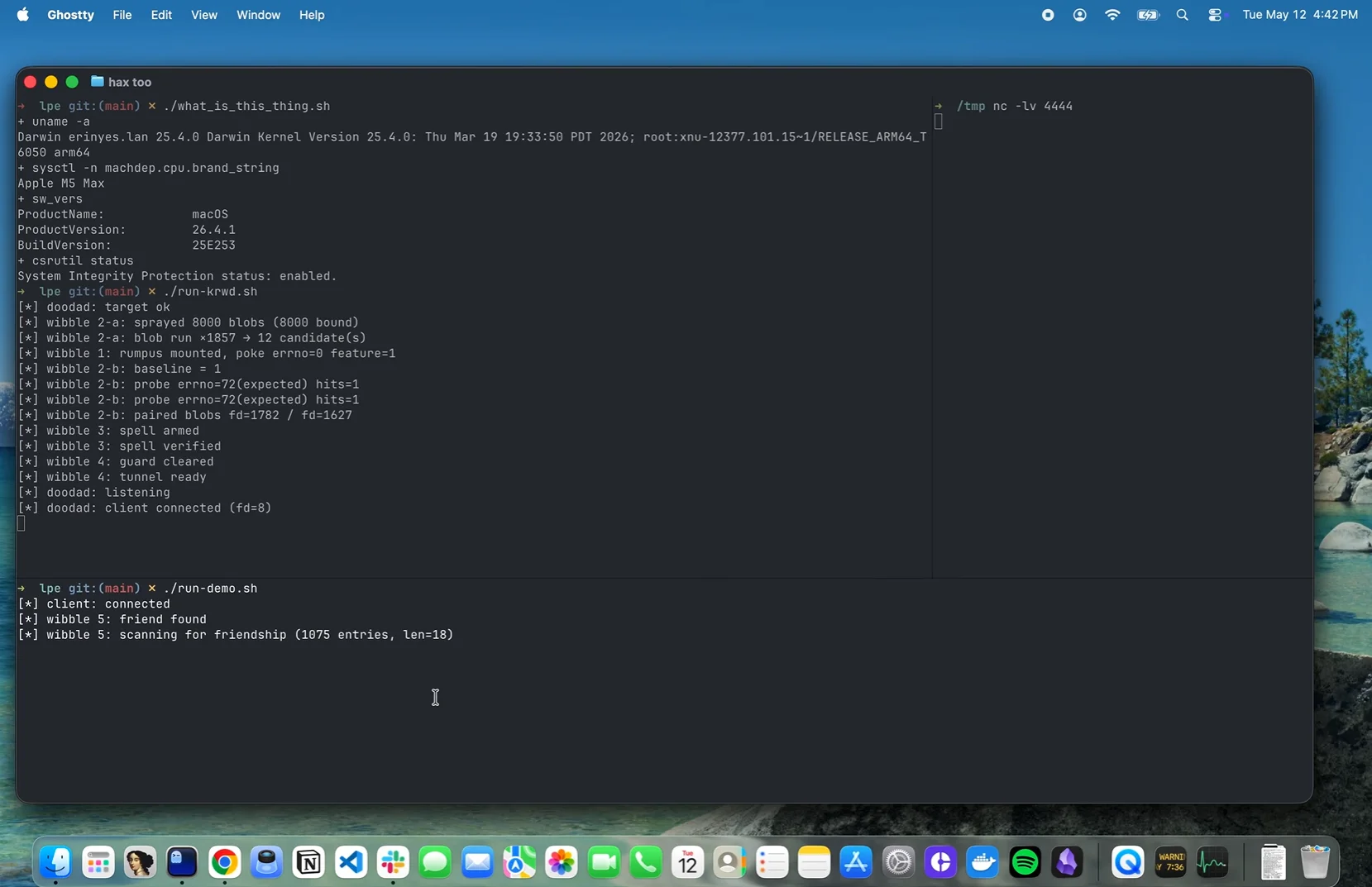
The exploit targeted macOS 26.4.1 running on Apple’s newest M5 hardware and reportedly allowed the researchers to gain full root access to the machine.
The biggest surprise was the shockingly accelerated timeline, as Calif said the bugs were first identified on April 25 and by May 1, the team already had a fully working hack ready.
Related



The AI team went to cybersecurity experts to tell them what’s wrong
The situation is quickly becoming one of the clearest examples yet of how AI is changing cybersecurity.
Tasks that once took expert researchers months of testing can now move dramatically faster with AI helping analyze code, identify patterns, and suggest possible attack paths.
Still, Calif CEO Thai Duong said the AI wasn’t working completely alone and that human researchers guided the process throughout the exploit development.
Once the team completed its work, researchers reportedly drove directly to Apple’s Cupertino headquarters carrying a huge 55-page report detailing exactly how the vulnerabilities worked.

An Apple spokeswoman told The Wall Street Journal: “Security is our top priority, and we take reports of potential vulnerabilities very seriously.”
The whole thing has left security experts both impressed and slightly nervous because if AI can help crack five years of engineering work in under a week, cybersecurity may be entering a completely different and unstable era.
Daisy is a technology and automotive journalist covering artificial intelligence, consumer tech, Apple news, cryptocurrency, emerging technologies, and transportation innovation. Since joining the team in 2025, she has reported on everything from AI-powered startups and major iOS updates to viral car stories and the latest developments shaping transportation and the digital economy. Drawing on her background in automotive journalism and a degree in History and Journalism from Goldsmiths, University of London, Daisy specializes in breaking down complex topics into clear, engaging reporting for a global audience. Her work spans cutting-edge technology, innovative vehicles, and the people driving change across both industries. Daisy has gained first-hand access to some of the world's most talked-about technologies and innovators, including meeting Tesla's Optimus humanoid robot during its first European appearance in London. She has also discussed the future of space exploration with an astronaut, bringing unique insights and real-world perspectives to her coverage of emerging technology.




