Physicists declare it's possible to send messages back in time just like in Interstellar
Published on May 11, 2026 at 3:56 AM (UTC-4)
by Daisy Edwards
Last updated on May 11, 2026 at 3:56 AM (UTC-4)
Edited by
Mason Jones
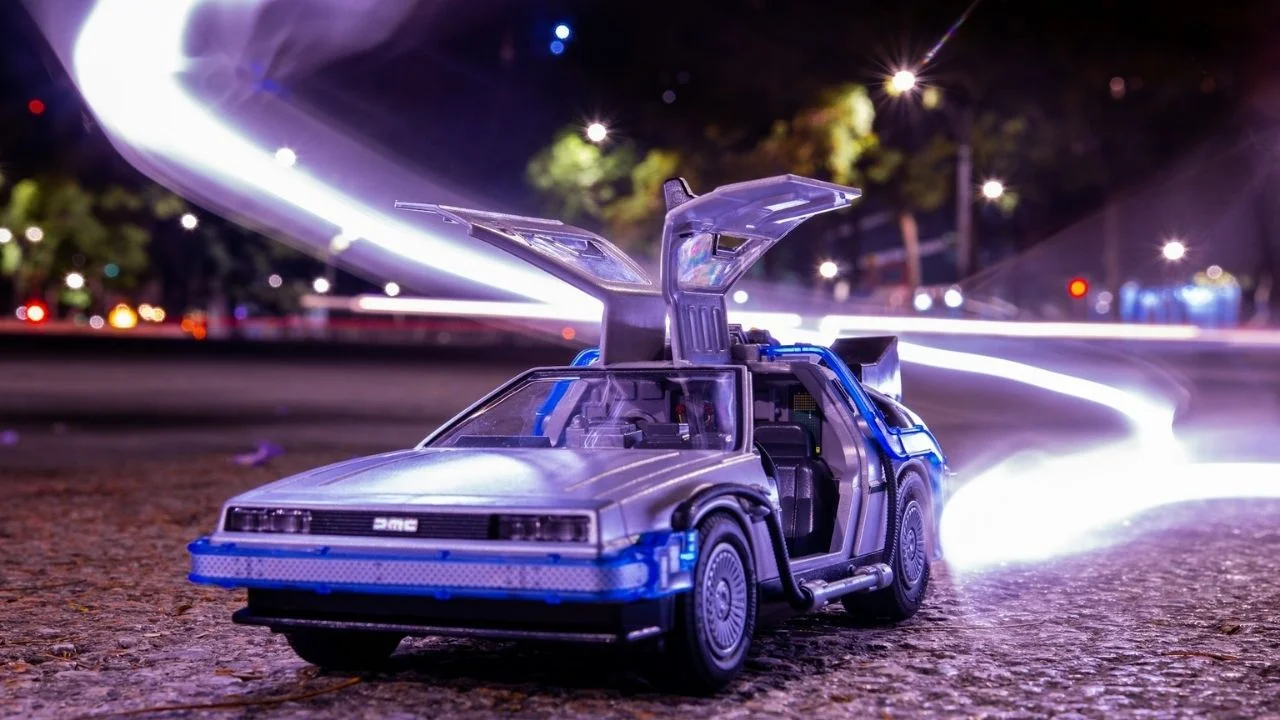

A new theory by physicists says information could potentially travel backwards through time under the right conditions, just like Interstellar.
Scientists tested the idea using quantum physics and simulated time loops.
The results were so strange that researchers say sending messages into the past could actually work better than sending them into the future.
And suddenly, Doc Brown doesn’t seem quite so crazy anymore.
Physicists think messages could travel back in time
Spoiler alert! If you’ve seen Interstellar, you probably remember the moment Cooper realizes he was the ‘ghost’ from the future (or maybe the past) communicating with Murph all along.
Inside the film’s famous scene, he sends messages through gravity across time, helping his daughter solve the equation that saves humanity and for years, it sounded like classic Christopher Nolan brain-melting sci-fi.
But physicists are now exploring a real scientific concept that sounds surprisingly similar.
Researchers have been studying something called a ‘closed timelike curve’, a theoretical idea from Einstein’s theory of relativity where spacetime bends back on itself, creating a loop through time.
In theory, information travelling through that loop could arrive before it was originally sent.
The team simulated the effect using entangled photons, particles connected through quantum mechanics in such a strange way that changing one instantly affects the other, even across huge distances.
Scientists often call it one of the weirdest features of quantum physics because the particles behave almost like they’re sharing information instantly.
Using those photons, researchers created a quantum system that behaved like a tiny artificial time loop.


Sending messages back to the future like in Interstellar
The strangest part of the study came when researchers added noise into the communication system.
Normally, noisy channels scramble information, like trying to understand someone speaking through static on a bad phone connection.
But the physicists discovered that in some cases, the simulated backward-in-time communication became more reliable than sending information normally into the future.

The reason comes down to how the quantum system preserves ‘memory’ of earlier states, helping the information correct itself inside the loop.
That also helps avoid famous time-travel paradoxes like changing the past and accidentally erasing your own future.
So no, nobody’s about to warn their younger self about bad decisions just yet, but still, the fact that scientists are now testing physics concepts that sound like Interstellar is pretty incredible.
Turns out Christopher Nolan’s sci-fi masterpiece may have featured more real science than anyone realized.
Daisy is a technology and automotive journalist covering artificial intelligence, consumer tech, Apple news, cryptocurrency, emerging technologies, and transportation innovation. Since joining the team in 2025, she has reported on everything from AI-powered startups and major iOS updates to viral car stories and the latest developments shaping transportation and the digital economy. Drawing on her background in automotive journalism and a degree in History and Journalism from Goldsmiths, University of London, Daisy specializes in breaking down complex topics into clear, engaging reporting for a global audience. Her work spans cutting-edge technology, innovative vehicles, and the people driving change across both industries. Daisy has gained first-hand access to some of the world's most talked-about technologies and innovators, including meeting Tesla's Optimus humanoid robot during its first European appearance in London. She has also discussed the future of space exploration with an astronaut, bringing unique insights and real-world perspectives to her coverage of emerging technology.




