NASA’s Curiosity Rover accidentally cracked open a rock on Mars and found something that shouldn’t be there
- The Curiosity Rover made an ‘unexpected discovery’
- The rover has been exploring Mars since 2012
- The discovery was a first on the Red Planet
Published on Mar 29, 2025 at 3:30 PM (UTC+4)
by Claire Reid
Last updated on Mar 27, 2025 at 12:32 PM (UTC+4)
Edited by
Kate Bain
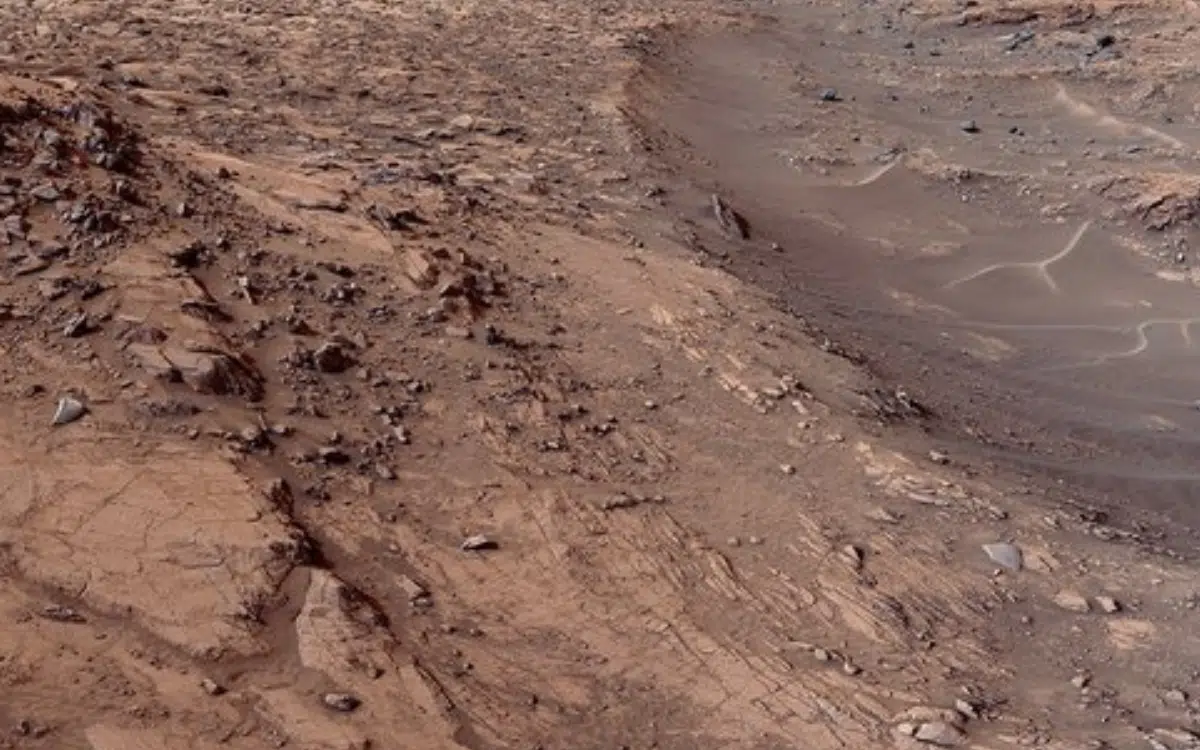

The Curiosity Rover, sent up to Mars by NASA, accidentally cracked open a Martian rock when it drove over it and made an interesting discovery inside.
Curiosity blasted off to the Red Planet in August 2011 and landed the following November.
The rover has been active on Mars for 12 years and is still going strong.
In May last year, Curiosity made a fascinating discovery after it rolled over a rock and cracked it in two.
DISCOVER SBX CARS – The global premium auction platform powered by Supercar Blondie
The Curiosity Rover made an interesting new discovery
With more than a decade in space, the Curiosity Rover has made some incredible discoveries and given scientists new insights, such as capturing the most detailed footage of the Red Planet to date, and sending back data that challenged a long-held belief regarding water on Mars.
Last May, while Curiosity was out doing its usual roving across the surface of Mars, it stumbled over a rock, accidentally cracking it open.
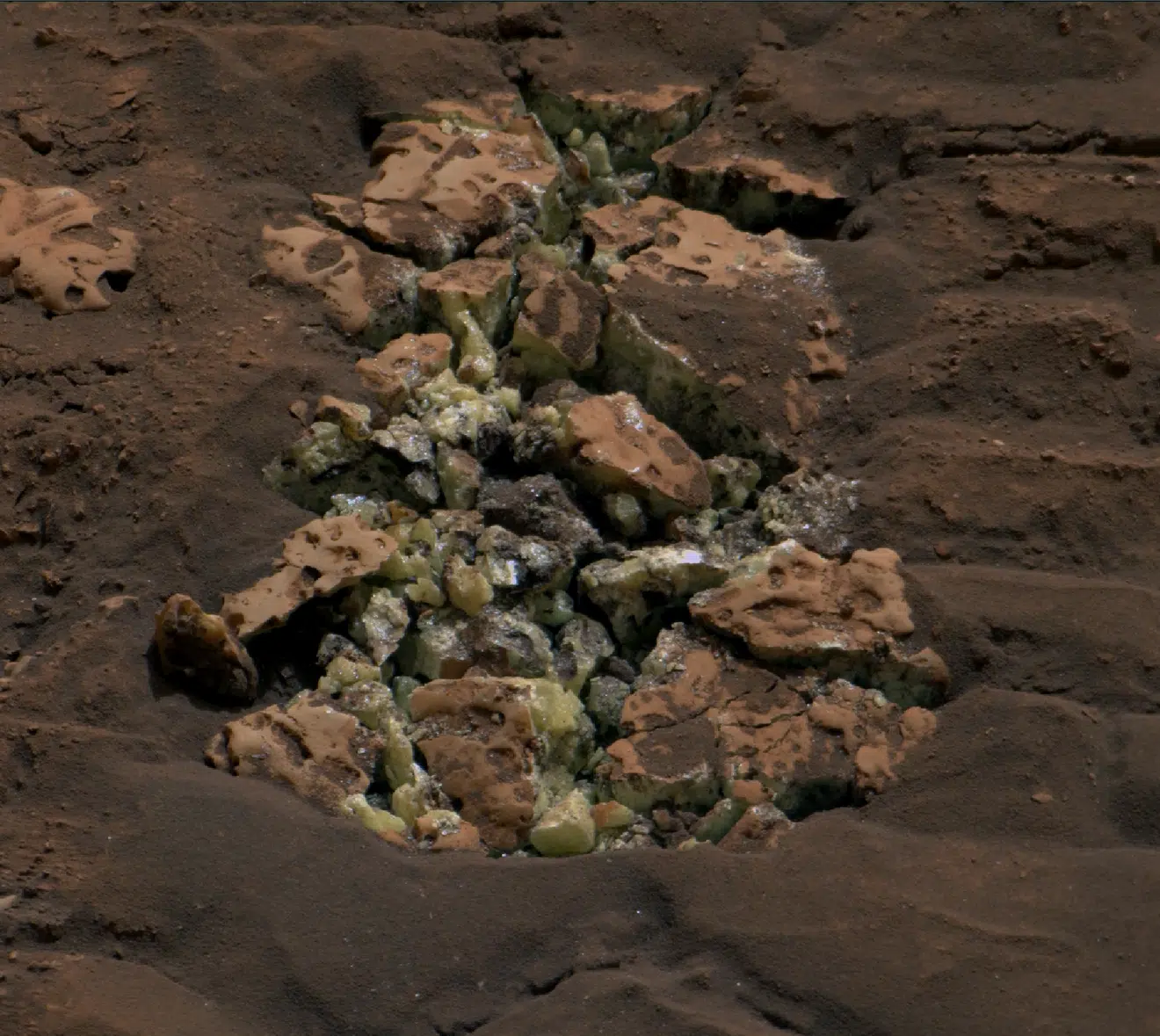
The inside of the rock turned out to be a bit of a surprise.
The broken rock turned out to be crammed full of glowing yellow-colored rocks that were later identified as sulfur crystals – something that had never been seen before on the surface of Mars and has been branded ‘unexpected’ by a NASA scientist.
The ‘unexpected’ discovery was a first on Mars
The Curiosity Rover had been exploring an area of Mars that was ‘rich with sulfates’ at the time of the discovery, but all past detections had only shown a mix of sulfur and other materials – until the rover cracked open that rock.
The rock contained pure – or elemental – sulfur.
The rover also went on to find a lot more.
According to a NASA statement at the time, Curiosity found ‘an entire field of bright rocks that look similar to the one the rover crushed’.
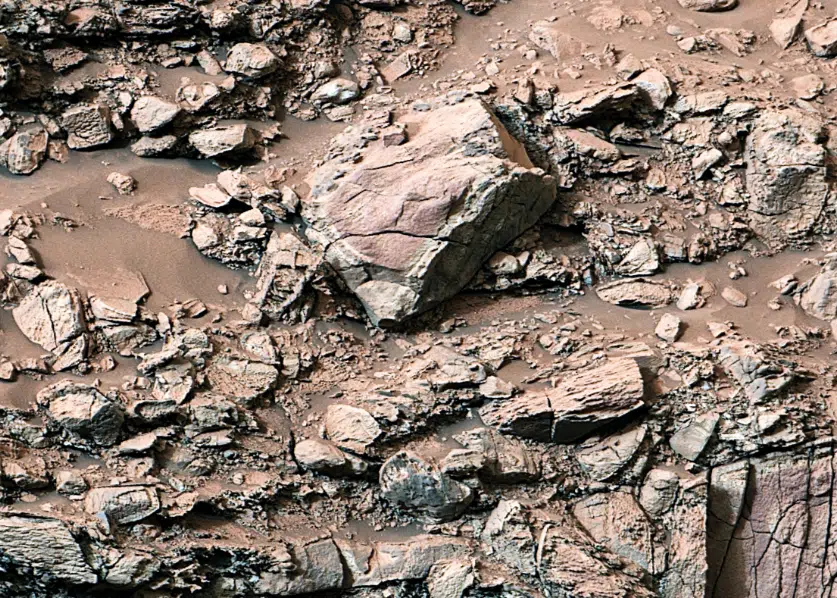
“Finding a field of stones made of pure sulfur is like finding an oasis in the desert,” Curiosity’s project scientist, Ashwin Vasavada of NASA’s Jet Propulsion Laboratory in Southern California said.
“It shouldn’t be there, so now we have to explain it. Discovering strange and unexpected things is what makes planetary exploration so exciting.”
Curiosity’s mission is to help determine where and when Mars’s ancient terrain could have provided the nutrients required to support microbial life, if any was ever formed on the planet.
So, discoveries such as the one above are very important to researchers hoping to find out if we’ve ever had life on Mars.
DISCOVER SBX CARS: The global premium car auction platform powered by Supercar Blondie
With a background in both local and national press in the UK, Claire has covered a range of topics, including technology, gaming, and cryptocurrency, since joining the editorial team at Supercar Blondie in May 2024. Her ability to be first to a story has been integral to making SB’s coverage of scientific discovery, AI, and global tech news a slick 24/7 operation.