Italian scientists managed to freeze pure light and make it solid in revolutionary first
Published on Mar 10, 2025 at 7:19 AM (UTC-4)
by Daisy Edwards
Last updated on Oct 06, 2025 at 12:01 PM (UTC-4)
Edited by
Tom Wood
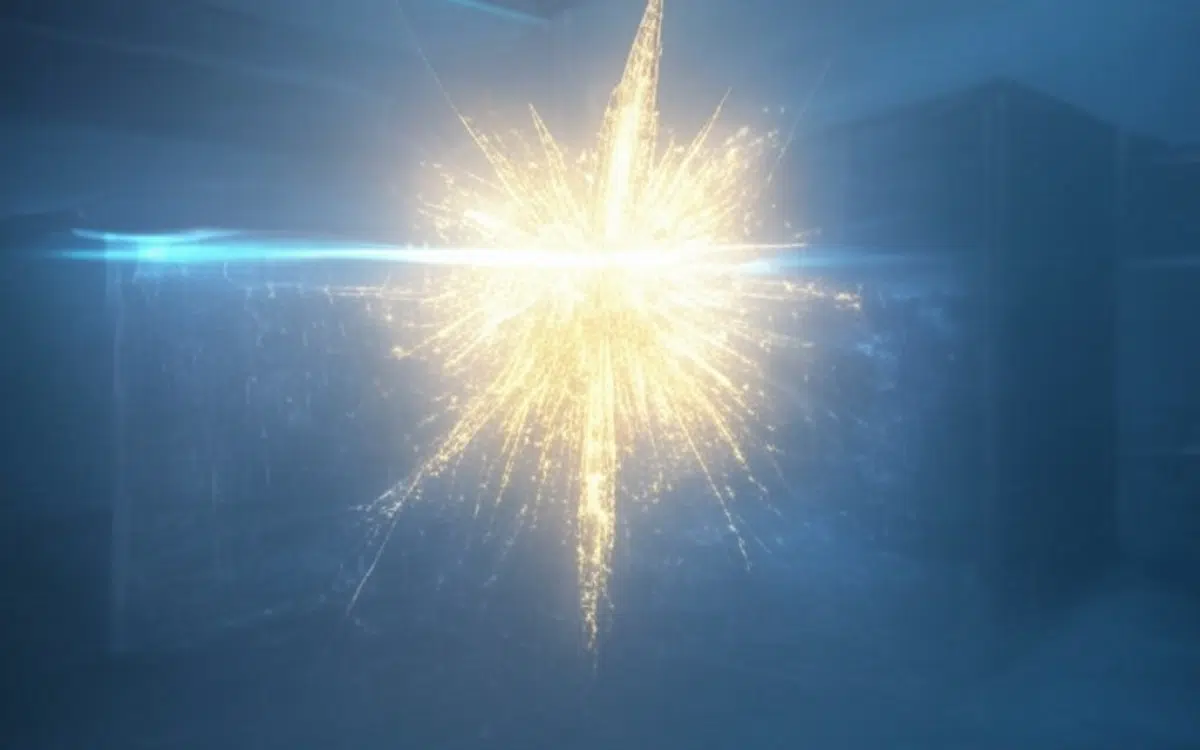

Scientists in Italy have managed to change everything we know about physics and the world itself by managing to freeze pure light and make it solid.
This type of supersolid has only ever been seen in ultracold atomic gases, and it has not only shocked the world, but the scientists themselves, too.
A supersolid is a strange purgatory of a state of matter that has properties of both a solid and a liquid and needs extremely specific conditions to form.
No, this isn’t from a Marvel movie, but this has completely changed the future of quantum mechanics, photonics and science as a whole.
EXPLORE SBX CARS – Supercar auctions starting soon powered by Supercar Blondie
Scientists managed to freeze pure light
In a new discovery published in Nature, a group of Italian scientists – specifically nanotechnologists and physicists – shared that they have changed science as we know it.
The scientists have done something that has never been done before and managed to freeze pure light – light had become a supersolid.
A supersolid is a state of matter that becomes a solid crystalline structure, but also flows without resistance, which is a superfluid property.
In the past, supersolids like this have only been seen in super-frozen atomic gases and they need very specific conditions of temperatures close to absolute zero.
The ability to freeze pure light has challenged conventional views on the laws of nature.


DIY your own frozen light
If you have a laser beam and a gallium arsenide structure lying about, then you will be able to freeze your own light.
All joking aside, these scientists have devoted their whole lives to reaching this new scientific boundary.
The gallium arsenide structure had precisely engineered microscopic ridges and the interaction between the light and material led to tiny hybrid light and matter particles called polaritons, which were the things showing supersolid properties.
This supersolid makes light more controllable and stable, making it perfect for future optical technologies and quantum computing discoveries, and it also opens the door to the discovery of more matter.
Who knew that in 2025 we would be discovering new types of matter? It’s exciting to see the new frontiers of science that will be reached with this discovery.
Daisy is a technology and automotive journalist covering artificial intelligence, consumer tech, Apple news, cryptocurrency, emerging technologies, and transportation innovation. Since joining the team in 2025, she has reported on everything from AI-powered startups and major iOS updates to viral car stories and the latest developments shaping transportation and the digital economy. Drawing on her background in automotive journalism and a degree in History and Journalism from Goldsmiths, University of London, Daisy specializes in breaking down complex topics into clear, engaging reporting for a global audience. Her work spans cutting-edge technology, innovative vehicles, and the people driving change across both industries. Daisy has gained first-hand access to some of the world's most talked-about technologies and innovators, including meeting Tesla's Optimus humanoid robot during its first European appearance in London. She has also discussed the future of space exploration with an astronaut, bringing unique insights and real-world perspectives to her coverage of emerging technology.




