The UN tried to get everyone to use these universal road signs but the world ended up rejecting them
Published on Dec 30, 2025 at 8:56 AM (UTC+4)
by Molly Davidson
Last updated on Dec 30, 2025 at 2:10 PM (UTC+4)
Edited by
Kate Bain

The UN once tried to make road signs universal – the same shapes with the same meanings everywhere.
On paper, it made perfect sense, especially because cars were crossing borders faster than rules could keep up.
A single global system would mean fewer mistakes, fewer crashes, fewer confused drivers.
Instead, the world took one look and said no.
DISCOVER SBX CARS – The global premium auction platform powered by Supercar Blondie
Why the UN universal road sign idea flopped
Back in the early 1900s, cars were spreading fast, but rules weren’t.
People were suddenly driving into other countries where signs looked totally different, and that was… not ideal.
So, according to a video posted by YouTuber Chris Spargo, a few early agreements tried to standardize things, starting with just a handful of road signs.
After World War II, it felt like the perfect moment to go big.

Europe was rebuilding, lots of countries didn’t even have proper road signs yet, and the newly formed United Nations thought: now or never.
In 1949, diplomats from 20 countries met in Geneva with a bold plan – one global road sign system for everyone.
Ignore it, and you’d technically be breaking international law.
Then the United States walked into the room.
While Europe had been carefully designing symbol-based signs that worked across lots of languages, the US had already built its own system.
It used words instead of pictures and worked just fine.
From America’s point of view, replacing millions of signs made zero sense.
The UK wasn’t excited about the idea either.
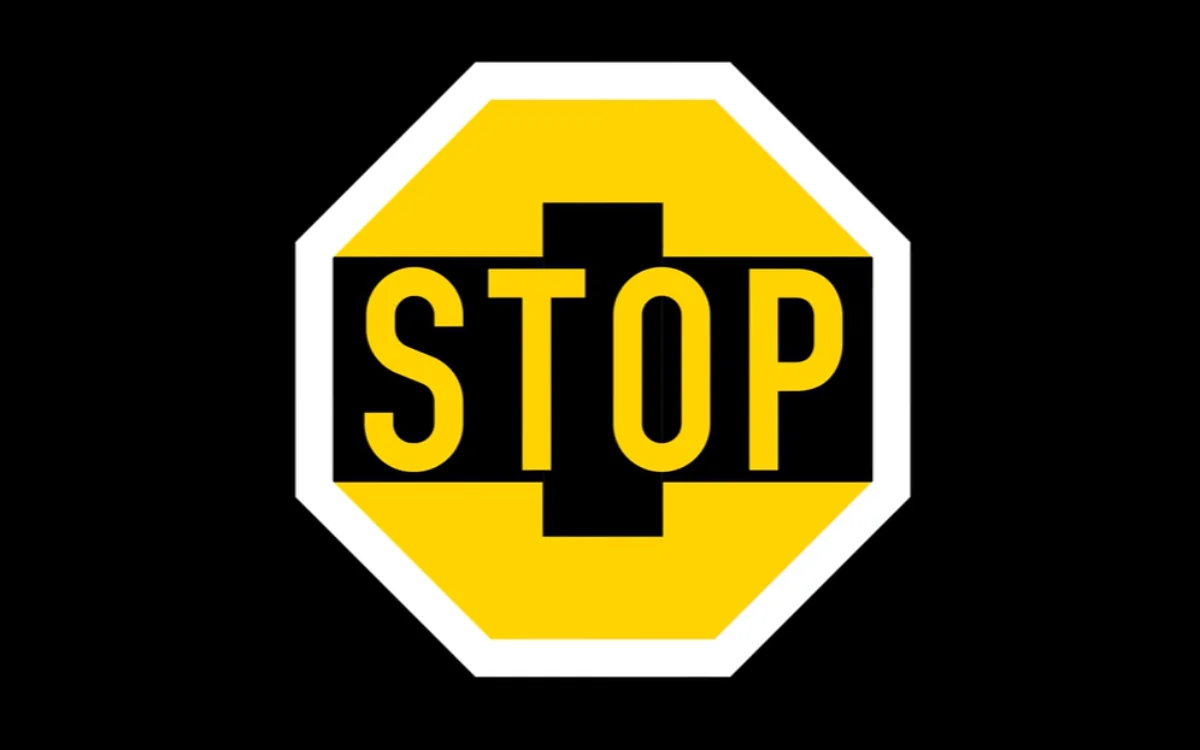
Both countries pushed back hard, and once the rules became optional, most of the Americas and Europe stuck with their own systems.
The UN tried a mash-up system – some European shapes, some American ones – but that just annoyed everyone equally.
How the stop sign beat the odds
If there was one sign the world should agree on, the UN decided it was ‘STOP’.
At the time, Europe and the US used totally different designs.
Europe’s stop sign looked like just another sign.
America’s was different – an octagon you could recognize even in the dark, in snow, or if half of it was covered up.


That mattered, especially in places like the UK and Europe, where stop signs are rare and only used at really dangerous junctions.
If you’re going to tell drivers to stop right now, the sign better stand out.
So in 1971, European countries made a call and switched to the American-style red octagon.
Not because America won, but because the design worked.
And most of the world followed.
Proof that even when cultures across the globe can’t agree on much, they can agree on when to hit the brakes.

DISCOVER SBX CARS: The global premium car auction platform powered by Supercar Blondie
With roles at TEXT Journal, Bowen Street Press, Onya Magazine, and Swine Magazine on her CV, Molly joined Supercar Blondie in June 2025 as a Junior Content Writer. Having experience across copyediting, proofreading, reference checking, and production, she brings accuracy, clarity, and audience focus to her stories spanning automotive, tech, and lifestyle news.