This is why you might feel sick while you're in an EV as Mercedes comes up with a solution to fix it
Published on Mar 07, 2026 at 4:13 PM (UTC+4)
by Molly Davidson
Last updated on Mar 03, 2026 at 6:05 PM (UTC+4)
Edited by
Amelia Jean Hershman-Jones

If you think there’s a correlation between your motion sickness and EVs, it might not be all in your head – and Mercedes wants to help.
Some passengers say electric cars leave them feeling dizzy, even on short drives.
It’s a strange side effect of cars becoming smoother, quieter, and quicker than ever.
Now, Mercedes thinks it might have figured out how to fix it.
DISCOVER SBX CARS – The global premium auction platform powered by Supercar Blondie
How electric vehicles are causing motion sickness
Electric vehicles are almost too smooth for their own good.
There’s no engine growl, no gear changes, and barely any vibration to warn you that the car is about to move.
Instead, you press the pedal and boom – instant speed.
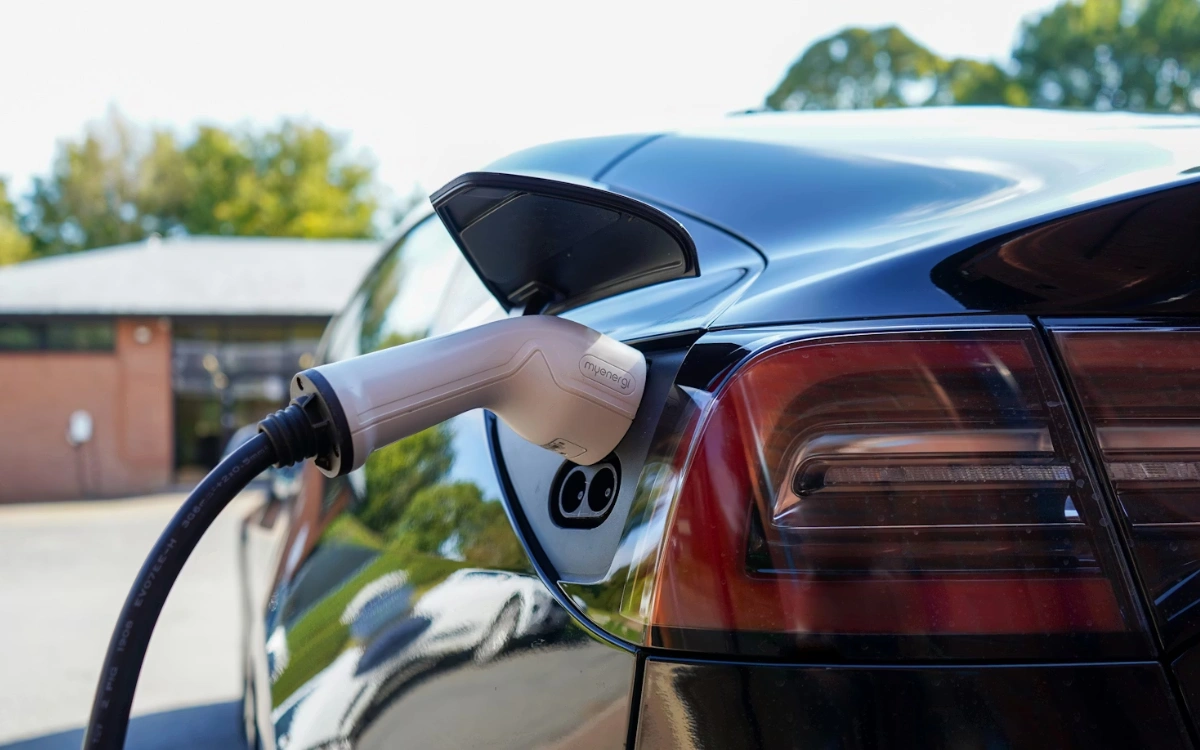
Take your foot off, and the car slows down fast because of regenerative braking, which basically turns slowing down into battery power.
Your eyes can see the road flying past.
But your inner ear – the bit that helps with balance – doesn’t always get the same signals.
That mismatch is what makes some people feel nauseous.
Researchers at France’s Université de Technologie de Belfort-Montbéliard found that when there are fewer physical clues about movement, the brain struggles to guess what’s coming next.
In gas cars, the rising engine noise and small vibrations ‘prepare’ your body.
EVs skip that warning.
So it’s not in your head.
It’s actually your head trying to figure out what on earth is happening.
And now Mercedes thinks it has a way to calm your stomach down.
Click the star icon next to supercarblondie.com in Google Search to stay ahead of the curve on the latest and greatest supercars, hypercars, and ground-breaking technology
Mercedes’ unusual fix involves air and lights
Mercedes has patented a system that sounds a bit sci-fi.
Instead of adding noise, it wants to use airflow and ambient lighting to trick your brain into feeling more in control.
The idea is simple in theory.
When the car speeds up, hidden vents would push more air into the cabin.
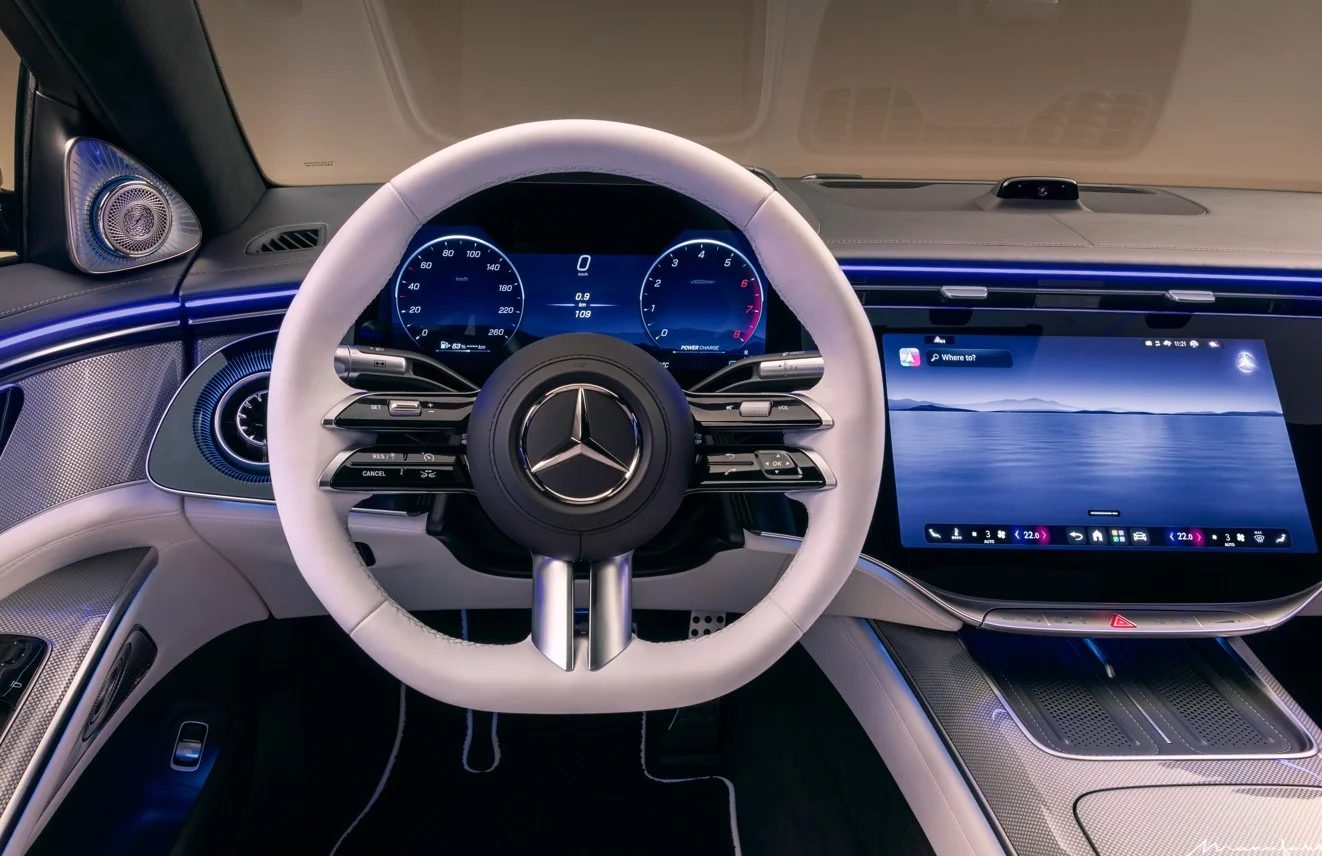
When it slows down, the airflow would ease off.
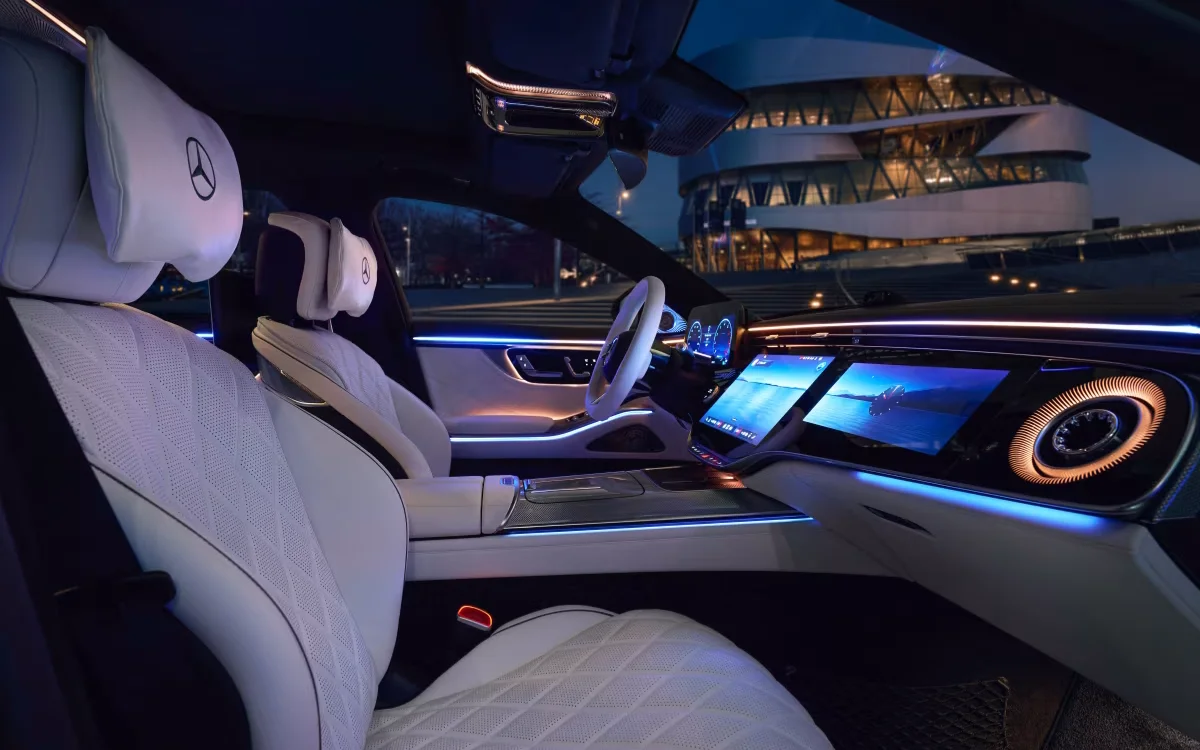
At the same time, the interior lights could change color or show subtle patterns to match what the car is doing.
Basically, it’s giving your brain extra hints so it can keep up.
Think of it like subtitles for your inner ear.
Will it actually show up in a real Mercedes anytime soon?
Maybe not.
Patents don’t always turn into production cars, and this would need a lot of software and sensors to work properly.
Still, as electric cars become more common, solving EV motion sickness might be the next big comfort upgrade.
Because silent speed is great… until your stomach decides it’s not.
DISCOVER SBX CARS: The global premium car auction platform powered by Supercar Blondie
With roles at TEXT Journal, Bowen Street Press, Onya Magazine, and Swine Magazine on her CV, Molly joined Supercar Blondie in June 2025 as a Junior Content Writer. Having experience across copyediting, proofreading, reference checking, and production, she brings accuracy, clarity, and audience focus to her stories spanning automotive, tech, and lifestyle news.