Supply chain expert explains why Temu products are so cheap and how Chinese production works
Published on Jan 28, 2026 at 4:38 AM (UTC+4)
by Daisy Edwards
Last updated on Jan 27, 2026 at 2:33 PM (UTC+4)
Edited by
Kate Bain

A supply chain expert has just revealed why Temu products are so cheap and explained how Chinese production works.
Have you ever wondered how these crazy cheap bargains keep ending up in your shopping cart for a fraction of the cost of their US equivalents?
The short version is that Temu is built to keep Chinese factories busy, even if it means selling inventory at almost no profit.
But there’s a lot more to it.
EXPLORE SBX CARS – Supercar auctions starting soon powered by Supercar Blondie
Why are Temu products so cheap?
Gadget and clothing drop-shipping websites like Temu or Alibaba have pricing that looks like a magic trick, but the mechanism is surprisingly simple: it feeds off demand and funnels it directly to factories with spare capacity.
Instead of relying on Western brands to place big orders, the platform cuts out the middleman and goes to customers first, then uses that demand to keep production lines running.
Factories hate idle time, and if a production line sits still, the business still pays overhead and bleeds cash.
So if a factory can make a small amount on a little order instead of losing money with machines switched off, it will take that deal all day.

That is why Temu’s catalog constantly changes.
One week, a supplier has capacity for car chargers; the next, it is gloves or Nintendo Switch cases; then Temu decides on prices to move that inventory fast, turning excess production into rapid sales.
The downside to this is that rock-bottom pricing often reflects incredibly thin margins and intense competition.
The cheapest products can come with a higher risk around labor standards, durability, and sustainability, especially deeper in the supply chain where oversight is less strenuous.

Click the star icon next to supercarblondie.com in Google Search to stay ahead of the curve on the latest and greatest supercars, hypercars, and ground-breaking technology
‘Made in China’ doesn’t necessarily mean low quality
According to this expert, China is not just a place where items get assembled; it is an interconnected ecosystem of specialized cities, suppliers, raw materials, tools, and know-how.
There are hubs known for electronics, apparel, and even whole factories made to create tiny components like zippers.
That density of these hubs makes it easy to change tracks quickly because a brand can source parts, adjust specs, and ramp production without rebuilding the whole chain if one part falls apart.

This is also why ‘Made in China’ does not automatically mean low quality.
Chinese factories can hit high standards at scale, and perception often comes down to branding, not capability.
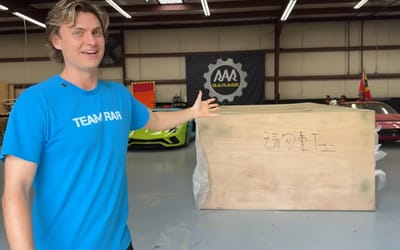
Recently, a YouTuber got to see the true scale of the Chinese factory where they built his mini Temu excavator, and he was blown away by the quality of the product, despite its low price tag.

If Chinese-made goods vanished overnight, the biggest shock would be consumer electronics and everyday accessories like chargers and cables, because the supporting ecosystem is hard to replicate quickly.
Other categories, like clothes, might still exist elsewhere, but could jump dramatically in price due to the lack of Chinese-made components and materials.
DISCOVER SBX CARS: The global premium car auction platform powered by Supercar Blondie