The world’s largest ship graveyard has held more than 9,000 vessels and at its peak handled a third of all global ship recycling
Published on Dec 08, 2025 at 7:10 AM (UTC+4)
by Jason Fan
Last updated on Dec 05, 2025 at 5:17 PM (UTC+4)
Edited by
Mason Jones

The Alang Ship Breaking Yard in Gujarat, India, is a sprawling coastal zone where the world’s retired vessels meet their end.
For decades, this isolated stretch of beach has served as the final destination for everything from rusting cargo carriers to luxury liners.
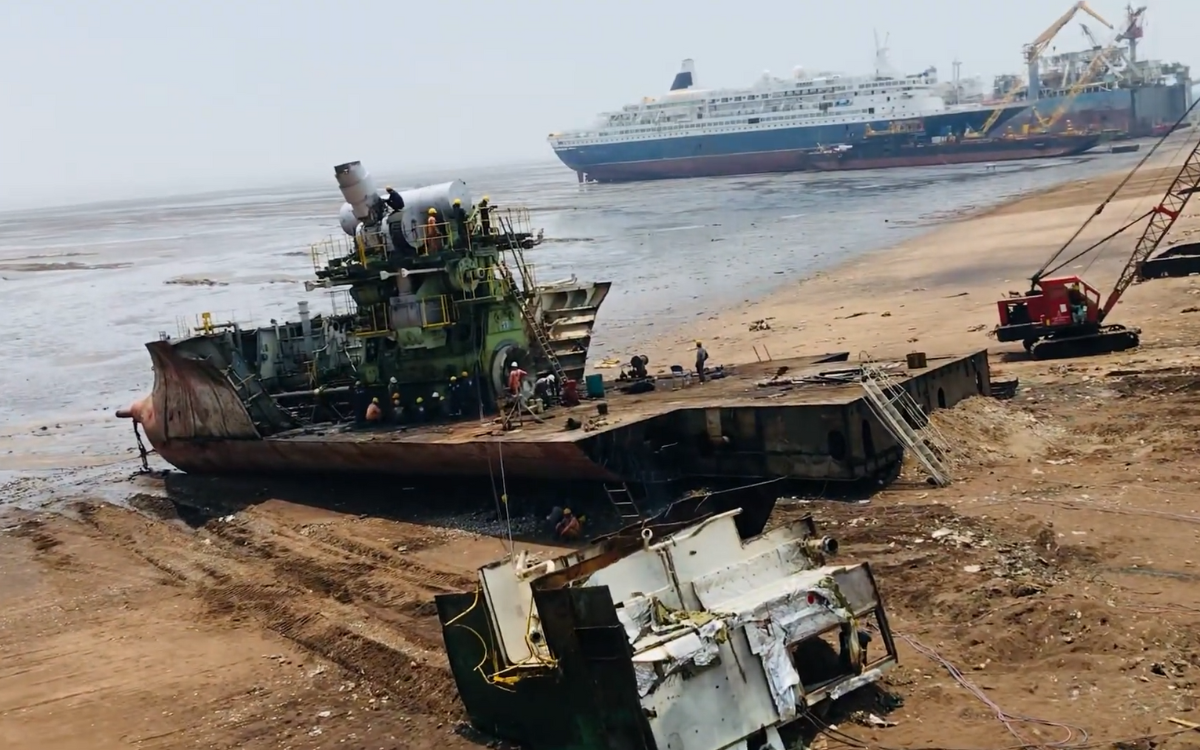
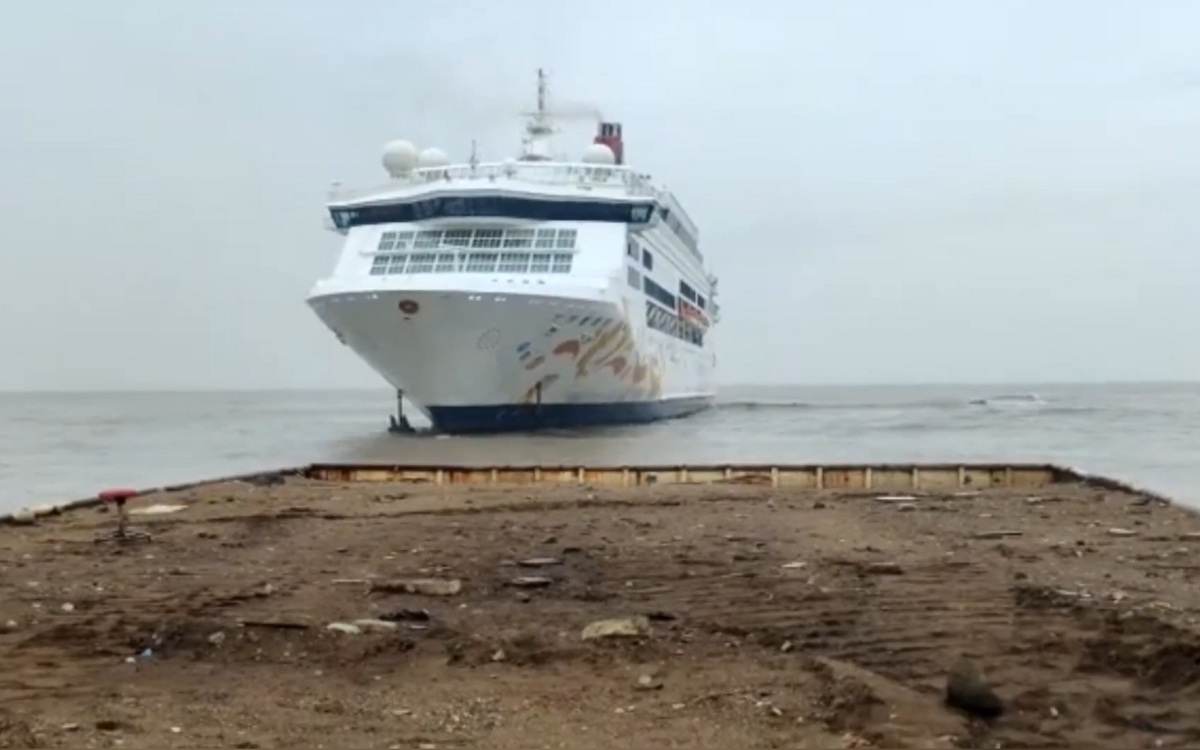
The scale is staggering: miles of beach lined with rusting hulls, thousands of workers, and a steady rhythm of ships run aground at high tide before being dismantled by hand.
And despite rising competition and evolving regulations, Alang remains the most recognisable symbol of the ship-breaking world.
SBX CARS – View live supercar auctions powered by Supercar Blondie
Retired ships contain plenty of valuable materials
Since opening in 1983, Alang has dismantled more than 9,000 ships, a volume unmatched by any other yard.
At its peak, it handled around one-third of all global ship recycling.
While this accolade earned it a reputation as an industrial powerhouse, it also became a lightning rod for debates about safety and environmental standards.
The yard stretches for several miles along the Gulf of Khambhat, where extreme tidal swings allow workers to beach vessels at high tide and begin cutting them apart once the water recedes.
The result is a unique mix of geography, economics, and labour that has kept Alang dominant for more than four decades.
Ship graveyards like Alang exist because massive oceangoing vessels simply can’t operate forever.
After roughly 25–30 years, maintenance becomes too expensive, engines and electronics age out of compliance, and hull fatigue raises safety concerns.
Rather than letting these steel giants rust away at sea, the global shipping industry relies on specialised yards to extract valuable materials.
This can be up to 90 percent of a ship’s mass, mostly in the form of high-quality steel.
Considering that the world’s largest cruise ships make the Titanic look small in comparison, there’s a lot of raw materials to be extracted.
The world’s largest ship graveyard benefits from low labor costs
But recycling a ship isn’t cheap, and the cost gap between countries is enormous.
There are many reasons why nations choose not to process their own retired vessels: stringent environmental rules, high labor costs, or scare shoreline space.
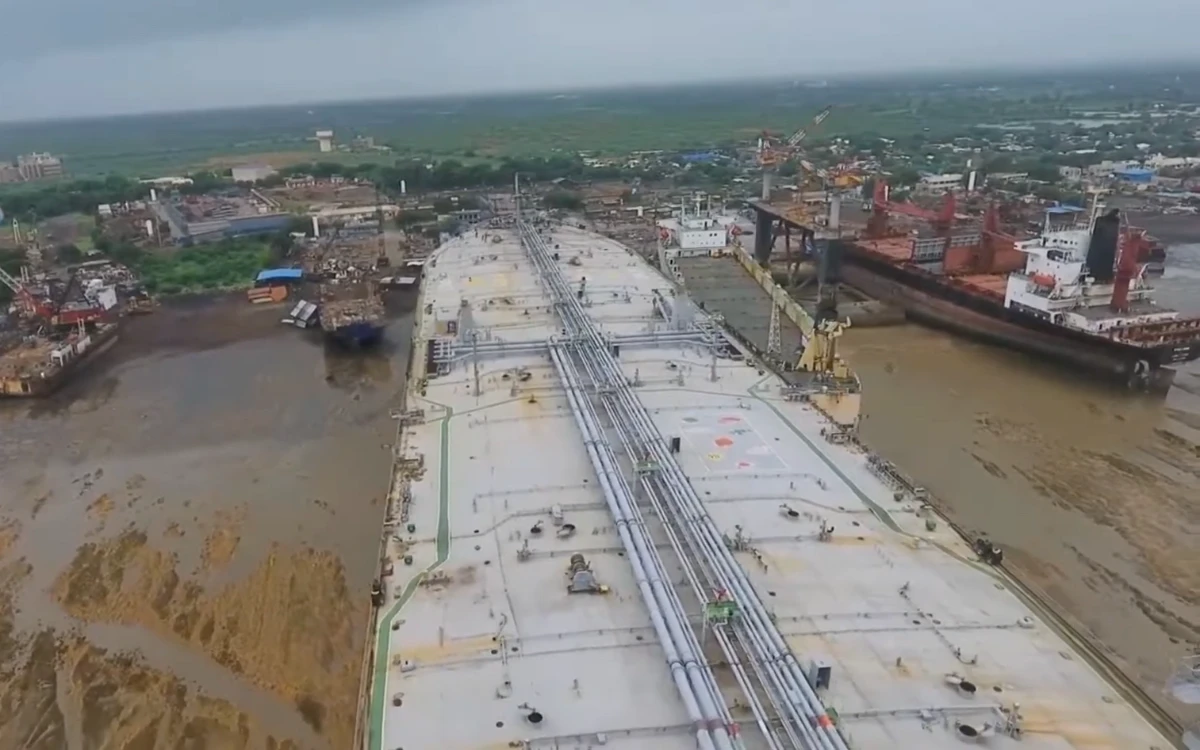
A single tanker can contain asbestos, heavy metals, residual oils, and other hazardous waste, which must be removed under tight regulations in wealthier countries.
That can make domestic recycling several times more expensive than sending the vessel abroad.
In contrast, South Asian yards benefit from lower labor costs and local steel demand.
These yards also perform beaching: a controversial but cost-effective method of extracting materials that keeps prices low enough to attract global shipowners.
While international pressure persists for cleaner and more regulated practices, the low costs provided by Alang means that it’s likely to continue as the world’s largest ship graveyard.
DISCOVER SBX CARS: The global premium car auction platform powered by Supercar Blondie