BYD unveils its first heavy-duty electric semi and it packs 1,000HP, charges in 20 minutes and carries a huge battery warranty
Published on Sep 27, 2026 at 10:04 AM (UTC-4)
by Ben Thompson
Last updated on Sep 27, 2026 at 10:04 AM (UTC-4)
Edited by
Mason Jones
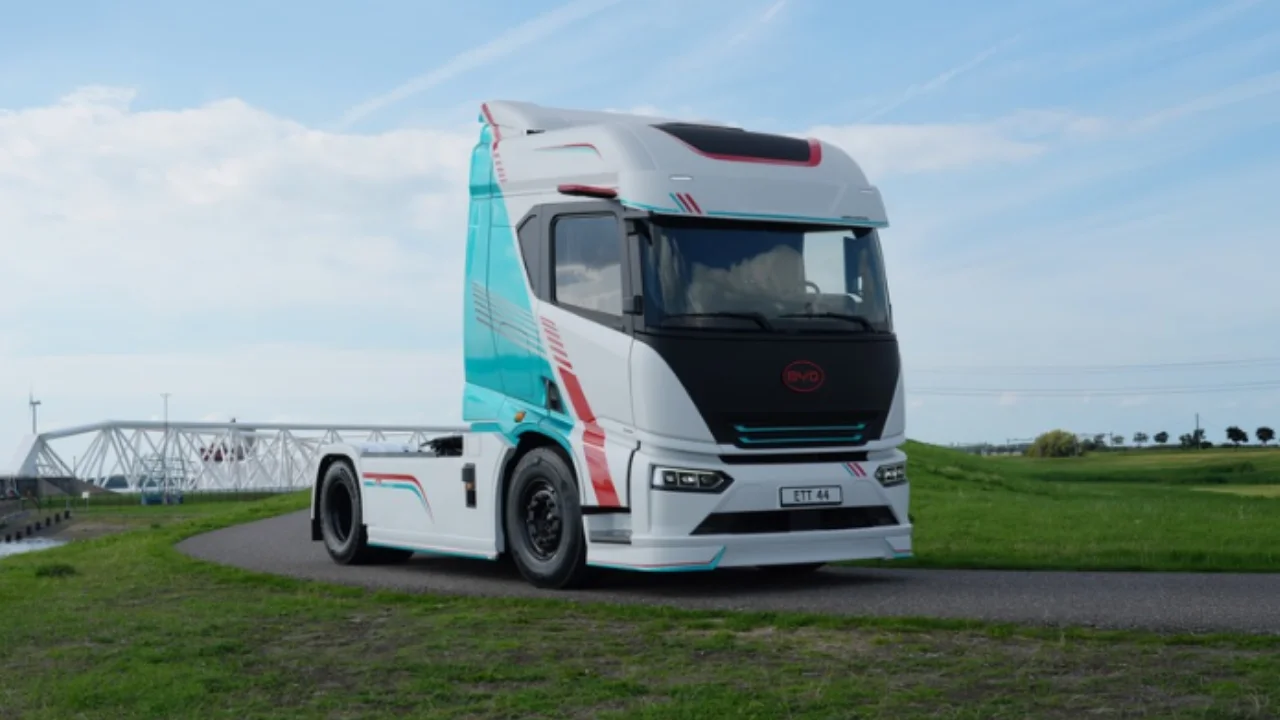

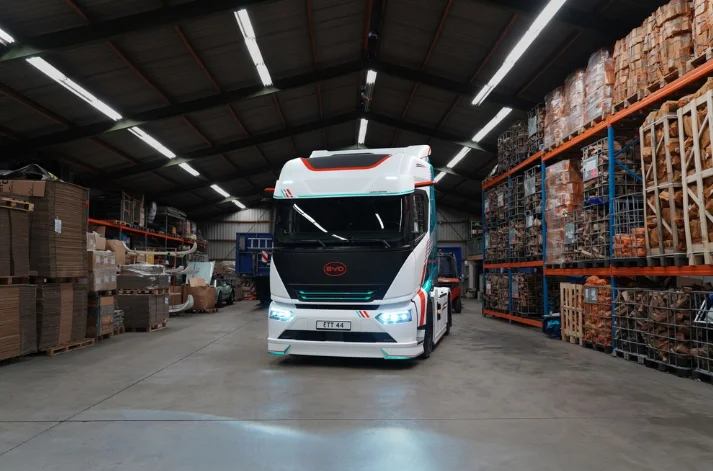
BYD has unveiled its first heavy-duty electric semi, and it can be charged in 20 minutes.
And that’s not the only impressive stat attached to the ET44.
Capable of hauling 44-ton combinations and packing 1,000HP, there’s no questioning the power of this new offering from BYD.
It’s enough to make us ask – should Tesla be worried?
How BYD is on the rise
If you’ve spent any length of time reading automotive news these past few years, the rip-roaring success of BYD won’t have passed you by.
The Chinese carmaker has been flexing on its competitors for a long while now, whether it’s charging EVs in freezing cold temperatures or getting its SUVs to drive on three wheels.
And that’s not forgetting their sales figures, which have been soaring around the world, from South America to Australia.
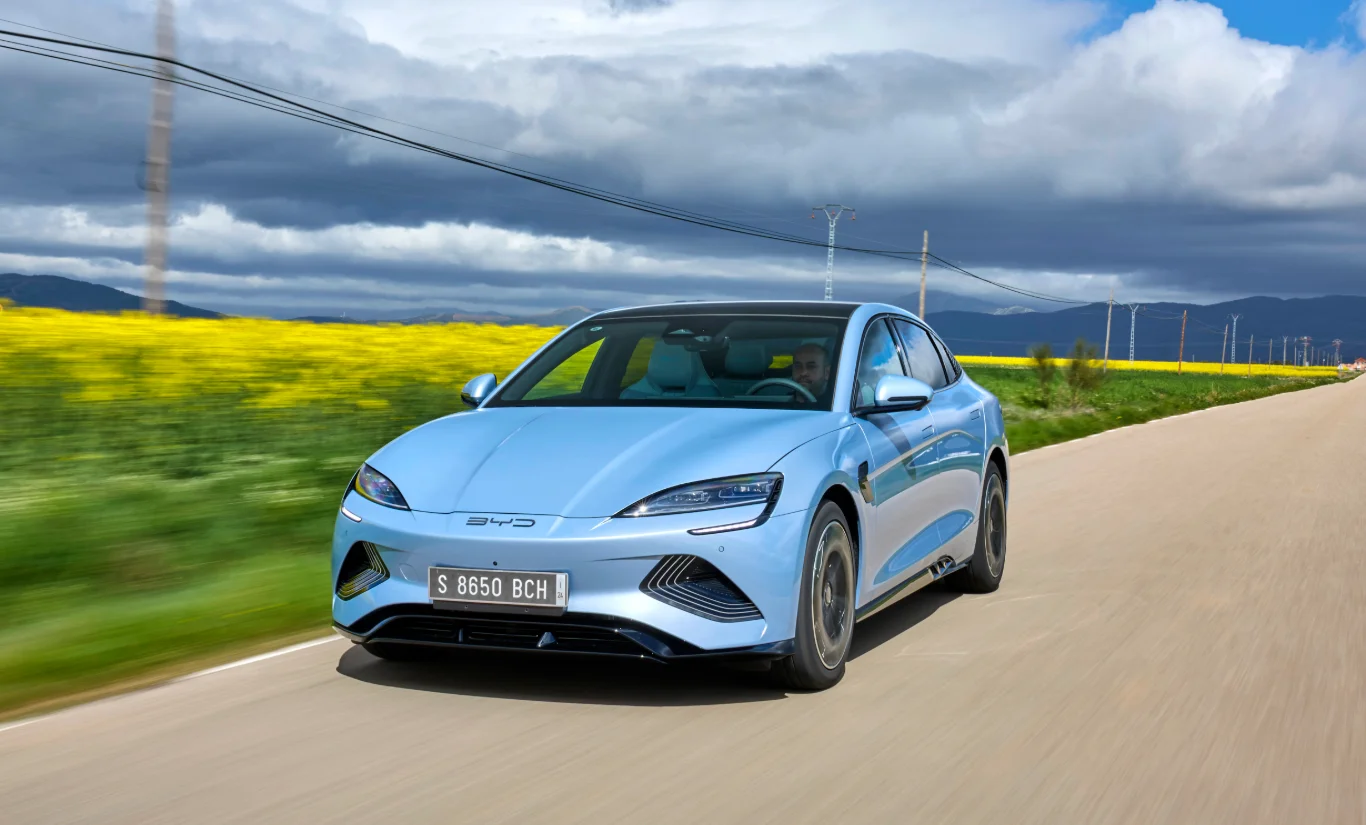
With their back-to-back successes, it’d only make sense that the company would be looking to expand.
And what better way to take on its primary rival – Tesla – than by putting out a semi truck?
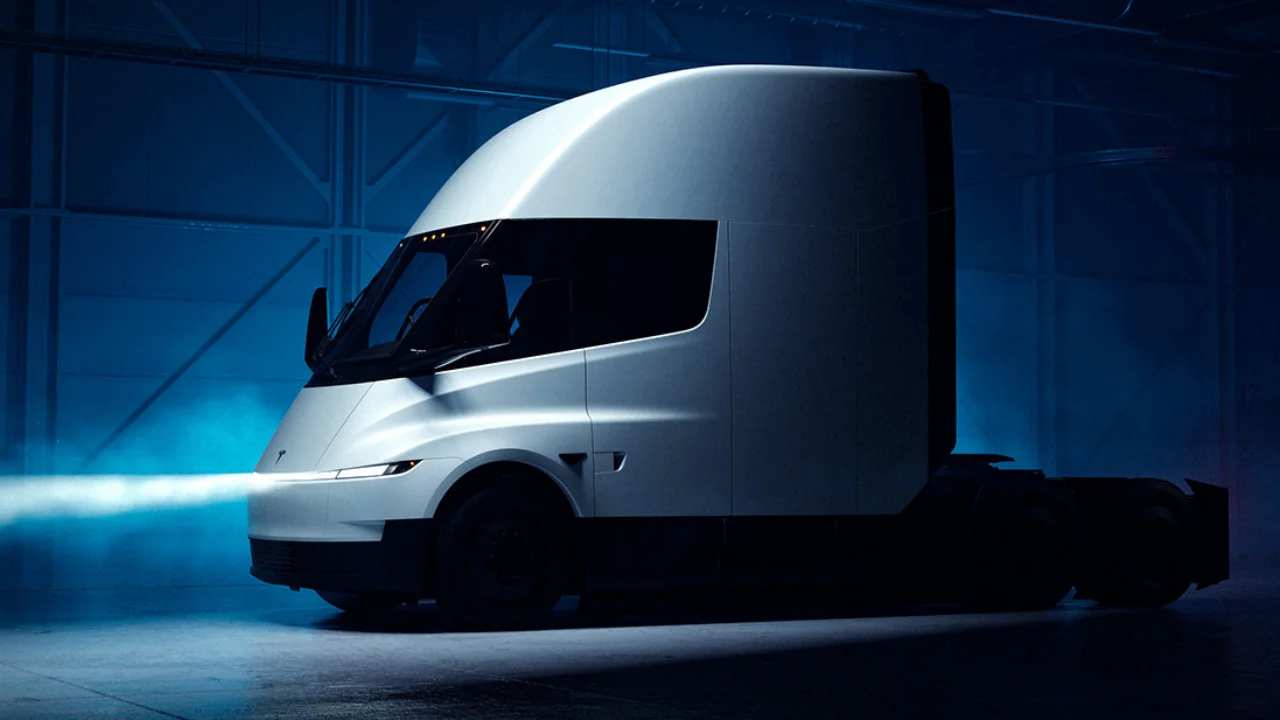
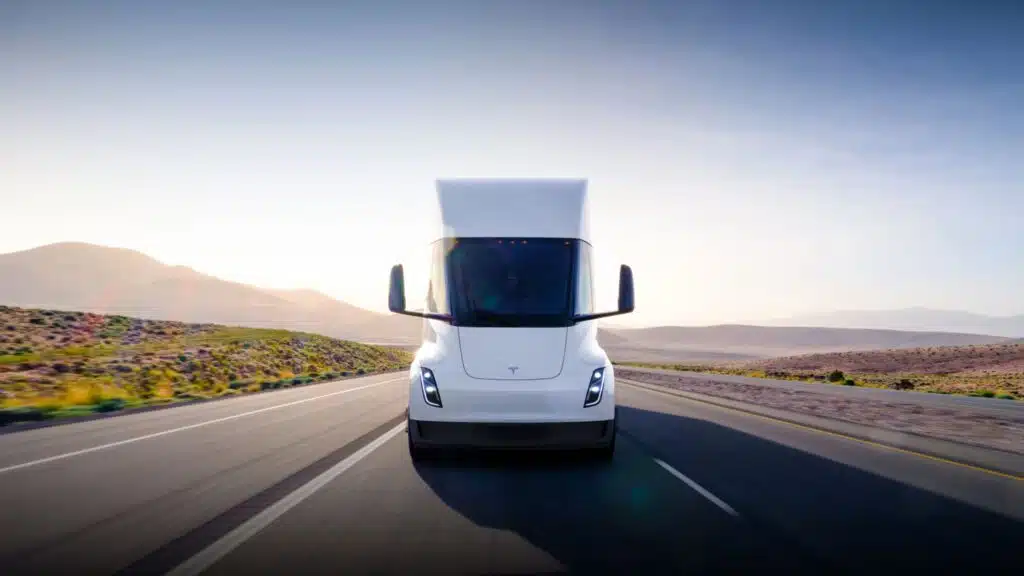
As you will undoubtedly know, the Tesla Semi has been making headlines all over the place, whether it’s being driven by Jay Leno or generating buzz for the weight of its battery.
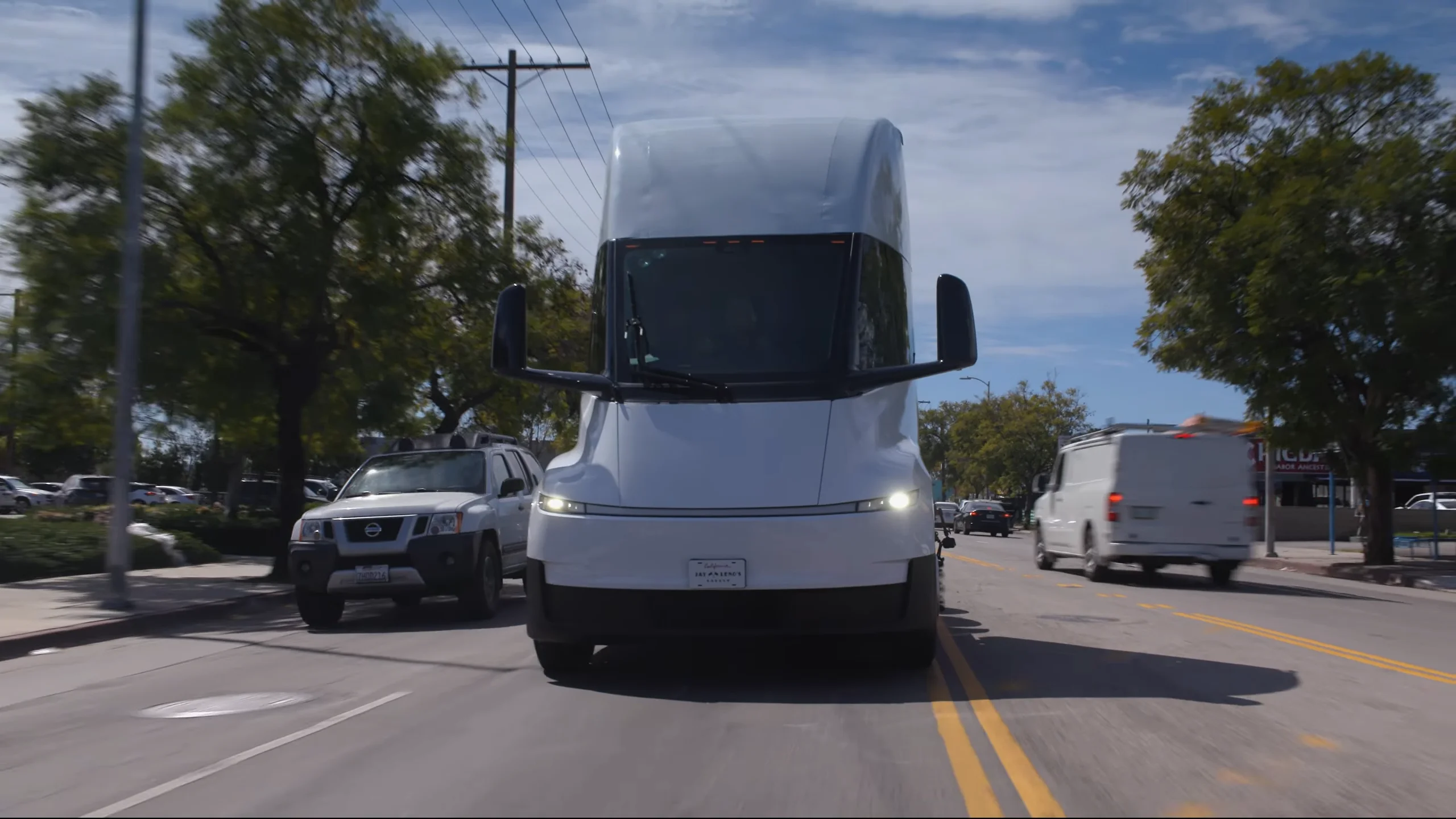
But after all that, is it about to get upstaged by the ET44?
Let’s take a closer look.

The ET44 is a heavy-duty semi to be reckoned with
BYD has said the ET44 is capable of hauling a full 44-ton combination.
It can’t be a coincidence that this is the maximum payload allowed on European roads.
It also surely can’t be a coincidence that this is four tons more than what the Tesla Semi is capable of.
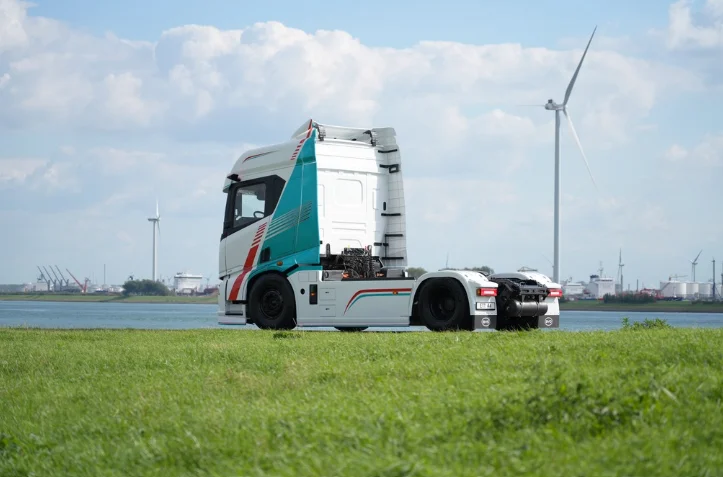
Powered by an LFP Blade Battery, the ET44 can reach a peak power of 735kW (just under 1,000HP).
It’s not just in physical capabilities that this semi poses a threat to Tesla – it’s also expected to be cheaper.
It’s anticipated to arrive in Europe by 2027, with expansion in Canada, Australia, and the UK likely to follow.

But it’s not such a clear-cut clean sweep for the ET44, as noted by YouTuber The Electric Viking.
“[The Tesla Semi] charges at up to 1.2 megawatt with 548 or 822 kWh packs. So [BYD] has the charging edge and Tesla clearly has the bigger battery and will get significantly more range,” he explained.
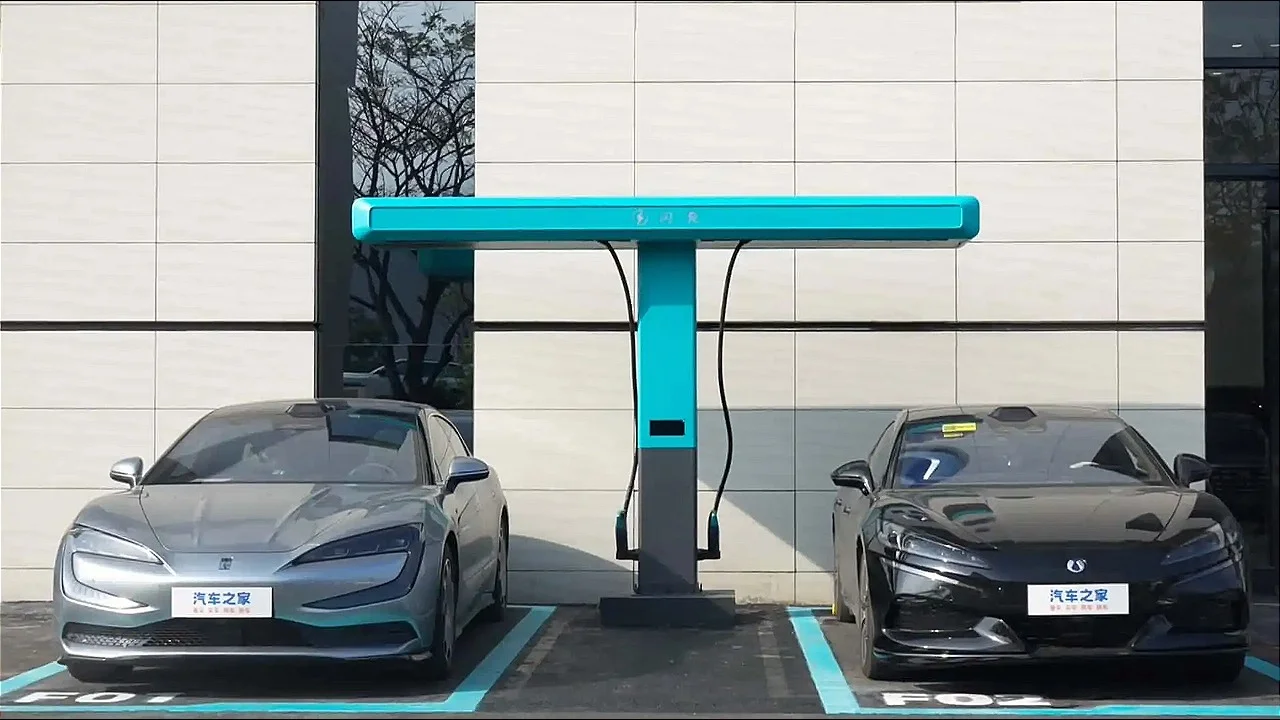
“The headline here is BYD’s own megawatt chargers. This truck pulls more than 1.5 megawatt and goes from 20 to 80% in about 20 minutes. So, it’s the fastest charging truck.
“The real story here though, is BYD turning up with the truck, the battery, the megawatt charger, and the financing all under the same roof. Every other truck maker is waiting on someone else to build the chargers.”
When asked whether he thought the ET44 posed a threat to the Tesla Semi, he gave a nuanced answer.
“The short answer is that the ETT44 is the first serious competitor the Tesla Semi has faced in Europe and no threat at all in America — and even in Europe I expect the Semi to sell better. Tariffs decide the American half of that before the trucks do,” Sam Evans, The Electric Viking, told Supercar Blondie.
“The ETT44 is a brand-new truck with no track record anywhere, no European factory named, and no customer deliveries until the second quarter of 2027.
“Add the fact that the Semi enters Europe duty-free and BYD’s truck doesn’t, and I expect the Tesla Semi to outsell the ETT44 in Europe, not the other way round.
“What BYD has really done is give Tesla its first proper competitor — a cheaper truck with a longer warranty and a one-stop package — and that will keep Tesla’s European pricing honest.
“That’s good for every haulier in Europe, but it doesn’t make the ETT44 the better truck.”
Timeline of BYD
1995: Founded by Wang Chuanfu with 20 employees, initially manufacturing nickel-cadmium batteries to compete with Japanese suppliers.
2000 – 2002: Becomes China’s first lithium-ion battery supplier to Motorola and Nokia. The company is listed on the Hong Kong Stock Exchange.
2003: Acquires Xi’an Tsinchuan Auto, to pair its battery technology with vehicle manufacturing.
2005: Releases its first mass-produced ICE vehicle, the F3
2008: First plug-in hybrid, the F3DM, is launched.
2013 – 2015: Introduces the ‘Dynasty’ line of plug-in hybrid and electric vehicles.
2022: The company stops producing ICE vehicles to focus on BEVs and PHEVs, while launching global expansion across Europe, Asia-Pacific, and Latin America.
2023 – 2024: Surpasses 3 million NEV sales and overtakes Tesla in quarterly global pure-EV sales.
2025 – 2026: Expands further, opening manufacturing hubs across Brazil, Thailand, and Europe.
Ben joined Supercar Blondie in February 2025 after being published by international organizations including LADbible, The Sun, the New York Post, and the Daily Mail. He covers supercars, rare and collectible vehicles, aviation, luxury assets, and the fascinating people behind them. His reporting has explored everything from seven-figure supercars and historic Ferrari collections to unusual aircraft adventures and extraordinary automotive discoveries from around the world. Ben has also gained first-hand insight into vehicle craftsmanship and customization, including visiting specialist workshops to see bespoke vehicles up close.