High-performance engine builders have been pouring concrete into engine blocks for years and most car owners never knew
Published on Apr 19, 2026 at 9:40 AM (UTC-4)
by Molly Davidson
Last updated on Apr 19, 2026 at 9:40 AM (UTC-4)
Edited by
Emma Matthews
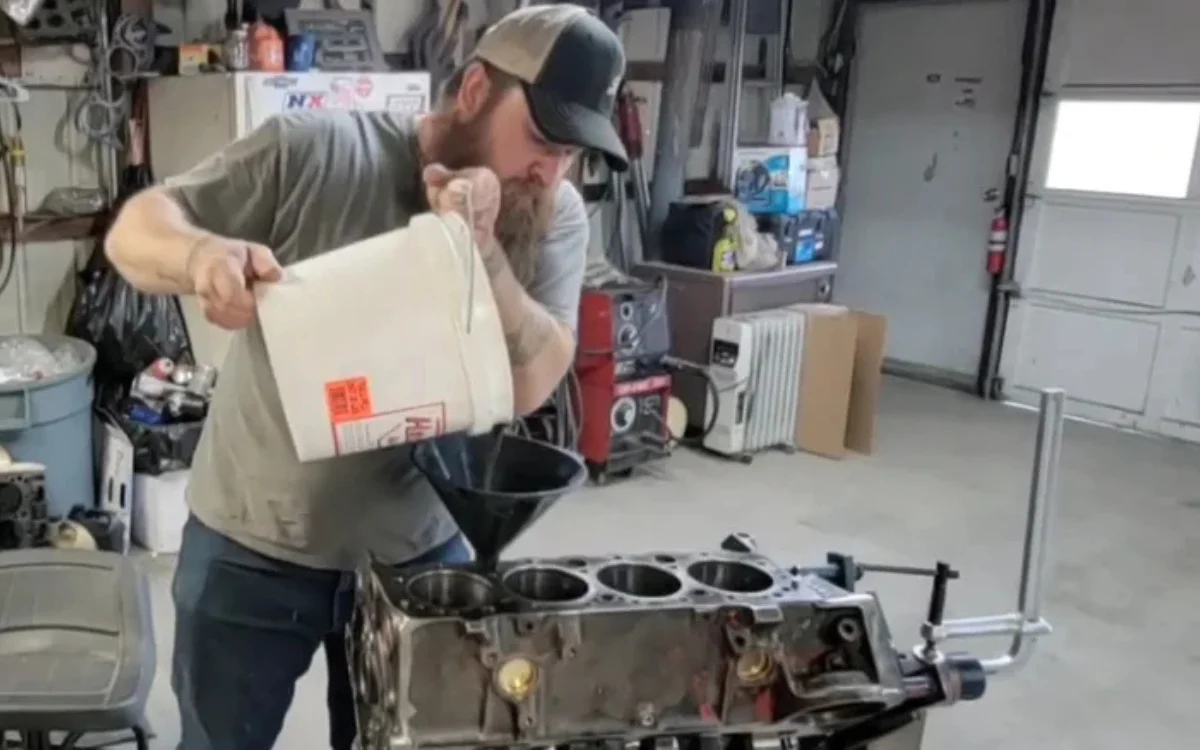

High-performance engine builders have been doing something that might make your jaw drop.
It involves pouring what looks like concrete straight into an engine block.
That might sound like the fastest way to destroy an engine.
But in the right context, it’s actually done to stop one from tearing itself apart.
Engine builders are pouring concrete into engine blocks
The idea sounds reckless, but it starts to make sense once you look at what’s happening inside a high-horsepower engine.
As power climbs, the forces inside the block ramp up fast.
Heat builds, pressure spikes, and everything starts pushing against the limits of what the metal can handle.
Because of that, even small amounts of flex in engine blocks can turn into real problems.
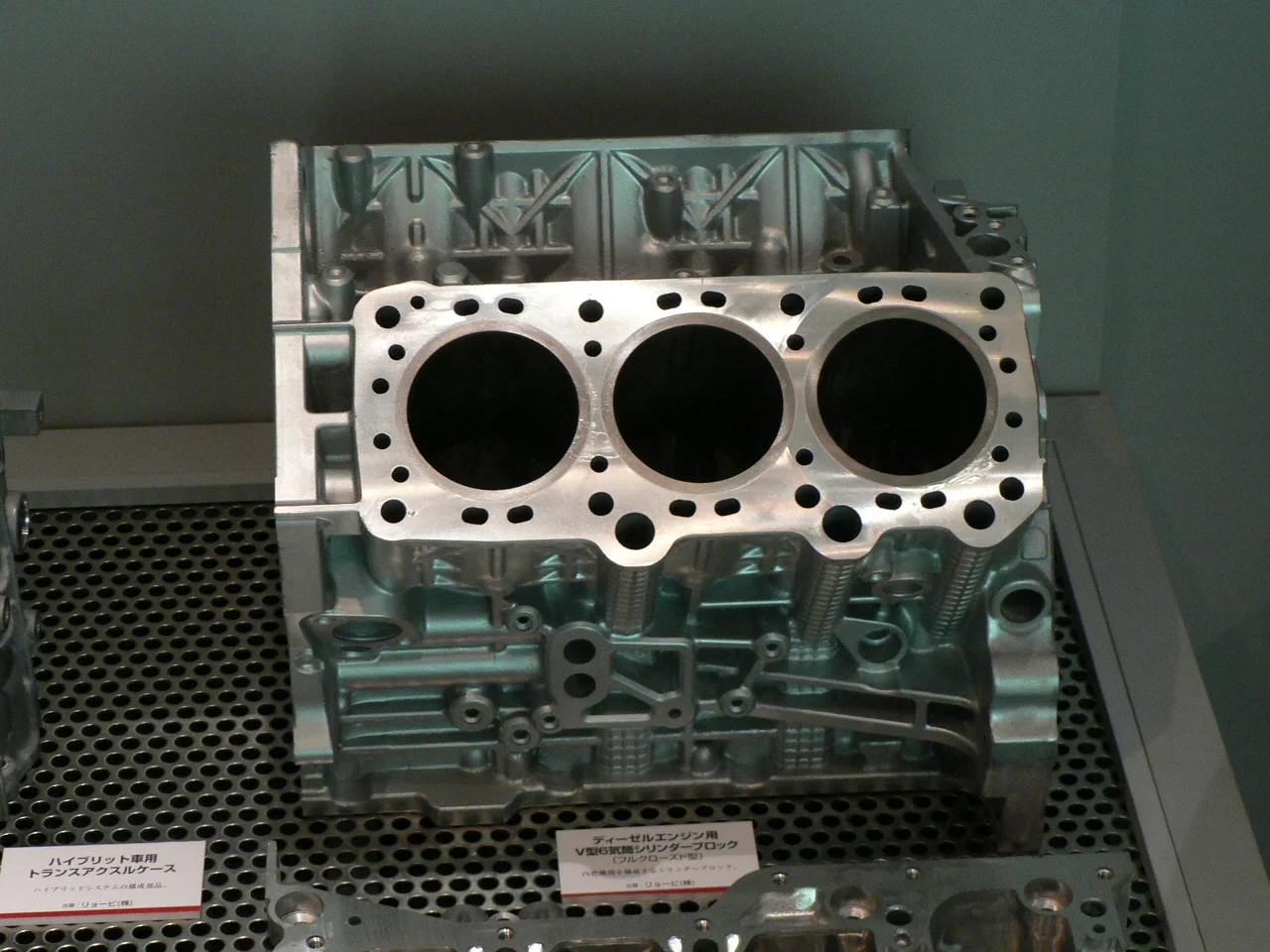
Inside the block, there are passages designed to let coolant flow through and control temperature.
But those hollow spaces also mean less support around the cylinder walls – the round sections inside the block where combustion happens, sometimes called the bores.
Under extreme load, those walls can flex slightly.
And at high power levels, that’s enough to throw things out of alignment or even cause cracking.
So engine builders remove that weak point.
By filling the cooling passages with concrete-like compounds, the block becomes far more rigid.
The extra support reduces how much the cylinder walls can move under pressure.
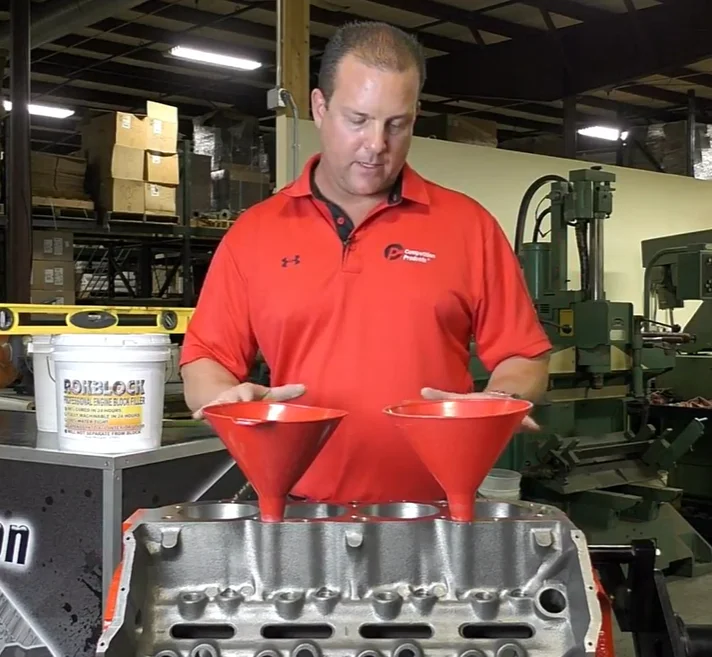
“These products are mixed with water and poured into the block water jacket to support the bore walls,” Darren Palumbo, Managing Director at Bullet Race Engineering, explained to Supercar Blondie.
That added support shortens the unsupported section of the cylinder wall, helping it hold its shape when cylinder pressure rises.
The result is a more stable engine that’s far less likely to distort or fail when pushed hard.
Related



This only works for extreme builds… not your daily driver
That added strength comes at a cost, and it’s a big one.
Those cooling passages exist for a reason.
Once they’re filled, the engine loses a large part of its ability to circulate coolant.
Instead, it relies far more on air cooling, which isn’t nearly as effective in everyday conditions.
Because of that, most builds don’t go all-in.
On street engines, builders often only partially fill engine blocks.
“On a streetcar, we will fill the water jacket in the bottom third or half so that water can still circulate,” Palumbo said.
Even then, it’s used carefully.
In some cases, it’s more of a precaution than a necessity.
“For instance, on a Ford Cleveland V8… we always do a half fill even for a mild engine. Say 450hp,” he said, noting it acts as an insurance policy rather than a last-resort fix.
At the extreme end, though, it becomes far more common.
Engines running high-output drag setups or restricted to factory blocks often rely on this kind of reinforcement simply to survive.
“It doesn’t really compare to other strengthening methods,” Palumbo added.
“In terms of strengthening the bores, that is the only method available.”
And that’s really the divide.
Everyday engines are built to balance cooling, flexibility, and longevity.
High-performance builds sacrifice that balance for strength where it matters most.
It might look like the fastest way to ruin an engine, but for the builds pushing serious power, it’s often what keeps them in one piece.

With roles at TEXT Journal, Bowen Street Press, Onya Magazine, and Swine Magazine on her CV, Molly joined Supercar Blondie in June 2025 as a Junior Content Writer. Having experience across copyediting, proofreading, reference checking, and production, she brings accuracy, clarity, and audience focus to her stories spanning automotive, tech, and lifestyle news.