A rare look at a $350,000 Lamborghini Huracán stripped of its body panels in West LA shows what a supercar's inner workings truly looks like
Published on Apr 16, 2026 at 8:46 AM (UTC-4)
by Callum Tokody
Last updated on Apr 17, 2026 at 5:37 AM (UTC-4)
Edited by
Emma Matthews
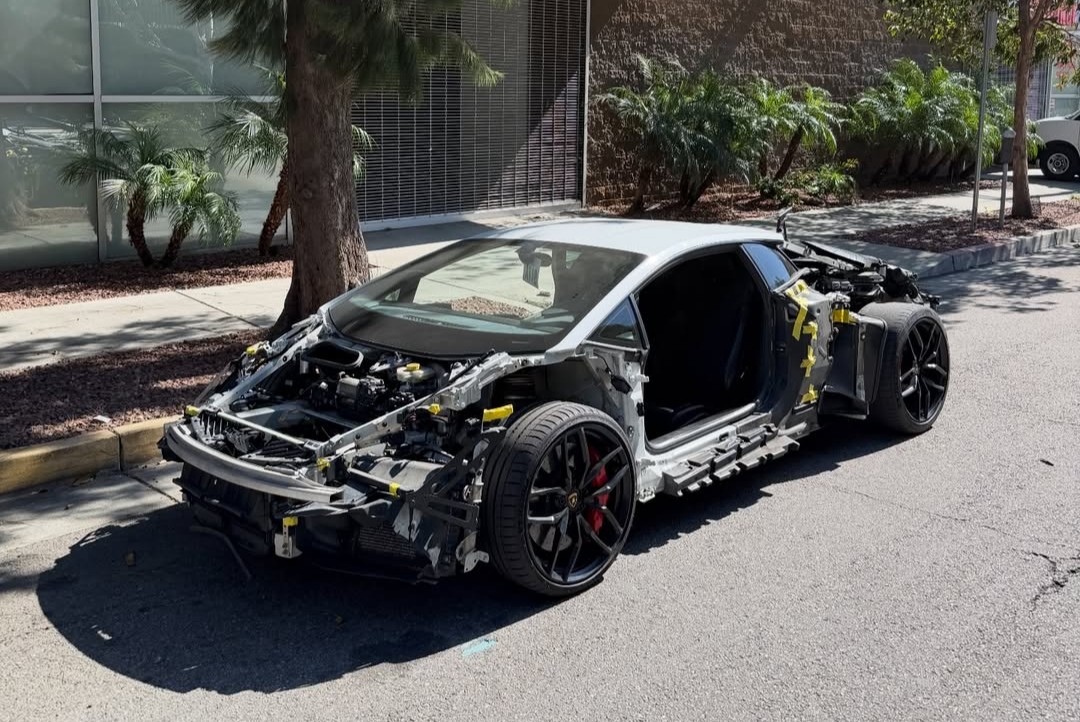

Few sights stop traffic like a $350,000 Lamborghini Huracán stripped to its bones in West LA to reveal a screaming V10 engine and raw supercar engineering.
A car delivery truck sat in the background of the footage, suggesting the vehicle was likely being dropped off for professional work.
While seeing a naked exotic on a city street feels jarring, mechanics often remove every panel to reach the tightest corners of the engine bay.
This skeletal look is likely the first step toward a widebody kit or a major service rather than anything nefarious.
The naked skeleton of a Lamborghini Huracán
The Lamborghini Huracán relies on a rigid spaceframe that integrates aluminum and carbon fiber.
This specific car in West LA showcases the mounting points for the suspension and the massive cooling ducts.
Seeing the Lamborghini Huracán like this gives you a really good look at the radiators and the intricate wiring harnesses.
And it shows that the mid-mounted V10 engine serves as a stressed member of the chassis, which helps improve handling.
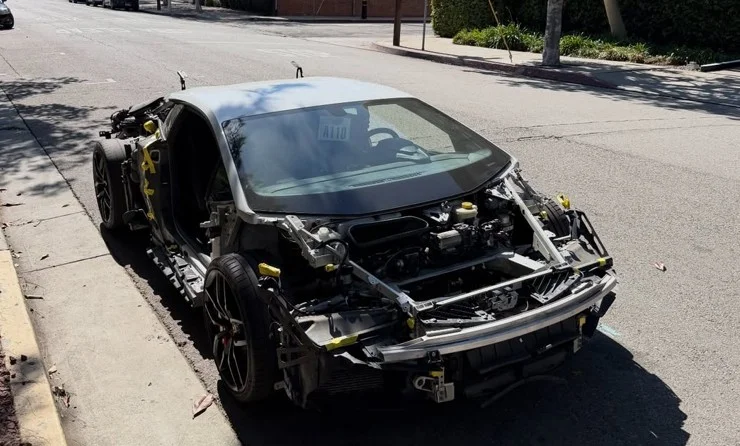
Supercar engineering at this level focuses on weight distribution and thermal management for high-speed driving, so most owners of a Lamborghini Huracán never see the vehicle in this state of total exposure.
The V10 engine is a naturally aspirated 5.2-liter unit that produces a distinct and mechanical sound.
Mechanics often strip a Lamborghini Huracán to this level for major performance upgrades or chassis repairs.
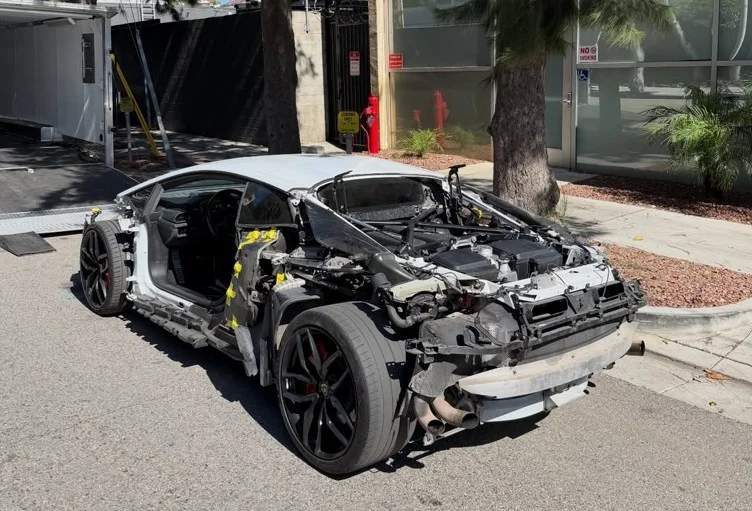
Pedestrians in West LA could see the dual-clutch transmission bolted directly to the V10 engine. This layout is a hallmark of the Huracán and its performance capabilities.
The suspension arms are also visible and show the precision of supercar engineering; every line and hose on the Lamborghini Huracán follows a path designed for maximum efficiency.
The West LA car remains a striking example of what a Huracán looks like without its aesthetic flourishes.
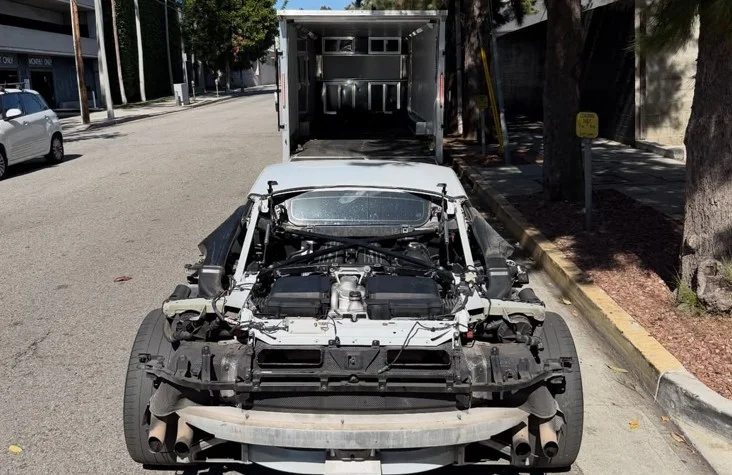
It’s rare to find a $350,000 machine parked in such a vulnerable state, but the exposed V10 engine provides a visual reminder of the power available to the driver.
Related



Raw engineering and the fading V10 era
The Lamborghini Huracán has finished production phase as the company moves toward electric assistance.
Lamborghini confirmed that the successor to the Huracán will move away from the naturally aspirated V10 engine.
This change marks a significant turning point for the brand and its approach to supercar engineering and power delivery.
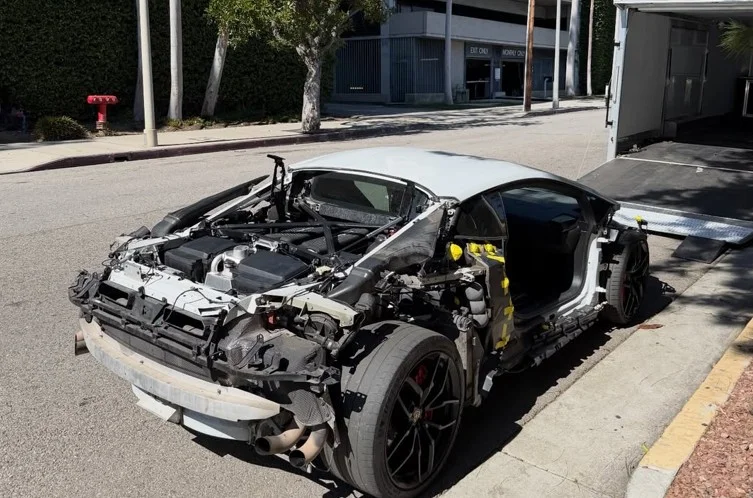
Collectors are currently showing increased interest in the Huracán because of its unique V10 engine, as new regulations mean the industry is moving toward smaller engines with hybrid systems.
The successor will replace the Lamborghini Huracán with a platform featuring different supercar engineering priorities.
Meaning that West LA residents will eventually see more hybridized supercars replacing the raw mechanical nature of the Huracán.
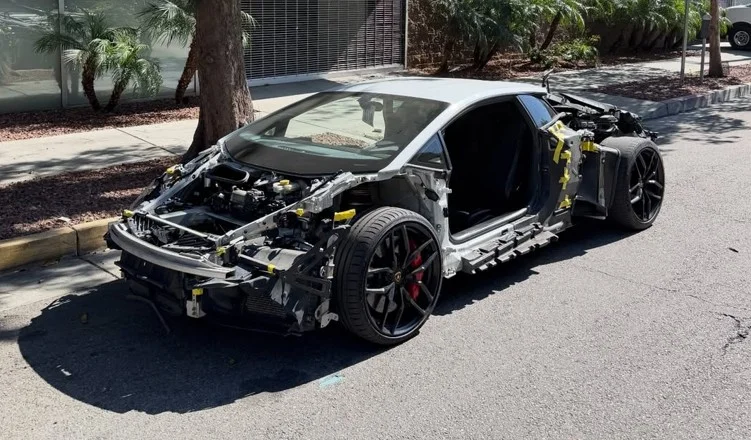
The sight of a stripped car in West LA shows the complexity involved in these machines, and the Huracán represents a peak in automotive development that is now evolving.
We’ve no doubt that future generations will look back at Huracán as a definitive V10 engine masterpiece.