The behind-the-scenes role that keeps the Formula 1 Melbourne Grand Prix running on time
Published on Jun 07, 2026 at 11:56 AM (UTC-4)
by Molly Davidson
Last updated on Jun 07, 2026 at 11:56 AM (UTC-4)
Edited by
Kate Bain
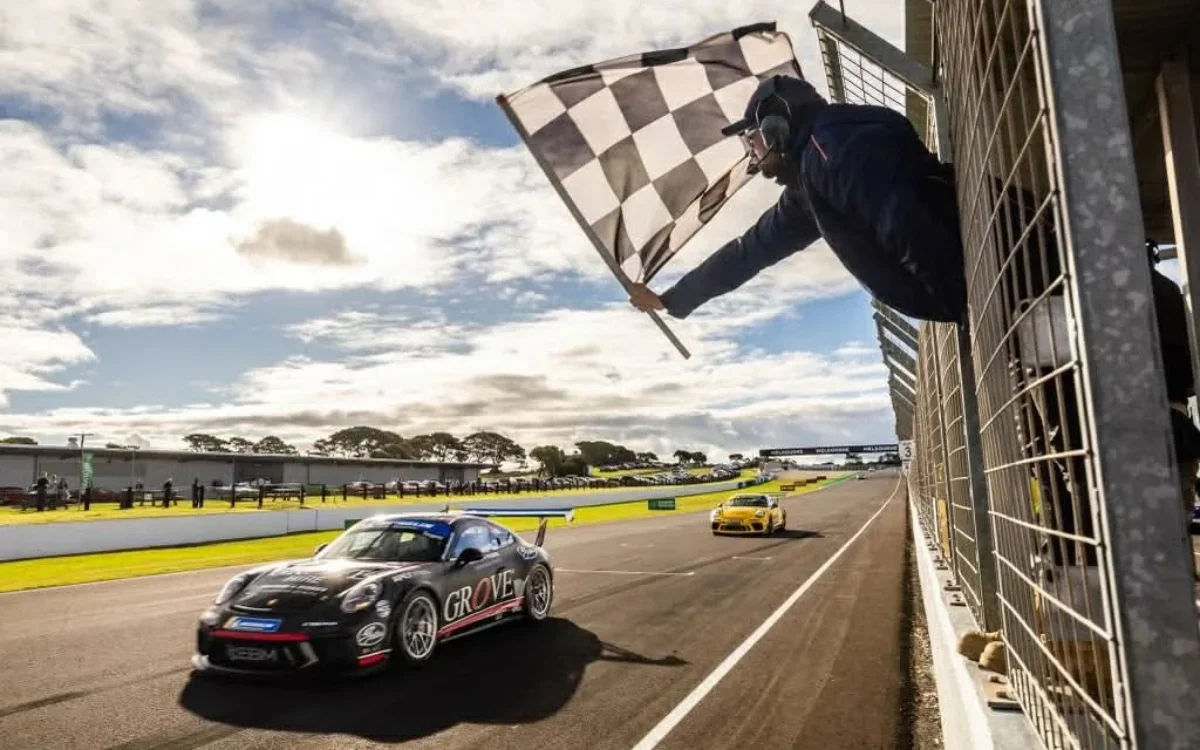

The Melbourne Grand Prix paddock is familiar to fans, but rarely seen up close.
It’s a place most people glimpse in flashes, between cars rolling out and drivers heading to the grid.
But behind the scenes are officials whose work shapes how each session runs, start to finish.
Daniel Schauer is one of them, and now he’s revealed exactly what goes on.
How to get onto the Grand Prix grid
Daniel’s involvement in motorsport goes back to childhood.
“As a kid growing up, I enjoyed going to the F1 races with my dad every year,” he says.
Over time, that turned into curiosity about what happens beyond the grandstands.
“We wanted a different perspective of the car racing events. We wanted to see the other side, the marshalling side,” he said.
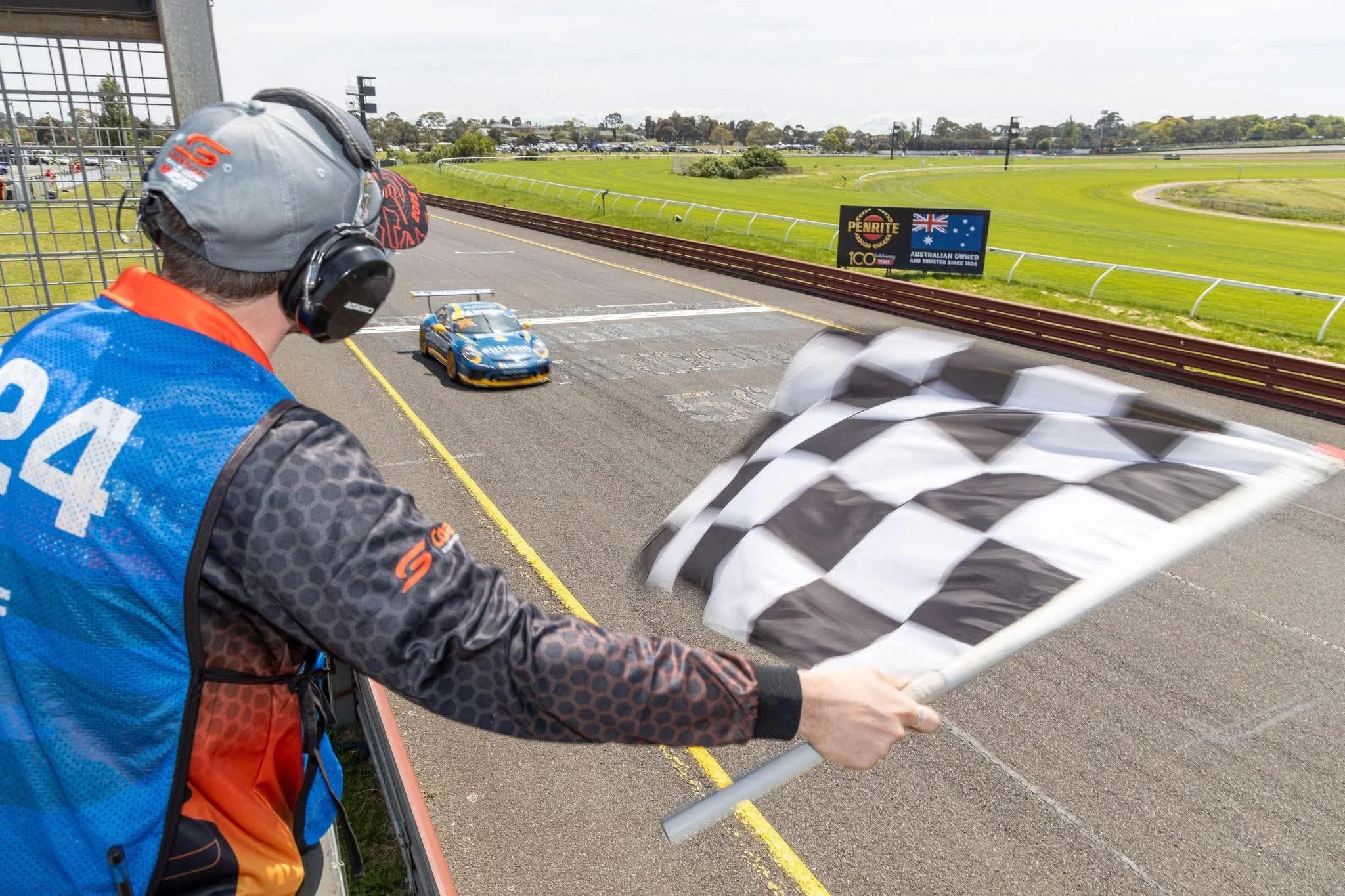
And that curiosity turned into hands-on experience.
“We started by doing local events, and through those connections we were able to go to a state-level event, then a national event, then an international event – which is an F1 race”.
Along the way, Daniel worked across the paddock, pit lane, and grid, gradually taking on more responsibility.
Ten years on, that steady progression has placed Daniel right where he wanted to be – part of the team making race weekends run from the inside.
What does it mean to be an Assistant National Starter?
Daniel works as an Assistant National Starter for Motorsport Australia, which runs V8 Supercars and Formula 1 events in Australia.
For national-category races, Daniel controls the race start.
As he describes it, national starts are essentially ‘light on, light off’ – a deliberately simple system where timing is everything.
Formula 1, by contrast, uses the full multi-light sequence – the rhythmic, anticipatory beat fans recognise from TV before the lights finally go out.
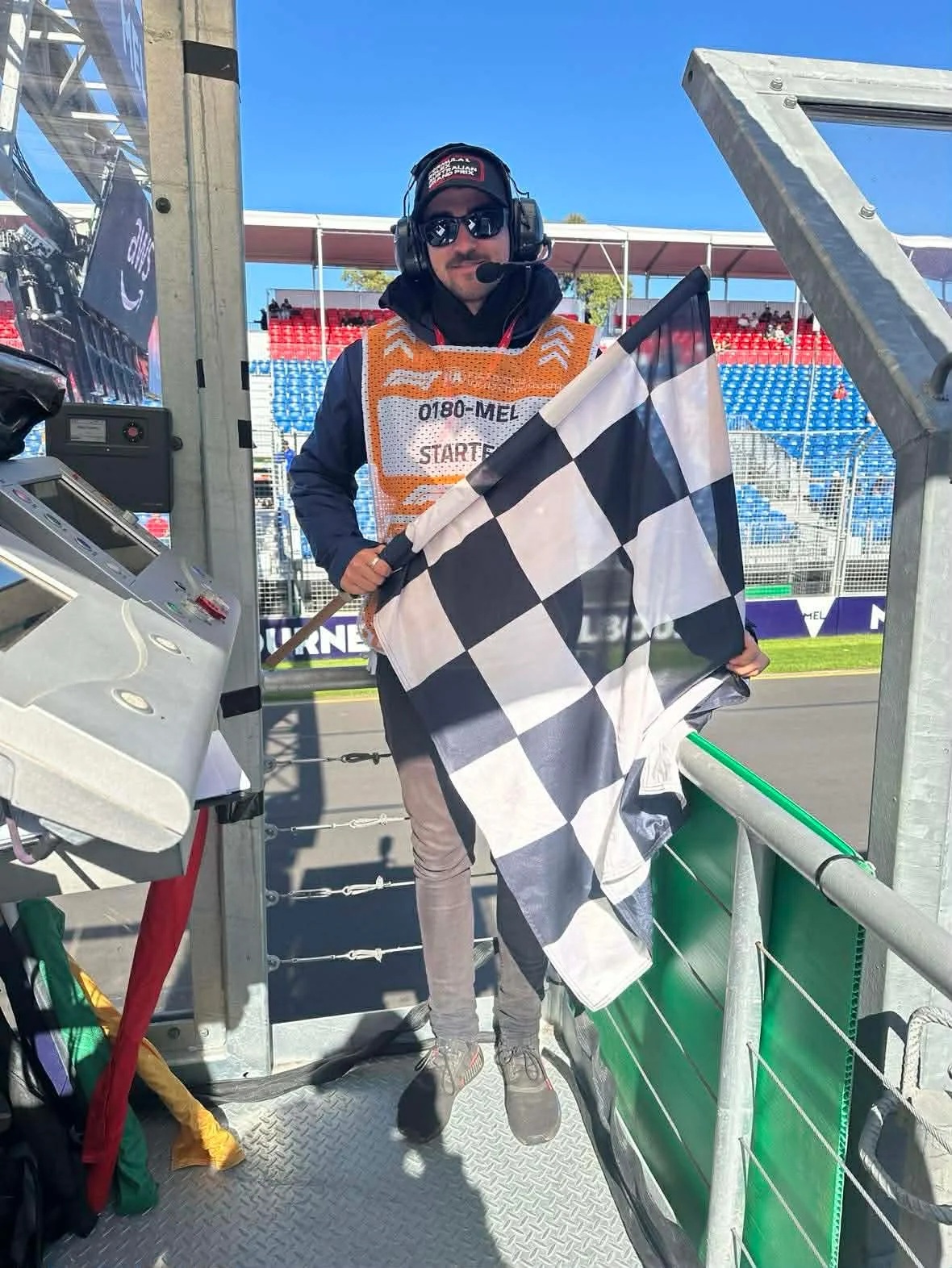
Daniel also waves the checkered flag at the end of F1 sessions, tracking the leader and timing the moment as they cross the line.
And he said there was a lot more to waving that flag than appearances suggested.
“Throughout the race, we follow the leader by lap counting,” he explains.
“Tracking where the leader is and the surrounding cars so we know exactly when to drop the checkered flag”.
Positioned about 30 feet from the line, he waits for the leader to cross, drops the flag, and signals the official end of the race.
A day in the life of a Grand Prix official
For Daniel, the work begins well before the first car heads out.
He’s typically on site by 6AM, running through pre-start checks before the paddock really wakes up.
Boards, flags, light tests – everything is checked and ready long before the grid forms.
And while you might expect that level of responsibility to bring pressure with it, Daniel frames it differently.
When the conversation turns to contingencies, he’s matter-of-fact.
“If there are any light sequence issues or any delays due to an incident prior to the start of the race, race control can declare it a delayed start,” he explains, sending the field out for an additional formation lap.
And if the lights themselves aren’t available, there’s a fallback ready.
“We use the national flag as a flag drop if the lights don’t work”.
It’s that preparation that gives Daniel the space to take in what’s happening around him.
And it’s that preparation that creates room for the moments he remembers most.
On being meters from his idols
Reflecting on one of those moments, Daniel remembers a scene that really stayed with him.
“At one of my first F1 events, I was lucky enough to be on the grid in P1 position with Lewis Hamilton,” he said.
Being among motorsport fans as they see their racing idols, witnessing the atmosphere change as these sporting greats prepare, Daniel tells us, is what it’s all about.
“You have your eyes on them, watching them glove up”, he said.
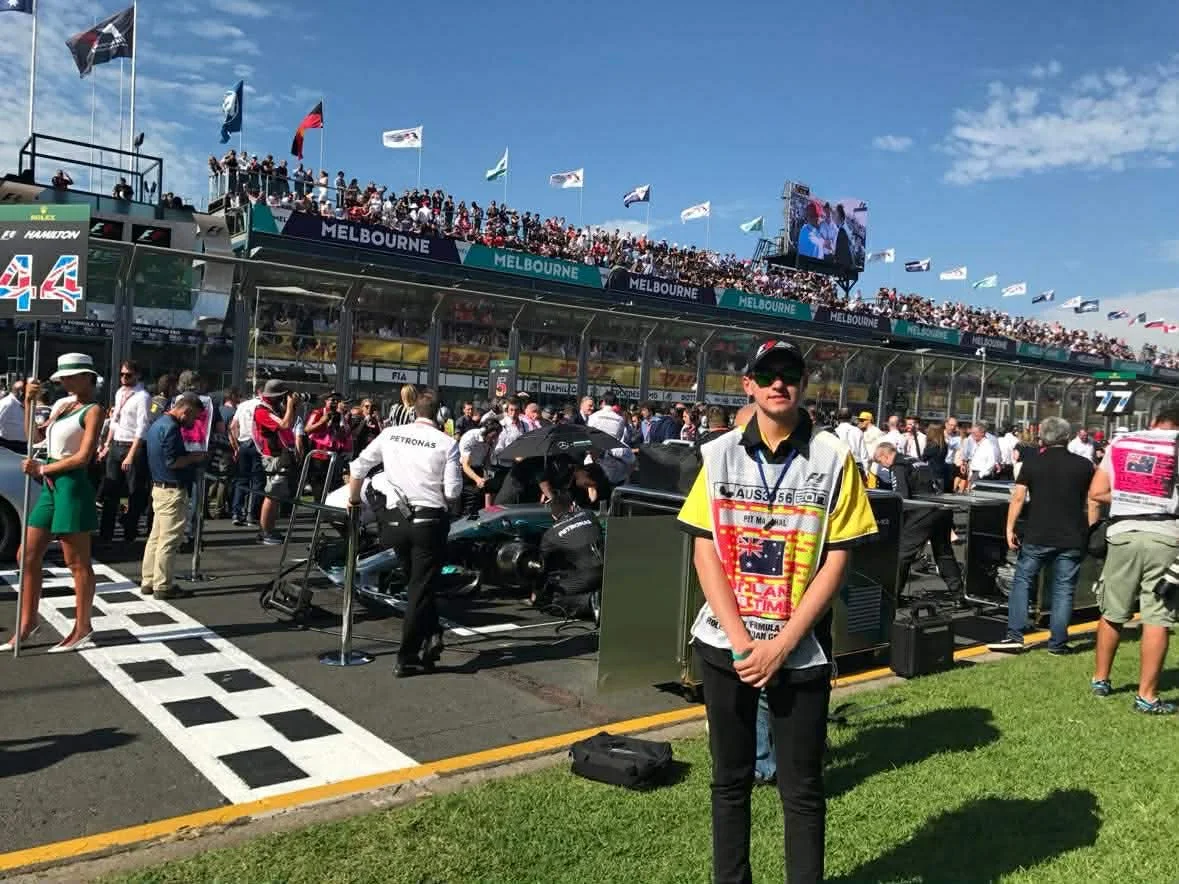
“Then seeing the atmosphere change as the five-minute signal is given and the grid clears of all personnel, leaving just 20 cars there ready to go”.
It’s that brief window – when the noise fades, the space opens up, and everything narrows to the cars ahead – that Daniel says stays with him long after the weekend is over.
Being that close to the cars, the drivers, and the glory is something he says never really gets old.
With roles at TEXT Journal, Bowen Street Press, Onya Magazine, and Swine Magazine on her CV, Molly joined Supercar Blondie in June 2025 as a Junior Content Writer. Having experience across copyediting, proofreading, reference checking, and production, she brings accuracy, clarity, and audience focus to her stories spanning automotive, tech, and lifestyle news.