Porsche Cayenne S Diesel set world record by pulling a 284-tonne Airbus A380 in ultimate test of its strength
Published on Sep 06, 2026 at 4:04 PM (UTC-4)
by Alessandro Renesis
Last updated on Sep 06, 2026 at 4:04 PM (UTC-4)
Edited by
Henry Kelsall
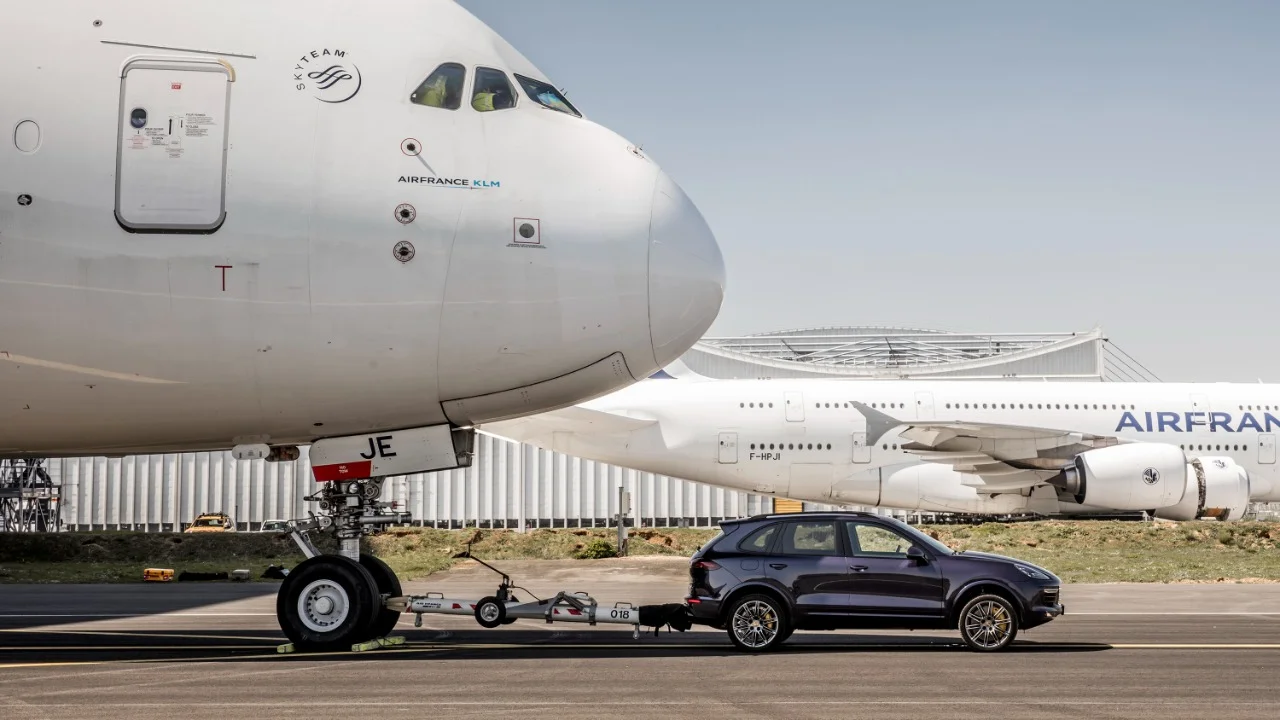

A while back, a Porsche Cayenne S Diesel successfully towed an Airbus A380 weighing 285 tonnes, setting a new Guinness World Record in the process.
Believe it or not, the Cayenne that pulled the massive 42-meter aircraft at Paris Charles de Gaulle Airport was completely unmodified.
Back then, Porsche set the record for the ‘heaviest aircraft pull by a production car.’
And the irony is that Porsche has since set a very similar record.
The Cayenne managed to do it without batting an eyelid
Automakers often set endurance records like this one just to prove a point.
A while back, a Land Rover towed a 110-tonne road train across the Australian Outback, and another Land Rover, specifically a Range Rover Sport, tackled China’s Tianmen Mountain Road to get to Heaven’s Gate.
Back in 2017, decided to set a new record by towing an Airbus A380, which is one of the largest and heaviest commercial airliners ever built.
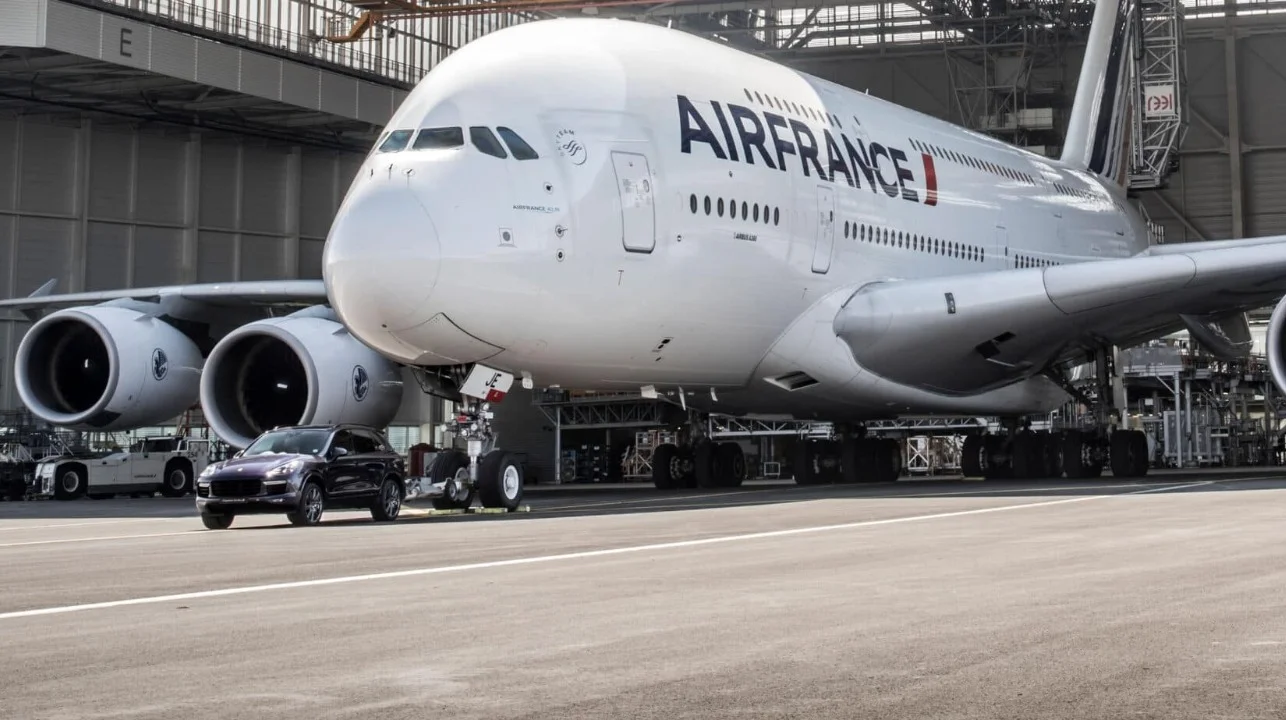
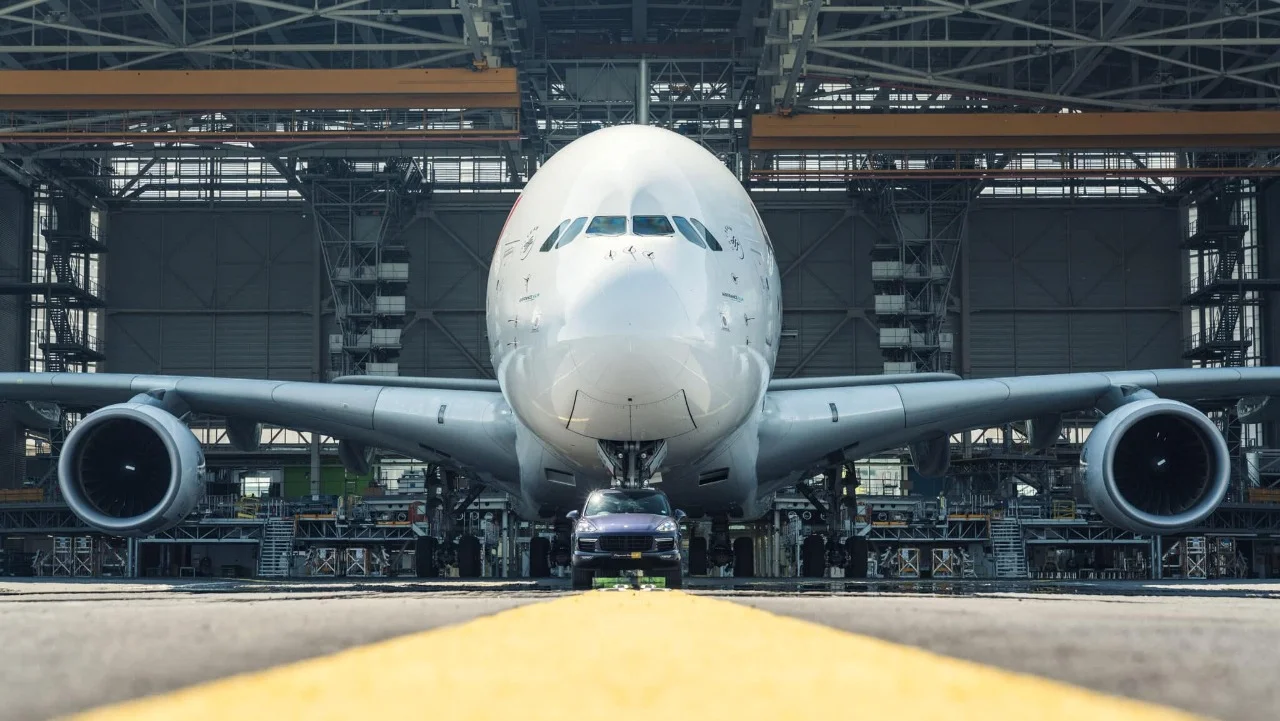
The 4.8-meter, 385-horsepower Porsche Cayenne S Diesel, completely unmodified, somehow managed to haul the 73-meter-long passenger plane along the hangar without a hitch.
A special towing attachment that sat on the Porsche Cayenne S Diesel’s standard tow bar was used to hook the car up to the Airbus A380, but that was basically the only modification.
Interestingly, Porsche wasn’t actually sure they were going to pull this off.
After the record had been set, Porsche GB technician Richard Payne admitted he and his team were ‘relieved.’
“It did it. I’m so relieved. We don’t usually go this far to test the limits of our cars, but I think today we got pretty close,” Payne said.
“I could tell that it was working hard, but the Cayenne didn’t complain and just got on with it. Our cars can go a bit beyond what our customers might expect. But even so, what the Cayenne did today was remarkable.” We drove the car here from London – and I plan to drive it home again, having towed an A380 in between,” he admitted.


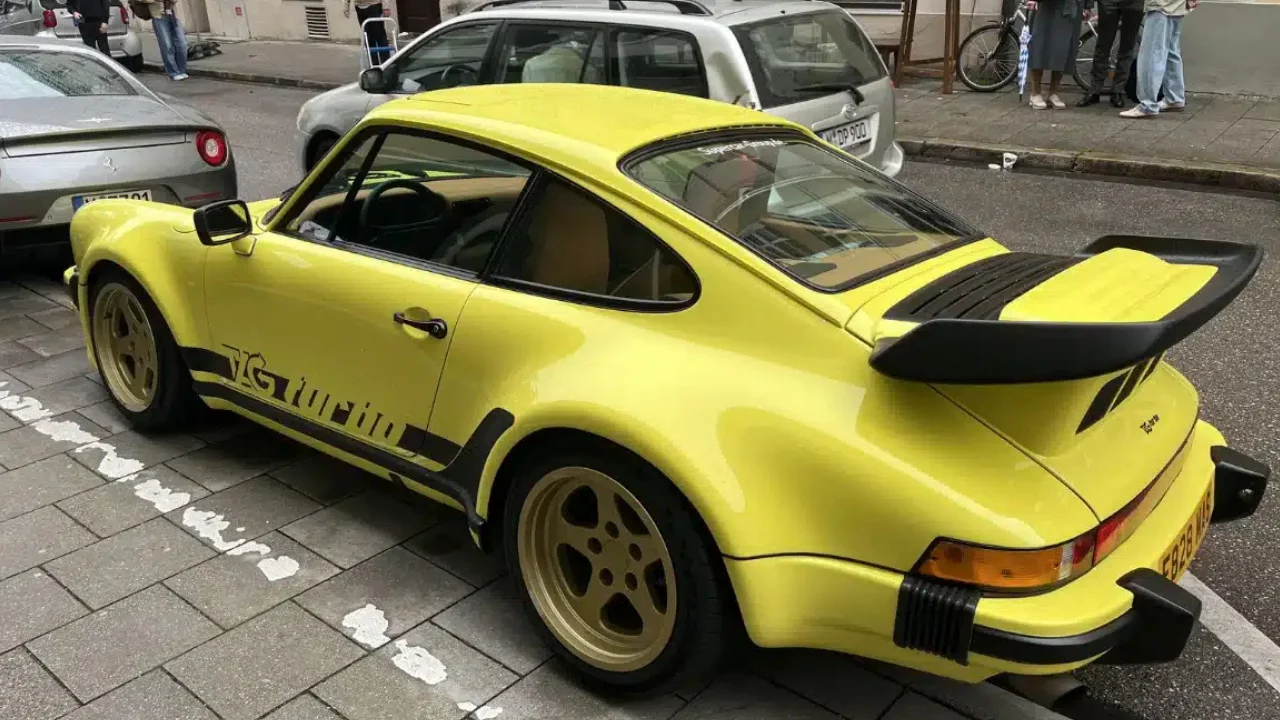
Porsche has since set another equivalent record
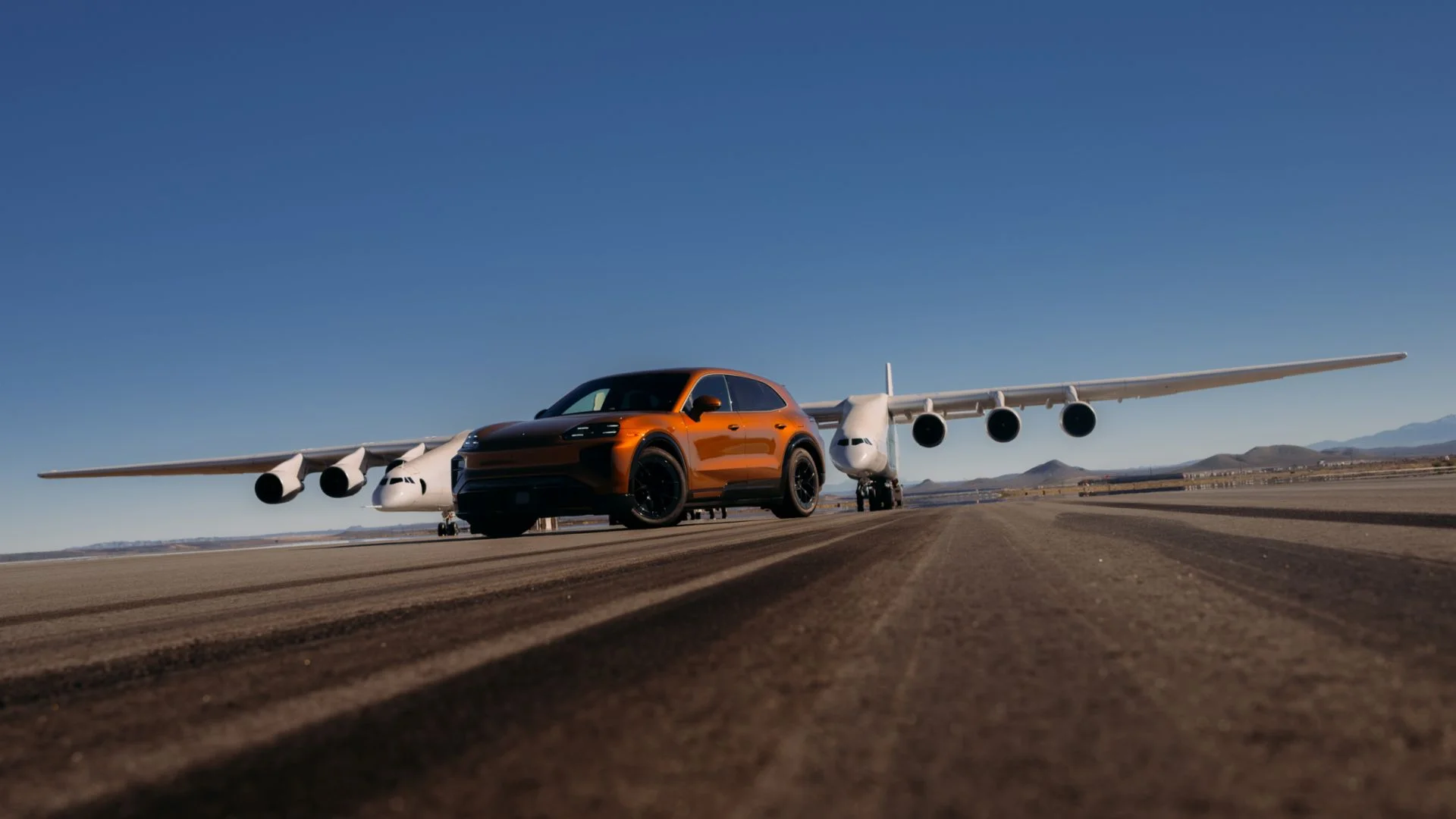
Nearly 10 years later, in 2026, Porsche set two similar records with another Cayenne.
After towing a speedboat, the Cayenne Electric kept pace with another, much larger plane.
There are two key differences.
First, the Cayenne they used was now powered by electric motors and batteries, not a diesel engine.
Second, the plane was even bigger.
Earlier this year, a 1,139-horsepower Cayenne Electric drove in perfect sync under the wing of the Stratolaunch ‘Roc’ during takeoff and landing.
The Cayenne stayed precisely in the ‘eye of the storm’ between the twin fuselages and beneath the wing as the plane accelerated and lifted off.
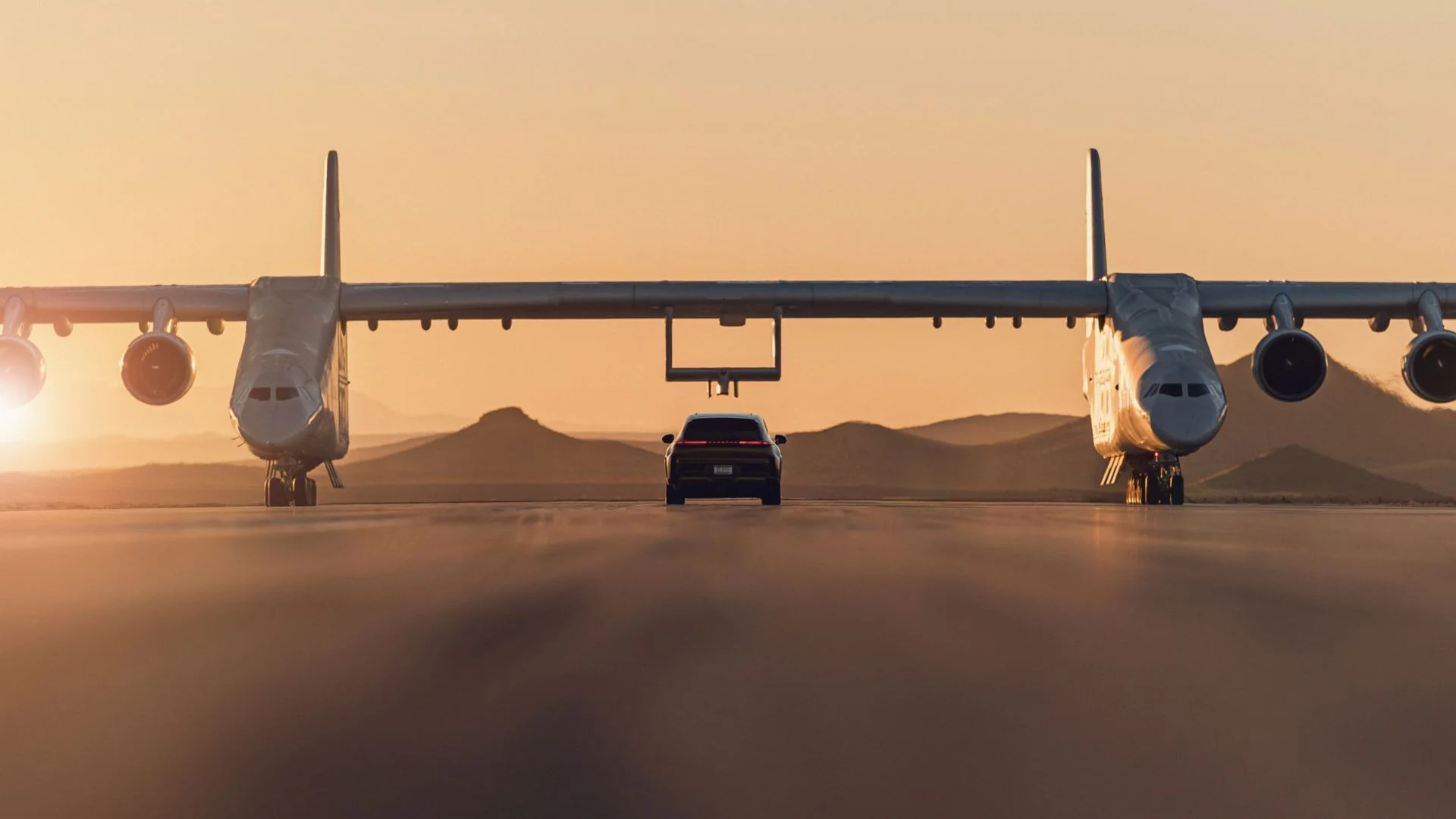
The Scaled Composites Model 351 Stratolaunch – or Roc, as most people call it – is one of the largest planes in the world, and the largest by wingspan.
It is 73 meters long, and it is designed to carry up to a 250-ton payload and has a 590-ton takeoff weight.
Crucially, it has the largest wingspan in the world: 385 feet – or 117 meters.
And an electric car was somehow able to keep up with it – imagine that.
Alessandro is an automotive journalist with 10 years of experience covering supercars, automotive history, emerging vehicle technology, and luxury transportation. He wrote the first article published on SupercarBlondie.com when the website launched in 2022 and has since built a reputation for insightful reporting across the automotive and transportation industries. His expertise is grounded in hands-on experience. Alessandro has driven every Tesla model ever produced, from the original Roadster to the Cybertruck, and regularly covers the latest developments in electric vehicles and automotive innovation. His passion for transportation extends beyond cars, he has even flown a Boeing 787 Dreamliner simulator in Addis Ababa, Ethiopia. His reporting spans everything from classic American muscle cars and rare automotive discoveries to luxury yachts, private aircraft, high-end watches, and cutting-edge vehicle technology. Known for his deep knowledge of automotive history and ability to uncover the stories behind iconic vehicles, Alessandro brings readers a blend of historical context, technical expertise, and first-hand experience.