Artemis II commander had a moment where he said 'human minds shouldn't have to go through this' as Earth vanished
Published on Apr 13, 2026 at 1:41 PM (UTC-4)
by Daisy Edwards
Last updated on Apr 15, 2026 at 11:50 AM (UTC-4)
Edited by
Emma Matthews


For most of us, watching a sunset is enough to make us stop and stare, but the Artemis II commander and his crew got something far more surreal: Earth vanishing from view.
As NASA’s Orion spacecraft moved behind the Moon, Commander Reid Wiseman watched our planet slowly disappear from view and admitted it was almost too much for the brain to handle.
He said the moment gave him chills, with his palms even starting to sweat as Earth slipped behind the lunar horizon.
It was one of those once-in-a-lifetime views that sounded genuinely quite impossible to envision.
Artemis II commander watched Earth vanish
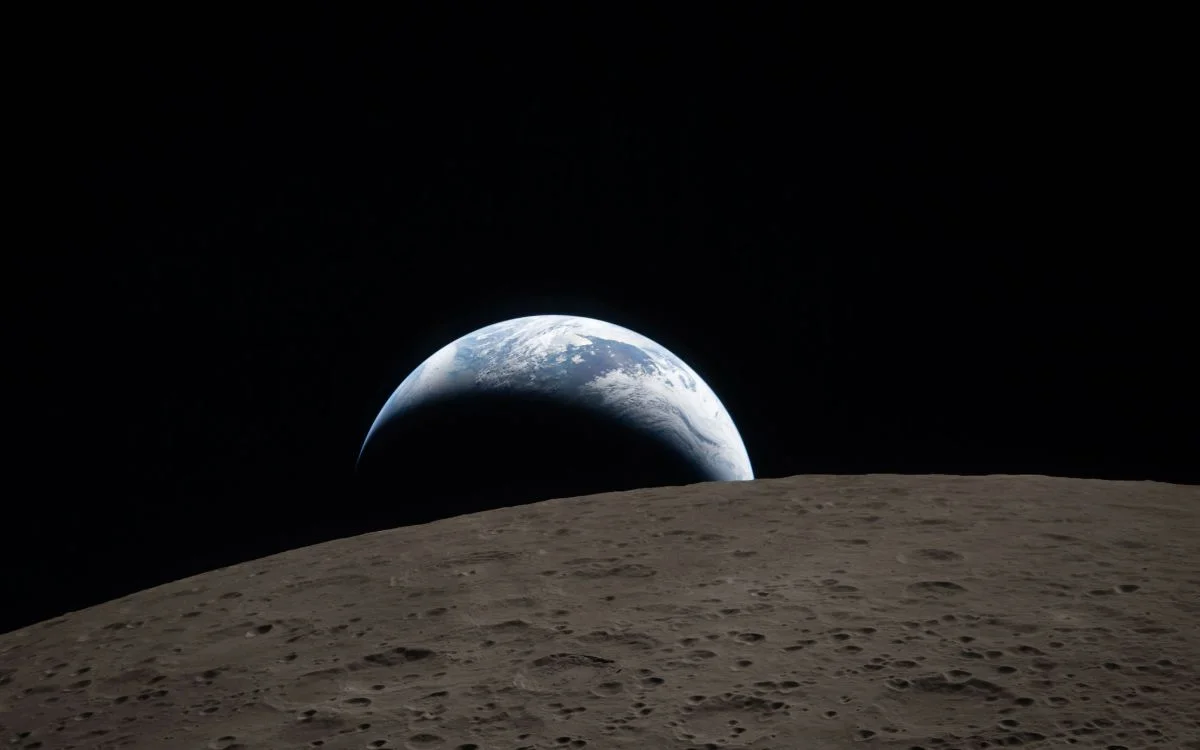
Just before communications went dark for around 31 minutes, the Artemis II crew captured a stunning image of a crescent Earth setting behind the Moon’s rugged edge in space.
The mission commander, Reid Wiseman, described it as ‘amazing to watch your home planet disappear behind the moon’, adding that the crew could see Earth’s atmosphere and even the Moon’s terrain projected across it.
Then came the line that really says everything about how mind-bending the view must have been.

“There’s a lot that our brains have to process,” Wiseman said.
“Human minds shouldn’t have to go through what these just went through, and it is a true gift.”
That is a pretty extraordinary thing to hear from someone trained for years to stay calm in high-pressure situations.
Even for astronauts, seeing your entire home world vanish is apparently the kind of experience that shakes you to your core.

Related


The Artemis II crew paused for a very human moment
What makes the story even better is what happened next.
According to Wiseman, the four astronauts took a few minutes together to reflect on where they were, and even shared maple cookies brought along by Canadian astronaut Jeremy Hansen.
It is such a brilliantly human detail in the middle of one of the most high-tech journeys imaginable.
The image has already drawn comparisons to Apollo 8’s iconic Earthrise photo from 1968, but this one feels different.

Earthrise showed humanity arriving at the Moon, but this Earthset felt like humanity rediscovering just how strange, beautiful, and maybe emotional, deep space can really be.
That was the magic of Artemis II because even with all the training, engineering, and all the planning, space can still render even the calmest people completely speechless.
Daisy is a technology and automotive journalist covering artificial intelligence, consumer tech, Apple news, cryptocurrency, emerging technologies, and transportation innovation. Since joining the team in 2025, she has reported on everything from AI-powered startups and major iOS updates to viral car stories and the latest developments shaping transportation and the digital economy. Drawing on her background in automotive journalism and a degree in History and Journalism from Goldsmiths, University of London, Daisy specializes in breaking down complex topics into clear, engaging reporting for a global audience. Her work spans cutting-edge technology, innovative vehicles, and the people driving change across both industries. Daisy has gained first-hand access to some of the world's most talked-about technologies and innovators, including meeting Tesla's Optimus humanoid robot during its first European appearance in London. She has also discussed the future of space exploration with an astronaut, bringing unique insights and real-world perspectives to her coverage of emerging technology.




